

ไบรอัน อาร์มสตรอง และ Coinbase: ทางเข้าใช้งานคริปโตที่เป็นไปตามกฎระเบียบ
มุมมองเชิงปฏิบัติ: ไบรอัน อาร์มสตรองช่วยปั้น Coinbase ให้เป็นโครงสร้างพื้นฐานคริปโตที่อยู่ภายใต้การกำกับอย่างไร—และสิ่งนี้หมายถึงอะไรต่อผู้ซื้อทั่วไป ธุรกิจ และผู้กำหนดนโยบาย
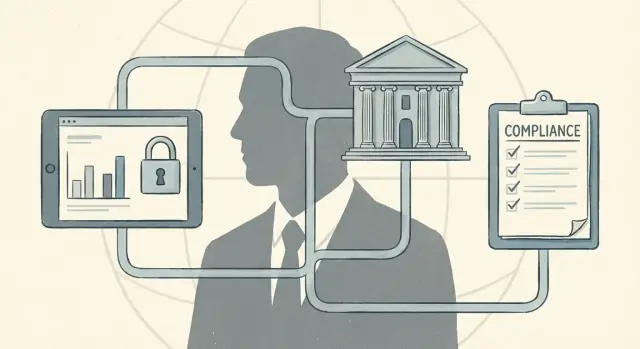
What “Mainstream On-Ramp” Means in Crypto
A crypto on-ramp is the set of tools that lets everyday people move from traditional money (like dollars in a bank account) into digital assets. Practically, it means you can link a payment method, verify your identity, and buy crypto in a way that feels as familiar as online banking.
Without on-ramps, crypto stays mostly peer-to-peer and niche—useful for enthusiasts, but harder for most people to access safely.
Why “mainstream” is a higher bar
A mainstream on-ramp isn’t just an app with a “Buy” button. It has to handle the unglamorous work behind the scenes: identity checks, fraud prevention, customer support, tax documents, and secure storage.
For many first-time buyers, the biggest hurdle isn’t understanding Bitcoin—it’s trusting that the route from their paycheck to a crypto wallet is legitimate and that there’s a clear process when something goes wrong.
Brian Armstrong’s role and Coinbase’s positioning
Brian Armstrong, Coinbase’s co-founder and CEO, helped shape the company around the idea that crypto adoption would grow faster if it worked with rules rather than around them. Coinbase has positioned itself as a regulated crypto exchange and a compliance-forward crypto on-ramp, especially in the U.S.
That focus shows up in the basics: crypto compliance programs such as KYC/AML (Know Your Customer and Anti-Money Laundering), clearer account controls, and operational processes designed to satisfy US crypto regulation expectations as they evolve.
What this article will (and won’t) do
This isn’t a price-prediction piece. The goal is to explain how regulated infrastructure—compliance, crypto custody, and financial plumbing like stablecoins—helps a platform like Coinbase act as a familiar first step for new users, while also meeting the standards expected of a public company crypto business.
From Early Bitcoin Days to a Consumer Exchange
Coinbase’s origin story starts in the early Bitcoin era, when buying crypto often meant wiring money to a stranger, navigating forums, or dealing with clunky interfaces. Brian Armstrong saw a gap between what crypto promised and what ordinary people could realistically use.
A quick timeline of the shift
In the earliest years, crypto ownership was mostly for enthusiasts who could manage wallets, private keys, and exchanges that felt built by engineers for engineers. Coinbase moved in a different direction: build a consumer product first, then layer the necessary financial infrastructure underneath it.
As the market expanded, the company leaned into familiar patterns people already trusted—bank connections, clear pricing, receipts and confirmations, and an account experience that resembled mainstream finance rather than a hobbyist tool.
Why ease of use mattered
For many first-time buyers, the biggest obstacle wasn’t interest—it was friction. A simple “buy” flow reduced the number of decisions a newcomer had to make: which wallet to use, how to store keys, where to send funds, and what “address formats” even meant.
By removing those early points of failure, Coinbase became a default starting point for people who wanted exposure to crypto without learning everything on day one.
Simplicity without ignoring rules
A clean interface doesn’t mean the business behind it is simple. Coinbase’s consumer experience depends on doing the unglamorous work: identity checks, payment risk management, and operational controls that make a financial product usable at scale.
The trick is keeping those requirements mostly in the background so the customer journey stays straightforward.
Offerings change by place and time
Coinbase isn’t one uniform product worldwide. Available assets, features (like staking or certain trading tools), and even payment methods can vary by region and evolve over time as regulations, partnerships, and market conditions change.
Compliance Basics: KYC, AML, and Why They Exist
Buying crypto on a regulated exchange can feel different from downloading a new app and getting started instantly. That friction is mostly compliance—and it exists for reasons that affect both the platform and its customers.
KYC: proving you are who you say you are
KYC stands for Know Your Customer. In plain terms, it means the exchange verifies your identity before letting you move meaningful amounts of money.
For platforms like Coinbase, KYC usually includes checking a government ID and confirming basic personal details. The goal isn’t to “watch” ordinary users—it’s to prevent people from opening anonymous accounts to run scams, buy stolen funds, or cash out proceeds from crimes.
AML: stopping dirty money from looking clean
AML stands for Anti–Money Laundering. It’s the set of rules and monitoring that helps detect suspicious activity—like patterns that resemble fraud rings, stolen card testing, ransomware cash-outs, or rapid “in and out” transfers designed to hide where money came from.
That’s why regulated exchanges may flag or pause certain transactions, ask for additional info, or require extra verification as you increase limits.
The trade-off: privacy vs protection (and legal reality)
Many people are drawn to crypto because it can feel more private than traditional banking. Regulated on-ramps trade some of that anonymity for consumer protection, access to banking rails, and compliance with financial laws.
The upside is fewer fake accounts and more recourse when something goes wrong. The downside is that you’ll be asked for personal information, and some activity may be reviewed.
What to prepare before you sign up
Have these ready to make onboarding smoother:
- A valid government-issued photo ID (passport or driver’s license)
- Your legal name, date of birth, and current address
- A phone number and email you control (often used for security checks)
- In some cases, proof of address or basic info about how you’ll fund the account
Doing this upfront helps you avoid delays when you’re ready to buy, sell, or withdraw.
Licenses, Reporting, and the Reality of Regulation
Coinbase didn’t become a default “first stop” for many U.S. buyers by ignoring regulation—it did it by building a business that could plug into the existing financial system. That means operating under money-transmission style rules and accepting ongoing scrutiny.
What “operating under licenses” actually means
At a high level, crypto exchanges that custody customer funds often register and license similarly to payments businesses. In the U.S., that commonly includes:
- State-by-state money transmitter licenses (MTLs) or equivalent approvals
- Federal registration as a Money Services Business (MSB)
- Ongoing compliance programs designed to prevent fraud and illicit finance
This is less about a single “crypto license” and more about proving you can safeguard customer assets, keep records, and run a controlled operation.
Reporting requirements shape the product
Licensing is only the entry ticket. Day-to-day obligations—recordkeeping, monitoring, and reporting—can affect what users are allowed to do.
For example, certain features may be limited or rolled out unevenly due to regulatory expectations:
- Some services may be available in one state but not another
- New products (like staking, yield, or derivatives) can require extra approvals or tighter disclosures
- Asset support may be constrained by internal review standards that align with regulators and banking partners
Reporting can also include filing suspicious activity reports when patterns look fraudulent, responding to law-enforcement requests, and maintaining audit trails. These are operational costs, but they’re also part of what makes banks and payment networks more willing to work with an exchange.
“Regulated” still doesn’t mean “risk-free”
A regulated crypto exchange can reduce certain risks—like outright fraud or careless custody practices—but it can’t remove the core risks of crypto:
- Prices can move sharply, even for well-known assets
- Tokens can fail due to bugs, hacks, or poor governance
- Users can still lose funds through scams, phishing, or sending to the wrong address
Regulation can add guardrails and transparency, but it can’t guarantee profits or protect users from every mistake.
Why regulation helps with trust and access
Compliance is also a relationship tool. Banks, card networks, and payment partners generally require strong KYC/AML controls, clear reporting processes, and documented policies before they’ll provide access to rails like ACH and card processing.
That trust is a big reason a platform like Coinbase can feel “familiar” to first-time buyers—because it can reliably connect crypto activity to everyday finance.
How Coinbase Became a Familiar Path for First-Time Buyers
Coinbase feels familiar to first-time buyers because it borrows the flow people already know from online banking and fintech apps: sign up, verify identity, connect money, buy, and optionally move funds elsewhere. That predictability matters when the asset itself feels new.
A step-by-step first purchase
Most newcomers follow a simple path:
- Create an account with email and a strong password (ideally with a password manager).
- Verification: submit personal details and an ID photo, sometimes a selfie. This is where KYC happens.
- Add a payment method (bank account, debit card, or other local rails where available).
- Fund and buy: choose an asset, enter an amount, review the quoted price and fee, then confirm.
- Withdraw or hold: keep crypto on the platform, or send it to a personal wallet—after double-checking the network.
Funding methods and typical constraints
- Bank transfer (ACH/wire/SEPA equivalents) is usually cheaper and supports larger amounts, but can take time to settle. Some transfers may have holding periods before you can withdraw crypto.
- Debit/credit cards are fast and convenient, but often have higher fees, lower limits, and may be restricted by the card issuer.
Fees vs. spreads (and how to compare)
New users often see two cost layers:
- Fees: explicit charges for using a specific product or payment method.
- Spread: the difference between the buy price you’re quoted and the market price at that moment, reflecting liquidity and price movement.
To compare platforms, look at the all-in cost for the same order size, not just the advertised fee.
Beginner mistakes to avoid
The most common—and costly—errors are:
- Sending on the wrong network (e.g., choosing a cheaper chain that the recipient doesn’t support).
- Rushing small “test transfers” and then repeating the same mistake at a larger amount.
- Copy/paste errors in wallet addresses (use QR codes when possible).
- Ignoring withdrawal holds and assuming funds are instantly movable.
Custody and Security: The Infrastructure Behind the App
For most people, Coinbase feels like a finance app: sign in, see a balance, buy or sell. Under the hood, the experience depends on two questions: who controls the private keys, and how the platform protects accounts and assets.
Custody, in plain English
Crypto ownership is tied to private keys—long secret codes that authorize transfers. If you hold your own keys (for example, in a personal wallet), you control the funds directly. If an exchange holds the keys on your behalf, the exchange is providing custody.
Coinbase’s mainstream appeal is largely built on that custodial model: you don’t have to manage keys yourself to get started. The trade-off is trust and responsibility: the platform must secure large pools of assets, and users must secure their logins.
Cold storage vs. hot wallets
Platforms typically separate funds into two buckets:
- Hot wallets are connected to the internet and used to process day-to-day withdrawals and transfers quickly.
- Cold storage is kept offline, making it much harder for attackers to access remotely.
This separation is similar to keeping cash in a register for daily transactions while storing most reserves in a vault. It reduces exposure: even if a hot system is targeted, the goal is to limit what can be reached.
Account security is still on you
Even with strong custody practices, many losses happen through compromised accounts. A few basics matter:
- Turn on 2FA (prefer an authenticator app over SMS when possible).
- Watch for phishing: verify URLs, don’t click “urgent” login links, and be wary of support impersonators.
- Use allowlists (approved withdrawal addresses) if available.
- Keep device hygiene: updates, screen locks, and unique passwords.
Security isn’t the same as safety from price moves
Good custody can help protect against theft and account takeover, but it can’t remove market risk. Even on a well-secured, regulated crypto on-ramp, prices can swing sharply—and those gains or losses are still yours.
Stablecoins and the Bridge to Everyday Money
Stablecoins are cryptocurrencies designed to hold a steady value—most commonly by tracking the U.S. dollar. Instead of swinging up and down like Bitcoin or many altcoins, a “$1 stablecoin” aims to stay near $1.
That seemingly simple feature matters because it turns crypto from a pure investment experience into something closer to money you can budget, price goods in, or move between platforms without worrying about sudden volatility.
Why stablecoins matter for payments and trading
For everyday users, stablecoins can feel like “cash inside crypto.” You can sell a volatile asset into a stablecoin to pause risk without leaving the crypto ecosystem.
For traders, stablecoins often function as the quote currency for markets (e.g., swapping an asset into a dollar-like token) and as collateral in certain strategies.
For payments, stability is the key. A merchant or a freelancer is far more likely to accept something that won’t drop 8% between invoice and settlement. Even when the final goal is dollars in a bank account, stablecoins can serve as a fast bridge—especially when traditional rails are slow, limited, or expensive.
Connecting crypto markets with dollar-like value
Stablecoins link two worlds: crypto markets that run 24/7 and the familiar unit of account most people already use. That connection can reduce friction for first-time buyers.
Instead of asking someone to think in fractions of a coin, stablecoins let them think in dollars while still using crypto-native rails. This is one reason regulated exchanges emphasize stablecoin pairs and conversions: they make it easier for users to enter, exit, and manage exposure without feeling like they’re stepping into an entirely new financial system.
The big risks: issuer, liquidity, and regulation
Stablecoins are not all the same. Key risk categories include:
- Issuer risk: Does the company behind the stablecoin actually hold the reserves it claims? How often are those reserves audited or attested?
- Liquidity risk: In a stressed market, can holders redeem quickly at (or near) $1, or does the price slip because redemption is constrained?
- Regulatory risk: Rules can change who may issue stablecoins, what reserves must look like, and which tokens platforms can support.
How regulated rails shape usage and availability
On a regulated crypto on-ramp, stablecoin support is rarely just a product decision—it’s also a compliance decision. Listing standards, custody rules, banking relationships, and reporting obligations can influence which stablecoins are available, where they’re available, and what features users can access.
The result is a trade-off: regulated rails can narrow the menu, but they also tend to push stablecoin usage toward clearer disclosures, stronger reserve practices, and more predictable redemptions—qualities that help stablecoins act as a reliable bridge to everyday money.
Serving Institutions Without Losing Retail Simplicity
Coinbase’s brand is built around an easy “buy and sell” experience, but the needs of a pension fund, a hedge fund, or a corporate treasury look nothing like the needs of a first-time buyer.
Rather than forcing everyone into one interface, exchanges often create separate products so retail stays simple while institutions get the controls they require.
Why institutions need different rails
Large players care less about a slick mobile flow and more about operational certainty. That usually means:
- Custody built for governance: multi-user approvals, clear roles, segregation of duties, and documented access controls.
- Reporting and records: exportable histories, reconciliations, and data formats that plug into accounting and risk systems.
- Audits and oversight: evidence trails for internal auditors and, where applicable, external assurance.
- Execution quality: tools designed for bigger orders—deeper liquidity access, smarter routing, and clearer slippage controls.
These requirements are hard to deliver inside a retail app without making it feel cluttered or intimidating. Coinbase’s approach has been to keep retail flows familiar, while offering institution-oriented services (often under separate branding and support models) that better match procurement, compliance, and risk-management expectations.
How compliance unlocks enterprise adoption
For institutions, “Can we do this?” is often a compliance question before it’s an investment question. Strong KYC/AML programs, onboarding documentation, sanctions screening, and clear terms make it easier for enterprises to justify participation—especially when boards and regulators ask how risks are monitored.
A necessary caution
Institutional access is not universal. Product availability, custody structures, and permitted assets can differ by jurisdiction, client type, and local rules. Even with a global brand, onboarding and services may vary depending on where the institution operates.
Asset Listings, Risk Controls, and User Expectations
When people first buy crypto, the exchange app often feels like “the market.” If a token appears in the search bar, it can seem implicitly endorsed. That’s why listing decisions matter: they shape what retail users can access and, just as importantly, what they don’t see.
Listings aren’t just about popularity
A regulated crypto exchange typically evaluates assets through multiple filters—legal, security, and market integrity—before deciding to list. Even if a token is trending, questions like “Is this asset a security?”, “Is the project transparent?”, or “Can we custody it safely?” can delay or block a listing.
For retail users, this can be confusing: “Why can I buy it on some platforms but not here?” The answer is often that exchanges have different risk tolerances, regulatory exposure, and compliance requirements.
Innovation speed vs. risk controls
Crypto moves quickly: new tokens, new chains, new mechanisms. But risk controls move deliberately because the downside is real—bugs, exploits, market manipulation, and regulatory action can harm customers.
Exchanges may require stronger disclosures, minimum liquidity standards, or monitoring tools before offering an asset broadly. That can look conservative, but it’s also a way to reduce the odds that a first-time buyer walks into a preventable disaster.
Why assets can be restricted—or delisted
Listings aren’t permanent. Over time, an exchange may restrict trading, limit access in certain regions, or delist an asset due to:
- Regulatory developments or enforcement risk
- Security incidents, hacks, or protocol failures
- Evidence of manipulation or unreliable market data
- Project abandonment or lack of ongoing disclosures
A useful mindset for buyers
Treat exchange availability as a starting point, not a stamp of approval. Read the project’s documentation, understand the token’s purpose, check liquidity and risks, and compare independent sources.
If you’re investing, you should know what you own—even if an app makes buying it feel effortless.
Going Public and the Push Toward Transparency
When Coinbase went public, it didn’t just create a new way for investors to buy “crypto exposure.” It turned a major crypto on-ramp into a publicly scrutinized company with obligations that most private startups can avoid.
What “publicly traded” changes (at a high level)
A public company sells shares on a stock exchange, which means it answers not only to customers and regulators, but also to shareholders and the market. That status brings ongoing requirements: regular financial reporting, formal governance structures, and detailed risk disclosures.
For a regulated crypto exchange, this matters because users often judge trust by how much they can verify. Public filings don’t reveal everything about day-to-day operations, but they do force the company to put key claims and numbers in writing.
Disclosures, audits, and governance: why perceptions shift
Public companies typically publish quarterly and annual reports, describing revenue sources, major expenses, business risks, and legal matters. Audited financial statements add another layer: an independent accounting firm reviews whether the numbers follow standard rules.
Governance also becomes more visible. Boards, committees, executive compensation, and internal controls are documented and discussed, which can make the company feel less like a black box.
Transparency helps—and public scrutiny has a cost
For users, this can be a plus. More disclosure can clarify how a platform makes money, what risks it sees (from custody to regulation), and how it plans for adverse events.
But public status also amplifies headline risk. Earnings misses, lawsuits, policy fights, or security incidents can trigger dramatic market reactions and intense media attention—sometimes faster than facts can be fully understood.
Public doesn’t mean “safe” or “guaranteed”
It’s worth keeping the distinction clear: being publicly traded does not guarantee profitability, eliminate operational risk, or ensure that every customer experience will be smooth. It mainly raises the bar for reporting and accountability—helpful, but not a substitute for doing your own due diligence.
What Coinbase’s Model Suggests for Crypto’s Next Phase
Coinbase’s rise hints at where crypto is heading: not just “more apps,” but more infrastructure that can survive scrutiny. The next phase likely rewards platforms that treat regulation, security, and customer support as product features—not afterthoughts.
The regulatory debates that will shape the on-ramp
Most policy fights circle a few themes:
- Consumer protection: clearer disclosures, fewer confusing fees, tighter controls around promotions and “too-good-to-be-true” yields.
- Market integrity: surveillance against wash trading and manipulation, consistent listing standards, and rules for conflicts of interest.
- Innovation: how to permit new tokens and networks without forcing every experiment into the same box.
Coinbase’s model suggests that exchanges able to document processes—how assets are reviewed, how custody works, how incidents are handled—will be better positioned as rules tighten.
How exchanges generally work with regulators
Large exchanges increasingly engage like financial institutions: meeting with agencies, submitting comments on proposed rules, participating in industry groups, and building compliance teams that can translate policies into day-to-day controls. This doesn’t guarantee friendly outcomes, but it does move crypto from informal norms toward auditable standards.
What everyday users should watch
Rule changes often show up in small but important ways:
- Access: certain assets may be restricted by region, or new identity checks may be required.
- Fees and spreads: compliance and banking costs can shift pricing, especially during volatility.
- Transfers: limits on withdrawals, additional “travel rule” data, or longer holds on deposits.
If a platform announces policy updates, read them—small text can change how quickly you can move funds.
A practical checklist for choosing any on-ramp
Before you buy your first coins, ask:
- Who holds custody and how are assets segregated? (Customer funds separate from company funds.)
- What identity checks are required, and when? (Before deposits, before withdrawals, or only above thresholds.)
- What are the all-in costs? (Trading fee, spread, withdrawal fee, and network fee.)
- How do they handle incidents? (Status page, support response times, and any applicable coverage details.)
- What happens if rules change? (Clear process for delistings, forced conversions, or transfer windows.)
Coinbase’s trajectory suggests crypto’s next chapter will be less about novelty—and more about trust, clarity, and operational maturity.
A note for builders: regulated infrastructure is a product, not a checkbox
One takeaway from Coinbase’s playbook is that “compliance-forward” isn’t a slogan—it’s an engineering and operations commitment. KYC flows, audit trails, role-based access, transaction monitoring, incident response, and user support all shape the user experience as much as the trading screen does.
If you’re building crypto or fintech software, platforms like Koder.ai can be useful for quickly prototyping the unsexy but essential parts—admin dashboards, case-management tooling, reporting exports, and internal workflows—via a chat-driven build process. Because Koder.ai can generate full-stack apps (commonly React on the frontend and Go + PostgreSQL on the backend) with planning mode, snapshots, and rollback, teams can iterate on regulated-product requirements faster while still keeping the option to export source code when it’s time for deeper reviews and hardening.
คำถามที่พบบ่อย
What does “mainstream on-ramp” mean in crypto?
A “mainstream on-ramp” is a crypto buying path that feels as dependable as online banking: you can verify your identity, connect a common payment method, complete purchases with clear confirmations, and get help if something breaks.
It’s not just a Buy button—it’s compliance, fraud controls, custody, support, and reporting working together.
Why do regulated exchanges matter for everyday buyers?
Regulated exchanges can connect to banking and card rails more reliably because they run KYC/AML, recordkeeping, and reporting programs that partners expect.
That usually means better access to familiar funding options and more defined processes when accounts or transfers are disputed—at the cost of less anonymity.
What is KYC, and why do exchanges require it?
KYC (Know Your Customer) is the identity verification step—typically submitting personal details plus a government ID (and sometimes a selfie).
It exists to reduce fake accounts, payment fraud, and certain types of abuse, and it often unlocks higher limits once completed.
What is AML, and how can it affect my account?
AML (Anti–Money Laundering) is ongoing monitoring for patterns associated with illicit finance or fraud (for example, stolen funds, ransomware cash-outs, or rapid “in-and-out” transfers).
In practice, AML can trigger:
- extra verification requests
- temporary holds or transaction reviews
- limits that change as your activity changes
What does it mean when an exchange says it operates “under licenses”?
There often isn’t a single universal “crypto license.” In the U.S., exchanges may operate under a mix of:
- state money-transmitter style approvals
- federal MSB registration
- formal compliance programs (policies, audits, monitoring, reporting)
These requirements shape which features can launch, where they can launch, and what controls users encounter.
What’s the difference between fees and spreads when buying crypto?
You’ll usually see two cost components:
- Fees: explicit charges for the trade or payment method.
- Spread: the gap between your quoted buy/sell price and the broader market price at that moment.
To compare platforms, check the all-in cost for the same order size (not just the advertised fee).
Why can I buy crypto but not withdraw it right away?
Funding methods can settle at different speeds, and platforms may impose withdrawal holds to manage payment reversals and fraud risk.
Common expectations:
- bank transfers can be cheaper but slower
- cards can be instant but costlier and more restricted
Always confirm whether you can withdraw immediately—not just whether you can buy immediately.
Should I keep my crypto on an exchange or move it to a personal wallet?
Custody means who controls the private keys:
- Custodial (exchange-held keys): easier for beginners; you rely on the platform’s security and policies.
- Self-custody (you hold keys): more control; you’re responsible for backups, security, and mistakes.
A common path is to start custodial for simplicity, then move to a personal wallet once you understand networks and address handling.
Why do stablecoins matter on a regulated on-ramp?
Stablecoins aim to track a steady value (often $1), which makes them useful as “cash inside crypto” for trading, transfers, and budgeting.
Key risks to check:
- issuer/reserve quality (attestations, transparency)
- liquidity/redemption reliability in stress
- regulatory changes that can affect availability or usage
Does Coinbase being a publicly traded company make it safer to use?
Going public increases disclosure and accountability through regular reports, audited financial statements, and documented governance.
It can improve transparency about risks and business health, but it doesn’t make crypto risk-free—prices, scams, and user errors (like wrong-network sends) can still cause losses.