

Build a Founder Website to Share Experiments and Failures
Learn how to plan, write, and launch a founder website that documents experiments, failures, and lessons—without overengineering or losing your voice.
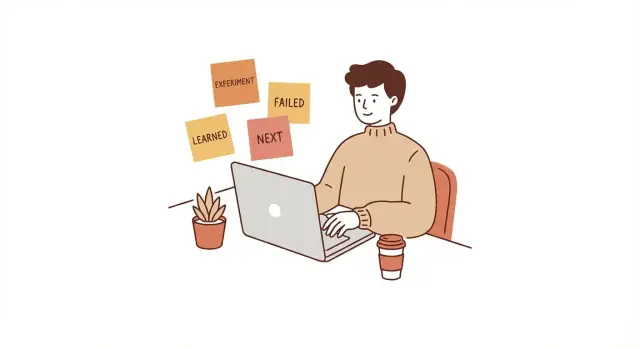
Start With Your Purpose and Boundaries
Before you pick a theme or write your first post, decide what this site is for. A founder website that shares experiments and failures works best when it has a clear intent—and clear limits.
Define your purpose (so readers understand the “why”)
Your purpose is the filter for what you publish and how you write. Common, founder-friendly reasons include:
- Accountability: you’re more likely to ship and measure when you know you’ll report back.
- Hiring: showing how you think attracts people who like your style of decision-making.
- Customers and peers: sharing lessons can build credibility and start conversations.
- A learning archive: your posts become your searchable memory of what you tried and what happened.
Write your purpose in one sentence. Example: “I publish experiments to document my learning and make it easier for customers and future teammates to see how I work.”
Decide what counts as an “experiment”
If “experiment” is too narrow, you’ll run out of material. If it’s too broad, the site becomes a random diary. A useful definition can include:
- Product: onboarding changes, pricing tests, feature removals, support workflows.
- Marketing: landing pages, positioning tweaks, channel trials, cold outreach scripts.
- Operations: meeting changes, tooling swaps, documentation, delegation attempts.
- Habits: founder routines that affect execution (planning, deep work, retrospectives).
The key is that an experiment has a hypothesis, a change you made, and an outcome—good or bad.
Choose a cadence you can actually sustain
Consistency beats intensity. Pick a rhythm that survives busy weeks:
- Weekly if you already write often and your experiments are small.
- Biweekly for most founders balancing building and reporting.
- Monthly if experiments take longer or you want more thoughtful postmortems.
You can also commit to a minimum: “One post per month, plus short notes when something breaks.”
Set boundaries upfront
Decide what you will not share, and stick to it. Typical boundaries include legal constraints, private financial details, sensitive team situations, customer information, and anything involving partners where you don’t have explicit permission.
A simple rule: if a detail could harm someone, violate trust, or create legal risk, summarize it at a higher level.
Define what success looks like
Success doesn’t have to mean traffic. Pick one or two signals that match your purpose: thoughtful replies, inbound opportunities, clearer thinking, a portfolio of startup lessons learned, or a reliable record of failure postmortems and wins. With that definition in place, the site becomes easier to maintain—and easier to be proud of.
Choose Your Audience and Point of View
A founder site gets easier (and more valuable) when you stop writing “to everyone” and choose one primary audience. Your experiments and failures can help lots of people, but clarity beats coverage.
Pick a primary audience
Choose the one group you most want to serve right now:
- Peers (other founders/operators)
- Potential users (people deciding whether to try your product)
- Employers (if you’re building career credibility)
- Investors (people evaluating your thinking and execution)
- Future you (a personal research log you’ll mine later)
You can still welcome others, but your default reader should be obvious.
List 3–5 questions they want answered
Write these down and keep them near your editor. Examples:
- What problem were you trying to solve, and why did it matter?
- What did you try, and what did it cost (time, money, attention)?
- What changed your mind—what evidence actually moved you?
- What failed, and what would you do differently next time?
- What should someone copy (or avoid) if they repeat the experiment?
Define your “voice rules”
Your point of view is mostly consistency. A simple set of voice rules keeps posts useful:
- Honest and specific (name constraints, tradeoffs, and uncertainties).
- No hype (avoid victory laps; describe results plainly).
- Show receipts when possible (numbers, screenshots, decision notes).
- Give credit (people, tools, and prior work that influenced you).
Create a simple positioning line for the homepage
One sentence that tells readers what to expect:
“I run small, time-boxed startup experiments and publish what worked, what failed, and what I learned—without the gloss.”
Decide on a default level of detail
Pick a baseline so you don’t renegotiate every post: will you include numbers, screenshots, and timelines by default? A practical rule: share enough detail that a reader could reproduce the experiment, while keeping sensitive info private (you can redact or round figures and still be credible).
Map the Site Structure (Simple, Founder-Friendly)
A founder site works best when visitors can understand what you do—and find your experiments—within a few seconds. Aim for a small set of “forever” pages, and treat everything else as optional.
Core pages (the minimum that works)
Home: A short explanation of what you’re building and why you publish experiments and failures. Put a prominent entry point to your latest experiments and a quick way to subscribe or follow along.
About: Your credibility, values, and context. Keep it practical: what you’re working on, what you’ve learned, and what readers can expect from your writing.
Experiments: The main archive. This is the hub where people browse your posts, filter by category/tag, and open any experiment in one click.
Now: A “current focus” page. This prevents your Home and About from becoming outdated, and it gives repeat visitors a reason to return.
Contact: A clear, low-friction way to reach you (email or a simple form) plus guidance on what you welcome (introductions, partnerships, press, speaking).
Optional pages (add only if you’ll use them)
If they support your goals, consider: Speaking, Press, Uses (tools/workflow), Projects (active and past), Newsletter (a dedicated landing page). Optional pages should never bury your experiments; they’re supporting actors.
Navigation: keep experiments one click away
Use a top navigation that is short and predictable. A good default is:
Home · Experiments · About · Now · Contact
If you add an optional page, make it earn its spot. If your menu wraps to two lines on mobile, it’s too long.
Calls to action (CTAs) that don’t feel pushy
Choose one primary CTA and repeat it consistently: Subscribe or Follow the journey. Then add a secondary CTA for people with intent: Contact. Place CTAs on the Home page and at the end of experiment posts.
Mobile readability is part of the structure
Structure isn’t just menus—it’s how easily someone can scan on a phone. Keep page titles obvious, use short sections, and make sure buttons and text aren’t cramped. If your Experiments page is hard to browse on mobile, your best work might never get read.
Design a Homepage That Sets Expectations
Your homepage isn’t the place to explain everything you’ve ever done. It’s a promise: what visitors will get here, how often, and what kind of honesty you practice. When that promise is clear, the right people stick around—and the wrong people self-select out (which is a gift).
Start with a simple “who/what” statement
In the first screen, write two short lines:
- Who this is for: founders, operators, builders, or curious learners.
- What you publish: experiment notes, failure postmortems, and what you’ll try next.
Keep it specific enough that someone can say, “Yes, that’s me.” Avoid buzzwords. Plain language builds confidence.
Add social proof carefully (only what’s true)
A founder homepage benefits from credibility, but it should match the tone of public learning. Use a small “Previously” strip with 2–4 items, such as:
- Past companies or products you worked on.
- A talk you gave (title + event name).
- Open-source projects or writing you’ve shipped.
The rule: proof, not hype. If you’re early, it’s okay to be light here.
Show what you’re testing right now
Add a compact “Current Experiments” block. This turns your site from “personal bio” into “working lab.” Keep it simple:
- Experiment name.
- What you’re trying to learn.
- A rough time window (e.g., “2-week test”).
This gives returning visitors a reason to come back even between big posts.
Highlight your best three posts (or placeholders)
Pick three featured slots: one failure, one lesson learned, and one experiment template example. If you haven’t published yet, use placeholders like “Coming next: Why my onboarding test failed” so the site still signals direction.
One clear call to action above the fold
Choose a single CTA: newsletter or email updates. Say what people will receive (“one note per week: what I tested, what broke, and what changed”). Make it easy to join without hunting through menus.
A good homepage sets expectations, reduces confusion, and earns permission to be imperfect in public.
Create an About Page That Builds Trust
Your About page isn’t a resume. It’s a credibility shortcut: a clear explanation of who’s running the experiments, what “winning” looks like, and how you’ll behave when things get messy.
Write a simple timeline (past → present → next)
Give readers quick orientation in three beats:
- Where you started: one or two sentences about the background that’s relevant to the experiments (industry, role, or the problem you’ve lived with).
- What you’re building now: the current product, company, or project—described in plain language.
- What you’re learning: the questions you’re actively testing (pricing, distribution, onboarding, retention, habits, etc.).
This format helps people understand your context before they judge your results.
Share your constraints and values
Trust grows when readers know your boundaries. Add a short “Operating rules” paragraph covering:
- Time and pace: how often you run experiments and publish updates.
- Budget reality: whether you’re bootstrapped, funded, or keeping spend intentionally low.
- Ethics and privacy: what you will not do (for example, dark patterns, naming customers, sharing sensitive numbers).
Constraints make your posts easier to interpret—and make your decisions feel grounded, not performative.
Add a photo + one trust-building personal detail
Include a clear photo so readers feel they’re following a real person.
Then add one personal detail that signals steadiness and accountability (not oversharing). Examples: where you’re based, a long-term hobby that shows patience, or a brief note on why you care about the problem.
Answer: “Why should I follow your experiments?”
Be explicit about the benefit. For example: you share readable postmortems, repeatable templates, and honest numbers when possible—so others can avoid your mistakes or copy what works.
Finally, make it easy to keep up: mention a /now page for your current focus and a /contact page for feedback, introductions, and corrections.
Use a Clear Template for Experiment Posts
A repeatable post format makes it easier to publish consistently—and easier for readers to learn from you. Instead of reinventing your structure each time, use one template that works for both wins and failures.
Start with a skimmable summary
Open with 3–5 lines that answer: What did you try, what happened, and what’s changing next? Many people will only read this section, so make it complete on its own.
The core template (copy/paste)
Use the same sequence in every experiment post:
- Goal: What outcome were you aiming for?
- Hypothesis: What did you believe would happen, and why?
- Setup: What you changed, where, and for whom.
- Time & cost: How long it took and what it cost (money, effort, tools, ads, engineering time).
- Results: What happened, with numbers.
- What failed: Where the approach broke down (assumptions, execution, timing, channel, messaging).
- Lessons: What you learned that you’ll reuse.
- Next: The follow-up experiment or decision.
Share numbers, but add context
Metrics are only useful when readers can judge how “real” they are. When you include results, add quick context like:
- sample size (e.g., 312 visitors, 18 signups)
- time window (e.g., 7 days vs. 1 quarter)
- confidence level (e.g., “directional, small sample” or “consistent across 3 weeks”)
This keeps you honest and prevents readers from overgeneralizing.
End with a question
Close with one specific question that invites feedback: “If you’ve tested onboarding emails, what subject lines performed best?” or “What would you try next to reduce churn in week one?” This turns posts into conversations—and often into better next experiments.
Organize Experiments With Categories and Tags
If you want people (and future-you) to learn from your experiments, they need a predictable way to browse. Categories answer “what kind of work is this?” Tags answer “what’s it about, specifically?” Together, they prevent your site from turning into an endless scroll of unrelated posts.
Start with a small, stable set of categories
Use categories as your top-level buckets. Keep them few, clear, and mutually exclusive.
A founder-friendly starting set:
- Marketing
- Product
- Sales
- Operations
- Personal Systems
When an experiment fits two categories, pick the one where a reader would most expect to find it. Consistency beats perfection.
Use tags for tools, channels, and themes
Tags should capture the “ingredients” of the experiment—things you might want to cross-reference later.
Good tag types:
- Tools (e.g., “Webflow,” “Notion,” “GA4”)
- Channels (e.g., “cold email,” “SEO,” “Twitter”)
- Themes (e.g., “onboarding,” “pricing,” “retention”)
Aim for 3–6 tags per post. If you add 12 tags, you’re no longer organizing—you’re annotating.
Build an archive that encourages exploration
Create an Archive page that lets readers filter by category and tag, so they can answer questions like “show me all pricing experiments” without searching.
Add a small “Best of” list at the top (5–10 posts) for people who want the highlights. This also helps new visitors understand your thinking style quickly.
Support multi-part work with series pages
For longer efforts, create series pages (e.g., “30 Days of Cold Email”) that collect every part, show the timeline, and summarize what changed from one iteration to the next.
Make titles do more work
Set a rule for post titles: include the outcome or metric when possible.
Examples:
- “Cold Email v2: Reply Rate Went from 1.2% to 3.8% (What Changed)”
- “Pricing Page Rewrite: More Demos, Smaller Deals”
Clear labels help readers self-select—and they keep your archive useful as it grows.
Add Metrics Without Turning the Site Into a Dashboard
You want feedback loops, not a wall of charts. The goal of adding metrics to a founder website is to learn what resonates and what drives meaningful conversations—without turning every post into a performance report.
Keep analytics lightweight—and look for trends
Use a simple analytics setup and pay attention to direction over time, not one-day spikes. A post that quietly drives a steady trickle of replies for three weeks is usually more valuable than a post that goes mini-viral and disappears.
If you find yourself checking numbers daily, you’re probably optimizing for feelings, not learning.
Track a small set of outcomes that matter
Pick a few goals that match why the site exists. Good “founder-friendly” metrics include:
- Newsletter signups (or waitlist joins)
- Direct replies (email responses, contact form notes)
- Demo requests (if you’re selling something)
- Job leads or partnership inquiries (if that’s part of your intent)
Everything else is supporting context. Pageviews are fine, but they don’t tell you whether people trust you.
Use UTM links to understand sources
When you share an experiment post on different channels, add UTM parameters so you can tell where attention is actually coming from. Keep it simple and consistent (same naming conventions each time), and treat it as a way to learn distribution—not to “game” attribution.
Put detailed metrics in a private log
Instead of cluttering posts with numbers, keep a private “metrics log” page or document. For each experiment, jot down:
- Where you shared it (with UTMs)
- What happened (signups, replies, requests)
- What surprised you
- What you’d do differently next time
Your public post stays readable; your private log stays honest and specific.
Review monthly and choose 1–2 tests
Once a month, review your trends and pick one or two changes to test next—maybe a clearer call-to-action on posts, a different homepage headline, or a simpler signup flow. The habit matters more than the perfect metric.
Handle Privacy, Ethics, and Sensitive Details
Sharing experiments and failures is valuable, but it can also expose people who didn’t sign up to be part of your story. A simple ethics layer protects your relationships, your readers, and your future self.
Write a short disclosure policy
Add a small “Disclosure” note (footer or a dedicated page) that states, in plain language:
- Whether you use sponsorships, affiliate links, or paid partnerships (and how you decide what to promote)
- Whether any post is written with input from a partner, investor, or employer
- A reminder that opinions are yours, and that results reflect your context
Keep it brief and consistent. The goal is clarity, not legal theater.
Set anonymization rules before you publish
Decide your defaults and follow them every time:
- Don’t include customer data, screenshots of dashboards, invoices, or support tickets unless fully redacted
- Use ranges instead of exact numbers when precision could reveal a client or contract (e.g., “mid five figures,” “single-digit churn”)
- Merge details across multiple situations so one person can’t be identified
- Get explicit permission before quoting teammates, advisors, or customers—even if the quote is positive
Avoid naming when it could harm someone
If naming a person or company could damage their reputation, hiring prospects, or commercial position, don’t do it. Focus on the decision, the constraint, and the lesson. You can still be honest without being specific.
Add a corrections note
Include a short “Corrections” line: what you’ll fix (factual errors, misquotes), what you won’t (changing history), and how readers can report an issue (a simple email address is enough).
Include a simple privacy note (especially for email)
If you collect emails, say what you collect, why, where it’s stored, and how to unsubscribe. Promise not to sell addresses—and mean it.
Choose Tools and Design That Won’t Slow You Down
The best toolset is the one you’ll still use when you’re tired, busy, or a little embarrassed about the results. Optimize for consistency and low maintenance—not endless tweaking.
Pick a stack you can actually maintain
You have three practical options:
- Hosted site builder (lowest effort): great if you want publishing to feel like writing a document.
- CMS (flexible): good when you want drafts, scheduling, and a simple editor for future collaborators.
- Static site generator (fast and durable): ideal if you’re comfortable with lightweight workflows and want maximum speed.
Whichever you choose, set a “no-fiddling” rule: if a change doesn’t improve clarity for readers, don’t do it.
If you’re also building product alongside your writing, consider tooling that reduces “setup tax.” For example, Koder.ai lets you vibe-code web apps through a chat interface (React on the front end, Go + PostgreSQL on the back end) and supports deployment, hosting, custom domains, snapshots, and rollback. That can be helpful if your founder site includes interactive elements like an experiment archive, tagging, or a lightweight newsletter signup flow—and you’d rather iterate fast than maintain a traditional pipeline.
Design for reading, not decorating
Your site is basically a reading environment. Prioritize:
- Fast loading (keep pages light; avoid heavy animations and giant libraries)
- Clean typography (one or two fonts, comfortable line height, generous spacing)
- Accessibility basics (good color contrast, readable font size, descriptive headings)
A simple, consistent layout will make your experiments feel more credible than a flashy theme.
Make publishing repeatable (URLs + templates)
Decide your URL pattern once and stick to it. A consistent structure makes your archive easier to browse and share. For example:
/experiments/slug/failures/slug
Then set up a basic post template in your tool (or as a saved draft): opening context, what you tried, what happened, what you learned, what you’d do next.
Newsletter capture without breaking trust
If you add a newsletter, keep it minimal: one field, clear expectation (“monthly notes” vs. “weekly”), and a double-check on the confirmation flow. Test it end-to-end so you know:
- the confirmation email arrives quickly
- the subject line is obvious
- the “confirm” click lands on a friendly page
Prepare a tiny style guide (so you don’t rethink everything)
Create a one-page style guide you can follow on autopilot: headings, callouts, how you present numbers, and what screenshots or charts should look like. The goal isn’t perfection—it’s reducing decision fatigue so you keep shipping honest updates.
Launch, Promote, and Keep the Habit Alive
Launching your founder site doesn’t require a “big reveal.” The goal is to ship a simple version, then build momentum through a repeatable routine. Treat publishing like an experiment: small scope, clear next step, steady cadence.
A lightweight publishing checklist
Create a checklist you can run in 30–45 minutes so you don’t rely on motivation:
- Draft → edit (tighten the story, keep the lesson explicit)
- Add internal links (2 older related experiments) and any sources you referenced
- Add visuals (one screenshot, chart, or simple diagram) only if it clarifies the learning
- Publish (title, date, category/tag, short summary at the top)
Keep the checklist in the same place you write—so “publish” is the default outcome.
Build an experiment backlog (so you never start from zero)
Maintain a running backlog of post ideas. Each entry should be just:
- A working title
- A one-line hypothesis (what you believed would happen)
Whenever you finish a meeting, ship a feature, lose a deal, or change pricing, add one line to the backlog. You’re capturing future material, not writing a novel.
Promote without turning it into a second job
For every full post, repurpose into three smaller updates:
- A short recap (what you tried, what changed)
- A single lesson (one paragraph)
- A question to peers (invite counterexamples)
This keeps the site as the “source of truth,” while your updates simply point people back to the full write-up.
Invite responses (and make it easy)
Don’t ask for “thoughts.” Ask a specific prompt, such as: “What would you test next?” or “Where is my logic weakest?” Add a clear way to respond (a contact page or a visible email address).
Keep the habit alive
Set a realistic cadence (e.g., one experiment post every two weeks). Track streaks, not vanity metrics. The win is consistency—and a growing archive of lessons you can reuse in pitches, hiring, and decision-making.
FAQ
What should I decide before picking a theme or writing my first post?
Start with a one-sentence purpose and a few clear boundaries.
- Purpose example: “I publish experiments to document learning and show how I make decisions.”
- Boundaries example: no customer-identifiable data, no sensitive team details, no legal/financial specifics.
These two lines will guide your structure, tone, and what you choose to publish.
What counts as an “experiment” on a founder website?
Use a definition that’s broad enough to sustain, but structured enough to stay useful.
An experiment should include:
- a hypothesis (what you believed)
- a change you made (what you did)
- an outcome (what happened)
This works for product, marketing, ops, and even founder habits—without turning into a random diary.
How often should I publish experiment posts?
Pick the cadence that survives your busiest weeks.
- Weekly: if experiments are small and you already write often
- Biweekly: a good default for most founders
- Monthly: if tests take longer or you prefer deeper postmortems
You can also set a minimum: “one post per month + short notes when something breaks.”
How do I share failures without creating privacy or legal problems?
Set your “won’t share” rules upfront and default to summarizing sensitive details.
Practical boundaries to consider:
- customer info (even “anonymous” screenshots can leak identity)
- sensitive team situations
- private financial or contract details
- anything involving partners without explicit permission
If a detail could harm someone, violate trust, or create legal risk, raise the level of abstraction.
Who should I write for if my site could help multiple groups?
Choose one primary audience so your posts are easier to write and more valuable to read.
Common primary audiences:
- peers (founders/operators)
- potential users
- employers
- investors
- future you (research log)
Then keep 3–5 audience questions near your editor (e.g., “What did you try?” “What changed your mind?”).
What pages should a founder website include?
A simple, practical set of pages is enough.
Minimum “forever” pages:
- Home
- Experiments (archive hub)
- About
- Now (current focus)
- Contact
Keep navigation short (e.g., Home · Experiments · About · Now · Contact) and make sure experiments are always one click away.
What should my homepage say to set expectations quickly?
Treat the homepage like a promise, not a biography.
Include:
- who it’s for + what you publish (in the first screen)
- a small “Current Experiments” block (what you’re testing now)
- 3 featured posts (or “coming next” placeholders)
- one clear CTA above the fold (subscribe or email updates)
The goal is fast clarity: the right readers stay; the wrong readers self-select out.
What’s a good template for experiment and failure posts?
Use a repeatable structure so publishing stays easy and readers can compare experiments.
A solid template:
- Goal
- Hypothesis
- Setup
- Time & cost
- Results (with numbers)
- What failed
- Lessons
- Next
Start with a 3–5 line summary and end with one specific question to invite feedback.
How should I organize experiments with categories and tags?
Use a small set of stable categories and lightweight tags.
- Categories answer: “what kind of work is this?” (e.g., Marketing, Product, Sales, Operations, Personal Systems)
- Tags answer: “what is it about specifically?” (tools, channels, themes)
Aim for 3–6 tags per post, and consider an archive page that filters by category/tag plus a small “Best of” list.
What metrics should I track without turning the site into a dashboard?
Track only the metrics tied to your purpose, and review trends—not daily spikes.
Founder-friendly outcomes:
- direct replies (email/contact)
- newsletter signups
- demo requests
- job leads or partnership inquiries
Use UTMs to understand sources, keep detailed metrics in a private log, and do a monthly review to pick 1–2 improvements (CTA, homepage headline, signup flow).