

How to Build a Personal Finance & Expense Tracker App
Step-by-step plan to build a mobile personal finance app: MVP features, UX, data model, bank imports, security, testing, and launch strategy.
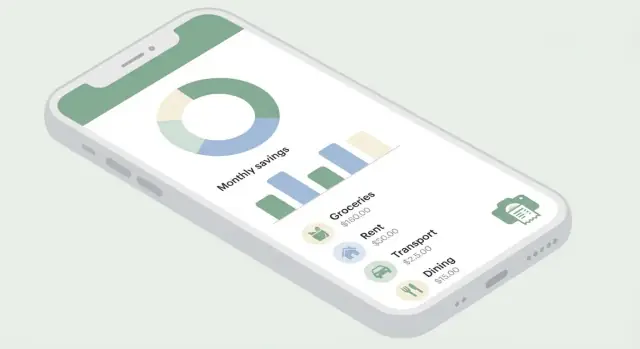
Define Your Audience and App Goals
Before you sketch screens or pick a tech stack, decide who you’re building for and what “success” looks like. Personal finance apps often fail by trying to satisfy everyone with the same workflow.
Pick a target user you can describe in one sentence
Choose one primary audience and write a simple profile. For example:
- Students: irregular income, need spending limits and reminders
- Freelancers: variable cash flow, want category insights and tax-friendly exports
- Families: shared budgets, recurring bills, multiple devices
- Couples: transparency and shared goals without oversharing every detail
A clear audience keeps your expense tracker app focused and makes later decisions (like bank sync or shared wallets) much easier.
Define the app’s main promise
Your app should make one core promise that users can repeat back to you. Common “north stars” in personal finance app development include:
- “Log expenses in under 10 seconds.”
- “Stay within budget categories each month.”
- “Hit savings goals with weekly guidance.”
If you can’t express it simply, your MVP personal finance app scope will likely drift.
Decide success metrics you’ll actually track
Pick 2–4 metrics that match your promise and can be measured early:
- Weekly active users (WAU) and D7/D30 retention
- Logging consistency (e.g., % of days with at least one entry)
- Budget adherence (e.g., % of categories within limit)
- Time-to-value (how fast a new user records their first expense)
List constraints up front
Write down hard limits now: region and currency support, platform(s), team size, timeline, and whether compliance requirements apply. Constraints aren’t blockers—they’re guardrails that help you ship a simpler, more effective first version.
Choose MVP Scope and Feature Priorities
An expense tracker app can expand endlessly—subscriptions, investing, credit scores, bank sync, and more. Your MVP should prove one thing: people can log spending consistently and understand where their money went.
Define the MVP “core loop”
For a first release, keep the loop tight:
- Manual expense logging in under 10 seconds
- Simple categories (with the option to edit)
- Monthly summary that answers “Where did my money go?”
This scope is small enough to ship, but useful enough that early users can form a habit.
Must-haves vs. nice-to-haves
Use a simple rule: if a feature doesn’t support daily logging or monthly understanding, it’s probably not MVP.
Must-haves
- Add expense/income, date, amount, category
- Basic search/filter (at least by month and category)
- Monthly totals and category breakdown
Nice-to-haves (plan, don’t build yet)
- Goals (save for a trip, emergency fund)
- Subscription tracking
- Bill reminders
You can still design with these in mind (e.g., data fields and navigation), without building full flows.
Onboarding: quick start vs. guided setup
Onboarding is where many finance apps lose users. Consider two modes:
- Quick start: choose currency + a few categories, then land directly on “Add expense.”
- Guided setup: optional steps like setting a monthly budget or adding custom categories.
A strong compromise is quick start by default, with a “Set up budgets” prompt later.
Admin and support needs (often forgotten)
Even an MVP needs a minimal support path:
- In-app feedback and bug reporting (include app version and device info)
- A lightweight admin view (or internal dashboard) to review issues and feature requests
This keeps iteration focused and helps you prioritize the next release based on real usage—not guesses.
Design the Data Model for Money Tracking
A clean data model is what makes budgeting, reports, and syncing reliable later. Start with a few core entities and make them flexible enough for real-life edge cases (refunds, split purchases, multiple currencies).
Transactions: the source of truth
Model transactions as immutable records whenever possible. Typical fields:
- Amount (signed: negative for expense, positive for income)
- Date/time (store in UTC + original time zone)
- Category (required) and optional subcategory
- Tags (many-to-many) for flexible grouping (e.g., “work”, “kids”)
- Notes (free text)
- Attachments (receipt images or PDFs, stored as references)
- Merchant/payee, payment method, and optional location
Plan for split transactions (one purchase across multiple categories) and transfers (between accounts) as first-class cases.
Accounts: balances vs. transaction totals
Support common account types: cash, card, checking, savings. Decide how balances work:
- Transaction-based totals: compute balance from transaction history (most accurate, slower to query).
- Stored balance snapshots: store current balance + reconcile with transactions (faster, needs careful updates).
Many apps combine both: keep a derived “current balance” per account and periodically verify it from transactions.
Budgets: rules that match how people plan
Budgets usually need:
- Period rules (monthly, weekly, custom start day)
- Rollover behavior (carry leftover forward, or reset)
- Shared budgets (multiple users, shared categories, per-user limits)
Store budget “envelopes” linked to categories/tags and a period definition so historical budget performance is reproducible.
Currency and time zones
If you support multi-currency, store:
- Transaction currency + amount
- Base currency amount (converted) + exchange rate used
- Rate timestamp/source for auditability
Always keep the user’s time zone for display and reporting boundaries (e.g., month-end differs by locale).
Create a Simple UX for Daily Expense Logging
A great expense tracker app succeeds when logging takes seconds, not willpower. Your UX should make “capture now, understand later” feel effortless—especially when someone is tired, busy, or on the move.
Home dashboard: only what matters at a glance
Treat the home screen like a quick check-in, not a report.
Show 3–5 essentials: today/this month spend, remaining budget, and one or two alerts (e.g., “Dining out is 80% of budget”). Keep labels explicit (“Spent this month”), and avoid clever but confusing visualizations.
If you include charts, make them accessible: high contrast, clear legends, and numbers visible without tapping. A simple bar chart often beats a dense donut.
Fast expense entry that works one-handed
Daily logging is the core of your personal finance app development effort, so optimize the add-expense flow aggressively:
- Put a prominent “+ Expense” action within thumb reach.
- Use smart defaults: last used account, today’s date, and a probable category.
- Offer “Recent” and “Favorites” categories so people don’t hunt.
- Support quick amount entry and optional notes (don’t force a description).
Consider an “add another” mode for entering multiple receipts, and a lightweight confirmation so mistakes don’t feel scary.
Keep categories simple (and forgiving)
Category management should not turn into a setup project. Start with a small, sensible set and allow edits later.
Avoid long multi-step category creation. If a user types “coffee,” let them save it as-is, then later merge it into “Dining” or rename it. This keeps budgeting app features approachable without overwhelming people.
Reduce anxiety with friendly feedback
Money apps can trigger stress. Use calm microcopy, clear errors (“Bank connection timed out—try again”), and easy undo for edits and deletions.
When warning about overspending, keep it supportive: “You’re close to your limit—want to adjust your budget or keep tracking?” This tone builds trust and improves retention for any expense tracker app.
Add Features that Reduce Manual Work
Once you’ve nailed fast, reliable manual logging, the next step is adding time-savers that reduce taps and prevent repetitive work—without making the experience feel complicated.
Receipt capture (attach a photo, OCR, and easy corrections)
Start simple: let users attach one or more receipt photos to a transaction. Even without perfect OCR, photos add trust and make later reconciliation easier.
If you add basic OCR, design for reality: totals and dates are easier than line items. Show extracted fields (merchant, date, total, tax, tip) and a clear “tap to edit” flow. The goal isn’t flawless scanning—it’s making correction faster than retyping.
A practical pattern is a review screen:
- Highlight uncertain fields (low confidence)
- Allow quick merchant selection from history
- Let users save the receipt to the transaction even if OCR fails
Rules and automation (auto-categorize with control)
Auto-categorization is one of the highest-impact features in an expense tracker app. Keep it understandable: “When merchant contains ‘Uber’ → Category: Transport.”
Support a couple of rule types to start:
- By merchant name
- By keywords in notes
Always show what happened and why. For example, display a small label like “Auto-categorized by rule: ‘Starbucks’ → Coffee.” Give users a one-tap way to fix the category and optionally update the rule so it learns.
Recurring items (subscriptions, bills, reminders)
Recurring expenses are predictable, which makes them perfect for automation. Detect patterns (same merchant + similar amount + monthly cadence) and suggest: “Looks recurring—create a subscription?”
When users set up recurring items, include real-life controls:
- Skip this occurrence (vacation month, paused membership)
- Duplicate (same bill paid twice)
- Edit just this one vs. edit the whole series
Pair recurrence with gentle reminders for upcoming bills so users feel supported, not nagged.
Splits (across categories and people)
Splitting is essential for mixed purchases (groceries + household) and shared costs (roommates, trips). Keep the split UI lightweight:
- Split by amount or percentage
- Ensure totals always add up (show remaining balance)
- Save common splits as templates (e.g., “50/50 with Alex”)
If you support “people” splits, you don’t need full debt tracking on day one—just record who paid and who owes for later export.
Search and filters that actually help
As data grows, search becomes the main navigation tool. Prioritize filters people use most:
- Merchant, category, date range, amount
Add quick chips for common ranges (This month, Last month) and keep results fast. A good search experience often matters more than adding another chart.
Plan Bank Sync and Data Import (Optional)
Bank connectivity can make an expense tracker app feel “automatic,” but it also adds complexity, cost, and support burden. Treat it as an optional module: start with imports, prove the core experience, then add live connections when you’re ready.
Start with CSV import (high impact, low risk)
A practical first step is letting users import transactions from their bank or card as a CSV file. It’s widely available, avoids storing banking credentials, and works even in regions where open banking is limited.
When you build CSV import, focus on a clear mapping flow:
- Let users pick which columns represent date, description, amount, and currency.
- Support common date formats and decimal separators.
- Preview the first 10–20 rows before importing.
Plan live bank connections via aggregators
If you later add bank sync, most apps use an aggregator (for example, open banking providers or data aggregators). Availability, supported banks, and data quality depend heavily on region, so design your product to degrade gracefully.
Key product decisions to make early:
- Which countries/banks you’ll support first
- Whether you’ll sync accounts, cards, or both
- How often you will refresh data (and what triggers refresh)
Handle real-world transaction messiness
Imported and synced feeds are rarely clean. Your data model and logic should account for:
- Duplicates (re-imports, overlapping date ranges, aggregator retries)
- Pending transactions that later post with a different ID or amount
- Reversed charges/refunds that look like separate transactions
A common approach is to generate a “fingerprint” (date ± tolerance, amount, normalized merchant) and keep an internal transaction status (pending/posted/reversed) so the UI stays consistent.
Set expectations: freshness and limitations
Be explicit in the UI about what users can expect:
- Last successful sync time
- Whether pending transactions are included
- Known limitations (missing merchants, delayed postings, partial history)
This prevents support tickets and builds trust—especially when totals don’t match a bank statement yet.
Always provide a manual fallback
Even the best integrations fail: bank maintenance, MFA challenges, revoked consent, or aggregator outages. Keep manual entry and CSV import available as a fallback, and provide a simple “Fix connection” path that doesn’t block the rest of the app.
Build Security and Privacy In from Day One
Security and privacy aren’t “later” features for an expense tracker app—they shape what you build, what you store, and how much trust users place in you. Start with a few high-impact decisions that reduce risk without adding a lot of complexity.
Authentication that fits everyday use
Many people open a personal finance app in public spaces, so quick protection matters. Offer lightweight options such as:
- App passcode (separate from the phone unlock)
- Biometrics (Face ID/Touch ID / Android biometrics)
- Device-based sessions with short inactivity timeouts
A practical approach is: default to device-based sessions, then let users opt into a passcode/biometric lock for the app.
Encrypt data at rest and in transit
Use TLS for all network traffic, and encrypt sensitive data stored on the device and in your backend database. Keep encryption keys out of source code and out of plain config files—use platform key stores (iOS Keychain / Android Keystore) and managed secret storage on the server.
If you log events for debugging, treat logs as sensitive: never write full account numbers, tokens, or merchant details to logs.
Store the minimum you need
Apply the “minimum data” principle: only collect what the app truly needs to track expenses and provide insights. For example, you might not need precise GPS location, contact lists, or raw bank credentials. The less you store, the less you can leak.
Make privacy understandable in the UX
Add clear consent screens (especially for optional features like bank sync or receipt scanning), and provide simple controls:
- Export your data (CSV/JSON) from settings
- Delete your account and data in-app
Link to your privacy policy with a relative URL like /privacy.
Cover common threats early
Plan for basics like screen scraping (hide sensitive screens in the app switcher), device backups (ensure encrypted storage stays encrypted), and log leaks (sanitize analytics and crash reports). These small safeguards prevent many real-world incidents.
Pick the Tech Stack and App Architecture
Your tech choices should match the reality of your team and the promises you want to make to users (speed, privacy, offline reliability).
Cross‑platform vs. native
If your team is small or you need iOS and Android quickly, a cross‑platform stack (Flutter or React Native) can cut development time while still delivering a polished UI.
Go native (Swift/Kotlin) if you expect heavy OS integration (widgets, advanced background work), you need maximum performance, or your team already specializes in one platform.
Decide what “backend” means for your app
Expense tracker apps can be built in three common modes:
- Local‑only: everything stays on-device. Fast, private, simpler to maintain.
- Sync backend: a lightweight server stores encrypted user data so devices stay in sync.
- Full cloud: includes server-side analytics, shared budgets, family accounts, or web access.
Pick the simplest option that still supports your roadmap. You can start local‑only and add sync later, but plan your data model so it can be synced without painful migrations.
If you want to validate product flows quickly before investing in a full engineering pipeline, a vibe-coding platform like Koder.ai can help you prototype a personal finance app end-to-end via chat (UI + backend + database), then iterate on onboarding, logging speed, and reporting screens with less overhead.
Architecture: keep money math separate from screens
A clean architecture pays off quickly in finance apps. Keep a clear domain layer for calculations (balances, category totals, budget rules, recurring transactions) that doesn’t depend on UI code.
Organize code into modules (e.g., Transactions, Budgets, Accounts, Import) so features can evolve without breaking everything else.
Storage choices (device + server)
On-device databases like SQLite (or wrappers such as Room/GRDB) work well for offline-first tracking. If you add sync, choose a server database that matches your query needs and scaling expectations, and keep identifiers stable across devices.
Notifications and background tasks
If you plan reminders (“log today’s expenses”) or recurring transaction checks, design background work early. Mobile OS rules are strict, and aggressive scheduling can drain battery. Keep tasks small, respect user settings, and test on real devices before launch.
Handle Offline Mode, Sync, and Notifications
Offline support is a trust feature: people log expenses in a subway, on a flight, or when data is spotty. If the app “forgets” or blocks entry, users churn fast.
Define offline-first behavior
Be explicit about what must work without internet. At minimum, allow users to add/edit expenses, categorize, attach notes/receipts (queued), and view recent totals. Make the UI clearly show sync status (e.g., “Saved on device” vs “Synced”) and keep the app usable even if sync fails.
A practical rule: write to a local database first, then sync in the background when connectivity returns.
Sync rules and conflict handling
Conflicts happen when the same transaction is edited on two devices. Decide your policy early:
- Last-write wins: simplest. Use timestamps and overwrite. Works for single-user apps, but can surprise users.
- Merge rules: safer for key fields. For example, keep the newest amount, but merge tags/notes, and never delete without a recovery option.
When a conflict can’t be safely resolved, show a small “Review changes” screen instead of silently picking a winner.
Backups and restore expectations
Users assume finance data is permanent. Offer at least one of:
- Local export (CSV/JSON) for transparency and portability
- Cloud backup + restore tied to an account
Communicate retention (“We keep backups for 30 days”) and what happens on reinstall or phone change.
Notifications that help, not annoy
Keep notifications timely and configurable:
- Budget alerts (e.g., 80% and 100% of category budget)
- Bill reminders (scheduled, with “mark as paid” action)
- Weekly summaries (opt-in digest)
Let users control frequency, quiet hours, and which alerts they receive—especially for shared devices.
Build Budgeting, Insights, and Goal Tracking
Budgeting and insights are where an expense tracker app turns raw entries into decisions. The key is to keep reports clear, calculations explainable, and customization easy—so users trust what they see and actually act on it.
Reports people understand at a glance
Start with a small set of high-signal views:
- Spending by category (this month, last month, and average)
- Month-over-month change with plain labels like “Up $42 (+8%)”
- A simple cashflow summary: income, spending, net
Keep charts readable, but always include exact numbers and totals. If a number looks surprising, users should be able to tap through to the transactions that created it.
Make calculations transparent
Budget confusion is a common reason people abandon finance apps. Add short, inline explanations such as:
- What counts toward a budget (e.g., transfers excluded by default)
- When spending is counted (transaction date vs. posted date)
- How refunds, reimbursements, and split transactions affect totals
A small “How we calculate this” link in each report builds trust without cluttering the UI.
Goal tracking that stays motivating
Offer goal templates (emergency fund, debt payoff, vacation savings) plus custom goals. Show:
- Current balance/progress
- Required pace (e.g., “$25/week to hit June 1”)
- A gentle forecast (“On track / behind / ahead”) based on recent behavior
Behavior cues without guilt
Use prompts sparingly: reminders to log, nudges when a category is nearly exceeded, and check-in summaries. If you use streaks, keep them optional and only when they clearly reinforce the habit.
Customization that feels personal
Let users customize categories, budget periods (weekly, biweekly, monthly), and report views (hide categories, reorder, switch chart types). These small controls make the app feel built for their life, not yours.
Testing, Performance, and Compliance Checklist
A personal finance app fails most often in the details: one incorrect total, a missing transaction, or a confusing privacy prompt. Treat QA as a product feature, not a final hurdle.
1) Test the “money math” thoroughly
Validate calculations with real-world edge cases, not just happy paths:
- Rounding and currency precision: confirm you never lose cents when splitting bills, applying percentages, or converting currencies.
- Time zones and day boundaries: a late-night purchase should not jump to “tomorrow” when a user travels.
- Month boundaries: budgets and summaries must reset correctly across months (including February and leap years).
- Refunds and reversals: ensure negative amounts, chargebacks, and edited transactions don’t double-count.
Create a small set of “golden” test accounts with known expected totals and run them after every release.
2) QA across devices and real constraints
Expense logging is often done on older phones with limited resources. Check:
- Small screens (e.g., compact phones) and accessibility settings (large text).
- Older OS versions you intend to support.
- Low storage and low memory conditions (does the app crash when the system is under pressure?).
3) Performance checks that match real usage
Stress-test the screens that can grow indefinitely:
- Large transaction lists: scrolling, searching, filtering, and selecting categories should stay smooth.
- Chart rendering: don’t recompute everything on every scroll; cache aggregates and load heavy visuals lazily.
4) Compliance basics you shouldn’t skip
You don’t need to be a lawyer to get the basics right:
- Follow app store rules for subscriptions, data access, and account deletion.
- Provide clear privacy disclosures: what you collect, why, and how users can control it.
- Record consent where required (analytics, marketing emails, optional permissions), and allow users to change their mind.
5) Support plan before launch
Prepare a lightweight support system:
- A short FAQ and in-app help for common tasks (add/edit transactions, export, restore access).
- A feedback form with category + screenshot attachment.
- Clear response expectations (even if it’s “within 2 business days”).
Launch, Iterate, and Plan Monetization
A finance app doesn’t “ship” once—it improves in cycles. Treat your first public release as a learning tool, not a final product. The goal is to validate that people can onboard quickly, log expenses daily, and trust the data.
Soft launch with structured feedback
Start with a small, representative group (friends-of-friends, a waitlist segment, a niche community). Give them a clear test mission—e.g., “Track all spending for 7 days and set one budget.”
Collect feedback in a consistent format so you can compare responses. A short survey works well: what they expected, where they got stuck, what felt confusing, and what they’d pay for.
Measure retention and drop-off (especially onboarding)
Instrument the funnel so you can see where people leave:
- Install → account creation (or skip)
- First expense logged
- Second session within 48 hours
- “Aha” moment (e.g., budget created or insight viewed)
Pay extra attention to onboarding. If users don’t log an expense in the first session, they rarely return.
Iterate before you add
Plan releases around impact. Fix the top issues (crashes, confusing categories, missing edit/undo, slow entry) before building new features. Keep a lightweight roadmap that separates:
- Must-fix friction (blocking daily use)
- Nice-to-have enhancements
- Big bets (automation, advanced insights)
Monetization and pricing boundaries
Common models: freemium, subscription, or a one-time purchase. For personal finance, subscriptions work when you offer ongoing value (automation, advanced insights, multi-device sync).
Set a clear boundary: keep essential tracking usable in the free tier (log expenses, basic categories, simple totals). Monetize convenience and depth—premium reports, smart rules, exports, multi-currency, or family sharing. For a detailed breakdown, link to /pricing once you finalize tiers.
If you’re building in public, consider turning your development updates into a growth loop: teams using Koder.ai can ship faster and may also earn platform credits through its content program or referrals—useful if you’re testing monetization while keeping costs predictable during early iterations.
FAQ
How do I choose the right target audience for an expense tracker app?
Start with one primary user you can describe in a single sentence (e.g., “freelancers with variable income who need fast logging and tax-friendly exports”). Use that profile to decide defaults (categories, onboarding steps, reports) and to say “no” to features that don’t support their daily workflow.
What’s the best way to define the core promise and success metrics?
Write one “north star” promise users can repeat, such as:
- “Log expenses in under 10 seconds.”
- “Know where your money went every month.”
Then pick 2–4 measurable success metrics tied to that promise (e.g., time-to-first-expense, logging consistency, D7/D30 retention, budget adherence).
What should be in the MVP scope for a personal finance and expense tracker app?
A practical MVP core loop is:
- Manual expense logging (fast, one-handed)
- Simple categories (editable later)
- A monthly summary that answers “Where did my money go?”
If a feature doesn’t improve daily logging or monthly understanding, treat it as “later,” not MVP.
How should I design the data model for transactions, splits, and transfers?
Model transactions as the source of truth with fields like amount (signed), date/time (store UTC + original time zone), category, tags, notes, and optional attachments. Plan for real cases early:
- Split transactions (one purchase, multiple categories)
- Transfers (between accounts)
- Refunds/reversals (so totals don’t double-count)
Should my app store account balances or compute them from transactions?
Support core account types (cash, card, checking, savings) and choose how you represent balances:
- Compute balances from transaction history (accurate, can be slower)
- Store “current balance” snapshots (fast, needs careful updates)
Many apps do both: store a derived current balance and periodically verify it against transactions.
When should I add bank sync, and what’s a good first step?
Start with CSV import because it’s high impact and lower risk than live bank connections:
- Let users map columns (date, description, amount, currency)
- Preview rows before import
- Handle common formats (date and decimal separators)
Add live bank sync later via an aggregator once your core experience is proven and you’re ready for support burden and regional variability.
How do I handle duplicates, pending transactions, and reversals from imports or bank feeds?
Plan for messy feeds from day one:
- Detect duplicates (re-imports, retries)
- Represent pending vs. posted transactions
- Handle reversals/refunds without double-counting
A common approach is an internal status plus a “fingerprint” (normalized merchant + amount + date tolerance) to identify likely duplicates.
What UX patterns make daily expense logging fast enough to become a habit?
Optimize the add-expense flow:
- Put “+ Expense” within thumb reach
- Use smart defaults (last account, today’s date, likely category)
- Offer Recent/Favorites categories
- Make notes optional and provide undo
Design the home screen as a quick check-in (3–5 essentials) rather than a dense report.
What security and privacy features should an expense tracker MVP include?
Implement a few high-impact basics:
- App passcode and/or biometrics
- TLS in transit and encryption at rest
- Minimum-data collection (avoid storing what you don’t need)
- Data controls: export and in-app deletion
Make consent understandable in the UI, and link policies with relative URLs like /privacy.
How should I think about monetization for a personal finance app without harming retention?
Keep essentials free (logging, categories, simple totals) and charge for convenience and depth, such as:
- Automation (smart rules, recurring detection)
- Advanced reports/insights
- Multi-device sync and sharing
- Exports and multi-currency
Define pricing boundaries early and publish tiers at /pricing once finalized.