

David Baszucki and Roblox: How UGC Becomes Compounding
A clear breakdown of how Roblox, led by David Baszucki, compounds growth by turning creation tools, community, and UGC into a durable creator economy.
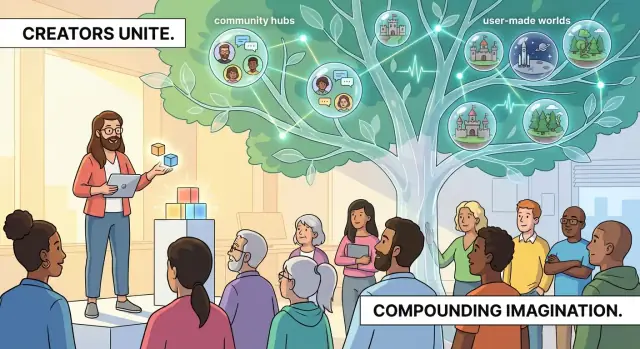
What This Post Explains About Roblox and Its Flywheel
David Baszucki is the co-founder and CEO of Roblox, a company that’s often described as a “game,” but is better understood as a platform where other people make the games (and the items, and the social spaces). That distinction matters because it changes the growth story: Roblox grows when creators can build easily, publish quickly, and earn enough to keep going.
What a “creator economy platform” means (in plain terms)
A creator economy platform is a product where users don’t just consume content—they produce it—and where the platform provides:
- Tools to create (software, templates, systems)
- Distribution (an audience, discovery, social sharing)
- Monetization (ways to earn, spend, and reinvest)
Roblox’s version includes developer tools (Roblox Studio), community-driven social play, and a virtual economy that lets UGC creators get paid.
The core idea this post will unpack
This post explains Roblox’s flywheel: better tools make creation easier, which increases the supply of UGC (experiences, worlds, items). More and better UGC gives players more reasons to show up, bringing in more community activity (friends, groups, word-of-mouth). That usage attracts more creators, who build more things, and the cycle compounds.
What this post is (and isn’t)
We’ll focus on the product and platform mechanics: incentives, network effects, discovery, and the operational cost of moderating UGC at scale.
We won’t provide investment advice, claim access to internal data, or share “secret metrics.” The goal is to make the flywheel understandable—and transferable—whether you’re building a creator tool, a marketplace, or a community-driven app.
Roblox Is a Platform, Not Just a Game
When people say “I play Roblox,” they often mean a specific experience they tried with friends. But Roblox isn’t one game with one set of rules. It’s closer to a store full of games, plus the tools and economy that let anyone build what’s on the shelves.
That distinction is a big part of David Baszucki’s bet: if you create the right platform, the best content doesn’t have to come from one studio. It can come from millions of creators, compounding over time.
A two-sided system: players and creators
Roblox works because it serves two groups at once:
- Players get endless variety: new games, new hangout spaces, new items to wear or use.
- Creators get a place to publish, reach an audience, and earn money.
More creators means more things to do. More players means more reasons to create. That feedback loop is the platform’s engine.
The different creator roles (and why they matter)
“Creator” on Roblox can mean several jobs:
- Studio creators (developers) use Roblox Studio to build interactive experiences.
- Experience publishers ship those experiences, update them, and run them like live products.
- UGC item makers design avatar items (like accessories) that people can buy, collect, and show off.
These roles reinforce each other. A popular experience can drive demand for avatar items. Great items can pull new players in and keep them engaged across many experiences.
Why the platform mindset scales
If Roblox were “just a game,” growth would depend on one team making the next hit. A platform scales differently: it grows by improving the tools, rules, and incentives so thousands of hits can emerge—and then stick around through updates, communities, and a shared virtual economy.
Tools First: Making Creation Easier Than Consumption
The first growth lever in a UGC platform isn’t marketing—it’s friction. If making something is hard, only a small, stubborn group will ship. Lower that barrier and you don’t just get “more creators”; you get more attempts, more variety, and a higher chance that a few creations break out and pull everyone else in.
Roblox’s flywheel starts with treating creation as the default behavior. Players shouldn’t need a computer science background to prototype an experience, publish it, and see what happens.
This “lower the barrier, then let iteration do the work” idea shows up outside gaming too. For example, Koder.ai applies a similar principle for software: building web, backend, and mobile apps through a chat interface so teams can go from idea → prototype → deploy with less setup friction.
What “accessible tooling” looks like in practice
Lowering creation friction usually means offering a ladder of starting points:
- Templates and starter projects that already include common loops (obby, tycoon, roleplay) so creators can change one thing and feel progress immediately.
- Reusable asset libraries (props, UI elements, animations, sounds) so “world-building” is more like assembling than modeling from scratch.
- Scripting help that meets creators where they are: autocomplete, safe defaults, examples, and higher-level components that hide complexity until it’s needed.
- Tight iteration loops: playtest in seconds, see performance stats, and fix issues without rebuilding the whole project.
The key is reducing the number of decisions required to get to a playable first version. Every extra step—installation issues, confusing documentation, slow preview builds—cuts the number of people who make it to publish.
Fast publishing keeps creators in the game
Publishing speed matters as much as ease of building. When creators can push an update quickly, they’re more willing to experiment: new mechanics, new monetization, better onboarding, seasonal events. That creates a rhythm of shipping, learning, and improving—exactly the behavior that generates surprise hits.
Tooling improvements translate directly into more experiments. More experiments produce more “winners,” and each winner attracts new players and inspires the next wave of creators to try again.
UGC Supply Creates Demand: The Core Network Effect
Roblox’s flywheel starts with supply: when more creators build, the platform doesn’t just get “more content”—it gets more types of content. A bigger creator base means more genres, more play styles, more difficulty levels, more cultural references, and more updates.
Variety matters because players aren’t looking for one perfect game; they’re looking for the next experience that fits their mood.
How supply turns into demand
As experiences multiply, players have more reasons to try Roblox and more reasons to stay. One person might come for an obby, another for roleplay, another for competitive shooters, and another for hangout spaces.
The key is that variety reduces the chance a player “finishes” Roblox. If today’s favorite gets stale, there’s always something adjacent to explore—often made by a different creator with a different sensibility.
Longer sessions follow naturally. More variety means more hopping between experiences, more social invitations (“try this with me”), and more repeated visits because worlds are live services that keep changing.
The feedback loop: players pull creators in
When players show up and stick around, creators see a bigger audience and stronger monetization potential. That attracts new builders, teams, and even semi-professional studios. More creators then produce more variety, and the loop compounds.
A simple niche-to-breakout example
Imagine a small group builds “cozy pet café” roleplay spaces for a tight community. At first it’s niche, but the format is easy to understand, fun to play with friends, and highly shareable. A few creators copy and improve it, adding trading, seasonal events, and customization.
Suddenly “pet café” becomes a recognizable category—bringing in new players who weren’t interested in other genres, and convincing more creators to enter because the demand is now obvious.
UGC as a Compounding Library of Worlds and Items
On Roblox, “UGC” isn’t just one thing—it’s an expanding library of playable experiences (games), worlds and maps inside those experiences, items (from cosmetics to gear), and the avatars players use to represent themselves. Each upload is a new “page” in a catalog that never has to go out of print.
What “compounding” really means
UGC compounds because older creations can keep producing value long after launch. A well-designed experience from two years ago can still attract new players today—especially if friends invite friends, creators update it, or a trend makes its theme relevant again.
The same is true for items: a classic hat or outfit can be rediscovered and purchased repeatedly as new users join and new avatar styles emerge.
Unlike a one-time campaign, this library grows in parallel:
- More worlds give players more reasons to return.
- More items give players more ways to express identity.
- More identity expression makes social play feel personal, which keeps sessions sticky.
Discoverability is the bridge between supply and demand
Compounding only works if players can find what already exists. Search, recommendations, category pages, and social sharing act as the “circulation system” of the library—moving attention from the huge supply of creations toward the experiences and items that match a player’s tastes.
The trade-off: scale creates quality and safety pressure
A growing catalog also raises the cost of quality control. More UGC means more copycats, low-effort spam, and potential policy violations.
To keep compounding healthy, Roblox has to invest in moderation, anti-abuse systems, and clearer rules—so the library stays usable and trustworthy instead of becoming noisy or unsafe.
The Creator Economy: Incentives That Keep People Building
A creator economy works when making something feels worth it. Hobbyist motivation matters, but money incentives change behavior in a specific way: they push creators to treat building like a craft and a business. That means more iteration, better onboarding, more frequent updates, and clearer attention to what players actually enjoy.
Why incentives reshape creator decisions
When creators can earn, they start optimizing for repeat play and long-term reputation. Instead of publishing a one-off project, they’re more likely to:
- Fix bugs quickly and ship improvements
- Invest time in tutorials, UI, and performance
- Collaborate, hire help, or buy assets to move faster
In other words, incentives convert “I made a thing” into “I’m running a product.” That shift is what keeps supply of experiences and items growing.
Virtual currency and the spending loop
Most platform economies rely on a virtual currency so transactions are simple and consistent across thousands of experiences. Players buy the currency, then spend it on things like cosmetic items, game passes, or perks inside experiences.
That spending becomes a loop: players get value in an experience, spend to personalize or progress, creators reinvest earnings into making the experience better, and the improved experience attracts more players who spend again.
What payouts mean—and why trust is everything
“Payouts” are how the platform converts a creator’s earned value (from player spending and engagement) into real-world money a creator can actually use. The exact math can vary, but what matters is that creators understand the rules and can rely on them.
Predictability and trust are the foundation here: clear policies, consistent enforcement, and stable economic mechanics reduce the fear that earnings will suddenly disappear. When creators believe the economy is fair and durable, they keep building—and they build for the long term.
Community as Distribution: Social Play Drives Retention
Roblox doesn’t spread like a traditional product where marketing pushes users in. It spreads through people. When play is social, every session can double as distribution: one friend invites another, a sibling follows, a class group migrates together.
That social proof is often stronger than ads because it arrives with context—“come join us”—and reduces the risk of trying something new.
How communities actually form
Communities on Roblox tend to cluster around three magnets:
- Genres (roleplay, obbies, shooters, simulators) that create shared expectations and slang.
- Creators who become the “brands” of their own worlds, with fans who track updates and copy styles.
- Friend groups that treat Roblox like a hangout spot, returning even when the specific game changes.
These clusters don’t just create belonging; they create a reliable audience for new experiences. A creator who earns trust in one genre can launch another world and bring an initial population with them.
Retention loops that feel like culture
Once a group forms, retention can become a habit loop:
- Events and seasonal drops give everyone a reason to show up at the same time.
- Frequent updates make worlds feel “alive,” rewarding check-ins.
- Clans, roleplay, and fandom turn play into identity—players come back to maintain status, relationships, or story.
Community health includes safety
Social growth only compounds when people feel comfortable staying. Clear norms, active moderation, and smart friction against bad behavior help communities remain welcoming—because a friend invite only works if the destination feels worth returning to.
Discovery: How Players Find the Next Great Experience
When a platform has millions of experiences, “choice” can turn into friction. Players open Roblox, see an ocean of options, and default to whatever is already popular or familiar. That’s the discoverability problem: great new games exist, but attention is limited, and most creators don’t have their own audience on day one.
The main discovery channels
Roblox uses multiple paths, because no single system works for every player:
- Search: direct intent (“obby,” “tycoon,” “horror”) plus keyword matching and quality filters.
- Recommendations: personalized suggestions based on what you play, how long you stay, and what similar players enjoy.
- Curated lists: editorial or policy-driven rows (seasonal picks, new updates, high-quality experiences) that can de-risk discovery.
- Trends and social proof: “trending now” formats that capitalize on momentum and help a hit spread faster.
Feedback signals that shape visibility
Discovery systems rely on signals that act like votes, but they’re weighted by behavior. High retention, strong session length, frequent return visits, and healthy conversion (e.g., players finishing onboarding or joining friends) tend to lift an experience.
Ratings and reports also matter, but raw star scores alone are easy to game; engagement quality is harder to fake at scale.
What this means for creators
For creators, discovery isn’t just marketing—it’s product design.
A steady update cadence gives the algorithm fresh reasons to re-test your experience. Tight onboarding reduces early exits (a common discoverability killer). Clear thumbnails, icons, and titles raise click-through, which earns more impressions. Polishing the first five minutes often beats adding late-game features, because visibility depends heavily on what new players do immediately after they arrive.
Trust and Safety: The Cost of UGC at Scale
User-generated content only compounds if people feel safe spending time and money inside the platform. For Roblox, trust and safety isn’t a “nice to have” policy layer—it’s a revenue and retention requirement.
If parents don’t trust the environment, kids can’t play. If players don’t trust transactions, they won’t buy. If creators don’t trust enforcement, they won’t build.
What goes wrong when anyone can create
At scale, UGC attracts every kind of bad behavior because attention and virtual currency have real value. The recurring problems are familiar:
- Scams and fraud: fake “free Robux” offers, phishing links, impersonation, chargeback abuse.
- Inappropriate content: sexual content, violent imagery, hateful symbols, bypassing filters.
- Harassment and grooming risks: abusive chat, unwanted contact, social engineering.
- Cheating and exploits: scripts that break experiences, steal items, or ruin competitive play.
Each issue has a compounding downside: it doesn’t just hurt one session, it reduces willingness to explore new experiences—slowing the entire flywheel.
Moderation and tooling as product infrastructure
Safety on Roblox depends on a mix of rules, automation, and human review. Filters and detection systems can catch patterns quickly, while reporting, appeals, and escalation handle edge cases.
Just as important are the tools that help creators avoid mistakes: safer defaults, clearer policy guidance, asset checks, and permission systems that reduce accidental exposure.
The tension: safety vs creative freedom
Over-enforcement can make building feel risky (“Will my game get taken down?”). Under-enforcement makes playing feel unsafe (“Why is this allowed?”). The goal is a predictable middle: transparent standards, fast feedback loops, and graduated penalties that stop bad actors without punishing good-faith creators.
At UGC scale, trust and safety is a continuing operating cost—but it’s also what protects the platform’s compounding value.
Governance: Rules That Keep the Ecosystem Usable
A creator platform doesn’t run on creativity alone. Once millions of people can publish worlds, items, and social spaces, you need governance: rules, enforcement, and clear expectations that make participation feel predictable.
Why rules are part of the product
Governance isn’t just “legal” or “moderation.” It’s a core feature that protects the flywheel. If players can’t trust what they’ll encounter, they leave. If creators don’t trust how decisions are made, they stop building.
Clear policies reduce uncertainty and keep the ecosystem usable for everyone—players, parents, creators, and advertisers.
Guidance creators can actually follow
Good governance includes practical creator guidance, not just prohibitions. That typically means:
- Policies written in plain language (what’s allowed, what’s not, and why)
- Age guidelines that reflect different expectations for kids, teens, and adults
- Content limits around harassment, sexual content, scams, and dangerous “challenges”
- Rules for monetization and advertising so UGC monetization doesn’t turn into fraud
Creators build faster when they know the boundaries. They also iterate with fewer takedowns, which reduces frustration and support load.
Enforcement: consistency beats perfection
At UGC scale, perfection is unrealistic. What matters more is consistent enforcement: similar cases handled similarly, with clear appeal paths and transparent consequences. Consistency builds trust even when people disagree with individual decisions.
That’s why mature platforms invest in a mix of automated detection, human review, and community reporting—plus escalation for edge cases. If you’re building something similar, document your approach and make it easy to find (for example, a central hub like /trust-and-safety).
The Compounding Business Model, Step by Step
Roblox’s business model compounds when every cycle makes the next cycle easier, cheaper, and more valuable. The flywheel isn’t magic—it’s a set of inputs that reliably produce outputs, then feed those outputs back into the system.
A simple “diagram” of the loop
Picture one circle with six arrows:
Better tools → more creators → more/better UGC → more players → more revenue → reinvestment (tools + safety + discovery) → back to better tools.
If the arrows stay unbroken, the library of experiences grows, players stay longer, and creators earn more—so both sides have a reason to keep showing up.
Inputs → outputs (what actually happens)
Tools lower the cost of building. When creation is fast and approachable, more people can ship playable experiences and iterate.
That produces creators, which produce UGC: games, worlds, items, and updates. UGC increases variety and freshness, which turns into players: new users arrive, existing users return, and groups bring friends.
More engaged players drive revenue (spending, subscriptions, and overall monetization). Crucially, revenue isn’t the end state—it funds reinvestment: better developer tools, better discovery, better moderation, and better infrastructure. Done well, reinvestment widens the top of the funnel and improves quality in the middle.
What can break the loop
Three failure points can stall compounding:
- Poor discovery: great experiences exist, but players can’t find them. Creators then stop updating because effort doesn’t translate into audience.
- Unsafe or low-trust content: parents, players, and brands pull back; the platform spends more reacting than improving.
- Weak payouts or unclear incentives: if earning feels impossible or unfair, creators migrate or build less.
Why leadership focus matters
Long-term compounding depends on choosing reinvestment over short-term extraction. Leadership sets the priorities: ship tools that remove friction, fund safety before crises force it, and tune discovery and payouts so creators believe effort will be rewarded.
When those choices are consistent, the flywheel becomes a habit—not a one-off growth spike.
Lessons for Building Your Own Creator Economy Platform
Roblox’s flywheel is a useful blueprint, but you don’t need Roblox-scale ambition to borrow the mechanics. The core idea is consistent: creators build more when tools are easy, rewards are clear, and the audience can reliably find and trust what’s made.
Guiding principles you can actually implement
-
Reduce friction: Make “first creation” happen in minutes, not days. Ship templates, starter assets, and opinionated defaults so people can publish before they fully understand your system.
-
Reward creators predictably: Tie payouts to measurable value (time spent, sales, subscriptions, referrals) and make the math legible. Creators don’t just want money—they want confidence that effort converts into outcomes.
-
Protect users and creators: Trust and safety isn’t a bolt-on. Clear policies, fast reporting, and consistent enforcement protect the audience—and keep good creators from leaving.
-
Improve discovery continuously: Don’t rely on one “algorithm.” Mix search, personalized recommendations, curated collections, and social sharing so new creators have multiple paths to get noticed.
-
Design for compounding: Treat every piece of UGC as an asset that can be reused, remixed, and surfaced again later. Libraries beat one-off hits.
If you’re building outside games, the same principles still hold. Platforms like Koder.ai package “tooling + iteration + deployment” into a single workflow (including snapshots and rollback, planning mode, and source code export), which can make it easier to run fast experiments without rebuilding your pipeline from scratch.
Start small checklist (first 60–90 days)
- Pick one creation format (e.g., templates, items, levels) and make publishing dead simple.
- Launch a tiny marketplace with transparent pricing and a basic payout flow.
- Add minimum viable moderation: reporting, bans, and human review for edge cases.
- Ship two discovery surfaces: search + a “new and trending” feed.
- Create a creator feedback loop: a forum/Discord plus weekly changelog.
If you’re mapping your plan, see /blog/creator-economy. For packaging creator tooling and monetization tiers, sketch a simple model on /pricing.
FAQ
Is Roblox really a game, or a platform?
Roblox is better understood as a platform where millions of people create experiences, items, and social spaces—rather than a single game with one set of rules. That matters because growth comes from improving tools, incentives, discovery, and safety so more creators can ship more often.
What does “creator economy platform” mean in simple terms?
A creator economy platform lets users produce content (not just consume it) and provides three core layers:
- Tools to build (templates, assets, scripting support)
- Distribution so creations can be found (search, recommendations, social sharing)
- Monetization so creators can earn and reinvest (virtual currency, items, game passes, payouts)
What is Roblox’s flywheel, in one clear explanation?
The flywheel is a compounding loop:
- Better tools reduce creation friction
- More people create → more/better UGC supply
- More UGC increases player demand and session time
- More players drive revenue
- Revenue funds reinvestment (tools, discovery, safety)
If each link stays strong, the platform improves itself over time.
Why are tools the first growth lever for a UGC platform?
Because lowering friction increases attempts, not just “quality.” Templates, asset libraries, fast playtesting, and easier publishing let more creators get to a first playable version quickly—which increases variety and raises the odds that some projects become breakout hits.
Why does fast publishing matter as much as building tools?
Creators can’t iterate if shipping is slow. Fast publishing enables a tight loop of:
- launch
- learn from player behavior
- update
- re-test
That cadence produces more experiments, more improvements, and more “winners” that attract new players and inspire more creators.
How does more UGC actually create more player demand?
More creators means more types of experiences and items—different genres, tastes, difficulty levels, and cultural references. Variety reduces the chance players “finish” the platform; if one experience gets stale, players can jump to another, often with friends, keeping retention high.
What does it mean that UGC becomes a “compounding library”?
UGC compounds because older experiences and items can keep generating value long after launch:
- a world can stay relevant via updates or renewed trends
- items can be rediscovered and repurchased as new users join
This works best when discovery systems keep resurfacing the “back catalog,” not just the newest releases.
How do players find new experiences when there are millions of options?
Discovery connects supply to demand through multiple surfaces:
- Search for intent-based queries
- Recommendations personalized by behavior
- Curated lists that reduce risk for players
- Trends/social proof that amplify momentum
For creators, the practical takeaway is to optimize early retention, onboarding, and click-through (title/icon/thumbnail), since visibility responds to player behavior.
Why are trust, safety, and moderation central (not optional)?
At UGC scale, the platform must manage scams, inappropriate content, harassment risks, and exploits. If users and parents don’t trust the environment, they explore less and spend less—slowing the flywheel. Effective trust and safety combines rules, automation, reporting, and human review, plus clear guidance so good-faith creators don’t get blindsided.
What lessons from Roblox’s model apply to building a smaller creator platform?
Start with mechanics you can implement quickly:
- Make first creation possible in minutes (templates, opinionated defaults)
- Offer predictable rewards with legible payout rules
- Build minimum viable moderation (reporting, bans, escalation)
- Ship at least two discovery surfaces (search + a simple feed)
- Keep a tight creator feedback loop (community + frequent changelog)
For more on creator-economy fundamentals, see /blog/creator-economy.