

Ericsson and Telecom Networking: Why 5G Is an Oligopoly
Telecom networking is dominated by a few vendors. See how standards, 5G buildouts, and carrier relationships help Ericsson compete—and deter newcomers.
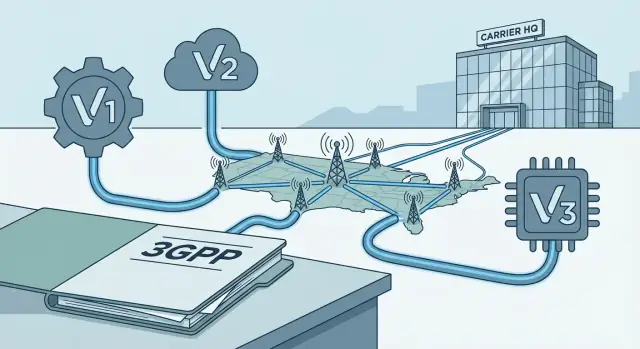
Why Telecom Networking Tends to Be an Oligopoly
An oligopoly is a market where a small number of companies supply most of what customers buy. It’s not a monopoly (one seller), but it’s also not a wide-open field with dozens of equal competitors. Prices, product roadmaps, and even deployment timelines tend to be shaped by a handful of players.
Telecom network equipment—especially 5G radio access networks (RAN) and core networks—fits this pattern because carriers can’t treat it like ordinary IT hardware. A national network has to be secure, interoperable, and supported for many years. That combination makes it hard for new vendors to enter—and hard for carriers to switch quickly.
Ericsson as a useful example (not the whole story)
Ericsson is one of the best-known vendors in this space, alongside other major suppliers. Using Ericsson as a reference point helps illustrate market structure without implying that any single company “caused” the oligopoly.
Three forces that keep the field small
Three dynamics reinforce each other:
- Standards: global rules (like 3GPP) that define what equipment must support.
- Infrastructure complexity: 5G is a full system—hardware, software, integration, and performance tuning.
- Carrier ties: long purchasing cycles, operational support, and trust built over time.
What to expect
The goal here is to explain industry mechanics—how decisions get made and why outcomes repeat—not to promote any vendor. If you’re a buyer, partner, or observer, understanding these constraints makes telecom competition feel far less mysterious.
Telecom Standards: The Rules Everyone Must Follow
Telecom networks only work when equipment from many parties can talk to each other reliably—phones, base stations, core networks, SIMs, and roaming partners. Standards are the shared rulebook that makes that possible.
What standards actually do
At a practical level, standards define:
- Interoperability: how signals are formatted, how devices attach to the network, and how handovers work between cells.
- Safety and compliance expectations: limits and behaviors that help equipment operate predictably.
- Performance baselines: minimum capabilities (for example, supported bands, modulation options, latency-related behaviors) so carriers can plan nationwide deployments.
Without standards, every network would be a custom integration project—slower to build, harder to roam on, and more costly to maintain.
Who writes the rules
Two names show up constantly:
- 3GPP (3rd Generation Partnership Project): produces the detailed technical specifications behind 4G and 5G, including the RAN and core.
- ITU (International Telecommunication Union): sets high-level frameworks and global coordination (for example, families of technologies and broad requirements).
You’ll also see regional and industry groups, but 3GPP is the center of gravity for modern cellular.
Standards vs. products: same map, different journeys
A standard describes what must happen on the interfaces—the messages, procedures, timing, and behaviors. A vendor product is an implementation that must make those behaviors work under real-world constraints: messy radio conditions, dense cities, mixed device populations, and nonstop traffic.
Two vendors can be “standards-compliant” and still differ dramatically in:
- stability under load
- energy efficiency
- how quickly software issues are resolved
- tools for optimization and troubleshooting
Why compliance is still expensive
Following 3GPP specs isn’t a box-checking exercise. It requires deep engineering across radios, silicon, real-time software, security, and testing. Vendors invest heavily in conformance testing, interoperability trials, and repeated software releases to match evolving requirements. That ongoing cost is one reason only a few companies can compete at scale in 5G network equipment.
How 3GPP Release Cycles Shape Competition
3GPP publishes the “Release” specifications behind 4G and 5G. For carriers, these releases aren’t academic documents—they become the schedule that determines what capabilities can be bought, deployed, and supported with confidence. For major RAN suppliers, releases act like a treadmill: miss a step and you may fall behind for years.
Why releases matter to carriers
Carriers plan networks on multi‑year horizons. They need predictable feature availability (for example: new spectrum bands, improved energy saving modes, or better uplink performance), and they need assurance that phones, radios, and core network components will interoperate. A 3GPP Release gives procurement teams a shared reference point when writing RFPs and evaluating “Release X compliant” claims.
A moving target with deadlines
Each Release adds features while trying to preserve backward compatibility—older devices must keep working as networks evolve. That tension creates long timelines: specifications, then chipsets, then vendor software, then field trials, then nationwide rollout.
If a vendor is late to implement a required feature set, carriers may delay purchases or choose a competitor already proven in trials.
Conformance isn’t enough to win
Passing 3GPP conformance is necessary, but it doesn’t guarantee a deal. Carriers still judge real-world KPIs, upgrade paths, and how smoothly new Release features can be activated without disrupting existing sites.
Roadmaps align to Release cycles
Top vendors build product roadmaps around upcoming Releases—budgeting R&D, lab validation, and upgrade programs years ahead. That alignment favors incumbents with scale and experience, and it makes “catching up” extraordinarily expensive for new entrants.
Patents and Licensing: A Hidden Barrier to Entry
Standards make mobile networks interoperable—but they also create a quiet hurdle for new vendors: patents.
What SEPs are (in plain English)
A standard-essential patent (SEP) is a patent on a technology that you must use to follow a widely adopted standard. If you want to build equipment that speaks “real” 4G/5G—so it can connect with phones, core networks, and other vendors’ gear—you can’t simply design around many of these inventions.
The standard effectively locks in certain technical methods, and the patents tied to those methods become unavoidable.
Licensing isn’t just a fee—it's complexity
To ship compliant network equipment, a company typically needs the right to use a set of SEPs. That happens through licensing. Even when licensing is offered on fair terms, it adds work and risk:
- figuring out which patents apply to which products and features
- negotiating agreements that cover multiple markets and product lines
- managing ongoing obligations, audits, and disputes
This kind of overhead favors established firms that already have dedicated legal teams, long-standing licensing programs, and experience navigating telecom-specific IP norms.
Why big portfolios shift negotiating power
Large vendors often hold large patent portfolios, including SEPs. That matters because licensing is rarely one-way. When two companies both own relevant patents, they can cross-license, offsetting costs and reducing uncertainty.
A smaller entrant with few patents has less leverage. It may need to pay out more, accept stricter terms, or face higher exposure if conflicts arise. Patents don’t just protect inventions—they shape who can participate at scale, and how confidently they can sell to cautious carriers.
5G Infrastructure Is a System, Not a Single Product
When people say “buying 5G,” it can sound like a carrier is purchasing a single box. In reality, 5G infrastructure is a tightly connected set of domains that must behave well together—under real traffic, across thousands of sites, and through years of upgrades.
The major domains (and why each matters)
At a high level, carriers stitch together:
- RAN (Radio Access Network): radios, antennas, baseband, and the software that turns spectrum into usable capacity.
- Transport: fronthaul/midhaul/backhaul links that move traffic reliably from cell sites to the rest of the network.
- Core: the “brain” for authentication, mobility, routing, slicing, and policy.
- OSS/BSS (briefly): the operations and business systems for provisioning, monitoring, assurance, and billing.
“Works in a lab” vs “works nationwide”
A lab can prove a feature works under controlled conditions. Nationwide deployment adds messy realities: variable site power and cooling, fiber quality differences, local RF interference, mixed device populations, legacy 4G interworking, and regulatory constraints.
A RAN feature that looks great in testing may create edge-case failures when scaled to millions of handovers per hour.
Integration and tuning never really end
Performance is shaped by integration, parameter tuning, and continuous optimization: neighbor lists, scheduling behavior, beamforming settings, software compatibility, and upgrade choreography across RAN, transport, and core.
That continuous work is why only a few suppliers are considered credible at national scale: they can integrate end-to-end, support long upgrade paths, and absorb the operational risk that comes with running a country’s network.
Switching Costs: Why Carriers Rarely Change Vendors Quickly
Carrier networks aren’t refreshed like consumer electronics. Most 5G deployments are multi‑year programs built on top of existing 4G footprints: radios added to the same towers, new spectrum turned up in phases, and software features introduced release by release.
That upgrade path is a big reason incumbents tend to stay in place—changing midstream can reset timelines and risk coverage dips.
What “switching” really involves
Replacing a RAN vendor isn’t just buying different boxes. It can mean new site designs, antenna and cabling changes, different power and cooling profiles, fresh acceptance testing, and updated integration with transport, core, and OSS tools.
Even if equipment is physically compatible, the carrier still has to re-train field teams, update procedures, and validate performance KPIs under real traffic.
Lifecycle support is part of the cost
Operators also buy years of support: security patches, bug fixes, feature updates aligned to 3GPP releases, spares logistics, and repair processes. Over time, networks accumulate vendor-specific tuning and operational “muscle memory.”
When a product line approaches end-of-support or becomes obsolete, carriers must plan swaps carefully to avoid stranded sites and unexpected maintenance burdens.
Not absolute lock-in—just high friction
Carriers do change vendors, especially during major modernization projects or when introducing a new architecture. But the combination of site work, testing effort, operational disruption, and long-term support obligations creates real switching costs—enough to make “stay and upgrade” the default unless the benefits of switching are clearly worth the risk.
Carrier Procurement: Trials, KPIs, and Risk Reduction
Buying 5G network equipment isn’t like buying generic IT hardware. A carrier is selecting a long-term operational partner, and the procurement process is designed to reduce the chance of surprises after nationwide rollout.
What carriers actually require
Most tenders start with non-negotiables tied to business outcomes:
- Coverage: performance at cell edge, indoor reach, rural range
- Capacity: busy-hour throughput, spectral efficiency, uplink performance
- Reliability: availability targets, failover behavior, upgrade stability
- Energy: watts per sector, sleep modes, cooling needs, total site power budget
These requirements are measured, not promised.
RFPs, trials, and acceptance testing
A typical path is: RFI/RFP → lab evaluation → field trial → commercial negotiation → phased deployment.
During trials, vendors must integrate with existing cores, OSS/BSS tools, transport, and neighboring radio layers (often including older 4G). Carriers run acceptance tests that mimic real operating conditions: mobility, interference, handovers, and software upgrades at scale.
Selection is usually KPI-based, with scorecards that compare vendors on metrics such as call setup success, drop rates, latency, and energy consumption per delivered bit. Even if multiple vendors qualify, procurement often favors the option with the lowest execution risk.
Compliance and assurance add friction
Beyond performance, carriers need ongoing assurance: security audits, vulnerability handling, supply-chain traceability, lawful intercept support, and consistent QA processes. Meeting these requirements takes years of tooling, documentation, and proven procedures.
That’s why a vendor with a strong track record—stable releases, predictable delivery, and credible support—starts the race several steps ahead.
Operations and Support: Where Relationships Are Built
Network gear isn’t “done” once it’s installed. In telecom, day‑to‑day operations and support often determine which vendors stay in the network—and which ones never get a second chance.
What “carrier‑grade” really means
“Carrier‑grade” is shorthand for equipment and services designed for constant operation under strict service-level agreements. Carriers expect extremely high availability (often framed as “five nines”), built-in redundancy (no single point of failure), safe upgrades, and predictable behavior during peak traffic and emergencies.
Just as important: the vendor must prove it can sustain that reliability over years, not weeks—through software patches, security fixes, capacity expansions, and incident response.
24/7 support isn’t optional
Carriers typically require 24/7 network operations support with clear escalation paths: frontline triage, senior engineering, and direct access to specialists when an outage affects customers.
Field services matter too—trained engineers who can be on site quickly, replace failed units, validate fixes, and coordinate with the carrier’s teams. Local presence is part of the deal: local language support, regional repair centers, and familiarity with local regulatory and security expectations.
Why scale changes the outcome
Scale enables spares logistics: stocked depots, faster replacement cycles, and enough inventory to handle multiple simultaneous failures. Bigger support organizations also mean shorter response times and better “follow-the-sun” coverage.
Over time, consistent operations build trust. When a vendor repeatedly resolves incidents quickly and transparently, procurement risk feels lower—leading to renewals, expansions, and repeat business that reinforce the oligopoly dynamics discussed elsewhere in this article.
Long-Term Carrier Relationships: More Than a Sales Contract
Carrier–vendor relationships in telecom often run for a decade or more—long enough to span multiple technology generations (3G to 4G to 5G, and into 5G Advanced). That continuity isn’t just “brand loyalty.” It’s a working partnership built around keeping a nationwide network stable while it changes underneath.
Co-planning the network’s future
Large carriers don’t buy radio gear like a one-off purchase. They co-plan with vendors on multi-year roadmaps: how quickly to introduce new features, which bands and spectrum refarms are coming next, and what performance targets matter most in their specific footprint.
A vendor that understands a carrier’s topology, backhaul constraints, and existing software baseline can help prioritize features in a way that reduces disruption during rollouts.
Training, tooling, and the “way we operate”
Over years, teams standardize on workflows: field procedures, configuration templates, testing routines, and escalation paths. Engineers get trained on the vendor’s management tools, alarms, optimization methods, and update processes.
Those investments create an ecosystem—internal know-how, trusted integrators, and operational habits—that’s hard to replicate quickly with another supplier.
Relationships don’t eliminate competition
None of this replaces competitive bidding. Carriers still run RFPs, negotiate pricing, and benchmark vendors. But long-term relationships can influence what gets shortlisted and how risk is evaluated—especially when the cost of a misstep is measured in coverage gaps, failed upgrades, or months of remediation.
Scale, Supply Chains, and Delivery Reliability
Telecom equipment isn’t bought like standard IT hardware. A nationwide 5G rollout can require thousands of radios, antennas, baseband units, and transport upgrades—delivered on a tight schedule and installed by multiple teams in parallel.
Vendors compete not only on features, but on whether they can consistently ship, stage, and support that volume.
Scale is a product feature
Large RAN vendors have manufacturing capacity, long-term supplier contracts, and established test facilities that smaller entrants struggle to match. That scale lowers unit cost, but more importantly it reduces uncertainty: carriers want to know that “site 1” and “site 10,000” will behave the same way and pass the same acceptance checks.
Timelines depend on parts, not promises
Rollouts are often planned around coverage targets, spectrum deadlines, and seasonal construction windows. A single constrained component—power amplifiers, FPGA/ASIC parts, optics, even specialized connectors—can slow installation waves.
Reliable vendors plan around:
- multi-sourcing for critical components
- pre-qualification of alternates (so substitutions don’t trigger re-testing)
- regional warehousing and spare pools to avoid truck-roll delays
For carriers, this translates into fewer “paused clusters,” fewer crews waiting on missing parts, and fewer rushed changes that create later quality issues.
Multi-country deployments demand consistency
Many operator groups deploy across several countries. They want consistent quality control, documentation, and labeling; predictable packaging for local logistics partners; and a uniform way to handle returns and repairs.
Delivery reliability also includes software and configuration readiness—shipping hardware is only half the job if each market requires different parameters, regulatory settings, or integration steps.
When a vendor can repeatedly deliver on-time, with predictable quality and a steady supply of spares, it becomes hard to replace—even if a competitor looks cheaper on a per-unit quote. If you’re evaluating vendors, ask how they’ve performed on real rollout schedules, not just lab benchmarks, and how they protect timelines when components get tight.
Regulation and Security: Constraints That Shrink the Field
Telecom gear isn’t just another enterprise IT purchase. Mobile networks carry emergency calls, government traffic, and the communications that keep economies running. That makes radio access networks and core platforms heavily regulated—and politically sensitive—in a way that naturally limits how many vendors can realistically compete.
Security expectations are formal, ongoing, and expensive
Carriers don’t rely on a vendor’s promises. They often need security evaluations that include supply-chain controls, secure development practices, vulnerability handling, and incident response commitments.
Depending on the country and network function, this can also involve third-party audits, lab testing, and certification requirements (for example, national schemes or frameworks aligned to standards like ISO 27001). Even after initial approval, carriers may require continuous reporting, patch timelines, and access to security documentation under strict confidentiality.
Policy decisions can narrow the vendor set overnight
Regulators may restrict certain suppliers for national security reasons, limit where gear can be deployed, or require “high-risk vendor” mitigation measures (such as excluding a vendor from the core network or from sensitive geographic areas). In some markets, policy changes effectively reduce the practical options to a small set of approved RAN vendors.
This isn’t only about bans. Requirements around lawful intercept, data retention, critical infrastructure rules, and local compliance can add obligations that fewer vendors can meet quickly.
What carriers must plan for
For carriers, regulation and security are risk-management inputs, not afterthoughts. Vendor selection may need to account for worst-case scenarios (future restrictions, certification delays, export controls), which makes multi-year roadmaps and procurement decisions more conservative—and tends to reinforce an oligopoly structure.
Can Open RAN Break the Oligopoly? Opportunities and Limits
Open RAN (Open Radio Access Network) is an approach to building the “radio” part of a mobile network using more standardized, openly specified connections between components. In plain language: instead of buying a tightly bundled system from one RAN vendor, a carrier tries to mix and match pieces—like radios, baseband software, and control software—from different suppliers.
Open interfaces vs. plug-and-play reality
Open RAN’s big promise is open interfaces. If vendors agree on how parts talk to each other, competition can move from “who sells the whole stack” to “who makes the best part.” That can lower dependency on a single supplier and give carriers more negotiation power.
But open interfaces don’t automatically deliver plug-and-play networks. A mobile RAN is time-sensitive and performance-critical. Even if two products follow the same interface spec, getting them to behave well together—under real traffic, with real interference, at scale—often requires extra tuning, software updates, and joint testing.
Where Open RAN can help—and where it struggles
Open RAN tends to help most where requirements are clearer and volumes are manageable:
- Supplier choice in specific areas (for example, centralized RAN software, RIC apps, or certain radio deployments)
- Innovation at the edges, where specialized vendors can add features without replacing the whole network
The hardest part is still integration: who takes end-to-end responsibility when performance drops, an upgrade breaks something, or security fixes need to roll out quickly?
Evolution, not an instant reset
Open RAN can widen the field, especially for targeted deployments and new entrants with strong software capabilities. But it’s more likely to reshape the oligopoly than erase it—because carriers still need proven performance, predictable upgrades, and a clear “single throat to choke” when things go wrong.
Practical Takeaways for Buyers, Partners, and Observers
An oligopoly in 5G networking is not just a “few big names” story—it changes how decisions get made, how money gets spent, and what realistic options look like.
What this means for carriers
Costs tend to be high and sticky, because competition happens on multi-year roadmaps, performance proof, and support capacity—not on quick price cuts.
Risk management becomes the main buying filter. Carriers optimize for uptime, security posture, and delivery reliability, even if that reduces short‑term leverage in negotiations.
Leverage still exists, but it’s applied through contract structure: phased rollouts, acceptance tests, service-level agreements, and clear penalties—not by swapping vendors every year.
What this means for vendors (including incumbents)
Vendors carry a heavy R&D burden to keep up with 3GPP releases, interoperability requirements, and continuous security work. That spend is hard for smaller entrants to match.
They also earn (or lose) a trust premium. Proven performance in real networks, strong incident response, and predictable product lifecycles can matter as much as raw feature lists.
A simple checklist for evaluating 5G vendor claims
- Standards alignment: Which 3GPP release and features are supported today vs. “on the roadmap”?
- Proof in production: Where is it deployed at scale, and what KPIs were achieved (throughput, latency, energy use, handovers)?
- Interoperability: What works with third-party RAN/core/OSS in practice, and what needs custom integration?
- Operations reality: What is the support model (24/7, local spares, escalation), and how fast are security fixes delivered?
- Lifecycle clarity: How long are hardware and software supported, and what is the upgrade path and cost?
Where modern software platforms can help (without changing the market structure)
Even in an oligopoly, carriers and integrators can improve execution by building better internal tools: rollout tracking, acceptance-test automation, KPI scorecards, incident workflows, and vendor-comparison dashboards. Platforms like Koder.ai (a vibe-coding environment that builds web, backend, and mobile apps from chat) can speed up these supporting systems—especially when teams need to iterate quickly, export source code, and deploy reliably.
Disclaimer: This section is for educational purposes only and is not legal, investment, or procurement advice.
FAQ
What does it mean to say 5G network equipment is an oligopoly?
An oligopoly is a market dominated by a small number of suppliers. In 5G networking, only a few vendors can consistently meet the combined requirements of:
- standards compliance and interoperability
- national-scale performance and reliability
- long-term support and security obligations
- delivery capacity and proven rollout execution
Why do telecom standards push the market toward a few large vendors?
Standards (especially 3GPP specs) define how devices and network elements must communicate so phones, base stations, cores, and roaming partners interoperate. But building real products that behave correctly under load requires massive ongoing investment in engineering, testing, and release-driven updates—costs that naturally limit how many vendors can compete at scale.
How do 3GPP Release cycles affect competition among RAN vendors?
A “Release” is a versioned set of 3GPP specifications that vendors implement and carriers use to plan procurement and rollouts. Releases matter because they drive:
- what features are credible to buy now vs. later
- chipset and software timelines
- trial readiness and upgrade sequencing
If a vendor falls behind a release cycle, carriers may avoid them for years due to roadmap risk.
What are SEPs, and why are they a barrier for new telecom vendors?
Standard-essential patents (SEPs) cover technologies that are difficult or impossible to design around if you want to implement 4G/5G standards. Even when licensing is available, it adds:
- legal and negotiation overhead
- product and geography-specific licensing complexity
- exposure to disputes
Large incumbents often have portfolios that enable cross-licensing, which can reduce friction compared with new entrants.
Why can two standards-compliant 5G products perform very differently in the real world?
Because 5G isn’t one product—it’s a system spanning RAN, transport, core, and OSS/BSS operations. “Standards-compliant” equipment can still vary widely in:
- stability during upgrades and peak traffic
- energy efficiency and tuning behavior
- troubleshooting and operational tooling
Carriers buy the ability to run and evolve a nationwide system, not just hardware that passes interface tests.
Why is it so hard for a carrier to switch RAN vendors mid-deployment?
Switching vendors can require redesigning sites, revalidating RF performance, retraining teams, and redoing integration and acceptance testing across the network stack. Beyond the physical swap, carriers must manage years of:
- patches and feature upgrades
- spares and repair logistics
- vendor-specific operational procedures
That “friction” makes staying with an incumbent the default unless switching benefits clearly outweigh the risk.
What does carrier procurement look like for 5G equipment?
Carriers typically run a risk-reducing process: RFI/RFP → lab evaluation → field trial → commercial negotiation → phased rollout. Vendors are judged on measured KPIs such as:
- coverage and cell-edge performance
- busy-hour throughput and uplink performance
- reliability and upgrade stability
- energy use per delivered capacity
Even if multiple vendors qualify, the one with the lowest execution risk often wins.
What does “carrier-grade support” mean, and why does it shape vendor selection?
Telecom networks are operated continuously under strict SLAs, so “carrier-grade” includes:
- safe, repeatable upgrades
- rapid incident response and escalation
- long-term security patch capability
- local field support and spare-part availability
A vendor’s day-to-day support performance strongly influences renewals and expansion decisions, reinforcing a small set of trusted suppliers.
How do scale and supply-chain reliability reinforce the telecom oligopoly?
A national rollout requires consistent manufacturing, testing, shipping, staging, and spares planning across thousands of sites. Supply-chain reliability affects whether carriers hit:
- coverage targets and spectrum deadlines
- construction windows and crew utilization
- acceptance-test schedules
Vendors with scale can multi-source parts, pre-qualify alternates, and maintain regional inventory—reducing rollout delays and operational surprises.
Can Open RAN break the 5G oligopoly?
Open RAN can increase supplier choice by standardizing interfaces between RAN components, enabling more “mix and match” designs. The limiting factor is still integration and accountability:
- performance tuning across multi-vendor stacks is hard
- upgrades can introduce complex interoperability issues
- carriers still need clear end-to-end responsibility when outages happen
In practice, Open RAN is more likely to reshape the oligopoly (and create niches) than eliminate it outright.