

Founder Psychology: How Ego and Fear Drive Startup Outcomes
Markets matter, but founder ego and fear often decide focus, speed, hiring, and fundraising. Learn the patterns, warning signs, and practical fixes.
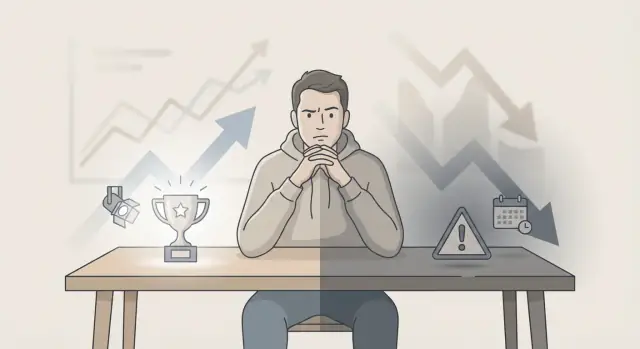
Why Founder Psychology Can Outweigh Market Conditions
It’s tempting to explain startup outcomes with “the market”: timing, competition, funding climate. But you’ve probably seen two teams with similar products, similar customers, and similar resources end up in wildly different places—one becomes focused and momentum-driven, the other drifts, thrashes, or quietly stalls.
The compounding effect of tiny decisions
Founder psychology matters because it shapes decisions, and decisions compound. A slight tendency to avoid hard conversations can delay firing a poor fit by three months. A subtle need to be right can block a critical pivot. A habit of reacting under pressure can turn one bad week into a quarter of churn.
Over time, those small choices create second-order effects:
- which customers you listen to (and which you dismiss)
- whether the product gets simpler or more complex
- how quickly problems surface—or get buried
- whether the team feels safe telling the truth
Markets provide the playing field. Psychology often determines the moves.
Not therapy—practical leadership leverage
This isn’t a therapy session or a personality test. The goal is practical leadership insight: noticing patterns that quietly bias your judgment, and building routines that keep you effective when stakes rise.
The three forces: ego, fear, and stress
Ego is the part of you that wants status, certainty, and a coherent story about being a “good founder.” It can fuel ambition and resilience, but it can also make feedback feel like an attack.
Fear is the drive to avoid loss—money, reputation, control, time. It often shows up as playing not to lose: delaying decisions, clinging to weak plans, or choosing short-term comfort over long-term clarity.
Stress is the physiological state that narrows attention and speeds reactions. Under sustained stress, even smart founders become more impulsive, less creative, and more likely to mistake urgency for importance.
Understanding these forces is the first step to leading yourself—and your company—more deliberately.
Ego in Startups: The Helpful Fuel and the Hidden Trap
Ego in startups isn’t the same thing as confidence. Confidence is a realistic belief in your ability to learn and execute. Ego is identity protection: the part of you that needs to be right, admired, or seen as the “real founder” so your sense of self stays intact.
When ego helps
A healthy dose of ego can be useful. It powers ambition (“we can build this”), persistence (“we’ll outlast the setbacks”), and the willingness to take social risk (pitching, selling, recruiting people who seem out of reach). It can also help you project conviction when the team needs steady energy.
When ego hurts
The trap is that ego quietly changes what you optimize for. Instead of optimizing for learning, you optimize for looking competent. Instead of optimizing for customer truth, you optimize for winning arguments.
Common outcomes include:
- Blind spots: ignoring data that threatens your story
- Overcommitment: sticking with a plan because changing course feels like admitting failure
- Defensive leadership: turning feedback into a debate instead of an input
Common ego triggers
Ego gets loud when status feels threatened. Typical triggers for founders include public criticism (especially online), investor rejection, and a competitor launching something similar—or getting press that you wanted.
Even small moments can spike it: a teammate questioning your decision in a meeting, a customer asking for a refund, or a peer founder casually implying you’re “behind.”
Identity fusion: when the company becomes the self
In identity fusion, your startup stops being something you run and becomes who you are. Wins feel like personal validation; setbacks feel like personal humiliation.
That fusion can increase commitment, but it also makes rational decisions harder—because protecting the company’s story starts to feel like protecting your own worth.
How Ego Quietly Distorts Strategy and Product Decisions
Ego rarely shows up as chest-thumping arrogance. More often, it’s a set of quiet preferences that feel like “high standards” or “strong conviction,” but systematically bend strategy and product choices away from reality.
Overconfidence: shipping too late (or too big)
When you’re convinced the product needs to be “worthy” of your vision, you start optimizing for impressiveness instead of learning. That turns early releases into massive, slow bets: more features, more polish, more integrations—anything to avoid the discomfort of a small, imperfect launch.
The cost isn’t just time. Shipping too late usually means you’re validating assumptions with internal debate rather than external feedback. Competitors don’t beat you with better ideas; they beat you with faster learning.
The need to be right: filtering feedback
Ego can make customer feedback feel like a referendum on you, not the product. So contradictory signals get explained away: “They’re not our target,” “They don’t get it,” “We need better messaging.” Sometimes that’s true—but if it’s always true, you’ve built a defense system, not a product process.
A useful test is to separate story from evidence. If your roadmap discussions are heavy on narrative (“here’s what we believe”) and light on proof (“here’s what customers did”), ego may be steering.
Status-seeking: strategy as theatre
Chasing press, titles, or vanity partnerships can look like momentum while quietly draining focus. You start picking initiatives that signal importance rather than solve a painful customer problem.
Status-driven strategy often shows up as:
- prioritizing “big brand” deals that won’t expand
- optimizing for announcement-worthy features instead of retention
- building for an imagined audience rather than current users
Control bias: product bottlenecks and slow decisions
Refusing to delegate is often framed as “quality control,” but it can turn founders into the limiting reagent. If every decision routes through one person, strategy becomes reactive and product cycles stretch.
A healthier pattern is to define what must be centralized (vision, a few key principles) and deliberately decentralize the rest (pricing tests, onboarding experiments, customer interviews). That’s how you keep standards without turning ego into a bottleneck.
Fear: Loss Aversion, Avoidance, and Playing Not to Lose
Fear in startups isn’t just “being nervous.” It’s a threat response—your brain scanning for danger and pushing you toward safety. For founders, the threats are rarely physical. They’re social (looking foolish, losing status), financial (running out of cash, disappointing investors), and identity-based (what failure would “say” about you as a person).
Loss aversion: protecting what exists
A common pattern is loss aversion: the tendency to work harder to avoid losing something you already have than to gain something better. In practice, this can make a team overprotect an early customer segment, a legacy feature, or a familiar go-to-market motion—even when evidence says it’s not the best path.
Loss aversion often shows up as:
- Keeping pricing too low because raising it might “lose customers,” even if the current price can’t support growth
- Over-investing in a mediocre channel because it’s predictable, while under-investing in a smaller but faster-growing channel
- Choosing “safe” roadmap items that won’t upset anyone instead of fixing the real retention problem
Avoidance: the hidden cost of delay
Fear also drives avoidance: delaying hard conversations and hard calls. It can look like “we’re just gathering more data,” when the real issue is the discomfort of making a bet.
Avoidance tends to cluster around:
- Underperformance (not addressing it directly)
- Customer feedback that contradicts the founder’s story
- Killing projects that have become emotionally expensive to let go of
Why fear can look like “being careful”
The tricky part is that fear often wears a reasonable costume: caution. Careful founders run experiments and manage downside. Fearful founders endlessly hedge, seek permission, and optimize for not being blamed.
A useful test: are your “careful” decisions increasing learning speed and clarity—or buying temporary relief from anxiety?
How Fear Shows Up in Everyday Founder Behavior
Fear in startups rarely looks like panic. More often it looks “reasonable” on the surface: being careful, staying busy, keeping options open. The trouble is that fear tends to protect the founder’s sense of safety, not the company’s learning speed.
People-pleasing: saying yes to everyone
When a founder fears disappointing others—customers, investors, advisors, even friends—“yes” becomes a reflex. Roadmaps fill with exceptions, priorities blur, and the team can’t tell what matters most.
A simple test: if you can’t name the one thing you’re willing to disappoint people for this quarter, you’re probably over-accommodating.
Perfectionism: polishing instead of learning
Perfectionism is often fear of being judged, not love of quality. The product gets “one more pass,” the website is rewritten again, messaging is endlessly debated—while real users still haven’t reacted.
The cost isn’t just time. Perfectionism delays the uncomfortable feedback that would reduce uncertainty.
Micromanagement: fear of mistakes
If every error feels like it could kill the company (or your credibility), delegation feels risky. So decisions climb upward, approvals multiply, and execution slows.
Micromanagement also teaches the team to stop thinking: people wait to be told what to do because initiative feels unsafe.
The freeze response: indecision under uncertainty
Founders often freeze on decisions that feel identity-threatening: pricing, hiring senior talent, firing, or a pivot. You gather more data, schedule more calls, and “revisit next week.”
A helpful reframe: many startup decisions aren’t about choosing the perfect option—they’re about choosing the next experiment and a timebox to learn.
Stress and Decision Quality: Why Good Founders Make Bad Calls
Stress doesn’t just feel unpleasant—it changes how your brain allocates attention. Under pressure, founders often zoom in on the most immediate threat (runway, an angry customer, a competitor launch) and lose peripheral vision. That narrowed focus can be useful for execution, but it reliably reduces creative problem-solving and makes “good enough” ideas look like the only options.
Fast thinking vs. slow thinking under pressure
In high-pressure moments, you default to fast thinking: quick pattern-matching, instinct, and snap judgments. It’s efficient, but it also leans on recent experiences (“last time this worked”), strong emotions (“this feels risky”), and simple narratives (“we must ship now”). Slow thinking is deliberate: weighing alternatives, asking for disconfirming evidence, and separating facts from stories.
The trap is that stress makes fast thinking feel like leadership. You sound decisive, move quickly, and avoid discomfort—while quietly increasing the odds of choosing the wrong hill to die on.
Simple safeguards that don’t slow you down
Two lightweight tools help force slow thinking without turning decisions into committee work.
Pre-mortems: Before committing, spend 10 minutes asking: “It’s 90 days later and this failed—why?” Collect reasons, then design one small mitigation for the top two.
Decision checklists: For recurring calls (pricing changes, new hires, feature bets), keep a short list:
- What problem are we solving, and for whom?
- What would change my mind?
- What’s the smallest reversible step?
- Who will be impacted, and have we asked them?
Don’t make big calls while exhausted
Exhaustion mimics certainty: you stop exploring options and start protecting energy. Avoid major, irreversible decisions (firing, pivoting, signing long contracts) when you’re sleep-deprived or emotionally flooded. If it can wait 12–24 hours, it often should—or at least be reviewed by someone rested enough to challenge your assumptions.
Hiring and Culture: Where Ego and Fear Become Everyone’s Problem
Hiring is where private founder psychology turns into shared company reality. Your first ten hires don’t just add capacity—they multiply your defaults. If ego or fear is driving the decision, you don’t merely get the “wrong person.” You get a culture that repeats the same mistakes at scale.
Ego-driven hiring: loyalty and pedigree over fit
Ego often hires to protect status. That can look like recruiting big-name resumes to “prove” legitimacy, or surrounding yourself with loyalists who won’t challenge you.
The costs show up quickly: high-performing but misaligned hires create politics, while loyal hires create blind spots. People learn that agreement is rewarded more than truth, so bad news arrives late and decisions get made on confidence rather than evidence.
Fear-driven hiring: waiting until you’re underwater
Fear tends to delay hiring until the pain is undeniable: revenue must be “safer,” the role must be “perfectly defined,” the candidate must be “flawless.” Meanwhile, the team absorbs the gap through overtime and heroics.
That teaches a dangerous lesson: suffering is normal, asking for help is risky, and burnout is a badge. By the time you hire, you’re often filling an emergency—not building a system.
Culture signals founders broadcast every day
Culture isn’t a poster; it’s what you model in tense moments:
- How you handle conflict (curiosity vs. winning)
- Where blame goes (systems vs. scapegoats)
- What learning looks like (postmortems vs. silence)
Simple practices that reduce damage
You don’t need perfection—just structure:
- Clear roles and decision owners (so disagreement isn’t personal)
- Written expectations for the first 30/60/90 days
- Regular 1:1s that include feedback in both directions
- A consistent interview rubric tied to the job, not your identity
When hiring and management become repeatable, ego has less room to audition and fear has fewer excuses to stall.
Customer Truth vs Founder Story: Listening Without Defensiveness
Founders don’t just build products—they build narratives. A clear story helps you recruit, sell, and stay motivated. The problem is when the story becomes something you protect instead of something you test.
How ego blocks listening
When ego is in the driver’s seat, feedback feels like a personal critique. You start defending the idea (“They don’t get it”) instead of studying the user (“What did they try to do, and what stopped them?”). You’ll cherry-pick the compliments, explain away confusion, and treat objections as debate prompts rather than data.
A simple tell: after a customer call, can you repeat their problem in their words without adding your pitch?
How fear blocks focus
Fear often shows up as “feature insurance.” You add options, settings, and edge-case support to avoid disappointing anyone—especially the loudest prospect or the biggest logo. The product gets broader, not better, and your core user experience becomes harder to understand, sell, and build.
Tactics that keep you honest
Customer truth is easier to hear when you lower the stakes and increase the evidence.
- Customer interviews: Ask about recent behavior (“Walk me through the last time…”) and listen for constraints, not opinions.
- Lightweight experiments: Fake doors, landing pages, concierge tests—small bets that reveal real intent.
- Kill criteria: Decide in advance what result would make you stop or change direction (e.g., “If fewer than 10% activate within 7 days, we pause this feature”).
If you’re using rapid build tools to run those experiments, make sure they reduce cycle time without increasing storytelling. For example, platforms like Koder.ai can help teams spin up testable web flows quickly (with planning mode, snapshots, and rollback), but you still need clear success metrics so speed doesn’t turn into fast, unvalidated building.
“Strong opinions, loosely held” (plain English)
Have a point of view and act on it. But treat it as a working hypothesis: if credible customer evidence contradicts you, you update quickly—without needing to “win” the conversation.
Fundraising Pressure: Validation, Rejection, and Short-Term Choices
Fundraising isn’t just a capital event—it’s an emotional event. Every meeting has a scorecard hiding inside it: “Did they want me?” That pressure can inflate ego (performing for approval) and spike fear (rejection sensitivity). When that mix takes over, founders start optimizing for the round, not the company.
How ego and fear hijack the process
Ego pushes you to tell the most impressive story, even if it’s not the truest one. Fear pushes you to avoid tough conversations, especially about traction, churn, runway, or team gaps. Together they create predictable traps:
- Chasing “validation rounds.” Raising because it signals status, not because it solves a specific constraint.
- Overpromising. Turning a hypothesis into certainty to sound fundable, then living under unrealistic commitments.
- Misalignment. Saying yes to money that quietly changes your timeline, control, or priorities.
A healthier fundraising stance
Start with clarity that doesn’t depend on investor approval:
- Why are you raising? (Extend runway, hire X roles, accelerate distribution, fund a known CAC payback period.)
- What are you trading? (Dilution, board control, optionality, speed vs. focus.)
- What timeline are you committing to? Align milestones with realistic execution, not a pitch-perfect chart.
A simple discipline helps: write a one-page “raise thesis” before the first meeting and use it to keep decisions consistent.
Red flags to watch in yourself
If you’re hiding bad news, constantly changing the pitch, or rewriting strategy after every partner meeting, fundraising is driving the company. The goal is to use capital to support focus—not to replace it.
Cofounder and Team Conflict: The Psychology Behind Blowups
Most startup conflicts don’t start as “big issues.” They start as small friction points that get interpreted through ego (“I’m not respected”) and fear (“If I push this, everything falls apart”). Over time, the original topic—product scope, hiring, pricing—gets replaced by a fight over identity and safety.
The patterns that predict a blowup
Common conflict loops tend to look like this: power struggles (who gets final say), avoidance (nobody names the tension), and scorekeeping (quietly tracking who “owes” whom). These patterns feel personal because they are personal—status, control, and belonging are on the line.
How ego turns disagreements into personal attacks
Ego makes feedback sound like a verdict. “Your plan has risks” becomes “You think I’m incompetent.” That shift triggers defensiveness, interrupting, lawyer-style arguing, and recruiting allies inside the team. The conflict spreads because people take sides rather than solve the problem.
How fear makes issues unspeakable
Fear doesn’t always look like panic; it looks like silence. Founders don’t raise the hard topics—equity resentment, performance doubts, cash runway—because they’re afraid of what it might trigger. The longer it stays unspoken, the more explosive it becomes.
Practical tools that keep conflict productive
Clarify decision rights early: who decides, who advises, and what requires joint agreement.
Set simple conflict rules: argue the idea, no surprise criticism in public, and take a break when voices rise.
Run weekly founder check-ins (30 minutes): “What’s bothering me?”, “What do I need?”, and “What decision is stuck?” Catch tension while it’s still cheap to fix.
Metrics and Self-Deception: Spotting the Stories You Want to Believe
Founders rarely lie on purpose. More often, they self-deceive: you repeat a narrative (“users love it,” “growth is inevitable,” “sales cycles will shorten”) until it feels like a fact. Ego prefers stories where you’re the hero; fear prefers stories where the scary signal is “temporary.” Either way, your brain starts filtering data to protect the storyline.
Vanity metrics vs. learning metrics
Vanity metrics make you feel good but don’t change what you should do next.
- Vanity: total signups, pageviews, app downloads, social followers.
- Learning: activation rate (signups who reach the “aha” moment), week-4 retention, payback period, trial-to-paid conversion by segment.
Simple example: “We added 5,000 signups” is comforting. “Only 8% complete onboarding, and retention is flat after week 2” is useful.
Set up honest reporting (so reality isn’t optional)
Make reporting boring, consistent, and written—so it can’t be rewritten in your head after a good meeting.
Weekly (1 page):
- One metric that matters this week (and its target)
- 3 customer learnings (quotes > opinions)
- Top 2 risks you’re currently wrong about
- What changed in the funnel (not just the top line)
Monthly (review):
- Cohort retention, conversion by segment, churn reasons
- What you tried, what you learned, what you’ll stop doing
Treat disconfirming evidence as a habit
Ask: “What would have to be true for our plan to be wrong?” Then actively look for it—lost deals, churned power users, users who almost activated. Reward the team for surfacing bad news early, because it’s not disloyalty; it’s time saved.
Practical Fixes: Routines That Reduce Ego, Fear, and Blind Spots
You can’t “delete” ego or fear. The goal is to stop them from silently steering decisions. The best tools are boring on purpose: small routines that add friction to impulsive choices and create regular reality checks.
Low-effort routines that change outcomes
Weekly reflection (15 minutes): write three bullets: (1) the best decision you made and why, (2) the worst decision you made and what you ignored, (3) one uncomfortable truth you avoided. Over time, patterns appear—especially around defensiveness and avoidance.
Decision logs: for any meaningful call (pricing change, new hire, pivot), capture: the decision, your assumptions, what would change your mind, and a date to review. This makes it harder to rewrite history and easier to learn without self-judgment.
Pre-mortems: before committing, ask the team: “It’s six months later and this failed—what happened?” You’re not inviting negativity; you’re giving fear a structured outlet so it informs planning instead of sabotaging execution.
Build feedback loops that don’t flatter you
Pick two “truth cadences” and keep them sacred:
- Trusted critics: 2–3 people allowed to be blunt (not employees who depend on you). Meet monthly with an agenda: what you’re avoiding, what you’re overconfident about, what you’re rationalizing.
- Customer cadence: a fixed number of customer conversations per week with a standard script. Record what surprised you, not what confirmed your story.
Boundaries that protect judgment
Ego spikes when you’re tired; fear spikes when you’re cornered.
- Guard sleep like a KPI.
- Schedule real time off (even if short) to reset perspective.
- Use no-decision windows when stressed (after bad news, late nights): gather info, but postpone irreversible calls.
When to get outside help
- Coaching for recurring leadership patterns (defensiveness, people-pleasing, control).
- Peer groups for normalization and accountability.
- Therapy when fear, burnout, or identity is driving the company.
- Mediation when cofounder conflict becomes cyclical or personal.
These moves don’t make you less ambitious—they make your ambition less self-destructive.
FAQ
Why can founder psychology matter more than market conditions?
Because markets set constraints, but founders choose how to respond inside them. Small psychology-driven decisions—avoiding a hard firing, refusing a pivot, chasing status—compound into second-order effects like slower learning, more complexity, and a culture where truth arrives late.
What are practical signs that ego is affecting my startup decisions?
Look for repeated patterns where you optimize for looking competent over learning fast:
- Roadmaps dominated by polish and scope instead of experiments
- Feedback that turns into debate
- Decisions that preserve your narrative despite conflicting evidence
- Reluctance to delegate “because quality” (but cycle times keep stretching)
How do I tell the difference between confidence and ego?
Confidence is a realistic belief you can learn and execute; it welcomes disconfirming evidence. Ego is identity protection; it needs to be right.
A quick test: when a customer or teammate disagrees, do you get curious and ask “what would prove me wrong?” (confidence) or do you explain it away and defend the story (ego)?
How can I reduce ego-driven overbuilding and late shipping?
Ship smaller and earlier with explicit learning goals. Try:
- Define the smallest version that tests one assumption
- Set “kill criteria” in advance (what result means stop/change)
- Run a pre-mortem: “90 days later this failed—why?”
- Review outcomes on a date, not when it “feels ready”
When does caution turn into fear-based avoidance?
Fear can disguise itself as being careful. “Careful” increases clarity and learning speed; “fearful” buys temporary relief.
If you’re endlessly gathering data, keeping options open, or delaying identity-threatening calls (pricing, firing, pivoting), you’re likely avoiding discomfort rather than managing risk.
How does people-pleasing hurt focus, and what can I do about it?
People-pleasing turns “yes” into the default, which blurs priorities and bloats the roadmap.
Practical fix: decide the one thing you’re willing to disappoint people for this quarter (e.g., saying no to custom work to protect retention work). Then communicate a clear priority and a simple rule for exceptions.
How does stress change decision quality for founders?
Stress narrows attention and pushes you into fast, reactive thinking. Under sustained stress, you’re more impulsive, less creative, and more likely to confuse urgency with importance.
To protect decision quality:
- Avoid irreversible calls when exhausted
- Use a lightweight checklist for recurring decisions
- Add a 10-minute pre-mortem before big bets
How do ego and fear show up in hiring and culture?
Ego-driven hiring often favors pedigree or loyalty over fit, creating politics or blind spots. Fear-driven hiring waits until you’re underwater, teaching burnout and heroics.
Stabilize the system with:
- Clear decision owners and roles
- Written 30/60/90 expectations
- A consistent interview rubric tied to the job
- Regular 1:1s with two-way feedback
How can I listen to customers without getting defensive?
Separate story from evidence with a repeatable customer-truth process:
- Ask about recent behavior (“Walk me through the last time…”) not opinions
- Use small experiments (landing pages, concierge tests) to measure intent
- After calls, restate the problem in the customer’s words—no pitch
- Decide in advance what result would change your mind
What routines help prevent self-deception and keep the company grounded in reality?
Install boring routines that reduce self-deception:
- Decision log: decision, assumptions, what would change your mind, review date
- Weekly one-pager: one key metric + target, 3 customer learnings (quotes), top 2 risks, funnel changes
- Monthly review: cohort retention, conversion by segment, churn reasons, what you’ll stop doing
Make reality consistent and written so it can’t be re-narrated after the fact.