

How Haskell Shaped Modern Language Design Beyond FP
See how Haskell popularized ideas like strong typing, pattern matching, and effect handling—and how those concepts shaped many non-functional languages.
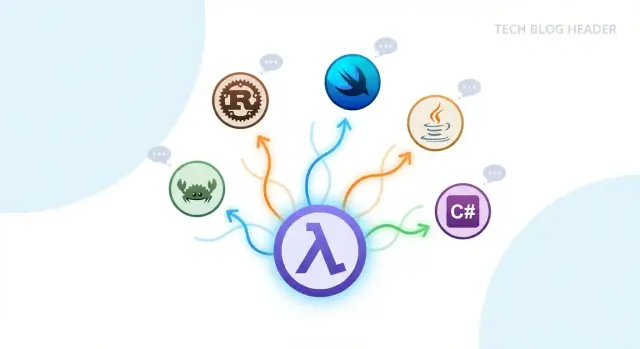
Why Haskell Matters Beyond Functional Programming
Haskell is often introduced as “the pure functional language,” but its real impact reaches far beyond the functional/non-functional divide. Its strong static type system, bias toward pure functions (separating computation from side effects), and expression-oriented style—where control flow returns values—pushed the language and its community to take correctness, composability, and tooling seriously.
That pressure didn’t stay inside the Haskell ecosystem. Many of the most practical ideas were absorbed into mainstream languages—not by copying Haskell’s surface syntax, but by importing design principles that make bugs harder to write and refactors safer.
What “influence” actually means
When people say Haskell influenced modern language design, they rarely mean other languages started “looking like Haskell.” The influence is mostly conceptual: type-driven design, safer defaults, and features that make illegal states harder to represent.
Languages borrow the underlying concepts and then adapt them to their own constraints—often with pragmatic trade-offs and friendlier syntax.
Why non-functional languages borrow from Haskell
Mainstream languages live in messy environments: UIs, databases, networks, concurrency, and large teams. In those contexts, Haskell-inspired features reduce bugs and make code easier to evolve—without requiring everyone to “go fully functional.” Even partial adoption (better typing, clearer handling of missing values, more predictable state) can pay off quickly.
What you’ll get from this article
You’ll see which Haskell ideas reshaped expectations in modern languages, how they show up in tools you may already use, and how to apply the principles without copying the aesthetics. The goal is practical: what to borrow, why it helps, and where the trade-offs are.
Strong Static Types as a Default Expectation
Haskell helped normalize the idea that static typing isn’t just a compiler checkbox—it’s a design stance. Instead of treating types as optional hints, Haskell treats them as the primary way to describe what a program is allowed to do. Many newer languages borrowed that expectation.
Static typing as a product feature
In Haskell, types communicate intent to both the compiler and other humans. That mindset pushed language designers to view strong static types as a user-facing benefit: fewer late surprises, clearer APIs, and more confidence when changing code.
Type-driven development: letting types shape APIs
A common Haskell workflow is to start by writing type signatures and data types, then “fill in” implementations until everything type-checks. This encourages APIs that make invalid states hard (or impossible) to represent, and it nudges you toward smaller, composable functions.
Even in non-functional languages, you can see this influence in expressive type systems, richer generics, and compile-time checks that prevent whole categories of mistakes.
Better errors and safer refactors as a goal
When strong typing is the default, tooling expectations rise with it. Developers begin to expect:
- actionable compiler messages that explain why code is wrong
- refactors that fail fast at compile time instead of breaking at runtime
The trade-off
The cost is real: there’s a learning curve, and sometimes you fight the type system before you understand it. The payoff is fewer runtime surprises and a clearer design rail that keeps larger codebases coherent.
Algebraic Data Types: Better Models for Real-World States
Algebraic Data Types (ADTs) are a simple idea with an outsized impact: instead of encoding meaning with “special values” (like null, -1, or an empty string), you define a small set of named, explicit possibilities.
Two everyday ADTs: Maybe/Option and Either/Result
Haskell popularized types like:
Maybe a— the value is either present (Just a) or absent (Nothing).Either e a— you get one of two outcomes, commonly “error” (Left e) or “success” (Right a).
This turns vague conventions into explicit contracts. A function returning Maybe User tells you upfront: “a user might not be found.” A function returning Either Error Invoice communicates that failures are part of normal flow, not an exceptional afterthought.
Why ADTs beat nulls and magic values
Nulls and sentinel values force readers to remember hidden rules (“empty means missing”, “-1 means unknown”). ADTs move those rules into the type system, so they’re visible wherever the value is used—and they can be checked.
That’s why mainstream languages adopted “enums with data” (a direct ADT flavor): Rust’s enum, Swift’s enum with associated values, Kotlin’s sealed classes, and TypeScript’s discriminated unions all let you represent real situations without guesswork.
Design tip: make invalid states unrepresentable
If a value can be in only a few meaningful states, model those states directly. For example, instead of a status string plus optional fields, define:
Draft(no payment info yet)Submitted { submittedAt }Paid { receiptId }
When the type can’t express an impossible combination, entire categories of bugs disappear before runtime.
Pattern Matching and Exhaustive Case Handling
Pattern matching is one of Haskell’s most practical ideas: instead of peeking inside values with a series of conditionals, you describe the shapes you expect and let the language route each case to the right branch.
Readability without boilerplate
A long if/else chain often repeats the same checks. Pattern matching turns that into a compact set of clearly named cases. You read it top-to-bottom like a menu of possibilities, not like a puzzle of nested branches.
Safer branching with compiler help
Haskell pushes a simple expectation: if a value can be one of N forms, you should handle all N. When you forget one, the compiler warns you early—before users see a crash or a weird fallback path. This idea spread widely: many modern languages can check (or at least encourage) exhaustive handling when matching over closed sets like enums.
Where you see it outside “pure FP”
Pattern matching shows up in mainstream features such as:
- Enums / sum types: Rust’s
match, Swift’sswitch, Kotlin’swhen, modern Java and C# switch expressions. - Error handling: matching on
Result/Either-style outcomes (“success” vs “failure”) instead of checking error codes. - Message/state handling: UI states like
Loading | Loaded data | Failed error.
When to prefer it over if/else
Use pattern matching when you’re branching on the kind of value (which variant/state it is). Keep if/else for simple boolean conditions (“is this number > 0?”) or when the set of possibilities is open-ended and won’t be exhaustively known.
Type Inference: Less Noise, More Intent
Type inference is the compiler’s ability to figure out types for you. You still get a statically typed program, but you don’t have to spell every type out. Instead of writing “this variable is an Int” everywhere, you write the expression, and the compiler deduces the most precise type that makes the whole program consistent.
Why it makes code feel simpler (without getting riskier)
In Haskell, inference isn’t a convenience feature bolted on top—it’s central. That changed what developers expect from a “safe” language: you can have strong compile-time checks without drowning in boilerplate.
When inference works well, it does two things at once:
- Keeps code concise, because local details don’t need repeated annotations.
- Keeps code honest, because the compiler still verifies every use site.
This also improves refactoring. If you change a function and break its inferred type, the compiler tells you exactly where the mismatch is—often earlier than runtime tests would.
Where explicit types still earn their keep
Haskell programmers still write type signatures frequently—and that’s an important lesson. Inference is great for local variables and small helper functions, but explicit types help when:
- Publishing APIs: a signature is documentation and a contract for callers.
- Reading complex code: types can explain intent faster than comments.
- Working with advanced generics: sometimes the compiler needs guidance, or the inferred type is technically correct but hard to understand.
Inference reduces noise, but types remain a powerful communication tool.
The expectation it set for modern languages
Haskell helped normalize the idea that “strong types” shouldn’t mean “verbose types.” You can see that expectation echoed in languages that made inference a default comfort feature. Even when people don’t cite Haskell directly, the bar has moved: developers increasingly want safety checks with minimal ceremony—and get suspicious of repeating what the compiler already knows.
Purity and the Idea of Controlling Side Effects
“Purity” in Haskell means a function’s output depends only on its inputs. If you call it twice with the same values, you get the same result—no hidden reads from the clock, no surprise network calls, no sneaky writes to global state.
That constraint sounds limiting, but it’s attractive to language designers because it turns large parts of a program into something closer to math: predictable, composable, and easier to reason about.
Separating logic from the messy world
Real programs need effects: reading files, talking to databases, generating random numbers, logging, measuring time. Haskell’s big idea isn’t “avoid effects forever,” but “make effects explicit and controlled.” Pure code handles decisions and transformations; effectful code is pushed to the edges where it can be seen, reviewed, and tested differently.
Even in ecosystems that aren’t pure by default, you can see the same design pressure: clearer boundaries, APIs that communicate when I/O happens, and tooling that rewards functions without hidden dependencies (for example, easier caching, parallelization, and refactoring).
Practical guideline: isolate effects for testability
A simple way to borrow this idea in any language is to split work into two layers:
- Pure core: functions that transform input data into output data
- Effect shell: code that reads inputs (HTTP, disk, time), calls the pure core, then writes outputs
When tests can exercise the pure core without mocks for time, randomness, or I/O, they become faster and more trustworthy—and design problems show up earlier.
Monads and Modern Effect Handling
Monads are often introduced with intimidating theory, but the everyday idea is simpler: they’re a way to sequence actions while enforcing some rules about what happens next. Instead of scattering checks and special cases everywhere, you write a normal-looking pipeline and let the “container” decide how steps connect.
Sequencing with built‑in rules
Think of a monad as a value plus a policy for chaining operations:
- If the value is “missing,” skip the rest.
- If an error occurred, stop and carry the error.
- If work is asynchronous, keep the chain running when the result arrives.
That policy is what makes effects manageable: you can compose steps without re-implementing control flow each time.
The familiar examples: Option, Result, and async
Haskell popularized these patterns, but you see them everywhere now:
- Optional values:
Option/Maybelets you avoid null checks by chaining transformations that automatically short-circuit on “none.” - Error handling:
Result/Eitherturns failures into data, enabling clean pipelines where errors flow alongside successes. - Async workflows:
Task/Promise(and similar types) let you chain operations that run later, while keeping sequencing readable.
How this shows up in mainstream syntax
Even when languages don’t say “monad,” the influence is visible in:
- Result/Option pipelines (
map,flatMap,andThen) that keep business logic linear. async/await, which is often a friendlier surface over the same idea: sequencing effectful steps without callback spaghetti.
The key takeaway: focus on the use case—composing computations that may fail, be absent, or run later—rather than memorizing category theory terms.
Type Classes and the Rise of Traits/Protocols
Type classes are one of Haskell’s most influential ideas because they solve a practical problem: how to write generic code that still depends on specific capabilities (like “can be compared” or “can be converted to text”) without forcing everything into a single inheritance hierarchy.
What type classes solve (without inheritance)
In plain terms, a type class lets you say: “for any type T, if T supports these operations, my function works.” That’s ad-hoc polymorphism: the function can behave differently depending on the type, but you don’t need a common parent class.
This avoids the classic object-oriented trap where unrelated types get shoved under an abstract base type just to share an interface, or where you end up with deep, brittle inheritance trees.
How the idea shows up in other languages
Many mainstream languages adopted similar building blocks:
- Rust traits: explicit capability contracts, heavily used for generics and operator behavior.
- Swift protocols: a protocol-oriented style that encourages building behavior from small pieces.
- C# / Java (interfaces + generics): increasingly used in a capabilities-first way, even when inheritance is available.
The common thread is that you can add shared behavior through conformance rather than “is-a” relationships.
Coherence and ambiguity: details that matter
Haskell’s design also highlights a subtle constraint: if more than one implementation could apply, code becomes unpredictable. Rules around coherence (and avoiding ambiguous/overlapping instances) are what keep “generic + extensible” from turning into “mysterious at runtime.” Languages that offer multiple extension mechanisms often have to make similar trade-offs.
API tip: compose, don’t build towers
When designing APIs, prefer small traits/protocols/interfaces that compose well. You’ll get flexible reuse without forcing consumers into deep inheritance trees—and your code stays easier to test and evolve.
Immutability as a Safer Default
Immutability is one of those Haskell-inspired habits that keeps paying off even if you never write a line of Haskell. When data can’t be changed after it’s created, whole categories of “who changed this value?” bugs disappear—especially in shared code where many functions touch the same objects.
Fewer accidental bugs in shared code
Mutable state often fails in boring, expensive ways: a helper function updates a structure “just for convenience,” and later code silently relies on the old value. With immutable data, “updating” means creating a new value, so changes are explicit and localized. That tends to improve readability too: you can treat values as facts, not as containers that might be modified elsewhere.
Persistent data structures make immutability practical
Immutability sounds wasteful until you learn the trick mainstream languages borrowed from functional programming: persistent data structures. Instead of copying everything on each change, new versions share most of their structure with the old version. This is how you can get efficient operations while still keeping previous versions intact (useful for undo/redo, caching, and safe sharing between threads).
Where “immutable by default” shows up today
You see this influence in language features and style guidance: final/val bindings, frozen objects, read-only views, and linters that nudge teams toward immutable patterns. Many codebases now default to “don’t mutate unless there’s a clear need,” even when the language allows mutation freely.
Practical advice
Prioritize immutability for:
- Shared state across modules or teams
- Data passed between threads/tasks
- Core domain models (orders, users, invoices)
Allow mutation in narrow, well-documented edges (parsing, performance-critical loops), and keep it out of business logic where correctness matters most.
Concurrency Thinking Shaped by Functional Ideas
Haskell didn’t just popularize functional programming—it also helped many developers rethink what “good concurrency” looks like. Instead of treating concurrency as “threads plus locks,” it pushed a more structured view: keep shared mutation rare, make communication explicit, and let the runtime handle lots of small, cheap units of work.
Lightweight threads and message-focused design
Haskell systems often rely on lightweight threads managed by the runtime rather than heavyweight OS threads. That changes the mental model: you can structure work as many small, independent tasks without paying huge overhead each time you add concurrency.
At a high level, this pairs naturally with message passing: separate parts of the program communicate by sending values, not by grabbing locks around shared objects. When the primary interaction is “send a message” rather than “share a variable,” common race conditions have fewer places to hide.
Why purity and immutability make parallel code easier
Purity and immutability simplify reasoning because most values can’t change after they’re created. If two threads read the same data, there’s no question about who mutated it “in the middle.” That doesn’t eliminate concurrency bugs, but it reduces the surface area dramatically—especially the accidental ones.
Influence on safer concurrency elsewhere
Many mainstream languages and ecosystems moved toward these ideas through actor models, channels, immutable data structures, and “share by communicating” guidance. Even when a language isn’t pure, libraries and style guides increasingly steer teams toward isolating state and passing data.
Design tip
Before adding locks, first reduce shared mutable state. Partition state by ownership, prefer passing immutable snapshots, and only then introduce synchronization where true sharing is unavoidable.
Property-Based Testing Inspired by QuickCheck
QuickCheck didn’t just add another testing library to Haskell—it popularized a different testing mindset: instead of hand-picking a few example inputs, you describe a property that should always hold, and the tool generates hundreds or thousands of random test cases to try to break it.
What QuickCheck made normal
Traditional unit tests are great at documenting expected behavior for specific cases. Property-based tests complement them by exploring the “unknown unknowns”: edge cases you didn’t think to write down. When a failure happens, QuickCheck-style tools typically shrink the failing input to the smallest counterexample, which makes bugs much easier to understand.
How the idea spread
That workflow—generate, falsify, shrink—has been adopted widely: ScalaCheck (Scala), Hypothesis (Python), jqwik (Java), fast-check (TypeScript/JavaScript), and many others. Even teams that don’t use Haskell borrow the practice because it scales well for parsers, serializers, and business-rule-heavy code.
Starter properties that pay off quickly
A few high-leverage properties show up again and again:
- Round-trips: encoding then decoding gives you back the original value.
- Ordering laws: sorting produces a list that is ordered and is a permutation of the input.
- Invariants: “balance never goes negative,” “IDs are unique,” “a validated value stays valid after normalization.”
When you can state a rule in one sentence, you can usually turn it into a property—and let the generator find the weird cases.
Compiler and Tooling Expectations Haskell Helped Set
Haskell didn’t just popularize language features; it shaped what developers expect from compilers and tooling. In many Haskell projects, the compiler is treated like a collaborator: it doesn’t merely translate code, it actively points out risks, inconsistencies, and missing cases.
Warnings as guidance, not noise
Haskell culture tends to take warnings seriously, especially around partial functions, unused bindings, and non-exhaustive pattern matches. The mindset is simple: if the compiler can prove something is suspicious, you want to hear about it early—before it becomes a bug report.
That attitude influenced other ecosystems where “warning-free builds” became a norm. It also encouraged compiler teams to invest in clearer messages and actionable suggestions.
Strong typing raised the bar for refactoring tools
When a language has expressive static types, tooling can be more confident. Rename a function, change a data structure, or split a module: the compiler guides you to every call site that needs attention.
Over time, developers began to expect this tight feedback loop elsewhere too—better jump-to-definition, safer automated refactors, more reliable autocomplete, and fewer mysterious runtime surprises.
Making the wrong thing harder
Haskell influenced the idea that the language and tools should steer you toward correct code by default. Examples include:
- nudges toward total (fully-defined) functions via exhaustiveness warnings
- surfacing dead code and unused imports early
- highlighting ambiguous or overly-general types that hide intent
This isn’t about being strict for its own sake; it’s about lowering the cost of doing the right thing.
Treat warnings like part of code review
A practical habit worth borrowing: make compiler warnings a first-class signal in reviews and CI. If a warning is acceptable, document why; otherwise, fix it. That keeps the warning channel meaningful—and turns the compiler into a consistent reviewer.
What to Borrow (and What to Avoid) from Haskell’s Influence
Haskell’s biggest gift to modern language design isn’t a single feature—it’s a mindset: make illegal states unrepresentable, make effects explicit, and let the compiler do more of the boring checking. But not every Haskell-inspired idea belongs everywhere.
When borrowing helps
Haskell-style ideas shine when you’re designing APIs, chasing correctness, or building systems where concurrency can magnify small bugs.
- ADTs + pattern matching help you model real states (e.g.,
Pending | Paid | Failed) and force callers to handle every case. - Type-driven design (strong types, inference, small pure functions) reduces “stringly-typed” code and makes refactors safer.
- Explicit effects (even without monads) improves clarity: separate pure calculations from I/O, time, randomness, and logging.
If you’re building full-stack software, these patterns translate well into everyday implementation choices—for example, using TypeScript discriminated unions in a React UI, sealed types in modern mobile stacks, and explicit error results in backend workflows.
When it hurts
Problems start when abstractions are adopted as status symbols instead of tools.
Over-abstract code can hide intent behind layers of generic helpers, and “clever” type tricks can slow onboarding. If teammates need a glossary to understand a feature, it’s likely doing harm.
A gradual adoption checklist
Start small and iterate:
- Introduce sum types/enums for domain states; remove magic strings.
- Prefer total functions and exhaustive matching (treat non-exhaustive warnings as errors).
- Isolate side effects at the edges (I/O boundaries), keep core logic pure.
- Add property-based tests for tricky invariants (parsers, serializers, business rules).
- Only then consider heavier tools (effect systems, advanced type features) if pain remains.
A practical note for teams shipping quickly
When you want to apply these ideas without rebuilding your whole pipeline, it helps to make them part of how you scaffold and iterate on software. For instance, teams using Koder.ai (a vibe-coding platform for building web, backend, and mobile apps via chat) often start in a planning-first workflow: define domain states as explicit types (e.g., TypeScript unions for UI state, Dart sealed classes for Flutter), ask the assistant to generate exhaustively handled flows, and then export and refine the source code. Because Koder.ai can generate React frontends and Go + PostgreSQL backends, it’s a convenient place to enforce “make states explicit” early—before ad-hoc null checks and magic strings spread through the codebase.
Further reading
- /blog/type-safety-explained
- /blog/pattern-matching-guide
FAQ
In what sense did Haskell influence modern languages if they don’t look like Haskell?
Haskell’s influence is mostly conceptual rather than aesthetic. Other languages borrowed ideas like algebraic data types, type inference, pattern matching, traits/protocols, and a stronger culture of compile-time feedback—even if their syntax and day-to-day style look nothing like Haskell.
Why would non-functional languages adopt Haskell-inspired ideas?
Because large, real-world systems benefit from safer defaults without requiring a fully pure ecosystem. Features like Option/Maybe, Result/Either, exhaustive switch/match, and better generics reduce bugs and make refactors safer in codebases that still do plenty of I/O, UI work, and concurrency.
What is “type-driven development,” and how can I use it outside Haskell?
Type-driven development means designing your data types and function signatures first, then implementing until everything type-checks. Practically, you can apply it by:
- defining domain types that forbid invalid combinations
- making absence and failure explicit (
Option,Result) - keeping function signatures small and specific
The goal is to let types shape APIs so mistakes become harder to express.
What problem do algebraic data types (ADTs) solve compared to nulls and sentinel values?
ADTs let you model a value as one of a closed set of named cases, often with associated data. Instead of magic values (null, "", -1), you represent meaning directly:
Maybe/Optionfor “present vs missing”Either/Resultfor “success vs error”
This makes edge cases explicit and pushes handling into compile-time-checked code paths.
When should I prefer pattern matching over if/else?
Pattern matching improves readability by expressing branching as a list of cases rather than nested conditionals. Exhaustiveness checks help because the compiler can warn (or error) when you forgot a case—especially for enums/sealed types.
Use it when you’re branching on the variant/state of a value; keep if/else for simple boolean conditions or open-ended predicates.
How does type inference change the trade-off between safety and verbosity?
Type inference gives you static typing without repeating types everywhere. You still get compiler guarantees, but code is less noisy.
A practical rule:
- rely on inference for local variables and small helpers
- write explicit types for public APIs, complex generics, or when the inferred type is hard to read
How can I apply Haskell’s “purity” idea in an impure language?
Purity is about making effects explicit: pure functions depend only on inputs and return outputs with no hidden I/O, time, or global state. You can borrow the benefit in any language by using a “functional core, imperative shell” split:
- pure core: domain logic and transformations
- effect shell: HTTP, DB calls, files, time, logging
This improves testability and makes dependencies visible.
Do I need to understand monads to benefit from Haskell’s influence?
A monad is a way to sequence computations with rules—for example “stop on error,” “skip if missing,” or “continue asynchronously.” You use it constantly under other names:
Option/Maybepipelines that short-circuit onNoneResult/Eitherpipelines that carry errors as dataPromise/Taskchains (andasync/await) for async sequencing
Focus on the composition pattern (map, flatMap, andThen) rather than the theory.
How are Haskell type classes related to traits, protocols, and interfaces?
Type classes let you write generic code based on capabilities (“can be compared,” “can be printed”) without forcing a shared base class. Many languages express this as:
- Rust traits
- Swift protocols
- Java/C# interfaces + generics
Design-wise, prefer small, composable capability interfaces over deep inheritance trees.
What is property-based testing, and what should I test first?
QuickCheck-style testing popularized property-based tests: you state a rule and the tool generates many cases to try to break it, shrinking failures to minimal counterexamples.
High-value properties include:
- round-trips (encode then decode yields the original)
- invariants (e.g., “balance never negative”)
- ordering laws (sorted output is ordered and a permutation)
It complements unit tests by finding edge cases you didn’t think to write by hand.