

Jack Ma and Alibaba: Building an Internet Economy OS
A clear guide to how Alibaba combined marketplaces, payments, and logistics to create a platform “operating system” for online commerce—and why it worked.
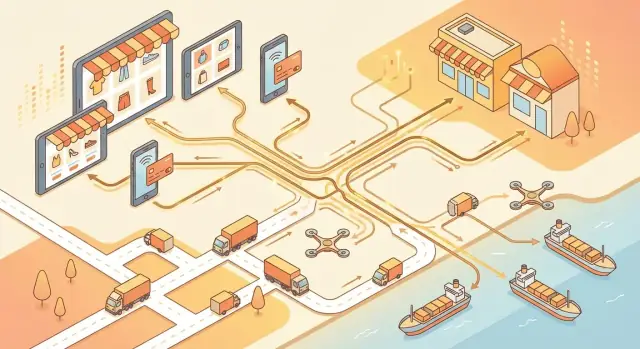
What an “Internet Economy OS” Means in Practice
Think of an “internet economy operating system” less like a piece of software you install and more like shared infrastructure: the connected services that let millions of businesses transact smoothly. It’s what makes online commerce feel routine—people can discover products, pay safely, get deliveries, and resolve issues—without every seller having to build those capabilities from scratch.
For Alibaba, the “OS” idea is practical, not philosophical. The core isn’t a single app. It’s a coordinated system where four layers operate as one loop.
The loop: discovery → trust → fulfillment → learning
Marketplaces create demand and discovery. They match buyers and sellers at scale, provide search and merchandising, and set basic rules of participation.
Payments (Alipay) add trust. When money moves securely—with escrow, fraud controls, and clear dispute processes—buyers take more risks and sellers can grow faster.
Logistics networks make the promise real. Delivery speed, reliability, and tracking turn online orders into a predictable experience, which increases repeat purchases.
Data ties it together. Signals from browsing, purchasing, delivery performance, and customer service feed back into the system to improve ranking, risk checks, inventory decisions, and service quality.
That’s the “OS” in action: each layer strengthens the others, and the whole system becomes more valuable as more participants join.
What this post will (and won’t) cover
This post focuses on mechanisms—how marketplaces, payments, logistics, and data reinforced one another to create network effects and help small businesses digitize.
It won’t be a hype story, a biography recap, or a “one-size-fits-all” playbook. We’ll skip buzzwords and stick to what changed the economics of selling online—and what you can borrow from it today.
The Problem Alibaba Set Out to Solve
Alibaba didn’t start by trying to “build e-commerce” as a single website feature set. It started by staring at a practical gap in early-2000s China: millions of small factories, traders, and family businesses could make and sell things, but couldn’t reliably find customers beyond their local circles—especially online.
China’s early internet, seen from a small business
Connectivity was improving, but the commercial internet was still uneven. Many SMEs lacked brand recognition, marketing budgets, and the know-how to run their own websites. If you were a buyer, searching for suppliers meant wading through scattered directories, outdated listings, and unknown companies.
For sellers, the internet promised reach—but reach without credibility didn’t convert into orders.
The three frictions: reach, trust, and transactions
Early e-commerce friction wasn’t just about speed or UI polish. It was structural:
- Reach: Buyers and sellers couldn’t easily discover each other at scale.
- Trust: Even if they connected, there was little assurance the other side was real, consistent, and accountable.
- Transaction friction: Negotiation, payment, disputes, and delivery coordination were slow, manual, and risky—especially across cities or borders.
These frictions fed each other. Low trust reduced willingness to transact; low transaction success reduced repeat business; and weak repeat business made it harder for honest sellers to stand out.
Why a platform mattered more than a single product
A standalone storefront tool wouldn’t fix this. What was needed was a shared place where many businesses could be found, compared, and validated—plus shared rules and services that made deals feel safer and easier. Alibaba’s core insight was to design for the system of commerce, not just the shopping cart.
Marketplaces as the Growth Engine
At the center of Alibaba’s “internet economy OS” is a simple idea executed at huge scale: build a place where buyers and sellers can reliably find each other, then make every interaction cheaper and more predictable over time. The marketplace isn’t just a storefront—it’s the main engine that pulls new businesses in and keeps shoppers coming back.
Matching buyers and sellers at scale
A marketplace works when it reduces the friction of discovery. Instead of a buyer guessing which factory or wholesaler to trust, the platform turns millions of scattered suppliers into searchable, comparable options.
That matching happens through everyday product mechanics:
- Search and filters that help buyers narrow down by price, specs, location, shipping speed, and more.
- Listings that standardize information (photos, descriptions, variants), so shoppers can compare quickly.
- Messaging and negotiation that bring the “trade show conversation” online, especially important for B2B and custom orders.
Reputation signals turn browsing into buying
Trust is the difference between “interesting” and “I’ll pay for this.” Alibaba’s marketplaces use reputation signals to help buyers take the next step without knowing the seller personally:
- Ratings and reviews
- Order history and repeat purchase patterns
- Seller responsiveness and dispute history
These signals don’t just protect buyers—they also reward good sellers with more visibility, which encourages better service.
Why SMEs join first—and why that matters
Small and medium businesses join early because the marketplace lowers their cost of reaching customers. They don’t need a national brand, a chain of distributors, or a big marketing budget to start.
Once SMEs fill the platform with selection (more products, more niches, more price points), buyers show up for variety and competition. That buyer traffic then attracts even more sellers. This is the basic growth loop that powers the rest of the system.
Payments as the Trust Layer (Alipay)
A marketplace can list millions of products, but it fails if buyers and sellers don’t trust the transaction. Alibaba’s answer was Alipay: not just a way to move money, but a system that made strangers comfortable doing business online.
Why online transactions need more than “pay now”
Early e-commerce had a basic problem: buyers feared paying and receiving nothing, while sellers feared shipping and never getting paid. Alipay popularized an escrow-style flow—holding funds until the buyer confirmed receipt—so neither side had to “go first” blindly.
That trust layer also required practical mechanisms:
- Identity checks to reduce impersonation and repeat fraud
- Dispute handling with clear steps and evidence (messages, shipping proof, time stamps)
- Refund and chargeback-like processes tailored to marketplace transactions, not just card payments
The result wasn’t only fewer scams; it was a predictable process that made online purchasing feel safe and normal.
How payments reduce friction and lift conversion
Payments influence conversion more than most people expect. When checkout is slow, confusing, or feels risky, customers abandon carts. Alipay reduced friction by making payment feel familiar and fast, with saved credentials and a consistent flow across many sellers.
Just as important, it reduced mental friction. If buyers believe they can get their money back when something goes wrong, they’re more willing to try a new merchant, place a larger order, or shop outside their home city.
Payment data as a feedback loop for risk and experience
Every payment generates signals: device patterns, transaction history, refund rates, delivery confirmation timing, and dispute outcomes. Used responsibly, that data improves both risk decisions (flagging suspicious behavior, limiting high-risk transactions) and user experience (faster approvals for trusted users, smoother checkout for reliable sellers).
Over time, payments became the marketplace’s trust scoreboard—helping the platform reward good behavior and spot problems early, before they spread.
Logistics as the Fulfillment Layer
A marketplace can match buyers and sellers, and payments can create trust—but the experience still breaks if delivery is slow, uncertain, or expensive. Alibaba treated logistics as the “fulfillment layer”: the part of the system that turns an online order into a real-world outcome.
What logistics enables (beyond shipping)
Good logistics isn’t just moving boxes. It enables specific promises that buyers can understand and rely on:
- Delivery commitments (e.g., “arrives in 2–3 days”), which reduce hesitation and cart abandonment.
- End-to-end tracking, which cuts support tickets and lowers “Where is my order?” anxiety.
- Predictable cost, so sellers can price accurately and buyers don’t feel surprised at checkout.
When those three are consistent, the marketplace feels dependable—more like a service than a directory.
Many carriers, one coordinated network
China’s delivery market was (and still is) highly fragmented, with countless regional carriers. Instead of replacing them with a single monolithic carrier, Alibaba’s approach was to coordinate them so they could behave like one network.
That coordination looks like shared standards (labels, data formats), routing logic, pickup scheduling, and centralized visibility. In practice, it means a seller can hand off a parcel and still provide a unified tracking experience to the customer—regardless of which carrier touches the package along the way.
Why logistics changes what sellers can offer
Once fulfillment becomes reliable, sellers can expand their catalog and ambition. They can confidently sell beyond their local area, offer faster shipping options, handle returns more smoothly, and run promotions without fearing a delivery meltdown. Logistics doesn’t just support commerce—it reshapes what a small business can credibly deliver.
The Flywheel: How the Pieces Reinforce Each Other
Alibaba didn’t grow by improving one feature at a time. It grew by building a loop where each part makes the next part stronger—and then letting that loop compound.
The core marketplace loop
At the center is a simple chain reaction:
- More sellers create more selection and better prices.
- More selection attracts more buyers.
- More buyers generate more transactions.
- More transactions give sellers reasons to invest (better photos, faster response, more inventory), which draws in even more sellers.
That’s the flywheel: a self-reinforcing cycle powered by volume and choice.
Payments and logistics accelerate the loop
A marketplace can’t spin fast if people hesitate at checkout or worry about delivery. Payments and logistics reduce friction at the two most sensitive moments: money transfer and fulfillment.
Payments (Alipay) strengthen trust. When buyers believe their money is protected and sellers believe they’ll get paid on time, conversion rates rise. Higher conversion means each visitor is worth more, which makes advertising and store improvements easier to justify for merchants.
Logistics networks turn online intent into real-world satisfaction. Faster, more predictable delivery reduces cancellations and returns, which improves seller ratings and buyer confidence. Reliable fulfillment also enables new categories (fresh goods, higher-value items) that increase average order size—feeding the transaction loop again.
Where network effects can stall
Flywheels don’t spin automatically forever. They slow down when trust or performance breaks:
- Quality issues: counterfeit goods or misleading listings reduce repeat purchases.
- Fraud and disputes: scams or weak resolution processes push users away.
- Delivery delays: missed time windows and damaged packages make “online” feel risky.
The takeaway: marketplaces generate growth, but payments and fulfillment keep that growth durable. When these layers work together, each new buyer and seller makes the system more valuable for the next one.
Data as the Control Plane
A marketplace is where demand and supply meet, payments create trust, and logistics delivers the promise. What makes the whole system steerable is data—signals that tell the platform what’s happening now, what’s likely to happen next, and where things are breaking.
The data trail from click to return
Every order produces a chain of events that can be measured:
- Browse: search terms, clicks, time on page, add-to-cart, wishlists, comparisons, and bounce behavior.
- Pay: payment method, success/failure, device and location fingerprints, velocity (how many attempts), refunds, chargebacks.
- Ship: warehouse scan times, carrier pickup, route milestones, delivery confirmation, late/failed deliveries.
- Return: reason codes, photos, dispute messages, return shipping time, inspection outcomes, repeat-return patterns.
Seen together, these signals describe not just what sold, but why it sold, how safely it was paid for, and whether fulfillment met expectations.
Improving search relevance and conversion
Browse and purchase data lets the platform rank results based on what actually satisfies buyers. For example:
- If shoppers who search “wireless earbuds” consistently buy items with certain specs (battery life, codec support), those attributes can be boosted in ranking.
- If a listing gets many clicks but low purchases, the platform can flag mismatched titles, misleading photos, or pricing that’s out of step.
- Seasonal spikes (e.g., school-start items) can be detected early, prompting more prominent placement and better inventory planning.
Fraud prevention and trust signals
Payments generate powerful risk signals, and platforms can act on them quickly:
- Detect abnormal payment retries or device switching and require step-up verification.
- Down-rank or pause sellers whose transactions show high dispute/refund rates.
- Spot triangulation fraud patterns by linking buyer accounts, addresses, and unusual shipping destinations.
Operational control: fixing bottlenecks before buyers feel them
Logistics and returns data turn operations into a feedback loop:
- If a carrier lane is trending late, the platform can adjust promised delivery dates or route volume elsewhere.
- If a product line has rising return rates for “defective,” it can trigger quality audits, packaging changes, or supplier reviews.
This is why “control plane” fits: data doesn’t just report the system—it helps direct it.
Ecosystem Services Built on Top
Once marketplaces, payments, and fulfillment were in place, Alibaba could offer “bolt-on” services that made the whole system more valuable to sellers—and harder to leave. These weren’t side products; they were tools that helped merchants grow from a small online shop into a repeatable business.
The most important add-ons
Advertising is the obvious one. Merchants could pay to surface products in search and recommendations, turning traffic into something closer to a controllable input. Alibaba’s ad tools also created feedback loops: better listings and better targeting improved conversion, which justified more spend.
Financing is another major layer. With transaction history, payment behavior, and fulfillment signals, lenders could underwrite small businesses faster than traditional banks. For a seller, access to short-term working capital (to buy inventory ahead of a peak season, for example) directly translates into more products available and fewer “out of stock” moments.
Storefront tools filled the day-to-day operational gap: templates, product catalog management, customer messaging, promotions, analytics dashboards, and basic CRM features. Even simple improvements—faster listing creation, clearer reporting, easier returns handling—reduce friction and save time.
Why these tools increase retention (and GMV)
Value-added services raise a seller’s earning potential without requiring them to rebuild their business elsewhere. As merchants invest in ads, learn the tooling, and integrate operations, switching costs climb. More importantly, the tools can increase GMV by improving discovery, conversion, repeat purchase, and inventory availability.
Risks to manage
The trade-off is complexity and dependence. Sellers can feel pressured by ad spend, policy changes, or opaque ranking incentives. Platform owners also have to watch conflicts of interest—ensuring rules, data access, and enforcement stay fair enough that the ecosystem keeps growing.
Governance, Safety, and Quality Control
An “Internet Economy OS” only works if people believe it’s safe to trade. At Alibaba’s scale, the biggest threats weren’t technical—they were human: dishonest sellers, misleading listings, and delivery failures that turn first-time buyers into one-time buyers.
The risks that break trust
Marketplaces concentrate opportunity, but they also concentrate abuse. Common failure modes include counterfeit goods, scams and impersonation, payment disputes and chargebacks, and late (or missing) deliveries. Each one chips away at confidence—and once trust drops, growth becomes expensive because every transaction needs extra reassurance.
The tools that keep the system credible
Alibaba’s governance is a set of feedback loops designed to reward good behavior and make bad behavior costly.
Seller verification and onboarding rules help reduce “hit-and-run” merchants.
Ratings, reviews, and complaint channels turn buyer experiences into visible signals, so quality becomes a competitive advantage.
Clear marketplace policies define what’s allowed, what’s prohibited, and what evidence is required in disputes—reducing ambiguity.
Enforcement loops (warnings, listing removals, account suspensions, and financial penalties) create consequences that scale.
Where payments and logistics connect to the platform, governance gets stronger: payment protection and dispute resolution can deter scams, and tracking plus delivery confirmation reduces “he said / she said” conflicts.
The growth vs. governance trade-off
Tight rules reduce fraud, but they can also slow onboarding and increase friction for legitimate small businesses. Loose rules accelerate growth, but invite counterfeits and customer harm.
Alibaba’s challenge was to tune governance like a product: start simple, measure where trust breaks, then add targeted controls. The goal isn’t perfect policing—it’s keeping transactions reliable enough that buyers return, sellers invest, and the ecosystem keeps compounding.
What This Model Did for Small Businesses
For many small merchants, Alibaba’s breakthrough wasn’t just “more customers.” It reduced the number of separate skills and systems needed to start selling. Instead of stitching together a website, payment provider, shipping partners, and ad tools, a shop could plug into one ecosystem and operate end-to-end.
Lowering the barrier to entry with an integrated stack
Marketplaces handled discovery and demand, Alipay payments reduced friction and increased confidence, and logistics networks made delivery predictable. That combination mattered most for SMEs that had products but lacked time, capital, or know-how to build their own e-commerce operations.
A practical effect: a small factory or family shop could test what sells, adjust pricing, and scale orders without negotiating a separate contract for every step.
What “digitization” looked like day to day
Digitization for SMEs wasn’t a buzzword—it was operational:
- Inventory: tracking stock and popular SKUs so they didn’t overproduce or run out during promotions.
- Marketing: running basic campaigns inside marketplaces, learning which keywords convert, and using ratings/reviews to improve listings.
- Payments: using Alipay to reduce cash-on-delivery risk and shorten the time from sale to cash in hand.
These tools turned intuition into feedback loops, helping merchants behave more like data-informed retailers even with small teams.
Who benefits most—and who can be left behind
The biggest winners were sellers with clear product-market fit and the ability to fulfill reliably—especially those who could respond quickly to customer feedback. But there were trade-offs: fees and platform rules could squeeze margins, competition became intense, and merchants who relied solely on a single marketplace risked dependency. The same network effects that accelerate growth can also make it harder for late entrants to stand out.
Why the “Operating System” Analogy Fits
Calling Alibaba an “Internet Economy OS” isn’t just a metaphor for size. It’s a useful way to explain how the parts were designed to work together—like modules in an operating system—so millions of businesses could plug in and operate.
Modules, APIs, and standards
An OS provides core services and standard interfaces. Alibaba did something similar for commerce:
- Modules: marketplaces (demand + discovery), payments (trust + settlement), logistics (delivery certainty), plus marketing and customer service tools.
- APIs and integrations: merchants, brands, and third parties could connect storefronts, inventory, ads, and shipping providers without rebuilding everything from scratch.
- Standards and coordination: consistent rules for listings, transactions, disputes, and delivery expectations reduced friction. That’s the “kernel” role—keeping the system stable while letting many players innovate on top.
The value isn’t any single component; it’s that the components behave predictably together.
How it differs from other platform paths
Other ecosystems often start with one dominant wedge:
- Super-apps bundle many consumer services in one interface, but commerce infrastructure may be uneven behind the scenes.
- Payment-first models can win trust quickly, yet struggle to create supply and fulfillment depth without a strong marketplace.
- Logistics-first models deliver reliability, but may not generate enough demand or merchant tools to become the default place to sell.
Alibaba’s OS-like approach is the coordinated stack: demand, trust, and fulfillment reinforcing each other.
What transfers outside China—and what doesn’t
Transferable: building shared rails (identity, payments, shipping integrations), clear standards, and incentives that reward good sellers.
More context-specific: China’s rapid mobile adoption, dense delivery economics, and regulatory/payment realities that shaped how fast each layer could scale.
Key Lessons and How to Apply Them Today
Alibaba’s big insight wasn’t “build a bigger marketplace.” It was to treat commerce like a system: discovery, trust, payment, fulfillment, and support all working together. You can apply the same thinking without being Alibaba-sized.
1) Build the system, not a single feature
If you only optimize the storefront (your marketplace or app), you inherit every other problem: fraud, late deliveries, refunds, and unhappy sellers.
Start by mapping your customer journey end-to-end, then choose one bottleneck to fix per quarter. For many platforms, that bottleneck is trust (verification, dispute handling) or fulfillment (clear SLAs, tracking, returns).
2) Make trust a product, not a policy
Trust isn’t a “terms and conditions” page. It’s measurable outcomes: fewer disputes, faster resolution, predictable delivery, and transparent ratings.
Practical moves:
- Standardize seller onboarding and identity checks.
- Create a clear refund/dispute path with time limits.
- Use incentives: faster payouts for consistently good performance.
3) Design flywheels, then protect them
Network effects are fragile when quality drops. Small improvements to ranking, reviews, and enforcement can do more than new growth campaigns.
Treat bad behavior like a cost center with a budget: if fraud rises, growth slows. Invest early in moderation tools and a dedicated ops function.
4) Help SMEs succeed, not just sign up
A platform wins when sellers make money. Build seller success into the product: templates, education, financing partners, shipping discounts, and analytics that answer simple questions (“Which products are profitable?”).
If you’re building these building blocks today, one practical advantage is speed: teams often need to prototype workflows (seller onboarding, listings, checkout, disputes, admin dashboards) and iterate quickly before “perfect” engineering is worth it. Platforms like Koder.ai can help you vibe-code working web, backend, and even mobile prototypes from a simple chat—using React on the front end, Go + PostgreSQL on the back end, and Flutter for mobile—then export the source code when you’re ready to harden it. Features like planning mode, snapshots, and rollback are particularly useful when you’re experimenting with marketplace rules and trust mechanisms.
What to explore next
If you want to go deeper on the mechanics, read /blog/platform-business-model and /blog/network-effects-explained.
Simple takeaways for founders and operators
Pick one trust metric and one fulfillment metric to own (weekly). Connect incentives to those metrics. Then add services that reduce seller effort—because the easiest platform to run is the one that keeps growing.
FAQ
What does “Internet Economy OS” mean in practical terms?
An “internet economy OS” is the shared infrastructure that makes online commerce routine: discovery (marketplaces), trust (payments/escrow + disputes), fulfillment (logistics + tracking), and learning (data feedback loops). It’s not one product—it’s a coordinated system that lets millions of merchants transact without rebuilding the same capabilities individually.
Why did Alibaba focus on building a platform instead of just a better online storefront tool?
Because a storefront alone doesn’t solve the three core frictions the post highlights:
- Reach: buyers and sellers can’t find each other reliably.
- Trust: strangers hesitate to transact.
- Transaction friction: payment, disputes, and delivery coordination are slow and risky.
A platform can standardize rules and services so deals become repeatable instead of one-off negotiations.
How do marketplaces actually create growth for buyers and sellers?
Marketplaces are the demand and discovery engine. They reduce search costs with structured listings, search/filtering, and messaging/negotiation—then use reputation signals (reviews, responsiveness, dispute history) to turn browsing into buying. As more sellers join, selection improves; as more buyers arrive, sellers get traction—creating a reinforcing loop.
What problem did Alipay solve beyond making payments faster?
Escrow-style flows reduce the “who goes first” problem:
- Buyers fear paying and receiving nothing.
- Sellers fear shipping and not getting paid.
By holding funds until receipt is confirmed (plus clear dispute steps, identity checks, and refunds), payments become a trust product, not just a transfer. That predictability increases conversion and willingness to try new merchants.
How does payment data improve trust and risk decisions?
Payments create high-signal data about behavior and outcomes, such as:
- unusual retry patterns, device/location anomalies, and velocity
- refund/dispute rates by buyer or seller
- timing between payment, shipment, and delivery confirmation
Used responsibly, this supports fraud controls, step-up verification, and incentives (e.g., smoother checkout or faster payouts for reliable participants).
Why is logistics considered a core layer of the system and not just an operational detail?
Fulfillment turns intent into satisfaction. Reliable logistics enables:
- delivery commitments buyers can trust
- end-to-end tracking that reduces support load
- predictable costs so pricing and checkout feel stable
When delivery is consistent, repeat purchases rise and new categories become viable (including higher-value items that require confidence in shipping).
How can “many carriers” still feel like “one network” to customers?
By coordinating a fragmented carrier market into something that behaves like one network via shared standards and visibility:
- common labels and data formats
- routing logic and pickup scheduling
- unified tracking regardless of which carrier handles each leg
This lets sellers plug into a predictable delivery experience without negotiating bespoke workflows for every region.
What is the flywheel in this model, and what causes it to stall?
The flywheel compounds when each layer strengthens the next:
- More sellers → more selection → more buyers → more transactions.
- Payments reduce hesitation at checkout and increase successful transactions.
- Logistics reduces cancellations/returns and improves ratings.
- Data improves ranking, risk checks, and operational decisions.
It stalls when trust breaks: counterfeits, fraud/disputes, or chronic delivery failures reduce repeat purchases and make growth more expensive.
What does it mean to treat data as a “control plane” for commerce?
The control plane is the end-to-end data trail from click to return (browse, pay, ship, return). It’s used to:
- improve relevance (rank what actually satisfies buyers)
- detect mismatch (high clicks, low purchases)
- prevent fraud (abnormal payment/behavior patterns)
- fix bottlenecks (late carrier lanes, rising defect returns)
In other words, data doesn’t just report performance—it helps steer the system in near real time.
How can founders apply the “Internet Economy OS” idea without being Alibaba-sized?
Start with the full journey and pick one bottleneck to fix per quarter. Practical steps aligned with the post:
- Own one trust metric (e.g., dispute rate or resolution time) and one fulfillment metric (e.g., on-time delivery rate) weekly.
- Make trust measurable: clear onboarding, escrow/refunds, time-boxed disputes, and incentives for good performance.
- Add seller tools that reduce effort: templates, analytics, shipping integrations, financing partners.
If you want related background, see /blog/platform-business-model and /blog/network-effects-explained.