

How LG Turns Displays and Appliances Into an Ecosystem Moat
How LG connects displays, home appliances, and key components into a cohesive consumer tech ecosystem—and why manufacturing depth can be a durable moat.
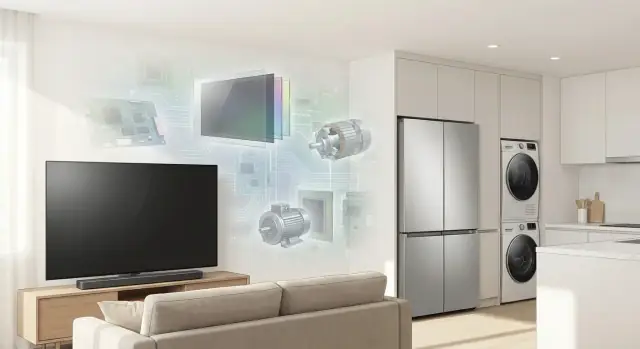
What “Ecosystem” Means for LG (and Why It Matters)
When people hear “ecosystem,” they often think of apps, voice assistants, and a single dashboard on a phone. For LG, the idea is broader and more practical: it’s the way products, components, factories, and service operations are designed to work together so each new model improves faster and more predictably.
Ecosystem = more than software
An LG ecosystem includes:
- Products that share assumptions: TVs, monitors, refrigerators, washers, and HVAC built around compatible foundations (connectivity, sensors, power needs, UI patterns).
- Components and modules: panels, compressors, motors, power boards, and wireless modules that evolve across product lines.
- Manufacturing know-how: the factory process itself—how quickly issues are detected, how consistently quality is held, and how efficiently changes get rolled out.
- Service and parts: repair networks, spare-parts planning, and feedback loops that turn real-world failures into design updates.
The “manufacturing moat,” in plain terms
A manufacturing moat is an advantage that comes from making things at scale, repeatedly, with fewer defects and fewer surprises. It shows up in three everyday outcomes:
- Cost: not just cheaper materials, but less waste, fewer returns, and better yields.
- Quality: tighter control over variability—so the product you buy is more likely to perform like the one reviewed.
- Iteration speed: faster learning cycles; issues found in production or service can be corrected in the next run, not two years later.
What this article covers (and how to use it)
We’ll focus on three pillars: displays (where screens shape the experience), appliances (where reliability and service matter most), and the component layer (often invisible, but decisive).
As a buyer, you can use this lens to judge more than specs: Which brand can support the product for years, integrate it cleanly at home, and keep improving the next generation? As a business reader, it’s a way to evaluate LG’s competitive position beyond marketing—through systems, not individual devices.
LG’s Home-Centered Strategy: From Single Products to Systems
LG’s ecosystem story is less about “one killer device” and more about owning everyday routines in a home. TVs, monitors, refrigerators, washers, air conditioners, and smaller components can look like separate businesses—until you see how they cluster around the same rooms, the same retailers, and the same service networks.
From TVs to appliances: expanding around the home
Displays pull people into the brand through high-visibility purchases like OLED TVs and premium monitors. Appliances then keep LG in the home for years, because kitchens and laundry rooms are “sticky”: once installed, they’re replaced infrequently and often in matching sets. That cadence pushes long-running product platforms rather than one-off gadgets.
How product families reinforce each other
Product families create reinforcement in practical ways:
- Shared interface patterns: consistent remote/app behaviors, setup flows, and notification styles reduce friction across devices.
- Services and support: the same warranty structures, technician networks, and parts logistics can serve multiple categories.
- Distribution leverage: retailers prefer brands that can fill floor space across departments—TVs, kitchen, laundry—supported by coordinated promotions and financing.
When these parts align, the LG ecosystem becomes a natural buying path: a TV purchase can lead to a soundbar, then a washer/dryer upgrade, then a kitchen refresh—without needing a dramatic “smart home” pitch.
Why appliance lifecycles change the playbook
Appliances live longer than phones, so strategy leans toward reliability, serviceability, and iterative improvement. Software matters, but it’s secondary to parts availability, repair turnaround, and consistent performance across years.
Where LG competes (without hype)
LG tends to win where premium experience (especially displays), reliability, and feature integration meet—conveniences that make multiple products feel coherent, not flashy.
Displays as the Anchor: Why Screens Drive the Experience
LG’s ecosystem story often starts with the most visible product in the home: the screen. TVs, monitors, and commercial displays aren’t just “categories” on a website—they’re the hub where entertainment, gaming, and even smart-home control gets noticed and judged.
Displays as a flagship category
A flagship OLED TV can set expectations for the rest of the brand: color, motion, sound pairing, and the overall feel of the interface. The same happens in monitors (creator workflows, high refresh-rate gaming) and commercial screens (signage reliability, uniformity, long run times). When the screen performs well, every connected device feels more premium.
Panel innovation shapes the product itself
Display advances don’t only improve picture quality—they change what designers can build. Thinner panels enable slimmer wall-mount installs and lighter stands. Efficiency gains reduce heat and power draw, which can improve longevity and allow quieter, more compact enclosures. Durability improvements matter in everyday use: image retention management, better thermal handling, and materials that hold up over years of brightness cycles.
Why display manufacturing is hard to copy quickly
Leading displays require massive capital investment, precise process control, and relentless yield learning. Even when competitors can source similar components, scaling consistently—without defects, banding, or uniformity issues—takes time. That manufacturing know-how compounds: each generation of panels teaches the next, and small improvements at scale become meaningful advantages.
Downstream impact: content, gaming, and home theater
Screens are where the ecosystem becomes emotionally tangible. Better HDR handling and motion processing can make streaming content feel “cinematic” without constant tweaking. Gaming features like low latency and variable refresh rate support influence console and PC setups. And once the TV anchors the room, add-ons become more likely: soundbars, rear speakers, multi-room audio—and smart-home routines through a unified interface.
A simple way to evaluate ecosystem strength is to ask: does the display make everything else in the room feel upgraded?
Appliances as the Long Game: Reliability, Service, and Iteration
Appliances are the “always-on” side of the LG ecosystem: refrigerators that run 24/7, laundry that cycles weekly for years, cooking products that must be safe under heat, and HVAC systems that can’t fail when weather gets extreme. Unlike phones or TVs, these categories punish short-term thinking. The real competition is measured in uptime, repair rates, and how painless ownership feels over a decade.
What improves year to year (and why it matters)
Many appliance upgrades aren’t flashy—but they’re meaningful in daily life. Efficiency gains lower bills and help meet tightening energy standards. Noise reduction is a quality-of-life improvement you notice every day (especially in open-plan homes). Better sensors and control logic can keep temperatures steadier, prevent over-drying clothes, and manage HVAC more smoothly.
Usability tends to move in small steps: clearer interfaces, faster cycles, better load detection, and fewer “mystery errors.” Serviceability matters too: designs that make common fixes easier can shorten repair time and reduce cost.
Reliability isn’t a spec—it’s a system
Brand trust is built when products keep working—and when they’re fixable when they don’t. Parts availability is a huge lever here: if key components are hard to source two or five years later, a minor failure becomes a major frustration. Clear documentation, consistent module designs, and sensible revision management help repairs stay practical.
The repair ecosystem is part of the product
After-sales service networks—authorized technicians, training, diagnostics, and logistics—turn reliability into a visible customer experience. Fast scheduling, accurate troubleshooting, and stocked parts are what make “warranty” feel like protection rather than paperwork. Over time, service data feeds iteration: repeat failure modes get redesigned, and the next model quietly becomes better.
The Component Layer: The Quiet Engine Behind Product Gains
When people compare TVs or appliances, they usually focus on visible features: picture quality, capacity, or smart functions. But much of the “feel” of a product is decided one layer down—by components and modules that rarely make it onto the box.
What counts as the component layer
In a home ecosystem, the component layer includes motors and drives that set vibration and torque, compressors that determine cooling performance, sensors that translate the real world into data, and connectivity modules (Wi‑Fi, Bluetooth, chipsets, antennas) that make smart features possible.
These parts aren’t glamorous, but they set the baseline for everything above them. If a compressor is inconsistent, software can’t fix temperature swings. If sensors drift, automations feel unreliable.
Why tighter component control improves products
Owning key components—or working in very tight partnerships around them—tends to improve two things: cost and learning speed.
On cost, you get more leverage from scale and less duplication of engineering effort across product lines. On learning, every returned unit, factory test, and field repair becomes feedback that can be turned into the next revision of the part. That shortens iteration cycles and reduces the gap between “lab spec” and real home performance.
Reusing modules without making everything identical
Module reuse doesn’t mean copy‑pasting the same design everywhere. It usually means shared building blocks: a sensor family used across multiple appliances, a connectivity module tuned once and deployed broadly, or motor control logic adapted to different loads. This can improve consistency while still allowing products to differentiate at the system level.
How component quality shows up at home
Better components surface in everyday outcomes: quieter operation, fewer rattles, steadier temperatures, lower energy use, and fewer early failures. Those are hard to demo in a store—but they’re what make an “ecosystem” feel dependable over years.
Vertical Integration: Benefits, Tradeoffs, and Real-World Constraints
Vertical integration means a company makes more of the “important bits” itself—key components, modules, or even final assembly—rather than buying them all from outside vendors. Strategic sourcing is the opposite approach: you rely on specialist suppliers for more of the stack, choosing partners based on cost, capability, and speed.
For LG, integration can be a real advantage when products depend on tight coordination between hardware, manufacturing, and quality standards.
The upside: speed, quality, and coordination
When more of the chain is in-house, LG can iterate faster. If a display module, a control board, and a production line are designed to work together, improvements don’t have to wait for lengthy supplier negotiations or mismatched roadmaps.
It also supports tighter quality control. Appliances and TVs are judged over years—noise levels, panel consistency, power efficiency, and failure rates. Owning more steps can mean clearer accountability and faster root-cause fixes when defects appear.
Just as important is coordination across teams. Integration makes it easier for R&D, manufacturing, and service teams to align on what “good” looks like—reducing surprises when a design hits mass production.
The tradeoffs: cost, demand risk, and complexity
The catch is fixed cost. Factories, tooling, and engineering teams require steady volume to stay efficient. If demand shifts—say consumers buy fewer large TVs or delay appliance upgrades—those costs don’t disappear.
Integration also increases management complexity. Running global operations, compliance, logistics, and quality systems across many product categories can slow decision-making if not carefully organized.
A realistic middle path
In practice, the strongest model is often a hybrid: keep the in-house “differentiators” (areas tied to performance, reliability, or brand identity) while using an external supplier ecosystem for parts where the market moves faster or scale is shared (commodity chips, standard sensors, certain plastics).
That mix lets LG protect what makes its products feel consistent—while staying flexible when technology or consumer demand changes.
Manufacturing Moats: Scale, Quality Control, and Yield Learning
Manufacturing is where a company’s “ecosystem” becomes physical. When LG can build large volumes of TVs, panels, and appliances across multiple factories, it isn’t just about producing more units—it’s about producing more consistently.
Scale: Lower cost per unit (without promising lower prices)
High volume can reduce per-unit cost through better utilization of equipment, steadier supplier contracts, and fewer changeovers on production lines. That efficiency doesn’t automatically translate into cheaper shelf prices (retail, promotions, and positioning matter), but it does give LG more room to invest in features, reliability, and support while staying competitive.
Quality control: Consistency, testing, and traceability
In home appliances especially, quality is less about one “perfect” unit and more about reducing variation across thousands of units. Mature factories standardize processes, run routine end-of-line testing, and track components and batches so issues can be isolated quickly. Traceability supports faster root-cause analysis—what changed, when it changed, and which units could be affected.
Yield learning: Defect reduction that compounds
Yield learning is the quiet compounding advantage of manufacturing at scale. Every defect found is a data point: a tool calibration tweak, a material change, a better assembly step, a tighter inspection rule. When those improvements get fed back into the line, defect rates can drop over time—meaning fewer returns, fewer repairs, and a smoother ownership experience.
Logistics: Distribution and spare parts
Scale also helps after the sale. Broader distribution networks, trained service partners, and more predictable spare-parts stocking become easier to justify when unit volumes are high—turning “availability” into a real, practical advantage.
Connectivity and Software: Where the Ecosystem Becomes Visible
The “ecosystem” part of LG isn’t just that your TV and washer can both connect to Wi‑Fi. It’s the software layer (apps, firmware, cloud services, and support tooling) that makes separate products feel coordinated—and makes ongoing improvements possible after you bring them home.
How data flows across devices (and why you feel it)
Connected devices generate small, practical streams of data: error codes, usage patterns, and sensor readings. When handled well, that turns into benefits you can actually notice:
- Diagnostics: clearer explanations of faults, faster troubleshooting, and fewer “try turning it off and on” service calls.
- Energy insights: visibility into consumption trends and suggested settings that reduce waste without guesswork.
- Maintenance alerts: filter reminders, abnormal vibration warnings, or early signals that something is drifting out of spec.
This is where software extends the value of reliable hardware—by catching problems earlier and reducing downtime.
Interoperability in a multi-brand home
Most homes are mixed-brand, so the expectation isn’t “everything must be LG,” but “it should play nicely.” Look for:
- Support for common standards (for example, Matter where available) and plain Wi‑Fi/Bluetooth setups.
- Compatibility with major voice assistants.
- Controls that still work when your phone changes, your router is replaced, or guests need limited access.
Privacy, security, and avoiding lock-in
Before you commit, check the basics: clear permissions, regular security updates, and an easy way to review connected devices and sign-ins. Prefer products with transparent data controls and a track record of firmware support.
To avoid lock-in, verify what still works locally (without cloud access), whether automation rules can be migrated, and if key features depend on a paid subscription. If the “smart” layer disappears, the appliance should still be a great appliance.
Practical note for builders: if you’re prototyping dashboards, service portals, or internal tooling around device fleets, the “ecosystem” challenge looks a lot like product-platform work: consistent data models, reliable integrations, and clear rollback paths. Tools like Koder.ai can help teams spin up a React-based web app with a Go/PostgreSQL backend from a chat-driven planning flow, then iterate quickly with snapshots and rollback—useful when you’re testing how real-world device data should surface in a UI.
Ecosystem Flywheels: Practical Use Cases in the Home
An ecosystem moat becomes real when devices make each other easier to use—and when that ease compounds over time. In a home, the “flywheel” effect shows up as fewer steps, clearer feedback, and routines that feel natural instead of engineered.
Scenario 1: TV + soundbar + remote routines
A common win is when an LG TV recognizes an LG soundbar immediately, sets the right audio mode, and keeps volume control consistent through a single remote.
Good ecosystem UX here looks like:
- One guided setup flow with plain-language choices (not a stack of separate pairing screens)
- Clear status (“Soundbar connected via eARC”) and simple troubleshooting when it isn’t
- Routines that are visible and reversible (e.g., “Movie Night” toggles sound mode, picture preset, and input without burying settings)
When this works, adding the soundbar doesn’t feel like adding a new product—it feels like upgrading the TV experience.
Scenario 2: Laundry + energy monitoring + maintenance reminders
Appliances create flywheels over months, not minutes. A washer/dryer set can become more valuable when energy monitoring highlights high-usage cycles, and maintenance reminders arrive before performance dips (filter cleaning, vent checks, drum care).
The best versions of this are calm and specific: a reminder with a “why it matters,” a quick how-to, and a confirmation that clears the alert—rather than vague notifications that train you to ignore the app.
Where ecosystems often fail
Ecosystems usually break in predictable ways: pairing that works once but not after a router change, updates that arrive unevenly across devices, and fragmented experiences where each product demands its own account, permissions, and settings. The flywheel only spins when the basics—setup, status, and updates—stay consistent across the whole home.
Innovation Loops: How R&D, Suppliers, and Factories Reinforce Each Other
An “ecosystem moat” isn’t only about having many products that connect. It’s also about how quickly a company can learn from real production and ship better versions—without breaking quality or margins. For LG, the loop between labs, supplier partners, and factories is where a lot of the quiet advantage builds.
R&D-to-factory feedback loops
Ideas rarely go straight from a lab bench to a store shelf. They move through prototypes, pilot lines, and limited runs where engineers can see what actually happens at scale: yield issues, defect patterns, assembly time, and failure points that only appear after thousands of units.
That feedback influences the next refresh cycle. A design tweak might reduce a part count, improve heat management, or make calibration faster—small changes that add up when you’re building at volume.
When manufacturing constraints shape design
Factories don’t just “execute” a design; they shape it. Materials, tolerances, and tooling limits can determine whether a product is stable over time.
Designing for repairability is part of this, too. If a module can be replaced faster, service becomes cheaper and customer downtime drops—especially important for appliances where lifespan expectations are high.
Supplier co-development vs. doing everything in-house
Vertical integration helps, but it has limits. Some advances arrive faster through co-development with specialized suppliers (for sensors, adhesives, chips, or coatings). The best partnerships look like shared roadmaps: LG defines system requirements and validation methods, while suppliers bring deep expertise and scale-ready processes.
Why time-to-market varies by category
Speed matters most in displays and consumer electronics, where yearly cycles and competitive launches drive demand. Appliances often move on longer timelines because reliability testing, safety certification, and service readiness take time.
The key is running both clocks at once: fast iteration where it’s safe, and deliberate iteration where durability and support matter more.
Limits and Risks: Where the Moat Can Narrow
LG’s ecosystem advantages don’t eliminate risk—they mostly shift it. Understanding where the moat thins helps set realistic expectations for performance, pricing, and long-term support.
Macro risks: swings that hit even the best operators
Consumer electronics demand can change quickly (promotions, interest rates, housing turnover). When demand drops, factories and suppliers still have fixed costs, which can pressure margins or slow new model rollouts.
Input costs can also move fast. Panels, resins, metals, and chips often behave like commodities; sudden price increases can show up as higher retail prices or fewer “value” configurations. Logistics disruptions—port congestion, regional shocks, fuel spikes—can delay availability and parts replenishment, affecting both new purchases and repairs.
Category risks: displays vs. appliances behave differently
Displays tend to be more cycle-driven. New formats, pricing battles, and rapid spec changes can make a “best” TV purchase feel dated sooner than expected.
Appliances are usually steadier, but the risk shifts to long-term reliability, service capacity, and parts continuity. A strong product can still frustrate buyers if local service is thin or parts lead times are long.
Software risks: support without guarantees
Smart features age faster than hardware. App changes, voice assistant policies, and security requirements can reduce compatibility over time. Update timelines and feature parity across models may vary—so buyers should avoid assuming “lifetime” support.
How buyers can reduce risk
Prioritize strong warranties and understand what’s covered (labor vs. parts). Before buying, check local service availability and typical repair turnaround times. If smart-home features matter, favor products that support common standards and keep a record of model numbers and support pages for future reference.
Buyer’s Checklist: Evaluating LG as an Ecosystem (Not Just a Device)
If you’re buying an LG TV, fridge, washer, or air conditioner, you’re not just choosing a single product—you’re choosing how service, updates, compatibility, and total running costs will feel over the next 5–10 years. Use this checklist to evaluate the ecosystem value, not just the spec sheet.
A simple checklist (what to verify before you buy)
- Compatibility: Will it work with what you already own (Wi‑Fi standard, voice assistants, smart-home platform)? If you’re adding an LG TV, check whether your existing soundbar, set‑top box, or console supports the formats you care about.
- Service network: Is there authorized service coverage where you live? Ask about typical turnaround time and whether in-home service is available for large appliances.
- Energy use: Compare annual energy cost, not only the rating. For appliances, also ask how different modes (eco/quick/steam) affect consumption.
- Update cadence: How long does the product get software/security updates? For connected appliances and TVs, updates can impact performance, app support, and smart features.
Questions to ask in-store (or before clicking “buy”)
Ask these directly—good retailers can answer, and vague answers are a signal.
- Parts: “How long are replacement parts stocked for this model line?”
- Repair options: “Is repair handled by LG-authorized techs, the retailer, or third parties?”
- Warranty details: “What’s covered for labor vs. parts, and what’s excluded?”
- App requirements: “Do I need an LG account? Can core features work without the app?”
- Connectivity: “If Wi‑Fi goes down, what functions still work locally?”
When to mix brands vs. commit to one ecosystem
Commit when you care about coordinated control and consistent service (multiple major appliances, a matching TV/audio setup, or a desire to manage everything in one app). Mix brands when your priority is best-in-class per category, or when you already have a strong smart-home hub and just need devices that play nicely with it.
Further reading
If you want to compare categories and see practical tradeoffs, browse related posts in /blog, and look for product comparison guides that break down serviceability, update history, and long-term cost—not only features.
FAQ
What does “ecosystem” mean for LG in this article?
In this context, an ecosystem is the end-to-end system that connects products (TVs, appliances, HVAC), shared components (panels, motors, compressors, boards), manufacturing processes, and the service/parts network.
The value is that each new model can improve faster and more predictably because learnings from factories and real-world repairs feed back into design.
What is a “manufacturing moat,” and how does it benefit buyers?
A manufacturing moat is the advantage a company gains by building at scale with repeatable quality.
Practically, it shows up as:
- Lower waste and fewer returns (not just cheaper materials)
- More consistent unit-to-unit performance
- Faster fixes and revisions when issues appear in production or service
Why are displays considered the anchor of LG’s ecosystem?
Displays are the most visible “flagship” category: picture quality, motion, HDR, and UI shape how premium the entire brand feels.
If the TV/monitor experience is smooth (setup, inputs, audio pairing, updates), it often becomes the anchor that makes add-ons—like soundbars or multi-room audio—feel like natural upgrades rather than separate projects.
How does panel innovation translate into real-world TV and monitor improvements?
Panel gains change what the product can be: thinner builds, lower heat, better efficiency, and improved uniformity/retention management.
As a buyer, look beyond peak specs and consider consistency signals (reviews mentioning uniformity/banding, sustained brightness behavior, and long-run reliability), since manufacturing control often matters as much as the headline features.
Why do appliances make ecosystem strategy more important than in phones or gadgets?
Appliances are judged over years, so the ecosystem advantage shifts to uptime and “time-to-fix,” not novelty.
Ownership tends to feel better when:
- Common parts are available years later
- Repairs are straightforward (modular designs, clear diagnostics)
- Service scheduling and parts logistics are reliable
Those are ecosystem outcomes you notice long after the install.
What is the “component layer,” and why should I care?
The component layer includes motors/drives, compressors, sensors, control boards, and connectivity modules.
Higher-quality, well-controlled components usually show up as quieter operation, steadier temperatures, fewer error conditions, and fewer early failures—things that are hard to demo in-store but dominate day-to-day satisfaction.
What does vertical integration mean here, and what are the tradeoffs?
Vertical integration means making more key parts and processes in-house; strategic sourcing relies more on specialized suppliers.
A practical rule of thumb:
- Integration can improve coordination, QA, and iteration speed on differentiating parts
- Sourcing can improve flexibility and cost on commoditized parts
Many strong manufacturers use a hybrid approach: keep the differentiators in-house and partner for the rest.
How does connectivity and software make the ecosystem feel real at home?
Connectivity becomes valuable when it produces useful outcomes, not just a “connected” label.
Look for features like:
- Clear diagnostics and error explanations
- Maintenance reminders that are specific and dismissible
- Energy insights that map to actionable settings
Also verify firmware/security update behavior, since software support often determines how well smart features age.
How can I evaluate interoperability and avoid getting locked into one brand?
Most homes are mixed-brand, so prioritize compatibility and resilience.
Before buying, check:
- Support for common standards (e.g., Matter where available) and basic Wi‑Fi/Bluetooth
- Voice assistant compatibility you actually use
- What still works locally if cloud/Wi‑Fi is down
- Whether automations or key features require subscriptions
This reduces lock-in risk while keeping day-to-day use smooth.
What are the main risks that can weaken an ecosystem moat over time?
Common risks include demand swings (which can affect pricing and rollout pace), parts/logistics disruptions (which affect repairs), and smart-feature aging (app changes, assistant policy shifts, uneven update timelines).
To reduce risk:
- Confirm local authorized service coverage and typical turnaround time
- Understand warranty details (labor vs. parts, exclusions)
- Ask how long replacement parts are stocked for the model line
- Prefer products that remain fully usable even without the app/cloud