

Library book hold request list that stays tidy for small collections
Set up a library book hold request list for a small collection with clear statuses, pickup windows, and a simple workflow anyone can run.
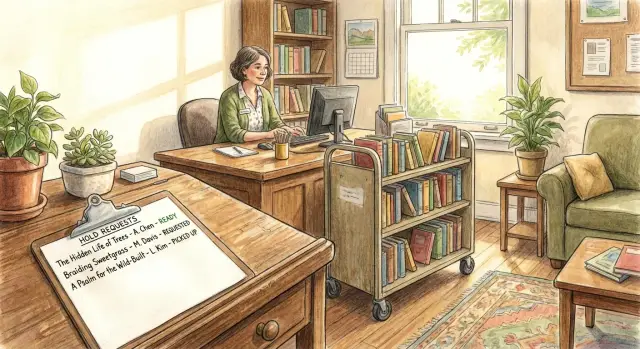
Why hold requests get messy in small libraries
Holds often start simple: someone asks for a book at the desk, a staff member writes it down, and the book gets pulled later. The trouble is that "later" invites shortcuts. A request in a text message, a sticky note on the monitor, or a name remembered "for tomorrow" works until the day gets busy.
The biggest problems show up when requests live in multiple places. One person writes "Sam - The Night Circus" on paper, another gets the same request by phone, and someone else tells a volunteer to "keep an eye out for it." With no single source of truth, nobody is sure what was promised or who is next.
Order issues appear fast, even with a small collection. If two people request the same title, the first person should get it first. But if the second request is easier to spot, or the first request was only verbal, the line gets flipped. Then patrons get missed, get called twice, or show up to find their hold was handed to someone else.
A tidy hold list has a few basic traits: one shared list, clear ownership each shift, simple statuses that mean the same thing to everyone, and an obvious next action (pull it, notify, put back, or cancel).
Even a small library benefits from a real system when staff coverage is thin, multiple people touch the same requests, popular titles create wait lines, or pickups happen within a set window. One missed call is annoying. A pattern of missed holds makes people stop trusting the process.
What to capture in each hold request
A tidy hold system starts with the same few details every time. Capture them up front and you spend less time chasing people down later.
Think of each hold as a small record. Whether you use a binder, a spreadsheet, or a simple app, keep the fields consistent so anyone can understand a request in seconds.
Include:
- Patron info: full name plus the best way to reach them (text, email, or phone). If families share a number, note it.
- Item details: title and author at minimum. Add format (hardcover, large print, audiobook) so you don’t pull the wrong copy.
- Identifier: barcode, copy number, or call number if you use one.
- Request date (and time if needed): so the line stays fair.
- Current status plus the status date: "Ready" without a date quickly becomes "ready when?"
- Pickup deadline: the last day for pickup.
- Notes: only what changes the action, like "OK with any edition" or "call, don’t text."
Example: Sam requests The Women by Kristin Hannah and prefers large print. If a standard copy returns first, you don’t waste time marking it ready and then undoing it. If you also record the ready date and deadline, staff can move to the next person without guessing.
Choose statuses everyone understands
Your list stays calm when every request has one clear status. If staff have to guess what "in progress" means, the list gets messy fast.
Keep statuses short and define them once. A simple set:
- Requested: the patron asked, but nobody has tried to pull it yet.
- Searching: you checked the shelf and obvious spots. Add a quick note when you check.
- Ready: the item is physically on the hold shelf, labeled, and the patron has been notified.
- Picked up: the request is complete.
- Expired / Cancelled: the hold won’t be filled. Record why (no pickup, patron cancelled, item missing, withdrawn).
A few rules make these useful:
- Don’t let Searching become a parking lot. If you can’t find it after two quick checks, note what you learned (on loan and due date, likely mis-shelved, missing) and choose a next step.
- Keep Ready strict. Only use it when the item is labeled and placed on the hold shelf.
- Treat Expired / Cancelled as a clean ending. It keeps the active list uncluttered.
Set ground rules before you start
A hold list stays tidy when everyone follows the same rules. The goal isn’t more paperwork. It’s fewer judgment calls when you’re busy.
Decide the rules once, then write them down
Pick rules a new volunteer can follow on day one. Keep them visible near the hold shelf or inside the binder.
Five decisions prevent most confusion:
- Who can add vs. who can edit: for example, anyone can add a request, but only one person per shift marks items Ready or Picked up.
- One home for the list: binder, shared spreadsheet, or one app. Any sticky note or voicemail must be entered the same day.
- One ordering rule: first come, first served, based on the request timestamp.
- One slip format: match the same fields you track (name, contact, date requested, pickup-by).
- A clear pickup window: how long you hold items, and what happens when time is up.
Make edge cases boring
Most messy-list problems come from exceptions. Decide how you’ll handle them before they happen.
Example: Two requests come in for the same title at 3:05 pm and 3:07 pm. The earlier request stays first, every time. When the book returns, you mark the first hold Ready, set the deadline, and place it on the shelf in the same order as the list.
Step-by-step workflow: request to pickup
A tidy hold process is mostly about doing the same small actions, in the same order, every time.
Step 1: Add the request immediately. Write it down while the patron is present (or when the message arrives). This prevents "I thought someone else added it" gaps.
Capture the basics: patron name and best contact method, exact title and author, request date, and any format needs or acceptable alternatives.
Step 2: Confirm details and alternatives. If the patron says "any edition is fine," write that. If they only want a specific edition or format, write that too.
Step 3: Time-stamp it and set the starting status. Use "Requested" as the default so the list stays fair when multiple people want the same book.
Step 4: Pull on a schedule, then update. Pick a consistent time (for example, first thing in the morning). Check the returns cart and shelves. If you don’t find it, keep the status but add a quick note like "Checked 1/21."
Step 5: When found, mark Ready and set the deadline. Put the book on the hold shelf with a matching slip. Only mark Ready when it’s labeled and placed.
Step 6: Close it. When collected, mark Picked up and record the date. If the deadline passes, mark Expired and move to the next person.
Keep the list and the hold shelf in sync
The system only feels tidy when the list and the shelf say the same thing. If a patron’s name looks different in two places, or one copy is labeled loosely, staff end up double-checking everything.
Pick one shelf label format and use it every time. Anyone should be able to read a label and find the matching row quickly.
Label rules that prevent most mix-ups:
- Use the same spelling as the list (no nicknames on the shelf).
- Choose one privacy-friendly style (last name + first initial, or initials) and stick to it.
- Include an identifier (call number or barcode), not just the title.
- Include the pickup-by date.
- If you have multiple locations, add a clear location code.
Where shelves get chaotic: multiple items for one patron. The cleanest approach is one row per item, even if the same person has three holds. Each physical item gets exactly one matching line, and you mark Ready item-by-item.
Series holds also need one rule. Either you accept "next available" or you require a specific volume number. Don’t leave it to staff to guess.
If the item is still checked out, add the expected return date and a follow-up date ("Due 2/10, recheck 2/11"). If it becomes overdue, update the entry so everyone sees the current reality.
For handoffs, a short end-of-shift note is enough: what was pulled and labeled, which patrons were notified, what to recheck, and what expired.
Common mistakes that create confusion
Most hold-list problems aren’t about the tool. They happen when small exceptions pile up.
A common one is changing a status without a date. "Ready" isn’t useful by itself. "Ready (Jan 21)" tells you how long it’s been waiting and when the pickup window should end.
Other mistakes that cause friction:
- Marking items Ready without a pickup deadline, so the hold shelf turns into storage.
- Reordering requests because someone is more persistent, instead of following first-come rules.
- Writing everything as free-form notes ("call soon," "maybe next week"), which makes the list hard to scan.
- Deleting old entries instead of archiving them for reference.
- Using vague status words ("handled," "in progress") that different staff interpret differently.
Two lists drifting apart is another classic problem: one at the desk, one in the back room. Keep one source of truth.
Example: A patron says they never got a call. If your entry shows "Ready" with no date and no deadline, you can’t tell if it became ready yesterday or three weeks ago. If it shows "Ready Jan 10, deadline Jan 17, notified by SMS Jan 10," the answer and next action are obvious.
Quick checks: daily and weekly
A small hold system stays tidy when you do a few checks at the same time every day. These aren’t about doing more work. They stop missed deadlines, lost order, and unnotified patrons from turning into a pile.
Daily checks (about 5 minutes)
Focus on what can cause a complaint today: expiring holds and people who were never notified.
- Scan for holds expiring today and decide: extend (if your rules allow), move to the next person, or reshelve.
- Review Searching holds older than your limit and update them with a clear note.
- Verify every Ready hold has both a notification and a pickup deadline.
- Spot-check the hold shelf: each item should match one line on the list.
A one-line note like "left voicemail 1/21" prevents repeated calls and guesswork.
Weekly checks (10-15 minutes)
Once a week, clean up the list so it doesn’t grow into a history book.
- Archive completed holds so active requests stay visible.
- Re-check long Searching requests and pick a next action date.
- Do a full shelf-to-list match to catch strays.
Example: keeping a popular title in order
Your library has one copy of a popular new novel. In one week, three people request it: Patron #1 (Mon), Patron #2 (Wed), Patron #3 (Fri). You keep them in one list, sorted by request time.
On Saturday, the book is returned. You mark Patron #1 Ready, set a pickup deadline, notify them, and place the book on the hold shelf with a clear label. Patrons #2 and #3 stay Requested.
If Patron #1 misses pickup, you mark that hold Expired with the date. Then you move the same physical book to Patron #2: mark Ready, set a new deadline, notify, and update the label. Patron #3 stays in place.
The key is simple: one copy is only ever Ready for one person at a time, and every change has a timestamp.
Next steps: make it easier without overbuilding
Once the basics are stable, remove friction without changing the workflow.
A spreadsheet is usually enough if you have one pickup spot, a small team, and not many active holds. A lightweight tool can help when multiple people update the list daily, duplicates are common, or you need better history.
The best upgrades are boring on purpose: templates for new requests, dropdown statuses, automatic pickup deadlines, and a notes field with a clear rule (exceptions only, not conversations).
If you do want a simple custom tool, Koder.ai (koder.ai) can be used to build a small internal tracker by describing your fields and statuses in chat, then iterating safely with snapshots and rollback. Keep it as small as your workflow: one list, a few statuses, clear deadlines.
FAQ
What’s the simplest way to stop hold requests from getting scattered?
Use one shared list that everyone treats as the single source of truth. Enter every request the same day it arrives, time-stamp it, and don’t rely on verbal memory or sticky notes.
What information should every hold request include?
Capture the patron’s full name and best contact method, the exact title and author, the requested format if it matters, and the request date (and time if you get frequent duplicates). Add a status with a status date so anyone can tell what happened and when.
How do we keep the line fair when two people want the same book?
Default to first-come, first-served based on a recorded timestamp. If you don’t have a time, add one consistently going forward and avoid “manual fairness” decisions in the moment.
Which statuses work best for a small library hold list?
Keep statuses few and literal so they’re hard to misread. A practical set is Requested, Searching, Ready, Picked up, and Expired/Cancelled, with a date added whenever you change the status.
When exactly should we mark a hold as “Ready”?
Only mark Ready when the item is physically on the hold shelf, clearly labeled, and the patron has been notified. If any of those steps didn’t happen yet, keep it as Requested or Searching and add a brief note.
How long should we hold items, and what do we do when the deadline passes?
Pick a clear pickup window and write it down where staff can see it. When the deadline passes, expire the hold, reshelve or move the item to the next person, and record the date so the next shift doesn’t guess.
What should we do when we can’t find a requested item on the shelf?
Do quick, scheduled pull attempts instead of constant ad hoc searching. If you can’t find it after two fast checks, note what you learned (like “on loan, due date”) and set a specific recheck date so Searching doesn’t become a dead end.
How do we keep the hold shelf and the hold list in sync?
Make the shelf label match the list exactly, using the same name format and including a pickup-by date. Every physical item should correspond to one line on the list, so staff can verify matches in seconds.
How should we handle multiple holds for the same patron?
Write one row per item, even if it’s the same patron. This prevents partial pickups from confusing the record and makes it clear which specific items are ready versus still requested.
Do we need software, or is a spreadsheet/binder enough?
Start with a shared spreadsheet or binder if one pickup spot and a small team can maintain it reliably. Move to a simple tool when duplicates, daily edits, and history tracking become painful; if you want something custom, a platform like Koder.ai can help you build a small internal tracker that matches your exact fields, statuses, and deadlines without overbuilding.