

Michael Dell’s Playbook: Supply Chain Discipline and B2B Focus
A practical look at how Dell scaled through direct sales, tight inventory control, and B2B priorities—and what operators can copy without hype.
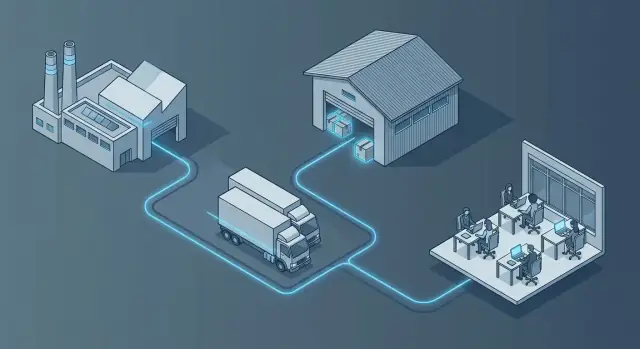
Why the Dell Story Still Matters
Studying Michael Dell isn’t about hero worship. Dell’s early success is better understood as a series of operating choices—many of them unglamorous—that stacked the odds in his favor. The story matters because it turns strategy into mechanics: what to build, when to buy, how to price, how to ship, and how to keep cash from getting trapped in the wrong places.
For founders and operators, Dell is a uniquely useful case because the company won in a market that looked commoditized and brutally competitive. PCs were not rare, magical products; they were interchangeable boxes of parts. That’s exactly why the playbook is worth revisiting: it shows how operational excellence can create durable advantage even when the product itself isn’t proprietary.
The two pillars: discipline + focus
This article frames the Dell playbook around two pillars that reinforce each other:
- Supply chain discipline: building against real demand, keeping inventory tight, standardizing components, and using speed (not prediction) to stay current as parts prices fell.
- B2B focus: shifting attention toward organizations that buy for reliability, service, and total cost—not just the lowest sticker price.
Together, these choices improved working capital, reduced risk, and made Dell easier to run at scale.
What you’ll learn—and how to apply it
You’ll learn how Dell’s direct sales model changed the flow of information (orders first, production second), why inventory turns can matter more than big revenue numbers, and how supplier relationships become leverage when your operations are predictable.
Most importantly, each section is written to be “copy-and-adapt.” You’ll be able to translate the ideas into practical questions for your own business: Where is cash getting stuck? What decisions should be standardized? Which customers value reliability enough to pay for it? And what metrics would tell you the model is actually working?
Michael Dell in Brief: The Big Moves
Michael Dell’s story is useful because it’s not mainly about inventing new technology—it’s about designing a system that moved faster than competitors and turned operating choices into durable advantage.
A quick timeline (dorm room to enterprise)
Dell started in 1984 by assembling PCs to order while at the University of Texas. Through the late 1980s and early 1990s, the company expanded nationally and then internationally, leaning heavily on selling directly to customers rather than through retail shelves.
By the mid-to-late 1990s, Dell had proven it could scale this approach: high volumes, tight control of costs, and increasingly sophisticated logistics. In the 2000s, the center of gravity shifted toward business and enterprise buyers—customers who cared less about the cheapest headline price and more about consistency, service, and predictable fleet management.
The “direct model” in plain terms
The direct model meant customers told Dell what they wanted first, and Dell built it after the order—then shipped it straight to them.
That sounds simple, but it changed everything:
- Demand was clearer because the order arrived before the build.
- Inventory stayed low because parts didn’t sit around for long.
- Pricing and configuration could be adjusted quickly without negotiating for retail shelf space.
Key inflection points: scale, competition, and the enterprise shift
Two major pivots defined the big moves. First, Dell industrialized build-to-order so it worked not just for enthusiasts, but at mass scale. Second, as consumer PC competition intensified and product differences narrowed, Dell leaned harder into B2B: standardized configurations, procurement-friendly processes, and support that matched how IT departments actually operate.
The limits of the playbook
This approach wasn’t magic. PC demand cycles, component shortages, and shifts in how people buy computers (including stronger retail and later online competitors) reduced the uniqueness of “direct.” The enduring lesson is that the system must evolve: what starts as differentiation can become table stakes, and discipline has to keep finding new places to matter.
The Direct Sales Model: Demand First, Then Build
Dell’s early advantage wasn’t a magical component or a secret factory trick—it was a selling method that reshaped everything downstream. By selling direct to customers rather than fighting for space on retail shelves, Dell turned “what to build” from a guess into a response.
Sell direct, own the relationship
Traditional PC makers pushed boxes into stores and hoped they sold. Dell went the other way: take the order first, then fulfill it. That direct relationship created two valuable assets at once—customer data and pricing control.
Without a retailer in the middle, Dell could see what people actually wanted (and what they stopped wanting) in near real time. It also meant fewer markups and fewer incentives to “stuff the channel” with inventory just to hit quarterly numbers.
Build-to-order: demand first, then assemble
The build-to-order core is simple: only assemble after demand is known. Instead of producing thousands of identical machines and discounting the leftovers later, Dell could configure systems based on current orders.
This approach reduces the risk of building the wrong mix—especially important in the PC market, where parts and specs age quickly. It also supports wider choice: customers can pick from standardized options, while the factory stays focused on repeatable assembly.
The feedback loop that guides stock and shipping
Direct orders don’t just trigger assembly—they guide what Dell needs to keep on hand and how fast it must move. If a certain processor or hard drive starts showing up in a growing share of orders, procurement can respond immediately.
That tight loop is the point: orders inform what to stock, what to prioritize in shipping, and where service teams should prepare for likely support needs. The sales model becomes an operational radar.
Trade-offs: less showroom presence, more operational responsibility
The downside is obvious: fewer customers casually discover your product on a store shelf. Direct selling requires stronger marketing, clearer configuration choices, and a buying experience customers trust.
It also shifts responsibility onto the company. When you own the relationship, you own the expectations—accurate delivery dates, reliable logistics, straightforward returns, and responsive support. Dell’s direct model wasn’t just a sales tactic; it was a promise operations had to keep.
Inventory Discipline: Speed Beats Prediction
Dell’s insight wasn’t that forecasting is useless—it’s that in fast-moving hardware, being fast often beats being right. When CPUs, drives, and memory drop in price every few weeks, inventory isn’t an asset; it’s a risk sitting on a shelf.
Why low inventory reduces risk
Holding weeks of parts means you can be stuck with yesterday’s components (and yesterday’s cost) while competitors ship newer specs for less. Even if you can sell the old stock, you may have to discount it, shrinking margins. Low inventory also lowers the chance of being caught with the wrong mix—too many of one model, not enough of another—when customer preferences shift.
Working capital 101: parts vs cash
Working capital is the money tied up to keep the business running day to day. If you buy a large pile of components in advance, cash leaves your account and sits in boxes until those PCs are sold.
Dell pushed the opposite: get the order, then pull parts through the system. The practical benefit is simple:
- Less cash trapped in inventory
- More cash available for marketing, support, and growth
- Fewer write-downs when prices fall
In operations terms, inventory isn’t just stock—it’s time and cash frozen in place.
Supplier coordination as a daily operating system
Low inventory only works if suppliers aren’t treated like distant vendors. They’re part of the daily rhythm. That means constant sharing of demand signals, quick confirmation of availability, and clear rules for substitutions when a part goes short.
Instead of betting on a quarterly forecast, the system relies on frequent updates: what’s selling today, what’s arriving tomorrow, and what must be expedited now.
Mistakes to avoid: cutting buffers too hard
There’s a limit. If you squeeze buffers to the point where one late truck stops shipments, you don’t have lean operations—you have missed deliveries.
Common pitfalls include:
- Optimizing for lowest inventory without protecting critical components
- Single-sourcing parts that are prone to shortages
- Ignoring transportation and receiving capacity (the parts exist, but don’t arrive in time)
The goal is controlled inventory: small where it’s safe, and intentional where reliability matters.
Standardization and Scale: Fewer Parts, More Options
Dell’s surprising advantage wasn’t exotic technology—it was restraint. By limiting the number of components it allowed into the system, Dell reduced complexity everywhere: purchasing, assembly, testing, support, and returns. Standardization became a scale engine.
Standardize components to simplify purchasing and assembly
When you buy fewer distinct parts, you spend less time sourcing, qualifying, and planning around them. On the factory floor, common components mean simpler work instructions, fewer assembly errors, and faster training. The build process becomes repeatable, which is exactly what you want when demand spikes.
Common parts = bargaining power and flexibility
High-volume orders on a small set of CPUs, drives, memory modules, and motherboards increase negotiation leverage with suppliers. It also makes substitutions easier when shortages hit: if multiple models share the same parts, you can reroute inventory to whatever configurations are selling without rewriting the entire bill of materials.
Quality control improves with fewer variants
Every new part is another potential failure mode. Fewer variants mean fewer combinations to test and fewer compatibility issues to debug. That tightens quality control and lowers the cost of support—especially important as Dell moved into enterprise accounts that expect predictable uptime.
Balancing standardization with customer configuration
Standardization doesn’t mean one size fits all. Dell paired a controlled set of approved parts with a configuration menu customers could understand: memory, storage, warranty, peripherals. The trick is to standardize behind the curtain while keeping the buying experience flexible.
A useful rule: if a component doesn’t clearly improve customer value or margins, it’s a candidate for removal.
Supplier Partnerships and Negotiation Leverage
Dell’s supply chain advantage wasn’t only about squeezing suppliers on price. It was about building a system where suppliers wanted to line up behind Dell—because the economics worked for them.
Mutual incentives: make volume valuable
When a company can turn orders into cash quickly, it can offer something many buyers can’t: steadier, more predictable pull-through. Suppliers benefit when volume is consistent and schedules are reliable.
For Dell, leverage came from being a high-throughput channel for components. For suppliers, the prize was scale and a clearer view of demand. That alignment matters more than a one-time discount, because it reduces suppliers’ risk and waste.
Information sharing that reduces everyone’s friction
The direct model generated clean order signals: what customers actually bought, in real time. Sharing those signals—forecasts, order patterns, and delivery cadence—helps suppliers plan production and logistics with fewer surprises.
In practice, this is what turns negotiation into coordination. Pricing improves, but so do lead times, quality, and responsiveness.
Near-site logistics and vendor-managed inventory (conceptually)
A key idea is pushing inventory closer to the assembly point without Dell owning it for long. Techniques like vendor-managed inventory and nearby supplier hubs shorten replenishment cycles and reduce stockouts.
This setup can:
- Cut transport and handling delays
- Lower buffers (and therefore working capital)
- Make late-stage configuration easier without piling up finished goods
Risk management: don’t trade efficiency for fragility
Strong partnerships can become a single point of failure if you over-depend on one supplier, one geography, or one specialized part. The best operators balance collaboration with contingency: second sources where feasible, clear escalation paths, and periodic stress tests.
Dell’s real leverage wasn’t just bargaining power—it was running an operating model that made suppliers faster, more certain, and more profitable when they stayed close.
The Shift to B2B: Winning on Reliability and Total Cost
Dell didn’t start by chasing the largest enterprises. The early wins came from small businesses that wanted decent performance, a fair price, and someone who would actually pick up the phone. Over time, that customer base became a bridge to bigger accounts—because the same traits that matter to a 50-person company also matter to a 50,000-person one, just with more paperwork.
Moving upmarket without losing the edge
As Dell moved from small business into enterprise customers, the pitch changed from “best specs for the money” to “lower total cost and fewer surprises.” Enterprises aren’t only buying a device; they’re buying predictability: standard images, consistent parts, clear warranties, and a vendor that won’t disappear mid-contract.
Why enterprises say yes
Procurement teams and IT departments value vendors that make buying and maintaining fleets boring—in a good way. What tends to matter most:
- Reliability and consistency: fewer model changes, stable driver support, predictable lifecycle planning.
- Support and accountability: fast replacement, clear escalation paths, and service-level commitments.
- Procurement ease: standardized configurations, volume pricing, straightforward invoicing, and clean approvals.
Longer cycles, but repeatable deals
B2B is slower. Security reviews, pilot programs, vendor onboarding, and contract negotiations stretch timelines. But once you win, you often get multi-year refresh cycles, larger order sizes, and expansion into adjacent teams or geographies.
Services and support as the “glue”
Services turn a hardware sale into an ongoing relationship. Deployment help, managed support, and warranty programs reduce downtime and workload for IT. That operational relief is sticky—and it helps defend accounts even when competitors match on price.
Customer Operations: Making IT Departments’ Lives Easier
Dell’s B2B edge wasn’t only about cheaper PCs—it was about reducing the daily friction inside IT departments. Enterprise buyers care less about a single great spec and more about whether 5,000 machines can be rolled out, supported, and refreshed without chaos.
Fleet management and standard images
IT teams want predictable fleets: a few approved models, consistent drivers, and one golden image they can deploy at scale. Standardization reduces help-desk tickets and speeds onboarding.
Dell’s operational promise to IT buyers is simple: pick a standard set, keep it stable, and make replacements match. When a laptop dies, the goal isn’t a fancy upgrade—it’s getting an employee back to work with minimal reconfiguration.
Lifecycle management: from purchase to refresh
Strong customer operations treat hardware as a lifecycle, not a one-time sale:
- Procurement: consistent configurations, clear lead times, straightforward pricing
- Deployment: imaging, tagging, staging that fits the customer’s rollout schedule
- Maintenance: predictable parts availability and fast warranty handling
- Refresh: planned replacement cycles that avoid surprise budgets
This is where reliability and total cost become tangible: fewer interruptions, fewer one-off exceptions, and fewer urgent escalations.
Bundle services without overselling
Services matter, but only when they’re concrete. Instead of vague “white-glove” claims, successful bundles are specific: next-business-day parts, onsite repair, pre-imaging, device tracking, or a managed refresh program. If you can’t define what happens, when, and who owns it, don’t sell it.
How to measure whether it’s working
Operational excellence shows up in boring metrics:
- Renewal rates for support and services
- Support performance: time-to-resolution, repeat-issue rate, and SLA compliance
- Account growth: expanding from one department to company-wide standards
When customer operations are strong, IT departments stop shopping model-by-model—and start standardizing around you.
Metrics That Made the Model Work
Dell’s advantage wasn’t just a clever direct sales model—it was the measurement system underneath it. When you build to order and keep inventory lean, small delays and quality slips show up fast. Metrics turned weak signals into actions.
Cycle time: the clock you can’t argue with
Speed was a competitive feature, so Dell tracked time like a production company, not a “PC brand.” The most useful cycle-time measures were end-to-end, not departmental:
- Order-to-ship time: how long from confirmed order to the unit leaving the factory
- Build time: time on the line, from kitting parts to finished system
- Delivery time: ship-to-door performance (often a carrier and regional operations issue, not manufacturing)
The key was treating these as one connected timer. If shipping slowed, sales promises had to adjust—or operations had to escalate fixes immediately.
Quality metrics: defects are operational debt
Build-to-order only works if what ships works the first time. Otherwise, you trade inventory cost for support cost and reputation damage. Dell monitored:
- Return rates by model and component batch
- Failure rates (early-life failures were especially telling)
- Support ticket volume and reasons, grouped into categories that mapped back to specific parts, configurations, or process steps
This made quality a feedback loop, not a post-mortem.
Financial metrics: working capital as a scoreboard
Operational excellence shows up in cash. Dell kept close watch on:
- Inventory turns (how many times inventory is sold and replaced over a period)
- Cash conversion cycle (how quickly cash spent on parts returns as cash from customers)
Shortening the cash cycle funded growth without needing as much external capital.
Targets and review rhythms: keeping teams aligned
Metrics only matter if they create habits. Dell-style operating cadences typically included weekly reviews for cycle time and quality, plus monthly deep dives on inventory turns and cash conversion. Targets were simple, visible, and owned—so when a number slipped, everyone knew who was leading the fix and by when.
Competition and the Limits of the Playbook
Dell’s advantages weren’t permanent secrets. Once rivals understood what was happening—sell direct, build to order, keep inventory low—they copied parts of the model. The difference was execution speed and organizational focus. Many competitors still had to protect retail channels, manage bigger finished-goods buffers, or rely on slower planning cycles. Copying the “what” was easier than copying the “how.”
When everyone gets efficient, price wins
As PCs became more interchangeable, commoditization turned operational excellence into table stakes rather than a differentiator. If two vendors can both deliver quickly with acceptable quality, buyers treat the hardware like a component in a broader IT budget. That intensifies price competition and forces differentiation elsewhere—support, financing, deployment services, security tooling, or standardized enterprise configurations.
Where the model strains
Dell’s demand-first approach works best when supply is flexible and component lead times are manageable. It strains in the opposite conditions:
- Demand shocks: sudden swings can overwhelm forecasting and logistics even with short inventory cycles.
- Component shortages: if a key part is constrained (CPUs, memory, displays), build-to-order can turn into can’t-build-at-all, pushing customers to whoever has allocation.
- Complex product mixes: too many options can erode the simplicity that makes standardization pay off.
In these moments, low inventory stops looking like discipline and starts looking like fragility. The response often requires selective buffering, stronger supply commitments, or designing products around interchangeable components.
When a Dell-style model won’t fit
Not every business benefits from direct, build-to-order operations. It’s a weaker fit when:
- Customers expect instant, retail-like availability.
- Products are highly experiential or brand-driven (where hands-on retail matters).
- Regulations, servicing, or installation require local channel partners.
- Demand is dominated by a few lumpy deals that can freeze a factory schedule.
The broader lesson: the playbook is powerful, but it’s conditional. It rewards clarity about where speed and working capital truly create an edge—and where the market forces you to compete on something else.
Practical Lessons for Founders and Operators
Dell’s story isn’t just “move fast” or “optimize inventory.” It’s a reminder that operations are a strategy—especially when you’re selling something physical, time-sensitive, or service-heavy. The takeaway is to earn complexity gradually, and only when the business has the demand and systems to support it.
1) Don’t build a complex supply chain before you earn the right
Many early teams try to look enterprise-ready by adding warehouses, too many shipping options, multiple contract manufacturers, and custom configurations for every customer. That complexity is expensive, distracting, and hard to unwind.
Start with the simplest supply chain that can reliably deliver. Add steps only when they clearly unlock growth (shorter lead times, lower unit cost, higher conversion) and when you have the volume to justify them.
2) Use demand signals before you commit cash
A core Dell idea was aligning build decisions with real demand. You may not be building PCs, but the principle transfers.
If you can, pull demand forward with:
- Pre-orders or waitlists for new products
- Deposits or milestone-based payments for custom work
- Clear configured-to-order quotes that expire
- Signed LOIs where appropriate (with realistic terms)
These mechanisms do two things: they reduce the risk of building the wrong thing, and they reduce working capital pressure by bringing cash closer to the moment you spend it.
3) Design offerings to reduce SKU sprawl early
Choice can quietly become chaos. Every variation creates forecasting issues, support burden, more edge cases, and more supplier dependencies.
Instead, design a small number of standard packages and use constrained options (for example: good/better/best tiers, a limited set of add-ons). Customers still get flexibility, but you keep the operational load manageable.
4) Build a few great supplier relationships before many average ones
It’s tempting to source everything from everywhere “just in case.” Dell’s playbook suggests the opposite: concentrate spend with a smaller set of reliable suppliers, collaborate closely, and use performance data to improve terms over time.
A practical operating rhythm:
- Choose suppliers you can grow with (quality, capacity, communication)
- Share forecasts carefully, but be honest about uncertainty
- Review performance monthly (lead time, defects, fill rate)
- Negotiate based on facts, not vibes—then reinvest savings into reliability
A supply chain isn’t a trophy. It’s a system that should get simpler as you scale, not more fragile.
5) Treat internal tooling as part of operations (not a side project)
A Dell-style model depends on tight feedback loops—order signals, inventory positions, supplier lead times, and cycle-time metrics—surfacing quickly enough to change decisions.
If you’re building internal tools (quote-to-cash, inventory views, SLA tracking, exception workflows), platforms like Koder.ai can help teams create web apps and dashboards from a chat interface, then iterate as processes change. The key is the same Dell lesson: shorten the cycle from “we noticed a problem” to “we changed the operating system.”
The Dell Playbook Summary: A Copy-and-Adapt Checklist
Dell’s advantage wasn’t a single trick—it was operational clarity: a system where sales, forecasting, procurement, and support reinforced each other. Use this as a “copy the principles, adapt the implementation” checklist.
What to copy (the timeless parts)
- Discipline on working capital: treat cash tied up in inventory as a cost, not a comfort blanket.
- Metrics that drive behavior: measure what you can control daily (cycle time, backlog, on-time delivery, returns), not just quarterly revenue.
- Demand-first thinking: listen to real orders and real usage signals before committing to big buys.
- Customer empathy for operators: design processes that reduce the workload on IT and procurement teams (clear configs, predictable delivery, fast fixes).
- Relentless simplicity: standardize parts, SKUs, and procedures so quality improves and exceptions shrink.
- Supplier relationships with leverage: be a reliable buyer, negotiate hard, and share forecasts—but keep accountability.
What to adapt (context matters)
- Channels: direct sales worked for PCs; your market might require partners, marketplaces, or a hybrid.
- Product type: hardware, SaaS, services, and regulated products have different lead times and failure costs.
- Service layer: Dell’s model leaned on efficient fulfillment; you may need premium onboarding, managed services, or SLA-heavy support.
- Batch size and customization: keep options for customers, but constrain complexity behind the scenes.
Common failure modes (spot them early)
- Customization creep that explodes SKUs and makes delivery unreliable.
- Chasing forecast accuracy instead of reducing cycle time and improving responsiveness.
- Great pricing, poor reliability: enterprise customers will pay more to avoid downtime and surprises.
- Metrics theater: dashboards that look good but don’t change decisions on the floor.
Closing takeaway
Operational clarity—knowing exactly how you make, sell, deliver, and support—can outlast product cycles. Copy the discipline, adapt the mechanics, and make execution your moat.
FAQ
Why does the Dell story still matter for founders and operators today?
It’s a concrete example of how operational choices (selling, building, sourcing, and measuring) can create advantage even when the product looks like a commodity. The value is in the mechanics: how to reduce risk, keep cash moving, and scale a repeatable system.
What are the two main pillars of the “Dell playbook”?
The two pillars are:
- Supply chain discipline: build against real demand, keep inventory tight, standardize components, and move fast as prices change.
- B2B focus: prioritize customers who value reliability, service, and total cost—not just the lowest sticker price.
Together they improve working capital, reduce operational risk, and make scaling easier.
What is Dell’s direct sales model in plain terms?
In the direct model, the order comes first, and production follows. That shifts you from forecasting what might sell to responding to what actually sold.
Practically, it:
- clarifies demand signals
- reduces finished-goods inventory
- lets you adjust pricing/configuration quickly without retail constraints
Why can inventory discipline matter more than big revenue numbers?
Low inventory matters because component prices and customer preferences can change quickly. Inventory isn’t just “stock”—it’s cash and time frozen in place.
Keeping inventory tight helps:
- avoid discounting outdated parts
- reduce write-down risk
- free cash for growth (marketing, support, expansion)
How do supplier relationships become leverage in this model?
It only works if suppliers operate as part of your daily system—not distant vendors.
Useful practices include:
- sharing demand signals frequently (not just quarterly forecasts)
- agreeing on substitution rules when parts go short
- shortening replenishment cycles with near-site logistics or vendor-managed inventory
What are the risks of going “too lean” on inventory?
If you cut buffers too hard, you can create fragility where one late shipment stops everything.
Common mistakes:
- optimizing for minimum inventory without protecting critical components
- single-sourcing shortage-prone parts
- ignoring logistics capacity (parts exist, but don’t arrive in time)
The goal is controlled inventory, not zero inventory.
How can standardization improve both scale and quality?
Standardization reduces complexity across purchasing, assembly, testing, support, and returns. Fewer variants means:
- simpler work instructions and faster training
- fewer compatibility issues to debug
- better bargaining power through higher volume on fewer parts
You can still offer choice by keeping a constrained configuration menu while standardizing “behind the curtain.”
Why did Dell’s shift toward B2B help it win long-term?
B2B buyers purchase predictability more than specs. They often care most about:
- reliability and consistency (stable models, drivers, lifecycles)
- support and accountability (clear SLAs, fast replacement, escalation paths)
- procurement ease (standard configs, volume pricing, invoicing)
That’s why total cost and fewer surprises can beat the lowest sticker price.
Which metrics best indicate whether a Dell-style model is working?
Operational excellence becomes real when it shows up in measurable performance. Practical metrics from the post include:
- cycle time: order-to-ship, build time, delivery time
- quality: return rates, failure rates, support ticket reasons
- cash efficiency: inventory turns and cash conversion cycle
Use simple targets and regular review cadences so numbers drive actions, not dashboards.
When won’t a Dell-style direct, build-to-order model fit well?
It’s a weaker fit when your market requires instant retail availability, hands-on discovery, heavy channel partners, or when demand is dominated by a few lumpy deals.
It also strains during:
- component shortages
- demand shocks
- product mixes with too many options
In those cases you may need selective buffering, hybrid channels, or redesigned offerings to keep reliability high.