

Niklas Zennström, Skype, and Viral Growth pre-iPhone
A clear look at how Skype spread through viral sharing, low-cost calling, and network effects—plus the trade-offs that shaped it before smartphones.
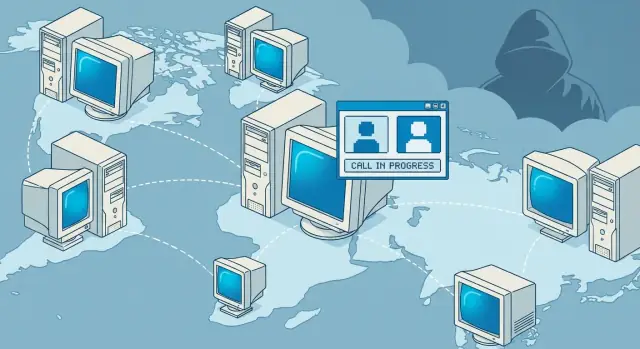
Why Skype’s early growth still matters
Skype’s early growth is one of the clearest examples of a product becoming a habit through everyday usefulness—not advertising budgets. Long before “growth loops” became a standard slide in pitch decks, Skype showed that a communication tool could spread person to person (and keep spreading) simply because each new user made the product more valuable for everyone else.
A big part of that story starts with Niklas Zennström, Skype’s co-founder and early strategist. Coming off the experience of building consumer internet products in Europe, Zennström helped shape Skype around a simple promise: make calling over the internet feel normal, trustworthy, and close enough to the phone that anyone could try it. The choices made in those early years—what to give away, what to charge for, and how to design the product to invite others—still map cleanly to modern product growth thinking.
What felt different about Skype
Traditional phone calling was expensive (especially across borders) and controlled by carriers. Skype flipped the feeling: calls could be free, setup didn’t require a contract, and you could see who was online and reach them instantly. That “I can just call you” moment made communication feel more casual—closer to a conversation than a transaction.
Why “before smartphones” is the point
Understanding Skype means remembering how people discovered software in the early 2000s: downloads, email, chat, and recommendations—not app stores and push notifications. Distribution depended on users sharing links, inviting friends, and solving a real problem right away on a laptop or desktop. Constraints were harsher, which makes Skype’s growth signals even more instructive.
What you’ll learn in this article
You’ll see how Skype combined:
- Viral distribution (invites and word-of-mouth built into the experience)
- Network effects (each new contact increased the product’s value)
- Product choices (a freemium model and clear use cases) that reinforced both
The result wasn’t just rapid sign-ups—it was repeat usage that turned Skype into a default verb for internet calling.
The communication problem Skype set out to solve
Skype didn’t invent the desire to talk across distance. It ran straight into everyday frustrations people already felt, but had learned to tolerate.
Long-distance calling was expensive and inconvenient
International calling in the early 2000s was still priced like a luxury. Per‑minute charges made “quick catch-ups” feel risky, and bills often arrived as unpleasant surprises. Even domestic long-distance could add up, especially for students, immigrants, remote workers, and anyone with family in another country.
The result was a communication pattern built around scarcity: call less often, keep calls short, and save “real conversations” for special occasions.
People were already trained on text-first communication
Most users were comfortable with email and instant messaging: asynchronous, cheap, and predictable. You could message multiple people, paste links, and avoid interrupting someone’s day. But these tools didn’t fully replace voice—especially when emotion, nuance, or urgency mattered.
So the expectation was clear: communication should be near-free, easy to initiate, and compatible with existing habits (contact lists, presence, quick follow-ups).
PCs and home broadband created a new opening
Broadband adoption on home PCs meant more households had “always-on” connectivity, headsets, and enough bandwidth for real-time audio. The phone line stopped being the default channel for voice—your computer could plausibly become the calling device.
Trust was the hidden hurdle
Installing new software from the internet wasn’t a casual decision. Users worried about scams, spyware, and the awkwardness of talking to strangers. Skype’s core problem wasn’t only technical—it also had to feel safe and familiar enough that people would try it, then invite someone they cared about.
A quick timeline of Skype’s rise
Skype’s rise looks almost compressed when you map it against the early-2000s internet. It went from a niche download to a default verb (“Just Skype me”) while most people still thought of calling as something you did through a phone company.
A simple timeline (launch to mainstream)
- 2003: Skype launches publicly as a downloadable PC app focused on free internet calling. Installing software to make calls felt novel—and slightly magical—on home broadband.
- 2004: Adoption accelerates through word-of-mouth. People don’t “try it”; they’re invited because someone they know wants to talk.
- 2005: Paid features (notably calling regular phone numbers) broaden the audience beyond “internet people.” Later that year, eBay announces an acquisition, pushing Skype into mainstream business press.
- 2006–2007: Skype becomes common in households and small offices. Headsets and webcams start showing up as “Skype accessories,” and calling abroad becomes a normal expectation for PC users.
The early use cases that made it stick
Skype’s growth wasn’t powered by abstract tech—it was powered by very human needs:
- Families across borders: Weekly calls to parents or partners abroad without long-distance bills.
- Students and expats: Keeping relationships alive from dorm rooms and rented flats.
- Freelancers and small businesses: Client check-ins, quick interviews, and international collaboration from a laptop.
These scenarios created repeat usage because the value wasn’t occasional; it was social and ongoing.
How word-of-mouth crossed countries
Skype spread through communities that were already international: diaspora networks, universities, open-source and tech forums, and globally distributed teams. One person installed it for a specific relationship, then pulled in the other side of that relationship—often in another country—creating a natural referral loop.
What “communication giant” meant in a PC-first era
Before smartphones, being huge meant being installed on millions of PCs and becoming the default way to reach someone when email was too slow and phone calls were too expensive. “Always-on” wasn’t about a device in your pocket—it was about a presence on your desktop and in your contact list.
The product architecture that enabled scale
Skype’s breakout wasn’t just clever marketing. The product was built on a peer-to-peer (P2P) architecture that fit the early 2000s internet—and turned technical decisions into visible user benefits.
P2P in plain language
In a traditional phone or VoIP calling setup, your voice goes through central servers owned by the provider. With peer-to-peer communication, parts of the “work” are shared across the network of users. Your Skype app could connect more directly to other Skype apps, instead of relying on one big, expensive hub for everything.
For non-technical users, the takeaway was simple: Skype calls often worked even when the service was growing fast, because the system didn’t depend on a single bottleneck.
Why P2P helped with reach and cost
Bandwidth and server infrastructure were costly, and home connections were uneven. By leaning on P2P, Skype could scale call setup and routing in ways that reduced how much centralized capacity it needed per new user. That mattered for viral distribution: as more people joined, the network could handle more conversations without Skype having to buy proportionally more servers.
This architecture also supported Skype’s global promise. International calling and cross-border communication became more accessible because the marginal cost of connecting two people was lower than in a fully centralized model.
“It works behind home routers” as a user benefit
Many people were behind home routers and firewalls that broke early VoIP tools. Skype invested heavily in making calling work through common network obstacles. Users didn’t have to learn what NAT, ports, or router settings were—calls simply connected.
That “it just works” moment is a growth feature: fewer failed setups means more successful first calls, more referrals, and stronger referral loops.
Limitations and trade-offs users felt
P2P wasn’t magic. Quality could vary with network conditions, and reliability sometimes depended on factors outside the user’s control. Updates were frequent and occasionally disruptive, because the system needed many clients to stay compatible. Some users also noticed higher CPU or bandwidth usage during calls.
Still, this product architecture gave Skype its signature advantage: it made global VoIP calling feel straightforward at a time when the internet wasn’t.
Viral distribution: how Skype spread user by user
Skype didn’t spread because people wanted “a better VoIP app.” It spread because one person wanted to talk to one specific person—and the fastest way to make that happen was to get the other person to install Skype.
The built-in sharing moment: “download it so we can talk”
The referral wasn’t an abstract recommendation; it was a practical instruction. If you were traveling, living abroad, or calling family long-distance, the value was immediate and personal. “Download Skype so we can talk for free” is a clearer pitch than any ad.
That made sharing feel like coordination, not marketing. The reward arrived instantly: your first call—no points, no waiting, no complicated incentives.
Contact lists as a growth engine
Skype turned the address book into distribution. Once you installed, the next step was naturally to find people you already knew.
Presence (seeing who was online) made invites feel timely: if a friend appeared available, you had a reason to message or call right then. And if they weren’t on Skype yet, the absence itself created a prompt to invite—because the product was literally more useful when your contacts were inside it.
Free core value lowered adoption friction
“Free-to-try” isn’t the same as “free and complete.” Skype’s core use case—Skype-to-Skype calling—delivered full value at $0. That removed the biggest hesitation in early-2000s software: paying upfront for something you weren’t sure would work on your computer and internet connection.
Design choices that made first success fast
Viral loops break when the first experience is confusing. Skype reduced early failure points with:
- Simple setup and a clear next action (add a contact, make a call)
- An audio test that helped users fix microphones before a real conversation
- A straightforward interface that matched the mental model of calling someone
When the first call sounded “good enough,” users immediately pulled in the next person—one relationship at a time.
Network effects: the flywheel behind retention
Skype wasn’t just “useful software.” It became useful because other people you cared about were on it. That’s the core network effect: every new user increased the number of possible free calls for everyone else.
Why a calling app improves with every join
A photo editor is valuable the moment you install it. A calling app is different: its value is proportional to who you can reach. When your contacts joined Skype, your “address book of reachable people” expanded—and your reason to keep Skype installed grew.
Callers and callees both turn into users
Phone calls are naturally two-sided. If you started a Skype call with a friend overseas, you didn’t just create one active user—you created (or reactivated) two. Many first-time users arrived because someone they trusted said, “Download Skype, it’s free.” The callee wasn’t an audience; they were the next node in the network.
Contact networks create switching costs (without lock-in)
Skype didn’t need hard lock-in to earn repeat usage. Once your family group, your project team, or your long-distance relationship settled on Skype, the “cost” of switching was social coordination: convincing everyone to move at once, re-adding contacts, and rebuilding habits. You could leave, but you’d be leaving behind the easiest path to the people you call.
Tipping points in real groups
Network effects often felt sudden:
- Families: one relative abroad joins, then the household installs Skype “for Sunday calls,” and it becomes routine.
- Friend groups: a single organizer adopts it, invites others, and it turns into the default for planning and catching up.
- Workplaces: a few remote teammates start using it; soon “Skype me” becomes shorthand for a quick call, and new hires adopt it on day one.
That’s the flywheel: invitations create reachable contacts, reachable contacts create repeat calls, and repeat calls create more invitations.
Monetization without killing growth
Skype’s monetization worked because it didn’t put a toll booth in front of the core behavior: talking to someone who also had Skype.
Free where the network effect matters
The simplest split was: Skype-to-Skype calls were free, while calls from Skype to regular phone numbers cost money (SkypeOut). Free calls maximized adoption and kept the “invite a friend” loop frictionless. Paid calling targeted a different job: reaching people who weren’t on Skype yet—family members, clients, hotels, landlines, and international numbers.
Why freemium fit communication products
Communication is inherently social: one person can’t get full value alone. Freemium lets users experience real utility immediately (a clear call, a familiar contact list, a working conversation) before they ever consider paying. That matters because trust builds through repeated use—especially with something as personal as voice.
Payments that supported growth (instead of blocking it)
By monetizing interoperability (calling “outside” the Skype network) rather than participation (joining it), Skype protected the top of the funnel. Users could download, test, and invite others without a credit card. When a need appeared—“I need to call a phone right now”—the upgrade felt situational and practical, not forced.
The trade-offs and risks
Freemium also introduces pitfalls:
- Plan confusion: multiple options (credit, subscriptions, calling rates) can create decision paralysis.
- Payment trust: early-2000s users were still cautious about online payments; a single bad checkout experience could stop conversion.
- Local expectations: pricing that felt cheap in one country could feel unfair in another, especially for international calling.
Skype’s challenge was to keep the free experience obvious and delightful, while making paid options understandable at the exact moment users needed them.
Quality, trust, and the messy realities of real calls
Skype’s promise sounded simple: voice calls that felt “normal,” just cheaper and easier across borders. But users didn’t judge it like a new internet gadget—they judged it against the phone. That meant three expectations mattered most: clarity, low delay, and consistency from one call to the next.
When real life hit the product
Early-2000s calling happened in imperfect conditions. People used bargain headsets, built-in laptop mics, or a shared family PC in a noisy room. Many connections ran over congested home broadband, and later, shaky home Wi‑Fi. The result was predictable: echo, jitter, dropped calls, and the classic “Can you hear me now?” loop.
Skype couldn’t control everyone’s setup, so it had to make uncertainty feel manageable.
Small features that built confidence
Trust often came from “boring” UI details that reduced anxiety mid-call:
- Contact presence and status (“Online,” “Away,” “On a call”) set expectations before you clicked Dial.
- Echo test / test call gave users a safe way to diagnose mic and speaker issues without embarrassment.
- Call logs and redial made the experience feel more like a dependable utility than a one-off experiment.
Together, these features turned inevitable glitches into something users could explain and fix—crucial for repeat usage.
Support, safety, and the cost of fast growth
A consumer app spreading virally also spreads confusion and abuse cases. As Skype scaled, it faced support pressure from users who blamed the product for hardware problems, ISP throttling, or misconfigured audio drivers. At the same time, safety issues grew: spam contact requests, impersonation, and unwanted calls.
Quality and trust weren’t just engineering goals—they were growth constraints. If the first call felt unreliable or unsafe, the referral loop broke. Skype’s long-term win required treating “messy reality” as a core product surface, not an edge case.
Messaging that traveled across borders
Skype’s growth message worked because it was easy to repeat and instantly relevant: call anyone, anywhere. You didn’t need to understand peer-to-peer communication or VoIP calling to get the value. If you had family abroad, a long‑distance partner, a distributed team, or friends from travel, the promise explained itself in one sentence.
A brand promise that fit real life
“Free” or “cheap” is only persuasive when people can picture the moment they’ll use it. Skype’s messaging naturally mapped to high-emotion, high-frequency situations—birthdays, quick check-ins, job interviews, study abroad—where international phone charges felt unfair.
That made the product easy to recommend without sounding like a tech pitch. Instead of “try this app,” the invitation was closer to: “Download Skype so we can talk without the bill.”
Localized growth, same core idea
Cross-border products win when they feel local. Skype’s message didn’t require perfect cultural translation because the pain point was shared globally.
Still, adoption often happened through specific international communities:
- migrant families bridging time zones
- students and expats coordinating across countries
- small businesses with overseas suppliers or clients
Each group carried the message into different languages and contexts, while keeping the same simple promise.
“Cheap international calling” as a referral script
Even when users cared about video or chat, “cheap international calling” became a memorable referral line—short, practical, and easy to justify. It gave people a reason to invite others, and it gave invitees a reason to accept.
Partnerships and press moments (without the hype)
Skype also benefited from visibility through everyday channels: mentions in mainstream tech coverage, distribution partnerships, and word-of-mouth sparked by notable product updates. None of that replaces a great product—but it amplifies a message that already travels well across borders.
Use cases that fueled repeat usage
Skype didn’t become a habit because it was novel—it became a habit because it solved recurring, emotional problems for specific groups. The strongest repeat usage came from people who had a reason to call again tomorrow.
The people who felt the pain most
Expats and international families were the clearest win. When “call home” costs drop from dollars per minute to essentially free, a monthly check-in can turn into a weekly ritual. That repeat cadence mattered: it kept contact lists fresh and made Skype the default place to see who’s around.
Remote teams were another early driver. Before modern collaboration suites, Skype became the meeting room: quick voice calls, ad‑hoc screen sharing later on, and a simple roster of who was online. For small distributed teams, reliability wasn’t a nice-to-have—it was their workflow.
Online sellers and freelancers used Skype as a trust tool. Hearing a real voice reduced uncertainty in cross-border deals, and it created a lightweight way to handle customer questions without publishing a personal phone number.
Gamers brought a different kind of repeat usage: high-frequency sessions. They weren’t scheduling “a call”; they were staying connected during play.
Small businesses: the informal phone system
Many small businesses treated Skype as a budget PBX: a shared account on a front-desk computer, a few usernames for staff, and paid calling for edge cases. It wasn’t polished, but it worked—and it was easy to try.
From scheduled calls to presence-based calling
A subtle behavior shift helped retention: Skype made calling feel more like messaging. Seeing someone online encouraged spontaneous “got a minute?” conversations.
What this reveals about product-led growth pre–app store
These use cases spread through everyday needs, not marketing channels. Download links traveled via email and chat, and value was proven in the first real conversation—then repeated because the user’s life demanded it.
What ‘before smartphones’ changed about distribution
Skype’s breakout years were shaped by the PC-first environment. “Install a program” was a normal step, and the hardware assumptions were different: a desktop or laptop that stayed online for long stretches, plus a cheap headset or USB microphone that turned a computer into a usable phone. Many early users first experienced VoIP through a shared family PC, an office workstation, or an internet café—places where long sessions and stable power weren’t a concern.
Distribution without app stores
Before app stores, the entire acquisition funnel had more friction. You had to:
- Find Skype via search, press, or a friend’s link
- Download an installer (often over slow connections)
- Trust it enough to run it
- Manually update when a new version shipped
That friction made word-of-mouth even more valuable: a recommendation didn’t just create awareness, it justified the effort and the trust required to install software.
Mobile rewired product expectations
When calling moved onto smartphones, the constraints changed. Users expected the app to be lightweight, sip battery, behave well on limited data, and “just work” in the background with push notifications. The PC-era pattern—leave Skype running all day—didn’t translate cleanly to a phone that people actively managed to preserve battery life.
Early advantages didn’t automatically transfer
Skype’s original strengths (PC presence, broadband at home/work, peer-to-peer efficiency, and a download-first growth model) were less differentiated once distribution consolidated into app stores and mobile platforms tightened control over background activity and networking. The same sharing instinct still mattered—but the channels, constraints, and default user behavior shifted underneath it.
Practical lessons for modern product teams
Skype’s story isn’t just “viral growth happened.” It’s a set of deliberate product choices—many still relevant whether you’re building a consumer app, a marketplace, or a B2B tool.
1) Put a shareable moment inside the core action
Skype didn’t bolt on referrals later. The product’s main job—calling—often required another person to join. That made the “invite-to-call” a natural step, not a marketing interruption.
If your product has a collaboration, handoff, or “we should do this together” moment, make sharing the shortest path to success.
2) Engineer network effects into everyday usage
Retention wasn’t just about features; it was about relationships. Contacts, presence (“online/offline”), and a familiar identity created a reason to return.
A practical check: does each new user make the product more useful for existing users? If yes, ensure those connections are visible and easy to re-engage.
3) Use freemium to prove value before asking for payment
VoIP calling was compelling because it delivered immediate savings and utility. Monetization (like paid calling to phones) came after users trusted the experience.
Freemium works best when:
- The free tier demonstrates the core value quickly
- Paid plans remove a real constraint (reach, convenience, reliability)
4) Don’t let growth outrun trust and support
Real-time communication amplifies the cost of bugs, spam, and confusion. Quality, safety, and customer support aren’t “later-stage” work—they’re growth features.
If you want viral distribution and network effects, build guardrails early: clear identity, anti-abuse controls, and fast recovery when calls fail.
A modern way to pressure-test these ideas is to prototype the user journey end-to-end—invite flow, contact graph, onboarding, and upgrade moments—before you commit months of engineering. Teams building new communication or collaboration products sometimes do this in Koder.ai, a vibe-coding platform where you can iterate through those loops in a chat-driven workflow, generate a React web app with a Go + PostgreSQL backend, and quickly validate whether your “shareable moment” and retention surfaces actually hold together.
For a deeper dive on growth mechanics, see /blog/referral-loops.
FAQ
What made Skype’s early growth viral without big advertising budgets?
Skype grew because the core action (calling) naturally required another person. Every successful call created the next invite: “download it so we can talk.” That made sharing feel like coordination, not promotion, and each new user increased the product’s value for existing users.
How are viral distribution and network effects different in Skype’s story?
Viral distribution is how new users arrive (invites, word-of-mouth embedded in the product). Network effects are why users stay (the product becomes more valuable as more of your contacts join). Skype combined both: invites drove installs, and a growing contact list drove repeat calling.
Why did “before smartphones” make Skype’s distribution harder—and more instructive?
In the early 2000s, users had to find a download link, run an installer, and trust unknown software—often with manual updates later. That extra friction made personal recommendations far more powerful, because a friend’s invite also provided the trust needed to install and try the product.
What product moment created Skype’s strongest “aha” for new users?
Skype’s first “aha” was making internet calling feel normal: install, add a contact, place a call that sounds good enough. Practical tactics for modern products:
- Put the share/invite inside the primary workflow
- Reduce setup failures (tests, defaults, clear next steps)
- Get users to first success fast so they have a reason to invite others
How did presence (online/offline status) improve retention?
Presence turned calling into a lightweight, everyday behavior. Seeing “Online/Away/On a call” helped users choose the right time to reach out, and it encouraged spontaneous “got a minute?” calls—more like messaging than formal phone calling.
What was the practical advantage of Skype’s peer-to-peer architecture?
Peer-to-peer (P2P) helped Skype scale without relying on one central bottleneck for every call. Practically, that translated to user-visible benefits:
- Calls often connected even as the network grew
- Lower infrastructure cost per additional user supported free calling
- Better tolerance for uneven home broadband in that era
How did Skype reduce first-time failure and increase successful first calls?
Skype removed early blockers that would kill referrals:
- Simple setup and a clear next action (add contact → call)
- An audio/echo test to fix mics before a real conversation
- Reliable basics like call logs and redial
For modern teams, treat onboarding reliability as a growth lever, not just UX polish.
Why did Skype’s freemium model accelerate growth instead of slowing it?
Skype kept Skype-to-Skype calling free (where network effects matter most) and charged for calling regular phone numbers (interoperability). That preserves growth because users can join, try, and invite others without payment—then pay only when they need to reach someone outside the network.
What trust and safety problems showed up as Skype scaled—and how should products prepare?
Viral growth amplifies abuse and confusion, so trust becomes a constraint. Common issues included spam contact requests, impersonation, and users blaming Skype for hardware/ISP problems. Practical guardrails:
- Strong identity and contact-request controls
- Anti-spam/anti-abuse systems early
- Clear troubleshooting paths and fast recovery when calls fail
What are the most transferable product-led growth lessons from Skype for teams today?
Design the product so sharing is the shortest path to success, and make connections visible:
- Put collaboration/invites inside the core action
- Make each new user improve the experience for existing users (contacts, teams, shared spaces)
- Monetize extensions (reach, convenience, reliability) rather than participation
If you’re mapping loops, a useful next step is documenting your referral paths and failure points (see /blog/referral-loops).