

Nokia: Cycles, Patents, and Platform Bets in Connectivity
A clear look at Nokia’s history to explain telecom capex cycles, patent licensing, and risky platform bets—and what they teach about connectivity markets.
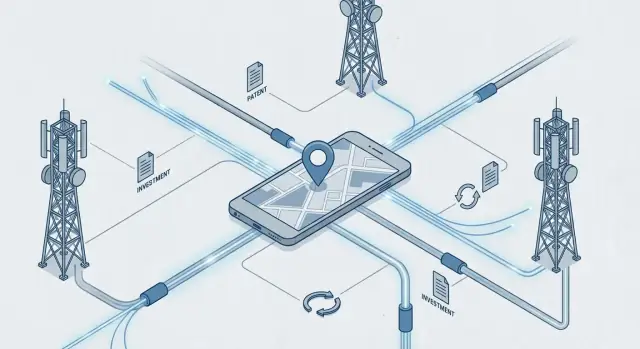
Why Nokia is a useful case study
This article isn’t a Nokia biography. It’s a way to understand how connectivity markets work—why fortunes rise and fall, why “great technology” doesn’t always win, and why even strong companies can look unstable from the outside.
What “connectivity markets” really include
When people say “telecom,” they often mean phone plans or towers. In practice, connectivity is an interlocking set of markets:
- Devices (handsets, modules, routers) that people and businesses use
- Networks (radio access, core networks, transport) that carry traffic
- Standards (like 3G/4G/5G) that define how everything interoperates
- Services and software that run, optimize, and secure those networks
Money and power move differently in each layer. Devices reward brand and distribution; networks reward long-term trust and engineering; standards reward participation and influence.
Why Nokia is the right lens
Few companies have lived through all of these layers the way Nokia has. Over the last few decades it has:
- Built one of the world’s most recognized phone businesses—then lost the platform battle
- Operated a major mobile network equipment business serving carriers
- Developed and monetized standard-essential patents (SEPs), creating revenue beyond selling hardware
That combination makes Nokia unusually useful for separating company-specific mistakes from system-level forces that affect everyone in the sector.
The three lenses we’ll use
To keep the story practical, we’ll look at Nokia through three recurring dynamics:
- Cycles: why telecom spending is lumpy, slow-moving, and hard to forecast
- Patents: how innovation can pay off through licensing even when product share changes
- Platform bets: how ecosystems (operating systems, network architectures) can create winner-take-most outcomes
With those lenses, Nokia becomes less of a “what happened?” story—and more a guide to how connectivity markets reward timing, scale, and strategic positioning.
Telecom infrastructure cycles: why revenue is rarely steady
Telecom equipment revenue looks “lumpy” because it follows operator CAPEX cycles, not consumer demand. Mobile network operators spend in bursts: they commit large budgets to a build-out, then shift into optimization mode, then pause—sometimes for years—before the next major upgrade.
The typical CAPEX rhythm
A common pattern is:
- Build-out: new sites, new radios, new transport capacity to reach coverage targets
- Densification: adding capacity in busy areas (more sites, more small cells, more antennas)
- Pause and sweat the assets: focusing on cost control, automation, and incremental software upgrades
- Upgrade: a step-change (new spectrum bands, new core features, major RAN refresh)
Suppliers like Nokia feel these swings first, because operator spend becomes purchase orders, then shipments, then revenue—often with little warning.
Generations (2G to 5G) set the spending clock
Each generation creates a new “reason to buy.” Early phases fund coverage and basic performance. Later phases fund capacity, new features, and better efficiency. The key point is timing: even if 5G adoption is rising, spending can slow once coverage obligations are met and networks are “good enough” for the moment.
Spectrum and regulation add hard deadlines
Spectrum auctions can force sudden investment: winning licenses means operators must deploy to meet coverage requirements or avoid penalties. Regulatory milestones (e.g., rural coverage targets, security-driven vendor changes, or shutdown deadlines for older networks) also compress timelines and pull spending forward.
Why forecasts swing
Operator budgets move with interest rates, competition, and policy decisions. When a few large operators delay upgrades, global forecasts can flip quickly—while suppliers still carry R&D costs and manufacturing commitments. That mismatch is a core reason infrastructure vendors see volatile quarters, even in long-term growth markets like 5G networks.
Where the money is: RAN, core, software, and services
Telecom vendors don’t sell “a 5G network” as one thing. Budgets are split across distinct domains, and each one has different profit dynamics and competitive pressure. Understanding that split explains why Nokia (and its peers) can look strong in one quarter and strained in the next.
RAN vs core vs transport: three different businesses
Radio Access Network (RAN)—the antennas, radios, and baseband that connect phones to the network—is usually the biggest slice of spend. It’s also the most price-competitive, because operators can benchmark performance and push vendors hard on unit pricing. RAN is where large rollouts happen, but it’s also where margin pressure is most intense.
Core network is the “brain” that authenticates users, routes traffic, and enables features like network slicing. Core projects tend to be smaller than RAN in dollar terms, but they can be stickier because integration, security, and reliability matter. Once a core is deployed, operators change it carefully.
Transport (backhaul/fronthaul/optical/IP routing) connects sites and data centers. Some vendors span this, others partner. For an operator, it’s a separate wallet with separate decision-makers.
Why “share of wallet” matters
Most carriers run multi-vendor strategies to avoid dependency, negotiate better pricing, and reduce risk. That means a vendor can win a deal yet still only capture part of the spend—RAN from one supplier, core from another, services from a third. Tracking share of wallet is often more revealing than headline contract wins.
Software and services: stabilizers, not a free pass
Software features, managed services, and optimization can smooth results between big hardware cycles, but they’re not guaranteed annuities. Contracts get rebid, operators bring work in-house, and automation can shrink service hours.
Deployment timelines shape product decisions
Network deployments run on multi-year timelines. Vendors must commit R&D and manufacturing capacity long before revenue is recognized—so product roadmaps, supply chain bets, and standards timing can matter as much as the technology itself.
Standards set the rules of competition
Telecom markets don’t run on “best gadget wins.” They run on agreed rules: what a 5G radio must transmit, how a core network authenticates users, how devices roam, and how equipment from different vendors talks to each other. Those rules are written in standards bodies—and they shape who gets paid, how much buyers can negotiate, and how quickly new entrants can catch up.
Standards bodies as economic tools
Groups like 3GPP (mobile specs), ETSI (European standards work), and ITU (global coordination) are where vendors, operators, and device makers negotiate technical choices that later become commercial realities. A standard is a contract the whole industry agrees to follow. Once it’s set, buyers can demand compliance and vendors can build to a predictable target—turning technical decisions into market structure.
Interoperability: lower risk, higher competition
Interoperability is a gift to buyers. If a mobile operator knows a Nokia baseband unit can interwork with standardized interfaces elsewhere in the network, procurement becomes less risky. That reduces “vendor lock-in” and makes competitive tenders easier.
The flip side is brutal for suppliers: when products must behave the same way on key functions, differentiation shrinks. Competition shifts to price, delivery capacity, energy efficiency, software quality, and services. Standards often expand the market, but they also make it easier to compare vendors side by side.
Timing matters: early vs right
Being early to a standard can be wasted effort if the industry doesn’t adopt your preferred approach. Being “right” technically but late politically can also fail—because once a release is frozen and deployments start, switching costs rise fast. Companies like Nokia invest heavily in standards work precisely because timing influences what becomes mandatory versus optional.
A simple view of SEPs
Some inventions are impossible to avoid if you implement the standard. Those are standard-essential patents (SEPs). Owners of SEPs can license them—often on FRAND terms (fair, reasonable, and non-discriminatory). This is one reason innovation can be monetized even when hardware margins compress, which we’ll build on later in /blog/nokia-cycles-patents-platform-bets.
Patents and licensing: monetizing innovation beyond hardware
Hardware sales in telecom are lumpy: operators buy big when rolling out a new generation, then pause. A well-run licensing business can be the opposite—more like a recurring revenue stream tied to the steady production of smartphones and other connected devices.
SEPs and FRAND, in plain language
Some patents are standard-essential patents (SEPs): inventions that are required to build products that follow a standard like 4G or 5G. If a phone or modem claims “5G,” it can’t avoid using certain standardized techniques.
Because SEPs can’t realistically be designed around, owners are expected to license them on FRAND terms: fair, reasonable, and non-discriminatory. Put simply: you should be able to get a license at a price that isn’t punitive, and similar companies should be treated similarly.
Why licensing can smooth the cycle
When network spending slows, licensing can still perform because it’s linked to device shipments, not operator capex. That can help stabilize earnings: millions of devices sold each quarter can translate into predictable royalty payments, even if a carrier delays a big radio upgrade.
The trade-offs you don’t see in a headline
Licensing also has real costs:
- Negotiations and audits can take time and management attention
- Litigation risk is expensive, uncertain, and can drag on for years
- Public perception can turn negative if licensing is framed as “trolling,” even when the patents are genuinely foundational
What a patent portfolio does (and does not) protect
A strong portfolio can defend pricing power in licensing and deter copycats—but it doesn’t guarantee success in hardware. Patents don’t automatically create distribution, scale, or product-market fit. They’re a monetization tool and a bargaining chip, not a substitute for winning the next equipment cycle.
Platform bets: the all-or-nothing nature of ecosystems
A “platform bet” is different from launching a single product. You’re betting that an ecosystem will form around your software: developers build apps, users buy devices because the apps are there, and partners promote it because demand is growing. When it works, it compounds. When it doesn’t, the gap widens quickly.
Why platforms pull in developers and users
Platforms are magnets because they reduce risk for everyone involved. Developers prefer writing once for a large audience, with predictable tools and payments. Users prefer platforms that already have the apps they need, accessories that fit, and services that sync across devices. Over time, the platform becomes the default choice, not because it’s “best,” but because it’s the safest bet.
Network effects and the “second best” trap
Network effects create a harsh dynamic: being close to the leader isn’t enough. A platform in second or third place often struggles to attract the next wave of apps and users, because each side waits for the other to move first.
Even if the underlying product is strong, the market judges platforms by ecosystem completeness—app availability, integration quality, and the pace of updates. Small deficits feel larger than they are, because they signal uncertainty.
Switching costs, apps, and distribution as choke points
Once people buy apps, learn an interface, and store photos and messages in a platform’s services, switching becomes inconvenient. Those switching costs are a moat for incumbents.
Distribution is another choke point. It’s not just app stores; it’s carrier promotion, retail shelf space, default search and browser settings, and enterprise procurement. If a platform can’t secure consistent distribution, it becomes harder to reach the scale developers expect.
Partnerships: accelerant and constraint
Partnerships can jump-start a platform—shared marketing, preloads, exclusive apps, or carrier support. But they can also narrow your options: roadmaps get negotiated, differentiation becomes limited, and dependence on a partner’s priorities increases. In platform wars, speed and control matter, and partnerships often trade one for the other.
What Nokia’s mobile platform era teaches about timing
Nokia’s handset years are a clean reminder that in platform markets, “good enough” rarely wins—being early or late by a single product cycle can be fatal. The company had real strengths that many rivals would envy, yet timing and ecosystem momentum moved faster than its internal cadence.
What went right (and why it mattered)
Nokia’s hardware execution was consistently strong: durable devices, excellent radio performance, battery life, and industrial design that consumers trusted. Add a powerful brand, deep carrier relationships, and wide distribution, and Nokia could place millions of phones in hands across many price tiers.
Those advantages are not trivial. They buy you attention, shelf space, and a chance to define a category—if the rest of the stack keeps up.
What went wrong: the platform clock sped up
The smartphone transition reset the rules. Touch-first user experience, app stores, and developer ecosystems became the deciding factors. Nokia’s software platforms struggled to shift quickly enough to the new interaction model, while competing ecosystems created a faster feedback loop: more users attracted more developers, which improved apps, which attracted more users.
Even when devices were competitive on specs, the “daily experience” and the availability of key apps increasingly drove purchase decisions. Platform decisions also carried switching costs: once consumers bought apps and learned an ecosystem, churn became harder to win back.
The lesson for any platform bet
Execution and ecosystem timing matter more than specs. A strong product can still lose if the platform arrives late, splits focus, or can’t attract developers and partners at scale. In platform eras, you don’t just ship devices—you ship momentum.
From handsets to networks: different games, different moats
Nokia’s shift from phones to network equipment is a reminder that “platform” can mean very different things. Consumer handsets reward attention, app ecosystems, and rapid product cycles. Network infrastructure rewards reliability, compatibility, and the ability to operate for years with minimal drama. The moats are built in different places.
Infrastructure isn’t a consumer platform
A phone succeeds when it wins users; a radio network succeeds when it meets coverage and capacity targets at the right total cost. Decisions are made by operators running large CAPEX budgets, under strict service obligations, and with existing equipment already in the field. That makes switching slower and less frequent than in consumer markets.
Why “best tech” doesn’t guarantee wins
Even if a vendor has superior performance on paper, procurement is shaped by risk management: delivery track record, supply-chain resilience, financing, and the cost of integrating with legacy systems. Politics and trust also matter. National security requirements, vendor restrictions, and government pressure can narrow the choice set before technical comparisons even begin.
The real value: support, reliability, integration
Networks are long-lived systems. Operators pay for multi-year support, software updates, spare parts, and fast incident response. Integration work—making RAN, core, OSS/BSS, and automation tools work together—is often where projects succeed or fail. Vendors that reduce operational complexity can defend pricing better than those selling “boxes” alone.
Fighting commoditization
Hardware tends to face price pressure over time. Suppliers try to move the battle toward software features, network automation, energy efficiency, and managed services—areas where outcomes (lower OPEX, faster rollout, higher uptime) are easier to monetize than raw equipment specs.
Policy, geopolitics, and trust as competitive factors
Telecom networks are treated as critical national infrastructure. That makes vendor selection about more than price or performance: it’s also about security posture, political alignment, and whether a supplier will still be “allowed” five years into a rollout.
Security concerns reshape who can sell where
When governments raise concerns about espionage risk, lawful intercept, or software update control, the impact is immediate: certain vendors can be restricted or excluded from parts of the network (often the core, sometimes the radio access network too). For suppliers like Nokia, this can open doors in markets tightening security rules—while also increasing scrutiny, audit requirements, and compliance costs.
Trust becomes a product feature. Carriers want confidence in secure development practices, transparent patching, and the ability to verify what runs in the network. This favors vendors that can prove process maturity and offer credible assurances around software supply chain integrity.
Export controls and supply chains are strategic risks
Modern network equipment depends on globally sourced semiconductors, optics, and specialized manufacturing. Export controls or sanctions can limit access to key components, engineering tools, or even customer markets. That risk doesn’t sit only with the vendor: carriers worry about delivery delays, spare-part availability, and whether future expansions will be blocked.
Carrier “diversity” goals change buying behavior
Many operators actively try to avoid single-vendor dependence. Diversity targets can lead to multi-vendor rollouts, split-region sourcing, and procurement that values “optionality” almost as much as technical specs. Even incumbents must compete continuously for share within the same network.
Long lifecycles amplify uncertainty
Mobile networks are upgraded in waves, but individual products stay in the field for a decade or more. Policy shifts mid-cycle can force costly swap-outs, accelerate depreciation, and reshape total cost of ownership. The result: procurement decisions increasingly price in political and regulatory volatility alongside engineering performance.
Open RAN and the next platform shift in networks
Open RAN (Open Radio Access Network) is a way to build the “radio” part of a mobile network using more open interfaces between components. Instead of buying a tightly integrated RAN stack from one vendor, a carrier can mix and match parts (radio unit, distributed unit, centralized unit) and run some functions as software on standard hardware.
Why some carriers like it
The appeal is optionality. Open RAN can increase vendor diversity—more suppliers can compete for a slice of the network, which can reduce dependency on any single equipment maker. It can also accelerate innovation: software features, analytics, and energy-saving algorithms can be updated more frequently when the network is built like a modular software system rather than a sealed appliance.
The trade-off: integration becomes the carrier’s problem
Open interfaces don’t automatically create plug-and-play networks. Someone still has to make multi-vendor components work together, keep performance stable, and troubleshoot issues that cross supplier boundaries. That integration burden can raise operating costs, slow rollouts, and shift power toward systems integrators and large carriers with the skills to manage complexity.
How incumbents (including Nokia) respond
Incumbent vendors rarely ignore Open RAN; they adapt. Common responses include offering “Open RAN compatible” product lines, partnering with cloud providers and specialist software firms, and positioning themselves as the prime integrator—selling openness while keeping accountability (and margins) tied to their services.
The next platform shift: what “platform” means in networks
In networks, “platform” increasingly means programmable control: APIs, automation tools, cloud-native deployment, and shared data layers that let operators manage performance, security, and cost at scale. Open RAN is part of that shift, but the bigger change is the move from hardware cycles to software platforms—where the winning position may belong to whoever owns the orchestration, not just the radios.
The brutal economics: scale, pricing pressure, and R&D load
Telecom equipment looks like a high-tech business, but it often behaves like heavy industry: a few big buyers, long purchasing cycles, and relentless pressure to cut unit costs. That combination makes “good enough” products dangerous—because a small price gap can decide a multi-year deal.
The squeeze: concentrated buyers and constant benchmarking
Most national markets have only a handful of mobile network operators, and they buy at massive scale. Procurement teams run competitive tenders, compare vendors feature-by-feature, and negotiate hard using credible switching threats (multi-vendor networks are common). Even when a vendor performs well, renewals can be repriced downward as operators push for lower total cost of ownership.
Why scale matters—yet differentiation is hard
Scale helps in two ways: it spreads fixed costs (manufacturing, global support, compliance) and, more importantly, it spreads R&D across more revenue. The catch is that differentiation is constrained by standards and interoperability requirements. Vendors can optimize radio performance, power use, automation, and support tooling—but many “headline” capabilities converge quickly.
For Nokia and its peers, this creates a race where the biggest cost line item—R&D—can’t be dialed down without risking the next transition.
Recurring software revenue is the escape hatch (if adopted)
Software, cloud management, security, and automation can be higher-margin and more recurring than hardware. But it only works when operators actually deploy these features broadly (not just pilot them) and accept subscription models—often a cultural shift from capex-heavy buying.
Common failure modes
When the economics turn ugly, it usually shows up as:
- Margin erosion from price-led deals and commodity hardware mix
- Underinvestment leading to missed technology transitions (e.g., new RAN architectures)
- “Revenue without profit” growth as services expand but stay low-margin
The lesson: in connectivity markets, you can’t cost-cut your way to leadership, and you can’t out-innovate your cost structure forever.
Practical takeaways: how to read connectivity markets
Connectivity markets reward patience and punish assumptions. Whether you’re buying equipment, building it, or investing in the sector, the biggest mistakes usually come from reading one good quarter (or one bad one) as a permanent trend.
For operators: manage vendor risk and lifecycle costs
Treat network purchases as long-lived system decisions, not “box” decisions. The headline price matters less than the total cost of running, upgrading, and securing the network over 7–10 years.
Focus your vendor evaluation on:
- Upgrade path clarity: what’s the roadmap from current 4G/5G features to the next release, and what requires new hardware?
- Operational burden: automation tooling, fault management, and how quickly problems get resolved in the field
- Supply chain and compliance: timelines, spare parts, and regulatory trust requirements
- Contract flexibility: options to shift spend between RAN, core, and software as demand changes
For vendors: balance patents, roadmaps, and partnerships
Patents and licensing can stabilize earnings, but they don’t replace product competitiveness. A healthy vendor strategy keeps three clocks aligned:
- Standards participation (to stay relevant)
- Product execution (to ship on time and at scale)
- Partner fit (cloud, silicon, systems integrators)
When partnerships change, customers fear lock-in. Reduce that fear with transparent interoperability plans and clear migration tooling.
One practical parallel from software: teams increasingly use platforms like Koder.ai to move faster from planning to delivery—using a chat-driven workflow to create web, backend, or mobile apps while keeping iteration tight (planning mode, snapshots, and rollback). The telecom lesson translates well: speed matters, but so do repeatable processes and clear upgrade paths.
For investors: spot cycle position and competitiveness
Look past revenue and ask what portion is new deployments vs. swaps vs. software/services. Indicators that often signal cycle shifts:
- operator capex guidance and spectrum timelines
- backlog quality (delivery timing, cancellations, regional mix)
- margin movement tied to pricing pressure vs. mix shift
- R&D intensity and whether it’s funding future products or just keeping up
Surviving multiple tech generations
Nokia’s story highlights a simple rule: technology generations change the rules, but execution and timing decide who benefits. Favor strategies that keep optionality—portable software, upgradeable architectures, and licensing models that don’t depend on one product cycle going perfectly.
FAQ
What does the post mean by “connectivity markets,” beyond just telecom carriers?
Connectivity markets span multiple layers that behave differently:
- Devices (handsets, routers, modules)
- Networks (RAN, core, transport)
- Standards (3G/4G/5G interoperability rules)
- Software/services (automation, security, managed ops)
A company can be strong in one layer and weak in another, so “the market” isn’t one market.
Why is Nokia a useful case study for understanding connectivity markets?
Nokia has operated across key layers over time: mass-market devices, carrier-grade network equipment, and standard-essential patent (SEP) licensing. That mix makes it a practical lens for separating:
- company execution issues
- from system-level dynamics like CAPEX cycles, standards-driven commoditization, and platform network effects
Why is telecom infrastructure revenue so “lumpy” quarter to quarter?
Because suppliers sell into operator CAPEX cycles, not steady consumer demand. A typical pattern is:
- build-out
- densification
- pause/optimization (“sweat the assets”)
- upgrade (new spectrum/features/refresh)
Vendors feel the swing quickly because purchase orders and shipment timing can change faster than their fixed R&D and manufacturing commitments.
If 5G adoption is growing, why can vendor spending still slow down?
Not necessarily. Early in a generation, spending can be heavy for coverage targets; later, operators may slow once networks are “good enough.” Watch for:
- coverage obligations being met
- delayed upgrades due to interest rates or competition
- shifting spend toward optimization/software rather than new radios
Adoption can rise while CAPEX temporarily falls.
What’s the practical difference between RAN, core, and transport when evaluating vendors?
It highlights where margins, competition, and “stickiness” differ:
- RAN: biggest spend, most price pressure
- Core: smaller dollars, often stickier due to integration/security
- Transport: separate budget owners and procurement logic
A vendor can “win 5G” in headlines but still struggle if the win is concentrated in a lower-margin domain.
What does “share of wallet” mean, and why does it matter more than deal headlines?
Because most carriers buy multi-vendor to reduce dependency and improve negotiating leverage. A vendor may win a contract but capture only part of total spending (e.g., RAN but not core, or services but not transport).
To gauge real traction, track:
- which domains were awarded
- expansion options (future regions/features)
- renewals and re-bids, not just initial wins
How do telecom standards shape competition if everyone builds to the same spec?
Standards (via bodies like 3GPP/ETSI/ITU) define interoperability. That helps buyers because compliant equipment is easier to compare and swap, but it can compress supplier differentiation.
Vendors then compete on:
- cost and delivery
- energy efficiency
- software quality and operations tooling
- services and integration capability
What are SEPs and FRAND, and why do they matter to a company like Nokia?
SEPs cover inventions that are unavoidable if you implement a standard (like 4G/5G). FRAND means licensing should be fair, reasonable, and non-discriminatory.
In practice:
- licensing can create steadier revenue tied to device shipments
- but it also brings negotiation, audit, and litigation costs
It’s a monetization lever, not a guarantee of hardware success.
What’s the core lesson from Nokia’s handset platform era for any platform strategy?
Platform bets rely on ecosystem momentum: developers, users, partners, and distribution reinforce each other. Being “second best” can still fail if:
- key apps don’t arrive
- distribution (carriers/retail/defaults) is inconsistent
- switching costs lock users into the leader
Timing matters because once an ecosystem compounds, catching up gets exponentially harder.
What is Open RAN, and what should operators weigh before adopting it?
Open RAN promotes more modular RAN architectures with open interfaces, potentially increasing vendor diversity. The main trade-off is integration burden: multi-vendor interoperability, performance tuning, and troubleshooting don’t become automatic.
Practical questions to ask:
- Who is accountable for end-to-end performance?
- Do you have the skills/tools to integrate and operate it?
- Will openness reduce total cost, or shift cost from CAPEX to OPEX?
For more context, see /blog/nokia-cycles-patents-platform-bets.