

Panasonic and the Long Game of Applied Engineering at Scale
Explore how Panasonic’s batteries, industrial tech, and consumer devices reflect long-term applied engineering—scaling quality, cost, and reliability.
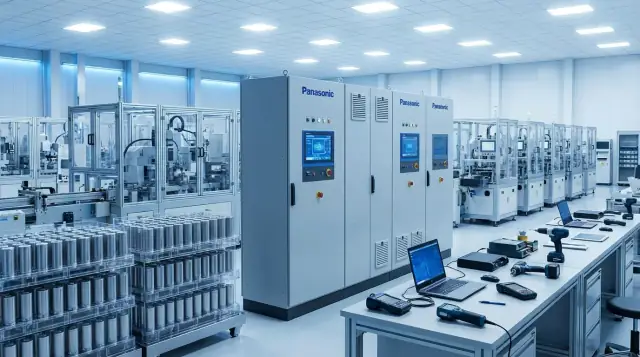
What “the long game” means in engineering
Engineering “the long game” means making choices that keep paying dividends long after the first product launch—sometimes for decades. It’s less about a single breakthrough and more about a steady habit: build capabilities, improve processes, and design products so the next generation is easier, safer, and cheaper to make.
Applied engineering at scale (in plain terms)
“Applied engineering at scale” is what happens when an idea leaves the lab and has to survive real-world constraints:
- Cost: not just the bill of materials, but scrap rates, rework, warranty returns, and how fast you can train new operators.
- Reliability: products need to behave the same way after thousands of cycles—years of vibration, heat, and everyday misuse.
- Throughput: if demand doubles, can you increase output without quality collapsing or safety risks rising?
A long-game approach treats manufacturing, testing, and servicing as part of the engineering problem—not afterthoughts. The payoff compounds: each improvement in yield, inspection, or assembly time reduces unit cost, stabilizes supply, and frees budget for the next iteration.
What to expect in this article
Panasonic is a useful case study because its portfolio forces the company to practice this mindset across very different realities:
- Batteries: where small chemistry gains must be matched with manufacturing discipline and safety controls.
- Industrial systems: where customers pay for uptime, predictable maintenance, and long service life.
- Consumer devices: where engineering must balance performance, usability, and the realities of mass production.
The common thread isn’t “fancier tech.” It’s engineering decisions that make products repeatable to build, dependable to use, and practical to support over a long lifecycle.
Panasonic’s multi-category playbook
Panasonic is easy to misunderstand because it doesn’t fit neatly into a single box. It’s not “just” a consumer electronics brand, and it’s not “only” an industrial supplier. The company’s long-game advantage is how it operates across categories while building a common set of engineering muscles that keep compounding over time.
One portfolio, shared capabilities
Across very different products, Panasonic repeatedly leans on the same fundamentals:
- Materials know-how: understanding how compounds, coatings, and components behave over years—not only on a test bench.
- Manufacturing discipline: designing processes that scale without losing consistency.
- Quality assurance (QA) and safety: building feedback loops that catch issues early and prevent them from resurfacing.
What makes this a “playbook” is transfer. Improvements in contamination control, precision assembly, or inspection methods don’t stay locked in one corner of the business. They become reusable building blocks—methods, equipment standards, supplier expectations, and measurement routines—that show up again in the next product line.
Three lenses for understanding the long game
To see applied engineering at scale clearly, it helps to view Panasonic through three lenses:
Batteries: where performance is inseparable from process. Chemistry matters, but so do the thousands of small decisions that determine consistency, safety margins, and usable life.
Industrial technology: where reliability is part of the “feature set.” The product isn’t only what it does on day one—it’s how predictably it behaves across shifts, environments, and maintenance cycles.
Consumer devices: where engineering meets human habits. The best designs survive drops, heat, dust, and daily misuse, while still feeling simple and intuitive.
Taken together, these categories reveal a company optimizing for repeatability, learning speed, and long-term trust—advantages that are hard to copy quickly because they’re built into processes as much as products.
Batteries: where chemistry meets manufacturing discipline
Batteries are often described as a chemistry problem, but Panasonic’s track record shows how quickly they become a manufacturing discipline. The best cell on paper is only valuable if it can be produced safely, consistently, and affordably—millions of times over.
What “good” looks like in a battery
When teams evaluate battery technology, they’re typically balancing a handful of metrics that pull against each other:
- Energy density: how much energy you can store per unit of weight/volume (range and portability).
- Safety: resistance to thermal runaway, abuse tolerance, stable behavior over time.
- Cycle life: how many charge/discharge cycles you get before capacity drops to an unacceptable level.
- Cost: materials, manufacturing time, scrap rate, and downstream warranty risk.
Panasonic’s long-game approach is treating those metrics as a system. You don’t “solve” safety and cost once; you keep improving them as requirements change and volumes grow.
Why consistency can matter as much as chemistry
Cell performance isn’t determined only by the formula in the lab. It’s also shaped by how precisely you can repeat the same steps—coating thickness, drying conditions, electrode alignment, electrolyte fill, sealing, formation cycles, and aging. Small variation in any of these can show up later as early capacity fade, increased internal resistance, or rare (but costly) safety events.
That’s why process control becomes a competitive advantage. Tight tolerances, well-instrumented lines, and disciplined quality checks can turn “good chemistry” into a reliable product. Poor control can ruin even a promising design.
Incremental improvements that compound at scale
Battery progress often looks incremental: a slightly more uniform coating, fewer contaminants, a marginally faster formation step, a small scrap-rate reduction. But at high volume, these changes stack up.
A fractional yield improvement can mean thousands more usable cells per day. Reduced variability can lower the need for conservative design buffers, improving usable energy. And fewer defects mean fewer recalls, fewer field failures, and fewer warranty claims.
This is the essence of applied engineering at scale: chemistry sets the ceiling, but manufacturing discipline turns that ceiling into real-world performance.
Scaling batteries: yield, safety, and repeatability
Scaling a battery from “it works in the lab” to “we can ship millions” is less about a single breakthrough and more about controlling variation. Small shifts in coating thickness, moisture, particle size, or assembly pressure can change capacity, cycle life, and—most importantly—safety. Long-game engineering shows up in how aggressively those variables are managed.
Designing for yield (not just performance)
Early battery prototypes often optimize energy density or fast charging. Production versions also optimize yield: the percentage of cells that pass every test without rework.
That means engineers design processes that tolerate normal factory variation—choosing electrode formulations that coat consistently, setting realistic tolerances, and building checks that catch drift before it becomes scrap. A 1% yield improvement at scale can be worth more than a headline spec increase because it lowers cost while improving consistency.
Standardization as a scaling tool
Repeatability depends on standardization at multiple levels:
- Formats and interfaces: consistent cell dimensions, tabs, and pack connections reduce custom assembly steps.
- Materials sourcing: qualifying multiple suppliers for key inputs (foils, separators, electrolytes) with clear specifications prevents quality swings and shortages.
- Test procedures: consistent measurement methods across lines and plants make results comparable, so teams can troubleshoot faster and transfer learnings.
Standardization isn’t about limiting innovation; it’s about creating a stable baseline where improvements can be measured and rolled out safely.
Quality systems that pay for themselves
Battery manufacturing needs quality systems that track issues down to lot, shift, and machine settings. Statistical process control, traceability, and end-of-line testing help prevent defective cells from reaching packs.
The payoff is concrete: fewer recalls, lower warranty costs, and less downtime for customers who depend on predictable runtime and charging behavior. When safety margins are engineered into both the design and the process, scaling becomes a repeatable operation—not a gamble.
Industrial technology: reliability as a product feature
Industrial technology is the part of the portfolio most people never see, but factories and infrastructure depend on it every day. Here, “industrial tech” includes control systems that keep machines in sync, factory equipment and tooling, sensors and measurement components, and the power/control electronics that sit quietly in cabinets and panels.
Reliability isn’t a slogan—it’s the product
Industrial buyers don’t choose equipment because it’s trendy. They choose it because it runs predictably for years under heat, vibration, dust, and 24/7 duty cycles. That shifts engineering priorities:
- Long service life over maximum novelty: parts are selected for stable performance, not just peak specs.
- Predictable maintenance over “set and forget”: designs assume inspection intervals, calibration schedules, and wear items.
- Failure modes that are safe and diagnosable: when something goes wrong, it should fail in a controlled way and be easy to isolate.
Downtime has a price tag. Reliability becomes a measurable feature: mean time between failures, drift over time, tolerance to environmental stress, and consistency across units.
Documentation, support, and continuity are part of engineering
Industrial customers buy certainty, so engineering extends beyond the hardware:
- Clear documentation (wiring diagrams, safety notes, operating limits, calibration procedures) so technicians can service systems quickly.
- Support and escalation paths that match real production pressure.
- Parts continuity and long-term availability so a factory doesn’t need a redesign because a small component was discontinued.
This is long-game applied engineering at its most practical: designing not only for performance on day one, but for predictable operation on day 2,000—and for the humans who will install, maintain, and audit it along the way.
Automation and measurement: the hidden multipliers
Automation isn’t just about replacing manual labor with machines. At manufacturing scale, the real prize is stability: holding tight tolerances hour after hour while materials, temperature, and equipment wear all drift. That’s where sensors, power electronics, and control systems turn “good designs” into consistently good output.
Stable production is a control problem
Modern lines behave like living systems. Motors warm up, humidity shifts, a tooling edge dulls, and a slightly different batch of raw material changes how a process responds. Sensors detect those changes early (pressure, torque, temperature, impedance, vision-based inspection), while controls adjust the process in real time.
Power electronics often sit at the center of this loop: clean, repeatable power delivery for heating, welding, coating, mixing, charging, or precision motion. When power and motion are controlled precisely, you get fewer defects, narrower performance variation, and higher yield—without slowing the line.
Measurement becomes a competitive advantage
The difference between “we inspect quality” and “we engineer quality” is measurement discipline:
- Calibration keeps instruments honest, so trends reflect reality—not sensor drift.
- Traceability ties results to lots, machines, operators, and environmental conditions, so teams can isolate root causes quickly.
- Closed-loop feedback uses data to tune parameters, not just flag failures.
Over time, this builds a factory memory: a practical understanding of which variables truly matter, and how much variation the process can tolerate.
Industrial know-how that improves consumer products
These measurement habits don’t stay on the factory floor. The same feedback loops inform product decisions: which parts are prone to variation, where tolerances should tighten (or loosen), and what tests predict long-term reliability.
That’s how industrial engineering supports better consumer devices—quieter motors, more consistent batteries, fewer early-life failures—because designs are shaped by manufacturing and field data. Automation and measurement don’t just make products faster; they make them repeatable.
Consumer devices: engineering for everyday use
Consumer electronics is where engineering meets real life: cramped countertops, thin apartment walls, spilled coffee, and people who don’t read manuals. Panasonic’s long-game advantage shows up in the unglamorous work of fitting performance into tight constraints—size, noise, heat, usability, and cost targets—without turning the product into a compromise.
The constraints nobody can “innovate” away
A hair dryer, microwave, shaver, or air purifier may look simple from the outside, but the engineering problem is always multi-variable. Make the motor stronger and you may add noise. Shrink the housing and you trap heat. Add insulation and you raise cost and weight. Even the “feel” of a button or the angle of a handle can decide whether a device becomes a daily habit or a dusty shelf resident.
Why “good enough” is hard at millions of units
When you produce in the millions, small variations become big customer experiences. A tolerance stack-up that’s harmless in a prototype can cause a door to rattle, a fan to whine, or a connector to loosen after six months. “Good enough” isn’t a single design—it’s a design that stays good enough across factories, shifts, suppliers, and seasons, while still meeting the price on the box.
Small changes that cut returns (and frustration)
The long game is often a series of tiny, disciplined improvements:
- A slightly different gasket material that keeps steam out of a switch.
- A minor change in airflow path that drops operating temperature and extends component life.
- A revised latch geometry that prevents misalignment and reduces “won’t close” support calls.
These tweaks don’t read like breakthroughs, but they directly reduce returns, warranty costs, and negative reviews. More importantly, they protect trust: everyday devices only “disappear” into daily life when they are consistently quiet, comfortable, safe, and predictable—every unit, every time.
Design for manufacturing and service
Great products aren’t only designed to work—they’re designed to be built and maintained thousands (or millions) of times with consistent results. That’s where DFM/DFX thinking matters.
DFM/DFX, explained without jargon
DFM (Design for Manufacturing) means shaping a product so it’s easy to assemble: fewer steps, fewer parts, and fewer opportunities for human error. DFX (Design for X) is the broader mindset: design for test, for reliability, for shipping, for compliance, and for service.
In practical terms, this can look like:
- Reducing the number of unique screws or connectors so assembly is faster and mistakes are less likely.
- Using features like alignment tabs or keyed connectors so parts can’t be installed the wrong way.
- Designing boards and modules so they can be tested quickly on the line, catching issues early.
Trade-offs you can feel (and measure)
Applied engineering is a series of trade-offs made explicit.
Materials are a classic example: a tougher casing or better sealing can improve durability, but adds cost, weight, or makes heat dissipation harder. In batteries and power electronics, small material choices can affect thermal performance, longevity, and safety margins.
Features also compete with power draw. Adding sensors, brighter displays, or always-on connectivity improves usability, but can reduce runtime or require a larger battery—changing size, weight, and charging behavior. Long-game engineering treats these as system-level decisions, not isolated upgrades.
Serviceability and modularity lower lifetime cost
Designing for service isn’t just “nice to have.” If a product can be repaired quickly, the total cost over its life drops—for the manufacturer, service network, and customer.
Modular designs help: replace a sub-assembly instead of troubleshooting to the component level, then refurbish and test the returned module centrally. Clear access points, standardized fasteners, and diagnostic modes reduce time-on-bench. Even documentation and part labeling are engineering choices that cut errors.
The payoff is quiet but powerful: fewer returns, faster repairs, and products that stay useful longer—exactly the kind of compounding advantage long-game companies aim for.
Supply chain and sourcing: engineering beyond the lab
A product that ships for years isn’t just an engineering achievement—it’s a supply-chain commitment. For companies like Panasonic, “the long game” includes designing around parts and materials that can be sourced consistently, tooling that can be maintained, and suppliers that can meet the same spec after the tenth, thousandth, and millionth unit.
Why long-term sourcing matters
Sourcing decisions reach deep into engineering: component tolerances, material purity, connector families, adhesives, and even packaging all influence reliability and manufacturability. Locking in a part that’s hard to obtain—or only made by one vendor—can quietly cap how far a design can scale.
Tooling is part of sourcing too. Molds, dies, jigs, test fixtures, and calibration standards have their own lead times and wear patterns. If replacement tooling isn’t planned for, a “known-good” process can drift simply because the physical instruments of production change.
The risks: shortages, substitutions, and quality drift
Shortages force uncomfortable choices: redesign boards, alter mechanical interfaces, or accept substitute materials. Even when substitutes are “equivalent,” small differences can cascade into new failure modes—different thermal behavior, aging characteristics, or contamination profiles.
Over time, quality can drift without any dramatic event. Suppliers change sub-tier vendors, production lines get relocated, or process parameters are optimized for cost. The part number stays the same; the behavior doesn’t.
Mitigation that looks like engineering
Long-game organizations treat sourcing as a controlled technical system:
- Multi-sourcing for critical parts where feasible, with designs that tolerate vendor variation.
- Qualification testing for alternates that mimics real use, not just datasheet checks.
- Change control (PCNs, lot traceability, and gated approvals) so material or process changes are reviewed like an engineering change order.
This is how supply chain becomes part of applied engineering—not procurement after the fact, but design intent protected over time.
Quality systems: how reliability is engineered
Quality isn’t just “inspect at the end.” In long-game engineering, reliability is designed into the product and then defended through the entire lifecycle—materials, process settings, supplier parts, and software/firmware versions. The goal is simple: make outcomes repeatable at scale.
Stress testing that reflects real life
A solid quality system uses structured stress to surface weak points before customers do.
Accelerated testing compresses years of use into weeks by pushing temperature, humidity, vibration, charge/discharge cycles, or duty cycles beyond normal ranges. Burn-in adds another filter: run components or assemblies long enough to reveal early-life failures (often the highest-risk period), then only ship what survives.
Many teams also use HALT-style thinking (highly accelerated life testing): deliberately stack multiple stresses to find design limits, then back off to set conservative operating margins. The point isn’t to “pass a test,” but to learn where the cliff edges are.
Closing the loop from field failures to design
Even with careful testing, real-world use finds new failure modes. Mature organizations treat every return, warranty claim, or service report as engineering input.
A typical loop looks like: capture symptoms and usage context, reproduce the failure, identify root cause (design, process, supplier, or handling), then implement a controlled change—updated parts, revised process parameters, firmware tweaks, or new inspection steps. Just as important is verifying the fix: does it hold up in the same accelerated conditions that exposed the problem?
Documentation and version control are quality tools
Reliability depends on knowing exactly what was built. Clear documentation (specs, test plans, work instructions) and strict version control (engineering change orders, BOM revisions, traceability by lot/serial) prevent “mystery variants.” When a defect appears, traceability turns guesswork into targeted containment—and keeps improvements from being undone by accidental backsliding.
Efficiency and sustainability at manufacturing scale
Sustainability gets real when you’re making millions of units. At that volume, small design and process decisions become huge: a fraction of a watt saved per device, a few grams of material removed, or a percentage point of yield improved can translate into meaningful reductions in energy use, waste, and cost.
Where the biggest wins actually come from
In high-volume production, the most practical sustainability gains tend to be operational:
- Energy use: factories consume energy in drying, heating, cooling, clean-room airflow, and precision testing. Cutting cycle time, improving thermal management, and optimizing equipment scheduling often saves more energy than a “greener” material swap that complicates production.
- Waste and yield: scrap is double waste—discarded materials plus the energy already spent processing them. Better measurement, tighter process windows, and fewer rework loops reduce environmental impact while improving margin.
- Materials choices: simplifying assemblies (fewer fasteners, fewer mixed plastics), choosing recyclable or easily separable materials, and avoiding hard-to-remove adhesives can make end-of-life handling more feasible without sacrificing durability.
Pragmatic sustainability: build things that last
A long-game engineering mindset treats sustainability as a combination of efficiency, longevity, and recoverability:
- Longer product life reduces replacement frequency and spreads manufacturing impact over more years of use.
- Serviceable design (accessible screws, modular sub-assemblies, available parts) makes maintenance realistic instead of theoretical.
- Recyclability improves when products are designed for disassembly and when materials are clearly identified.
What you can look for as a buyer
You don’t need factory data to spot better long-term choices. Look for clear efficiency ratings, meaningful warranty terms, and published repair/support policies. Practical signals include replacement parts availability, battery replacement guidance (where relevant), and documentation that suggests the product was designed to be used—and serviced—for years, not just shipped.
Takeaways: how to spot long-game engineering
Long-game engineering is less about dramatic breakthroughs and more about repeatable progress. The transferable pattern you see across batteries, industrial systems, and everyday devices is simple: iterate on what matters, measure it consistently, standardize the result, and keep supporting it after launch.
The repeatable loop: iterate → measure → standardize → support
Iteration only counts when it’s guided by measurement. Teams that win at scale define a small set of signals (yield, failure rates, calibration drift, warranty returns) and tighten them over years. Standardization then turns one good build into millions of similar builds—across shifts, factories, suppliers, and product refreshes. Support closes the loop: field data informs the next design, and serviceability prevents small issues from becoming brand problems.
A practical checklist for “engineering-first” products
When you’re evaluating a product—or a company’s approach—look for evidence of these behaviors:
- Clear performance metrics: do they talk about reliability, efficiency, safety, and lifetime in measurable terms (not just “premium”)?
- Evidence of learning cycles: are there visible generations, incremental improvements, or published updates that show steady refinement?
- Manufacturing discipline: do they mention testing, traceability, process control, or qualification of parts and suppliers?
- Designed-in service and longevity: are batteries, wear parts, and firmware updates handled responsibly? Is repair and maintenance realistic?
- Consistency across variants: do different models feel like siblings—shared components, familiar interfaces, compatible accessories?
- Support infrastructure: are documentation, spares, and warranties treated as part of the product, not an afterthought?
A quick software parallel (where Koder.ai fits)
The same long-game logic applies to software: prototypes are easy; repeatable delivery is the hard part. Teams that scale treat deployment, rollback, testing, and support as first-class engineering—not “later.”
That’s one reason platforms like Koder.ai can be useful for product teams experimenting with new internal tools or customer-facing apps. Because you build through a chat-driven workflow (with an agent-based architecture under the hood), you can iterate quickly while still keeping long-game guardrails such as:
- Planning mode to make trade-offs explicit before generating or changing large parts of a system.
- Snapshots and rollback so experiments don’t become irreversible production risks.
- Source code export to preserve continuity and avoid dead-end prototypes.
In other words: faster iteration, with discipline designed in—similar in spirit to how manufacturing leaders standardize and measure their way to reliable scale.
Why “boring consistency” often wins
At manufacturing scale, winners are usually the teams that make fewer surprising mistakes. Quiet improvements—better measurement, tighter tolerances, simpler assembly, clearer diagnostics—compound over time. The result doesn’t always look flashy, but it shows up where it counts: fewer failures, steadier performance, and products that keep working long after the unboxing moment.
FAQ
What does “the long game” mean in engineering?
Engineering “the long game” means making decisions that keep paying off after launch: repeatable manufacturing, measurable reliability, and designs that get easier and cheaper to build and support over time.
In practice, it’s investing in process control, QA loops, and serviceability so each product generation benefits from the last one.
What is “applied engineering at scale” in plain terms?
It’s the shift from “can we build one?” to “can we build millions reliably?” under real constraints:
- Cost beyond parts (scrap, rework, warranty)
- Reliability across years of stress and misuse
- Throughput without quality collapse
The key idea: manufacturing, testing, and service are part of engineering, not afterthoughts.
Why can manufacturing consistency matter as much as battery chemistry?
Because variation is where problems (and costs) come from. A strong chemistry/design on paper can fail in the field if coating thickness, moisture, alignment, fill, sealing, or formation steps drift.
Tight process control and disciplined QA turn good designs into consistent, safe products at high volume.
What does it mean to design batteries for yield, not just performance?
Yield is the percentage of units that pass without rework or scrap. Designing for yield means choosing tolerances, materials, and process windows that survive normal factory variation.
A small yield gain (even ~1%) can reduce unit cost and improve consistency more than a modest spec bump—especially at millions of units.
How does standardization help products scale without losing quality?
Standardization creates a stable baseline so improvements can be measured, transferred, and scaled safely.
Common levers include:
- Consistent formats/interfaces to reduce custom assembly
- Multi-sourced materials with clear specs
- Unified test procedures so plants and lines can compare results and troubleshoot faster
Why is reliability treated as a “product feature” in industrial technology?
Industrial buyers pay for uptime, so reliability is effectively part of the feature set.
That drives engineering choices like:
- Parts selected for stable, long-life behavior
- Predictable maintenance and diagnosable failures
- Environmental tolerance (heat, dust, vibration, 24/7 duty)
Metrics like drift, MTBF, and unit-to-unit consistency matter as much as peak performance.
How do automation and measurement improve quality at manufacturing scale?
At scale, the prize isn’t just automation—it’s stability over time. Sensors detect drift (temperature, torque, pressure, vision, impedance), and control systems adjust parameters to keep output consistent.
Measurement discipline (calibration, traceability, closed-loop feedback) builds “factory memory,” helping teams pinpoint root causes and tighten process windows.
What are DFM and DFX, and what do they look like in real products?
DFM (Design for Manufacturing) makes products easier and more repeatable to assemble; DFX extends that to test, reliability, shipping, compliance, and service.
Practical examples:
- Fewer unique fasteners/connectors
- Keyed parts and alignment features to prevent mistakes
- Modules/boards designed for fast, reliable line testing
How do supply chain decisions affect engineering reliability over time?
Long-lived products require long-lived sourcing. Risks include shortages, “equivalent” substitutions that change behavior, and gradual supplier/process drift.
Mitigations that behave like engineering:
- Multi-sourcing where feasible
- Qualification testing that mimics real use
- Change control (PCNs, traceability, gated approvals) to prevent silent spec erosion
Where do efficiency and sustainability gains usually come from at manufacturing scale?
At high volume, the biggest sustainability wins are often operational:
- Energy: shorter cycle times, optimized heating/cooling/testing
- Waste: higher yield and less rework (scrap is material + embedded energy)
- Longevity: durable, serviceable products reduce replacement frequency
As a buyer, look for clear efficiency ratings, meaningful warranties, and repair/support signals like parts availability and service documentation.