

Pantry expiration reminder list that prevents food waste fast
Use a pantry expiration reminder list to track expiry dates, set simple alerts, and use items in time. Includes a template, checklist, and examples.
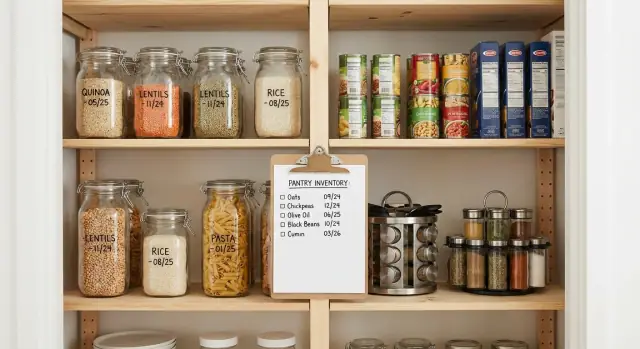
Why pantry food expires before you notice
Pantry food rarely goes bad overnight. More often, it gets pushed to the back of a shelf, buried under newer groceries, and turns into a surprise months later.
A few patterns cause most of the waste: you buy a second bag because you can’t see the first one, you stock up during a sale and forget what you already have, or you open a new package before finishing the old one.
Most “forgotten pantry” problems come down to five things: duplicates, items hiding behind taller packages, bulk “just in case” shopping, too many open packages of the same food, and no quick way to scan dates.
Date labels add another layer of confusion. They don’t all mean the same thing:
- Best before is about quality. It may still be fine, but taste and texture can drop.
- Use by is about safety (more common on refrigerated foods, but it shows up on some shelf-stable items).
- Expiry (or “expires on”) usually means the product isn’t intended to be used after that date.
That mix of hiding places and unclear labels is why waste feels random. It’s usually not one huge toss. It’s a handful of small losses: crackers that went stale, a spice that lost its punch, a can you bought twice, a baking mix that sat too long.
A pantry expiration reminder list stops the surprise. It’s a short record of what you have and the dates that matter, plus a nudge early enough to change what you cook and buy.
It’s not a full inventory system, not a perfect database, and not something you rewrite every week. It’s a lightweight habit that helps you use what you already own, while it’s still good.
What to put on your list (and what to skip)
A pantry expiration reminder list works best when it focuses on foods that either spoil quietly or lose quality faster than people expect. You don’t need to track everything. Start with items that cost real money, get forgotten in the back, or taste noticeably worse when they’re past their prime.
A practical starting set includes a few items from each of these categories: canned goods, grains and pasta, baking staples, snacks, and sauces or condiments.
Within those categories, pay extra attention to foods that go rancid, stale, or weak quickly, especially after opening. That often includes nuts and nut flours, whole grains (like brown rice and whole wheat flour), oils and fats, opened spreads and sauces, and “performance” items like spices, baking powder, and yeast.
Some foods usually don’t need strict tracking because they’re very stable. Salt and sugar don’t spoil in a typical pantry, vinegar lasts a long time, and dried beans or plain white rice are usually low stress if kept dry and sealed. Skip these at first unless you personally waste them.
Keep the first version small on purpose. Aim for your top 25 items: things you buy often, buy in bulk, or hate wasting. Once those 25 feel easy, expand slowly. That’s how the list stays useful instead of becoming another abandoned project.
A simple list format that’s easy to maintain
A reminder list only works if you can update it in seconds. The simplest format is one page (or one screen) that answers two questions: what do I have, and when should I use it?
Use the same columns every time
Keep the columns consistent so you never have to think. For most homes, these are enough:
- Item (clear name)
- Package size (optional, but helpful)
- Quantity
- Date opened (only when it matters)
- Best before / use by
- Reminder date
- Location (where you can grab it fast)
If you want it even simpler, drop “quantity” or “package size.” Fewer blanks means you’ll keep it updated.
A naming rule that prevents duplicates
Duplicates make lists messy when the same food shows up under multiple names. Use one simple rule:
Write the item first, then the form, then the size.
Examples: “Tomatoes - diced - 400g” and “Tomatoes - crushed - 700g.” For snacks, use flavor instead of form: “Popcorn - butter - 6 pack.” Similar items stay grouped, and it’s obvious when you already have something.
Where to keep the list
Choose a place you’ll actually check while cooking or shopping: a paper sheet on the pantry door, a pinned note on your phone, or a simple spreadsheet. Paper is fastest to glance at, phone notes are easiest to update anywhere, and spreadsheets help if you like sorting by reminder date.
Add a simple status tag
A status tag keeps the list scannable:
- OK
- Use soon
- Donate
- Replace
If your list is digital, put the status at the start of the item name (example: “USE SOON: Tomatoes - diced - 400g”) so it pops on a small screen.
How to set reminder dates that actually work
A reminder only helps if it shows up early enough to change what you cook and buy. Instead of calculating a perfect date every time, use a simple “reminder window” by item type.
- Canned and dry staples: remind 60 to 90 days before
- Baking items and snacks: remind 30 to 60 days before
- Oils, nuts, nut flours, and seeds: remind 14 to 30 days before
- Spices and extracts: remind about 60 days before (this is mostly about flavor)
- Baby food, special diets, and anything expensive: remind 30 days before
Oils and nuts get a shorter window because they can go rancid while the printed date still looks far away, and you usually notice only after you cook with them.
Next, pick one reminder method that matches your habits. Don’t stack five systems on top of each other. Choose one main approach, like a weekly 5-minute pantry check, a monthly shelf-by-shelf scan, or calendar reminders for just your most important items.
Opened items need their own rule. The date on the package is for unopened food. Your real clock starts when you open it. Write an “opened on” date on the container, then set a reminder based on how fast it goes stale.
Example: you open a big bag of walnuts on March 3. Instead of trusting a best-before date in December, set a reminder for three weeks later to use them in oatmeal, salads, or baking.
Step by step: build your pantry expiration reminder list in 30 minutes
You don’t need to catalog your whole pantry to get value fast. The goal is to catch the items most likely to expire before you notice.
The 30-minute setup
Start with one shelf or one cabinet. Put a bag or box on the counter for anything that should be used soon.
- Clear one shelf and group items (canned goods, grains, snacks, baking, sauces). It’s easier to spot duplicates when similar foods sit together.
- Pick your “key items” first. Aim for 15 to 25 items: what you buy often, what costs more, and what tends to hide.
- Write down the item name, quantity, and the date on the label (best before, use by, or expiry). If there’s no date, note the open date.
- Add a reminder date that gives you time to act. For most pantry items, 2 to 4 weeks before the label date works well. For “once in a while” ingredients, go 6 to 8 weeks early.
- Move soon-to-expire items into a front box or front row so you’ll actually see them.
Keep the format simple: Item, Location, Date on label, Reminder date, Plan.
Example: you find two bags of lentils, one expiring next month. Put that bag in the front box and write “lentil soup” in the Plan column. Now the reminder is a decision, not just a warning.
Lock it in with a weekly refresh
Schedule one repeating 10-minute check each week. Scan the front box, update what you used up, and add new key items. If you miss a week, nothing breaks. Pick it up next time.
A low-effort routine to use food before it expires
A pantry expiration reminder list only helps if it changes what you grab and what you buy. The goal isn’t perfect tracking. It’s a small routine that nudges you toward using the right items at the right time.
Start with first in, first out. When you bring groceries home, put newer items behind older ones.
The 2-minute “use next” reset
Create one obvious spot for anything that needs attention, like a small basket on a lower shelf.
Once a week, pull 5 to 10 items that are coming up soon and place them in the “use next” bin. Keep it visible, check it before you open something new, and refill it after shopping (not randomly during the week).
Turn expiring staples into future meals
When staples are getting close (beans, canned tomatoes, broth), batch-cook once and freeze. A big pot of soup or chili turns “about to waste” into “ready when we need it.”
Add one shopping rule to prevent duplicates: before buying pantry basics, take 10 seconds to check the list and the shelf. If an item is already in your “use next” bin, don’t buy more.
Common mistakes that make reminder lists fail
Reminder lists fail when they ask for work you can’t keep up with.
The biggest trap is going too big on day one. If you try to track every spice, tea bag, and snack, the list becomes a second job.
Another common miss is writing down only the printed date and ignoring the opened date. Many foods change faster after opening, especially if they’re stored warm or not sealed well.
Reminders also fail when they don’t include a next step. “Pasta sauce expires soon” is easy to swipe away. “Use next: pasta sauce, put it in the front bin” is harder to ignore.
Watch for these patterns:
- Tracking too many items, then abandoning the system
- Not noting “opened on” for foods that change quickly
- Reminders with no plan attached
- Keeping the list somewhere you never look
- Not updating quantities after shopping
A simple fix: start with 15 to 25 items you waste most, and make every reminder include a plan and a place.
Quick checklist: a 5-minute pantry expiry scan
Set a timer for five minutes and do only this. You’re not organizing everything. You’re just catching problems early.
- Flag the next two weeks. Note anything with a date coming up soon and add a simple plan (“use for tacos,” “bake this weekend”).
- Check open items with no opened date. If you don’t know when you opened it, do a quick smell/look and either label it today or move it to “use next.”
- Spot duplicates you can finish first. Decide which one to use before buying more.
- Check for damage. Deep dents, bulging lids, rust, torn pouches, or wet packaging are a “don’t risk it” moment.
- Move “use next” items to eye level. If you can’t see it, you won’t remember it.
When the timer ends, stop. Consistency beats perfection.
Example: a realistic reminder list for a busy household
Imagine a two-adult household that buys in bulk, cooks four nights a week, and regularly forgets what’s behind the rice and cereal. They keep a simple list on the fridge (or in a notes app) and check it once a week.
Here’s a sample list for 10 common items. The “Reminder” date is when they want a nudge, not the last safe day.
| Item | Location | Best by / Use by | Reminder | Plan when reminder hits |
|---|---|---|---|---|
| Brown rice (2 kg bag) | Back top shelf | 2026-01-10 | 2025-12-10 | Make rice bowls + freeze extra |
| Flour (5 lb) | Bin, low shelf | 2025-05-20 | 2025-04-20 | Pancakes + banana bread |
| Olive oil (large bottle) | Counter cabinet | 2025-09-01 | 2025-08-01 | Use for sheet-pan dinners |
| Peanut butter (jar) | Middle shelf | 2025-03-18 | 2025-02-18 | Sandwich week + oatmeal |
| Canned chickpeas (x6) | Back right | 2027-02-01 | 2026-12-01 | Curry + hummus |
| Canned tuna (x8) | Back left | 2026-06-15 | 2026-04-15 | Tuna pasta + salad |
| Pasta (3 packs) | Front bin | 2026-11-30 | 2026-10-30 | Pantry pasta night |
| Tomato paste (tubes x2) | Door rack | 2025-02-10 | 2025-01-20 | Chili + bolognese |
| Granola bars (box) | Snack drawer | 2025-01-25 | 2025-01-10 | Put in lunch bags daily |
| UHT milk (unopened cartons) | Bottom shelf | 2025-02-28 | 2025-02-10 | Use for baking + donate extras |
On Sunday, their weekly check takes five minutes. They scan the “Reminder” column and pick the top 2 to 3 items to use first. That week, tomato paste and granola bars go first because they’re closest.
Two rules keep it realistic: anything with a reminder in the next 14 days gets moved to the front zone (front of shelf or a small basket), and the week’s meal plan uses at least one reminder item.
If they donate unopened items, they donate with a buffer (often 2 to 4 weeks before the best-by date). They grab only sealed, shelf-stable extras and keep one backup at home.
Next steps: keep it simple, then automate if you want
Start with a scope you’ll actually maintain. For most homes, that’s 15 to 30 items that waste money when they expire: snacks, cereals, baking supplies, oils, nut butters, canned fish, broth, and rarely used spices.
Pick one reminder method and stick with it for a month. The best system is the one you’ll see at the right time.
Keep two repeating times on your schedule: a weekly scan and a monthly reset. The weekly scan can be five minutes before you plan meals or write a grocery list. The monthly reset is when you clean up old entries, add new bulk buys, and adjust reminder timing for items you keep missing.
If you decide to automate later, a small custom tracker can help once your list format is stable. If you like building your own tools, Koder.ai (koder.ai) lets you create simple web or mobile apps through a chat interface, which can be handy for a personal pantry tracker with reminders.
Keep the goal small: fewer expired items this month than last month. If the system feels easy, you’ll keep it.
FAQ
Do I really need to track every single pantry item?
Start with the stuff you actually waste: snacks, nuts, oils, whole grains, baking basics, and any expensive pantry items. Track 15–25 “high-risk” items first instead of trying to log everything.
What is a pantry expiration reminder list, exactly?
It’s a short list of key foods plus the dates that matter and a reminder early enough to change your meals or shopping. It’s meant to be quick to maintain, not a full inventory project.
Why does pantry food seem to expire “randomly”?
Most waste happens because items get hidden, you buy duplicates, and opened packages lose quality faster than you expect. A simple reminder list fixes the “out of sight, out of mind” problem and helps you use things in time.
How far ahead should I set reminder dates?
A good default is: canned and dry staples 60–90 days early, snacks and baking items 30–60 days early, and oils/nuts/seeds 14–30 days early. The point is to give yourself time to cook with it, not to hit the last possible day.
What’s the simplest list format that still works?
Use one consistent set of columns: item name, date on label, reminder date, and location. If you want one extra field, add a short “plan” like “tacos” or “bake this weekend” so the reminder turns into action.
How do I name items so I don’t create duplicates on the list?
Write the item first, then the form, then the size, like “Tomatoes - diced - 400g.” This keeps similar foods grouped and makes it obvious when you already have one hiding behind something else.
Do I need to track ‘opened on’ dates too?
The printed date is for unopened food, so once you open something, the “real clock” often changes. Mark an “opened on” date on the container and set a reminder based on how fast it goes stale or rancid.
Where should I keep the list so I’ll use it?
Pick one place you’ll actually look: a paper sheet on the pantry door, a pinned phone note, or a simple spreadsheet. The best location is the one you’ll check while cooking or making a grocery list.
How do I stop reminders from becoming easy to ignore?
Make every reminder include a next step and a place, like “Use next: tomato paste; move to front bin.” A reminder you can act on immediately is harder to ignore than a date sitting in a table.
What are the most common mistakes that make these lists fail?
Avoid tracking too many items at once, skipping opened dates, and keeping the list somewhere you never see. Another common issue is not updating after shopping, so the list stops matching reality and you stop trusting it.