

Qualcomm’s Playbook: Patents, Modems, and Mobile Power
A plain-English look at how Qualcomm built a licensing business by shaping cellular standards, advancing modem tech, and influencing mobile ecosystems.
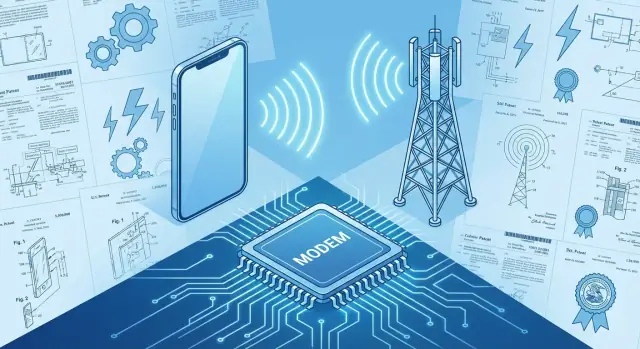
Why Qualcomm Matters to Everyday Connectivity
When your phone shows a few bars of signal, a lot has already gone right—between your device, the network, and the shared rules that let them talk. Qualcomm matters here because it’s one of the companies most closely associated with the “how” of cellular connectivity: the modems and chipsets inside devices, and the licensing system around inventions that made modern cellular possible.
What Qualcomm is known for
Qualcomm is often discussed in three connected roles:
- Modems: specialized components that handle cellular communication (3G/4G/5G) between your phone and the network.
- Chips (chipsets): bundles of components that can include the modem plus other parts that help a phone run efficiently.
- Licensing: collecting fees from companies that make cellular devices, based on patents tied to standardized cellular technology.
The core question: how did connectivity become recurring revenue?
Cellular standards (like 4G LTE and 5G) are built from thousands of technical contributions. Many of those contributions are patented. When a patented technique becomes part of a standard, device makers typically need a license to sell products that implement that standard.
This creates a business dynamic that’s unusual to most consumers: even if a phone maker buys chips from one supplier, it may still owe licensing fees to patent holders whose technology is required for the standard.
Key terms you’ll see in this article
A standard is a shared technical rulebook. A patent is a legal right over an invention. A license is permission to use that invention, usually for a fee. A modem is the radio “translator” that makes the standard work in a device.
We’ll keep this overview neutral and practical, and nothing here is legal advice.
How Cellular Standards Create a Shared Rulebook
When your phone connects to a tower, it’s following a common script that every network and device agrees to. That script is a cellular standard—the published set of technical rules that define how devices talk over the air.
Standards in plain English (2G to 5G)
Each generation (2G, 3G, 4G, 5G) is a major update to that rulebook. 2G made digital voice and texting practical. 3G brought usable mobile internet. 4G (LTE) pushed broadband-like speeds and made apps, video, and real-time services feel normal on mobile. 5G raises capacity and reduces delay, enabling faster downloads and more reliable connectivity in crowded places.
The key point: these standards aren’t “one company’s technology.” They’re shared specifications so a phone built by one brand can roam on networks run by thousands of operators worldwide.
Who writes the rulebook?
Standards are developed inside standard-setting organizations (SSOs). Industry players—chipmakers, phone brands, network equipment vendors, and carriers—send engineers to propose features, debate tradeoffs, run tests, and vote on what becomes part of the spec. The result is a detailed, versioned document that manufacturers can implement.
Why “standard-essential patents” (SEPs) matter
Sometimes a specific invention is the only practical way to meet a requirement in the standard. Patents covering those must-use ideas are called standard-essential patents (SEPs). They’re special because you can’t build a compliant 4G/5G device without practicing them.
Interoperability is the payoff: one shared ruleset shrinks compatibility risk, speeds adoption, and lets the whole industry scale—while making essential innovations valuable across the entire supply chain.
Modem Engineering: The Hidden Complexity Behind a Signal Bar
A phone’s “signal bar” looks simple, but the modem underneath is doing a constant stream of math and negotiation to keep you connected while saving battery.
What a modem actually does
At a high level, a cellular modem turns raw radio waves into usable data—and back again. That includes:
- Signal processing: filtering noise, synchronizing to the cell tower, estimating the channel, and correcting distortions caused by reflections off buildings.
- Encoding and decoding: packaging your bits with error-correcting codes so data survives interference and weak reception.
- Handshake and control: continuously “talking” to the network—authenticating, registering, scheduling resources, switching antennas, and coordinating features like carrier aggregation and MIMO.
None of this happens once. It’s a tight feedback loop running thousands of times per second.
Why modems are hard: power, heat, speed, reliability
Modem design is an engineering squeeze: you want higher throughput and lower latency while consuming minimal power. More computation usually means more heat, but smartphones have tiny thermal budgets. At the same time, reliability expectations are unforgiving—dropped calls and stalled video are instantly noticeable.
That’s why modem teams obsess over details like fixed-point math, hardware accelerators, scheduler efficiency, and “sleep” strategies that shut down parts of the modem between bursts without missing network timing.
The real world is messy
The modem doesn’t operate in a lab. Users move between cells at highway speeds, put phones in pockets, ride elevators, and walk through stadiums packed with interference. Signals fade, bounce, and collide with other transmissions. A good modem must adapt in milliseconds: changing modulation, adjusting transmit power, switching bands, and recovering quickly from errors.
Engineering breakthroughs become competitive advantage
When a company consistently solves these problems—better reception at the edge of coverage, steadier performance in crowded places, faster handovers—it’s not just “nice engineering.” It can translate into measurable device differentiation, stronger relationships with OEMs and carriers, and, ultimately, more leverage in how connectivity technology is valued across the industry.
From R&D to Patents: Turning Innovation into IP Assets
Wireless R&D isn’t just about making a phone “work better.” It’s about solving very specific problems: how to squeeze more data into the same airwaves, keep a signal stable while moving, reduce battery drain, or prevent interference from neighboring cells. When a team finds a new technique—say, a smarter way to estimate the channel or schedule transmissions—it may be patentable because it’s a concrete method that can be implemented in real devices and networks.
Why patents get filed around radio techniques
Radio is a game of tradeoffs. A small improvement in error correction, antenna tuning, or power control can translate into higher throughput, fewer dropped calls, or better coverage. Companies like Qualcomm file patents not only on the high-level idea (“use X to improve reliability”), but also on the practical implementation details (steps, parameters, signaling messages, and receiver/transmitter behaviors) that make the idea usable in a modem.
“Must-use” vs. optional features
Not every patented feature has the same leverage.
- Standard-essential patents (SEPs) cover features that devices must implement to comply with a cellular standard (for example, parts of LTE or 5G NR). If you want a compliant device, you can’t design around them.
- Non-essential patents may cover optional enhancements or alternative implementations. They can still be valuable, but manufacturers might avoid them by choosing another approach.
How a patent becomes essential
A patent can become “essential” when the standard adopts a method that falls within that patent’s claims. If the published standard effectively requires the patented technique, any compliant product will practice the invention—making licensing a practical necessity.
Not all patents are equal
Patent value depends on scope and relevance: broad, clearly written claims tied to widely used parts of the standard tend to matter more than narrow claims or niche features. Age, geographic coverage, and how central the technique is to performance also shape real-world licensing strength.
Chips vs. Licenses: Two Revenue Engines, One Strategy
Qualcomm is unusual because it doesn’t rely on just one way of getting paid for mobile innovation. It runs two businesses side by side: selling chips you can touch (modems, application processors, RF parts) and licensing the intellectual property (IP) that makes modern cellular standards work.
Selling chips: revenue tied to product wins
The chip business looks like a classic technology supplier model. Qualcomm designs products—like 5G modems and Snapdragon platforms—then earns revenue when phone makers choose those components for a specific device.
That means chip revenue depends on factors like:
- how competitive the chip is this year (speed, battery life, cost)
- how many models it gets designed into
- how much of the market it wins versus other silicon vendors
If an OEM switches suppliers on a flagship phone, chip revenue can drop quickly.
Licensing IP: revenue tied to standards adoption
Licensing is different. When a company contributes inventions that become part of cellular standards, those inventions can be licensed broadly across the industry. In other words, Qualcomm can earn licensing revenue even from devices that do not use Qualcomm chips—because the device still needs to implement the standard.
This is why licensing can scale: once the “rulebook” of cellular is widely adopted, many device makers may owe royalties for using the underlying patented techniques.
Volume matters—especially in handsets
Handsets are high-volume products. When millions of phones ship, per-device royalties (even modest ones) can add up to meaningful revenue. When the overall smartphone market slows, that same math works in reverse.
Why do both?
Doing both creates leverage in two directions: chip leadership proves real-world engineering value, while licensing helps monetize foundational inventions across the whole market. Together, they fund the R&D cycle that keeps Qualcomm competitive from one generation (5G) to the next.
For more on how licensing is structured, see /blog/frand-and-sep-licensing-basics.
FRAND and SEP Licensing: The Basics Without Legal Jargon
Standard-essential patents (SEPs) are patents that cover technology a device must use to follow a cellular standard like 4G LTE or 5G. If you want your phone to “speak” the same language as networks worldwide, you can’t simply skip those parts of the standard—so SEPs matter.
What FRAND actually means
When a company contributes patented ideas to a standard, it typically commits to license any SEPs on FRAND terms: fair, reasonable, and non-discriminatory.
- Fair: not designed to trap manufacturers after a standard is widely adopted.
- Reasonable: pricing should be in line with the value of the patented contribution (not arbitrary leverage).
- Non-discriminatory: similar licensees in similar situations should be offered comparable terms.
FRAND doesn’t mean “cheap,” and it doesn’t guarantee a single universal price. It’s more like a set of guardrails for how deals are made.
Common ways licenses are structured
Most SEP deals are signed as a portfolio license—one agreement that covers a bundle of patents relevant to multiple releases and features (rather than negotiating each patent one-by-one). Payment is often set on per-device terms (for example, a royalty per handset sold), sometimes with caps, floors, or other commercial adjustments.
What gets negotiated in practice
Even with FRAND commitments, there’s plenty to discuss:
- Scope: which products are covered (phones, tablets, IoT), which standards (3G/4G/5G), and which countries.
- Rate basis: what the royalty is calculated on (commonly tied to a device category rather than every component).
- Cross-licenses: if the manufacturer also owns relevant patents, both sides may grant rights to reduce net payments or avoid future disputes.
Important boundaries
Outcomes vary widely based on the product, the parties’ patent positions, contract history, and jurisdiction. Courts and regulators can interpret FRAND differently, and real-world agreements often reflect business trade-offs—not just abstract formulas.
How Licensing Plays Out Across the Mobile Supply Chain
Qualcomm’s licensing model makes the most sense when you view a phone as the last stop in a long chain of companies that all need cellular standards to work the same way.
The key players (and who deals with whom)
A simplified map looks like this:
- Device makers (OEMs) build and sell the phone. They’re the party that typically signs a patent license because they ship the finished, standards-compliant product.
- Chip suppliers (including Qualcomm and competitors) provide modems and other silicon. Buying a chip does not automatically grant patent rights to sell a 4G/5G device.
- Carriers run the networks and certify devices for their systems. They don’t usually pay handset patent royalties, but their requirements shape timelines and product decisions.
Why OEMs license in practice
To sell a phone that connects reliably across countries and carriers, an OEM must implement standardized features (LTE, 5G NR, VoLTE, and more). Those standards are built on thousands of patented ideas. Licensing standard-essential patents (SEPs) is the way an OEM gets legal permission to ship at scale without the constant risk that a product launch triggers infringement claims.
Where negotiations get tense
Even when both sides agree a license is necessary, friction is common:
- Cost: OEMs want predictable, competitive rates; licensors want compensation that reflects the value of the standard.
- Transparency: OEMs may ask how rates were calculated or how “essential” specific patents are; licensors may resist turning negotiations into a patent-by-patent audit.
- Timing: phone launches run on strict schedules. Licenses, renewals, and compliance reporting can become a gating item.
If talks break down
Most deals close through business negotiation, but disputes can escalate. Common pathways include courts (for contract or patent claims), regulators (when competition or licensing practices are questioned), and arbitration (when parties prefer a faster, private resolution).
The important point: licensing isn’t a one-time checkbox—it’s an ongoing commercial relationship that follows the phone through the supply chain.
Mobile Ecosystems: Why Platform Choices Reinforce Licensing Value
A phone isn’t just “a chip plus a screen.” It’s a stack of hardware, radio features, software, certifications, and carrier approvals that all need to line up. In that environment, platform choices tend to concentrate around solutions that reduce uncertainty—and that dynamic can reinforce the economic value of standard-essential patents (SEPs) and the licensing programs built around them.
Reference designs and modem roadmaps shape OEM planning
OEMs work on tight timelines: a device concept, board layout, antenna design, camera tuning, software integration, certification, then mass production. Reference designs (or platform guides) help translate modem capabilities into a buildable phone: which RF parts are recommended, how antennas should be arranged, and what performance targets are realistic.
Just as important is the modem roadmap. When an OEM is deciding whether to launch a midrange 5G phone in six months—or a premium model in twelve—it’s not only about current performance. It’s about feature availability (carrier aggregation combos, power-saving features, voice over 5G readiness) and when those features can be validated at scale.
Ecosystem effects: testing, certifications, and carrier requirements
Compatibility is a real, recurring cost. Devices must pass interoperability testing with networks, comply with regional regulations, and meet carrier acceptance criteria. Those requirements vary by country and operator, and they change as networks evolve.
That reality pushes OEMs toward solutions with a mature test matrix: known RF configurations, established relationships with labs, and a history of passing carrier checks. It’s less glamorous than benchmark scores, but it can determine whether a launch date slips—or ships.
Software stacks and platform integration are part of “the product”
Modern cellular performance depends on software as much as silicon: modem firmware, RF calibration tools, protocol stacks, power management, and ongoing updates. A tightly integrated platform can make it easier to deliver stable connectivity across many bands and network conditions.
Influence isn’t control
Ecosystem gravity can be strong—shared tools, shared expectations, shared certification paths—but it doesn’t equal control. OEMs can (and do) diversify suppliers, design their own components, or negotiate different commercial terms.
Licensing value persists largely because the underlying cellular standards are universal: if a device speaks 4G/5G, it benefits from standardized inventions, regardless of which chipset is inside.
5G Today, 6G Next: How the Cycle Keeps Repeating
Each “G” isn’t just a faster download speed—it’s a new set of technical problems that must be solved in a way everyone can implement. That creates fresh opportunities to invent, standardize, and then license.
Why every generation restarts the IP race
When 5G introduced features like new spectrum options, massive MIMO, and lower-latency modes, it forced the industry to agree on thousands of detailed methods: how devices connect, conserve power, handle mobility, and avoid interference. The firms that contribute workable solutions early often end up with more standard-essential patents (SEPs), because the standard adopts their approach.
Early 6G research repeats the pattern—new frequency ranges, AI-assisted radio techniques, sensing/communications convergence, and tighter energy constraints. Even before a standard is finalized, companies position their R&D so that, when the “rulebook” is written, their inventions are hard to design around.
Adjacent markets widen the payoff
Cellular standards increasingly spill into places beyond phones:
- IoT: cheaper modules, long battery life, and wide-area coverage for trackers and sensors
- Automotive: telematics, safety features, and vehicle-to-everything (V2X) communications
- Fixed Wireless Access (FWA): using 5G as “last-mile broadband,” where modem performance and network features directly affect user experience
As these categories scale, the same SEP framework can apply across more device types, increasing the strategic value of participating in standards.
Backward compatibility keeps older patents relevant
New generations are designed to interoperate with older networks and devices. That backward compatibility means earlier inventions—core signaling, handover methods, error correction, power control—can remain necessary building blocks even as 5G evolves and 6G takes shape.
Standards can shift bargaining power
Bargaining strength isn’t fixed. If a future standard leans more heavily on certain techniques (or shifts to new ones), the balance of whose patents matter most can change. That’s why companies invest continuously: each cycle is a chance to defend relevance, expand SEP coverage, and renegotiate their place in the connectivity stack.
A Practical Walkthrough: What an OEM Needs to Ship a Phone
Imagine a mid-size phone maker—call it “NovaMobile”—planning its first “global” model. The goal sounds simple: one device that works on major carriers across the US, Europe, India, and parts of Asia. The reality is a checklist that spans engineering, certification, and licensing.
Step 1: Pick the connectivity target
NovaMobile doesn’t just choose “5G.” It chooses which 5G bands, which LTE fallback bands, whether it needs mmWave, dual SIM behavior, VoNR/VoLTE requirements, and carrier-specific features. Each choice affects cost, power, antenna design, and test scope.
Step 2: Build the radio as a system (not a part)
A modem is only one piece. To hit carrier performance targets, the team must integrate RF front-end components, tune antennas inside a cramped enclosure, manage thermal limits, and pass coexistence testing (Wi‑Fi, Bluetooth, GPS).
This is where time-to-market is won or lost: a small antenna tweak can cascade into new RF tuning, new regulatory tests, and another round of carrier acceptance.
Step 3: Secure rights to the standards you’re implementing
To legally ship a standards-based phone, NovaMobile typically needs access to standard-essential patents (SEPs) covering technologies used in cellular standards. Portfolio licensing can reduce transaction complexity: instead of negotiating with many individual patent holders, an OEM may take a license that covers a broad set of relevant patents under consistent terms.
If terms like SEP and FRAND are fuzzy, link readers to a glossary-style explainer such as /blog/sep-frand-explained.
Step 4: Certify and ship
Finally come regulatory approvals, conformance testing, and carrier certifications—often the longest pole in the tent. When engineering integration and licensing are handled early, NovaMobile avoids the most expensive problem of all: being “done,” but unable to sell.
Controversies and Constraints: Where the Model Gets Challenged
Qualcomm’s mix of chip sales and SEP (standard-essential patent) licensing has been argued over for years, partly because standards touch almost every phone, network, and connected device. When a business model sits near the “rules of the road” for cellular standards, disagreements don’t stay private for long.
What critics argue about (in plain terms)
SEP debates usually cluster around a few recurring themes:
- “Hold-up” vs. “hold-out.” One side worries a patent owner can demand too much once a standard is locked in; the other worries implementers can delay or underpay because litigating takes time.
- Where licensing should happen. Some argue licensing should be at the device level (because that’s where the standard is implemented end-to-end); others argue it should be at the chip/component level (to reduce double-charging fears).
- Royalty stacking and pricing pressure. If multiple SEP holders charge royalties, device makers worry the total adds up in ways that are hard to predict.
- FRAND ambiguity. “Fair, reasonable, and non-discriminatory” sounds clear, but in practice people fight over what “reasonable” means and what comparable deals should count.
Why regulators and courts get involved
These disputes can have market-wide impact: they may affect handset prices, competition among chip suppliers, the pace of standard adoption, and incentives to fund expensive R&D. Regulators may scrutinize conduct under competition rules, while courts often end up interpreting contracts, patent scope, and FRAND commitments—especially when negotiations break down or injunctions are threatened.
Business constraints: cycles, lawsuits, and uncertainty
A licensing-led strategy can be exposed to standards cycles (2G→3G→4G→5G, and eventually 6G): the value of a portfolio shifts with each generation, as do negotiation dynamics. Litigation and regulatory actions also bring real costs—legal spend, management time, delayed deals, and reputational risk.
Because outcomes can hinge on jurisdiction, specific facts, and evolving policy, it’s best to lean on publicly available sources—court rulings, regulator statements, standards-body documents, and company disclosures—rather than assuming any single narrative is settled.
What to Watch Next: Signals That Shape Qualcomm’s Strategy
Qualcomm’s strategy isn’t only about the next flagship phone. It’s about staying central to the rules of wireless, proving its engineering lead, and keeping its technology embedded in the products people buy.
Signals worth monitoring
A few public cues can hint at where Qualcomm is headed next:
- Standard proposals and meeting outcomes: Watch what gets traction in 3GPP and related forums—especially features tied to power efficiency, spectrum use, and device-to-network intelligence. If a proposal becomes part of the standard, it can strengthen future standard-essential patents and licensing relevance.
- Major chipset “design wins”: When large OEMs (or new device categories) choose Qualcomm modems or platforms, it signals more than unit volume—it often locks in multi-year roadmaps and software relationships.
- Settlements and renewals: Licensing disputes, renewals, and cross-licensing deals can reset pricing expectations and reduce uncertainty around SEP royalties.
Diversification changes the story
Phones still matter, but growth narratives increasingly lean on adjacent markets:
- PCs: Always-on connectivity and battery-efficient performance can make modem know-how valuable beyond handsets.
- Automotive: Telematics, infotainment, and advanced driver systems extend product lifecycles—and can reshape how licensing and chip revenues are timed.
- IoT/industrial: Larger device counts and varied price points test how scalable a licensing-driven model really is.
Questions to ask when evaluating a licensing-driven company
- How dependent is revenue on a small number of OEMs or regions?
- Are new standards (5G-Advanced, early 6G work) increasing or reducing the company’s essentiality?
- Is the chip roadmap winning sockets because it’s better—or because switching costs are high?
- Do recent legal outcomes or regulator signals change negotiating leverage?
Building on top of cellular: where teams can move faster
If you’re not designing modems but you are building products that depend on connectivity—carrier provisioning flows, device-management dashboards, field-service apps, telemetry pipelines—the practical bottleneck is often software execution, not radio physics. Platforms like Koder.ai can help teams prototype and ship these kinds of web, backend, or mobile apps from a chat-driven workflow, while still supporting source-code export, deployment, and rollback. It’s a useful complement when the “rules of the road” (standards and licensing) are fixed, but the customer experience on top is where you can differentiate.
Recap: the three pillars
Qualcomm’s direction is easiest to read through three pillars: patents (how it stays tied to standards), engineering (how its modems and platforms stay competitive), and ecosystem (how partnerships and platform choices reinforce long-term value).
FAQ
What is Qualcomm best known for in mobile connectivity?
Qualcomm is known for three linked roles:
- Designing cellular modems that handle 3G/4G/5G communication.
- Selling chipsets/platforms (often combining modem + processing + RF-related components).
- Running a large patent licensing business tied to inventions that became part of cellular standards.
What does a cellular modem actually do inside a smartphone?
A modem is the phone’s radio “translator” that turns radio signals into data (and back) while constantly coordinating with the network. It handles tasks like synchronization, error correction, scheduling, mobility (handover), and power-saving behaviors—continuously, not just once at startup.
What is a cellular standard, and who creates it?
Cellular standards (2G–5G) are shared rulebooks that ensure phones and networks interoperate globally. They’re written in standards bodies (like 3GPP) where many companies contribute proposals, testing, and engineering details so any compliant device can work across carriers and countries.
What are standard-essential patents (SEPs), and why are they “must-use”?
A standard-essential patent (SEP) covers an invention you must use to implement a standard-compliant feature. If the standard effectively requires the technique described in the patent claims, manufacturers can’t realistically “design around” it while still shipping a compliant 4G/5G device.
Why might an OEM still owe patent royalties even if it doesn’t use Qualcomm chips?
Because buying a chip doesn’t automatically grant permission to sell a standards-compliant device. Even if an OEM uses a non-Qualcomm modem, it may still need licenses to SEPs held by multiple companies whose inventions are required by LTE/5G standards.
What does FRAND mean in SEP licensing?
FRAND means SEP holders commit to license on fair, reasonable, and non-discriminatory terms. In practice, it’s a set of negotiation guardrails—not a single fixed price—and outcomes can vary by product scope, geography, and comparable agreements.
How are SEP licenses typically structured in the real world?
Many licenses are signed as portfolio agreements covering a bundle of patents across multiple standard releases and countries. Payments are often per-device (sometimes with caps/floors), and deals may include cross-licenses if both sides have relevant patents.
Why is modem engineering so difficult compared to other phone components?
Modems face a constant tradeoff between speed, reliability, and power/heat limits. They must adapt in messy environments (movement, interference, weak coverage) using techniques like channel estimation, modulation changes, carrier aggregation, MIMO coordination, and aggressive sleep/wake timing.
Who licenses what in the mobile supply chain (OEMs, chipmakers, carriers)?
The chain typically works like this:
- OEMs ship the finished phone and usually sign SEP licenses.
- Chip suppliers sell components but don’t necessarily convey all patent rights.
- Carriers certify devices and enforce network requirements.
Licensing matters because it reduces legal risk and supports global, standards-based shipping at scale.
What should readers watch to understand Qualcomm’s strategy going forward?
Watch signals like:
- 3GPP outcomes and which proposals make it into releases (future SEP relevance).
- Major design wins for modems/platforms (multi-year roadmap influence).
- License renewals/settlements (pricing benchmarks and reduced uncertainty).
- Growth in adjacent markets (IoT, automotive, PCs, FWA) where the same standards/IP logic can expand.