

Reddit’s Distribution Engine: Communities, Mods, and Learning
Reddit distributes ideas through topic communities, volunteer moderation, and user posts—shaping how people discover interests and learn.
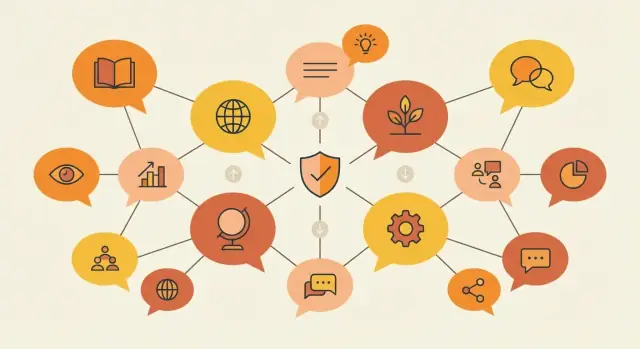
Why Reddit works as a distribution layer for interests
A distribution layer is the system that helps a piece of content find the people who will care about it. On Reddit, distribution isn’t driven by who posted something—it’s driven by what it’s about.
Interest-first, not identity-first
Many social platforms are built around identity: you follow individuals, and their posts show up because of who they are. Reddit flips that model. You “follow” topics by joining subreddits, and you see posts because they match your interests.
The result is unusually meritocratic reach: a newcomer with zero followers can still get in front of the right audience—if they post in the right place and the community finds it useful.
What you can expect (and what you can’t)
Reddit’s strength is depth and speed. Ask a focused question in an active community and you can get multiple perspectives quickly—often from people who’ve tried the exact thing you’re asking about. It’s also a great way to discover resources you wouldn’t think to search for directly: checklists, tool comparisons, “things I wish I knew” threads, and niche FAQs.
The tradeoff is that quality varies. Advice can be outdated, overly confident, or shaped by group dynamics. Reddit works best when you treat threads as inputs to verify—not as final answers.
The three pillars behind the engine
Reddit’s interest-based distribution works because of three forces operating together:
- Communities (subreddits) that gather people around specific topics.
- Moderation that sets rules, removes noise, and nudges discussions toward what the community values.
- User-generated content—posts and comments—that becomes a living knowledge base people return to.
The rest of this article breaks down how those pillars shape what you see, what you learn, and why some threads travel farther than others.
Subreddits: organizing the internet by topic
A subreddit is a dedicated community inside Reddit, usually centered on a single topic, activity, or identity. Think of it as a room with a clear purpose: what counts as “on-topic,” what tone is expected, and what kinds of posts get attention are all set by that community.
How a subreddit sets context
Each subreddit defines its boundaries through rules, pinned posts, and the sidebar/about section. Those details do a lot of work: they tell you whether the community prefers beginner questions or advanced discussion, whether you should include sources, and what will be removed.
For example, some subreddits require specific titles (e.g., tagging posts as “Question” or “Resource”), ban self-promotion, or insist that advice be backed by evidence. Others encourage personal stories—so long as they follow privacy guidelines.
Identity, norms, and shared language
Over time, subreddits build a recognizable identity. Regulars develop community norms (“be kind to newbies,” “show your work,” “no memes on weekdays”), recurring threads (weekly “Simple Questions” or “Show & Tell”), and shared jargon that helps insiders communicate quickly.
Those norms shape what gets shared: a supportive community might reward careful explanations, while a news-focused one might prioritize speed and credible links.
Broad hubs vs. specific niches
Reddit includes both giant hubs and tiny, highly focused subreddits. Broad communities can be great for discovery. Niche subreddits often deliver practical depth and targeted feedback.
Common subreddit formats
Some typical patterns you’ll see:
- Q&A/help desks (problem-solving, explanations)
- Project/showcase communities (build logs, critiques)
- News/updates feeds (links, summaries, discussion)
- Support spaces (peer advice, accountability, empathy)
Understanding a subreddit’s “format” is one of the fastest ways to post appropriately—and get better answers.
Posting and voting: how attention is allocated
Reddit doesn’t distribute attention evenly. It allocates visibility through a mix of post format, early feedback, and how each subreddit ranks content.
Post types (and what they’re good for)
Most subreddits accept several formats, and each tends to perform differently:
- Link posts: good for news, research, tools, and “read this” recommendations.
- Text posts: better for context, stories, mini-guides, and nuanced discussions.
- Images/video: high scannability; often strongest in hobby and meme-heavy communities.
- Questions: can drive long comment threads, especially when they’re specific and show effort.
- AMAs (Ask Me Anything): event-style posts where credibility and timing matter a lot.
Upvotes and downvotes: visibility signals, not “likes”
Upvotes and downvotes influence whether a post rises or sinks in a subreddit’s feeds. A key nuance: voting is community-specific. A post can be celebrated in one subreddit and ignored (or downvoted) in another because norms and expectations differ.
Votes also shape what you see: content with strong early engagement tends to get more impressions, which creates a feedback loop. That loop is why Reddit can feel “spiky”—a small number of posts capture a large share of attention.
Sorting modes: Hot, New, Top
- Hot favors posts that are getting engagement right now (freshness + activity).
- New is a chronological firehose—useful for catching questions early.
- Top surfaces the highest-voted content over a chosen time window (day/week/month/all time), which is great for learning the subreddit’s standards.
Practical drivers of reach
Small choices matter: clear titles, tight relevance to the subreddit, and good timing (posting when the community is awake) can outweigh effort. “Viral” on Reddit often means “widely shared inside that specific community,” not across the entire platform.
Comment threads as collaborative learning spaces
A Reddit post is often just the spark. The real learning usually emerges in the comments, where dozens (or thousands) of people add context, correct mistakes, and compare approaches. In many subreddits, the original post is a question, a claim, or a screenshot—while the comments become the working session.
Why comments can beat the post
Comments pool lived experience. You’ll see practical anecdotes (“this happened to me”), counterpoints (“here’s why that fails in practice”), and links to primary sources, tools, or prior discussions. When a topic is contentious, a good thread will surface competing explanations side by side—so you’re not stuck with a single narrator.
Iterative Q&A that sharpens understanding
Threads are rarely one-and-done. People ask follow-ups, request clarification, and propose alternatives; others respond, refine, and sometimes retract. Over time, this iterative Q&A can converge on clearer definitions, better steps, and more precise caveats.
Common learning patterns show up again and again:
- “Explain like I’m five” requests that force simple, jargon-free explanations
- Troubleshooting: users post symptoms, others diagnose, and the thread becomes a decision tree
- Critiques: someone shares an idea or draft, commenters stress-test it and suggest improvements
The built-in limitation
A thread can sound authoritative even when it’s wrong. Confidence often outpaces accuracy, especially in popular topics where catchy answers get rewarded. Treat highly upvoted guidance as a strong lead—not a final verdict—and look for supporting sources, dissenting replies, and updates from the original poster.
Moderation: the human layer that shapes quality
Moderators (“mods”) are community volunteers who help run individual subreddits. They’re not Reddit employees, and their job isn’t to win arguments—it’s to keep a space usable for the people who joined it.
What moderators typically handle
Most moderation work is routine housekeeping:
- Spam and scams: removing promotional posts, affiliate dumps, phishing links, and bot activity.
- Off-topic content: keeping discussions aligned with what the subreddit is actually for.
- Civility and harassment: enforcing expectations around respectful behavior and protecting targets of abuse.
- Duplicates and low-effort posts: reducing repetitive questions, reposts, and content that crowds out better threads.
How rules are enforced
Rules are usually applied through a few predictable actions:
- Post/comment removals (often with a short reason)
- Warnings via modmail or automated messages
- Temporary or permanent bans for repeated or severe violations
- Locked threads when a discussion becomes unmanageable (pile-ons, insults, brigading)
For learners, this matters because it shapes what rises to the top: not just what’s popular, but what fits the community’s standards.
The impact on learning quality and safety
Good moderation can make a subreddit feel like a curated study group: clearer questions, better sourcing, fewer personal attacks, and less misinformation spread through “confident but wrong” replies. It also creates psychological safety—people are more willing to ask beginner questions when they won’t be mocked.
The tensions to expect
Moderation isn’t perfectly consistent. Different mods interpret rules differently, and different subreddits set different standards. That can lead to frustration, perceived bias, or “why was my post removed?” moments.
The best approach is to treat each subreddit like its own classroom: read the rules, watch what gets approved, and adapt your posting style accordingly.
Quality signals: karma, flair, Automod, and community norms
Reddit threads can feel “self-cleaning” in many communities because several small signals work together. None of them guarantees truth, but they help readers and moderators separate useful contributions from noise.
Automod: the quiet bouncer
Automoderator (“Automod”) is a rule-based bot configured by each subreddit’s mod team. It can automatically check posts and comments for common issues, such as:
- removing obvious spam links or repetitive promotions
- filtering banned keywords or slurs
- enforcing title formats (e.g., requiring a tag like [Question] or [Solved])
- sending a reminder to include context (device, location, budget, sources)
- holding a post for review if it looks suspicious
Think of it as a checklist that runs instantly, so moderators can focus on harder judgment calls.
Visible cues: flair, templates, and megathreads
Many subreddits use flair—small labels on posts or usernames—to add structure. Post flair might signal “Beginner,” “News,” or “Help,” while user flair can show a role (student, professional) or a verified status in some communities.
You’ll also see post templates (required fields), minimum requirements (word count, sources, screenshots), and megathreads that collect repetitive topics—like weekly “simple questions” or “recommendations”—so the front page doesn’t get flooded.
Karma and account thresholds: helpful, not authoritative
Karma is a rough reputation hint based on upvotes, not proof of expertise. Great advice can come from a new account, and confident misinformation can come from a high-karma one.
Some communities require your account to be a certain age or have a bit of karma before posting. That mainly reduces drive-by spam, bot activity, and heated throwaway accounts—protecting the discussion so real learners can actually be heard.
How people discover content on Reddit
Discovery on Reddit is a mix of deliberate following and happy accidents. The platform can feel noisy at first, but once you understand where posts surface—and why—you can reliably find useful threads.
Joining vs. casual browsing
When you join a subreddit, you’re effectively subscribing to that community. Its posts start appearing in your Home feed, which becomes more personal over time.
Casual browsing is different: you can read a subreddit without joining, dip into comments, and leave without changing your feed much. This is a great way to “audition” communities before committing.
Feeds: Home, Popular, and subreddit views
- Home: your customized mix from subreddits you’ve joined (plus some light recommendations, depending on settings).
- Popular: what’s broadly trending across Reddit—useful for culture and news, less useful for niche learning.
- Subreddit feed: the focused view. This is where a topic becomes searchable and navigable because you’re seeing posts through one community’s rules and norms.
Inside a subreddit, sorting matters. Switching from “Hot” to “New” finds fresh questions; “Top” surfaces what the community has historically valued.
Search and filters that actually work
Reddit’s search works best when you search within a subreddit and filter by Top with a time window (past week/month/year/all time). That quickly finds canonical explanations, buyer guides, and “FAQ-style” megathreads.
Older threads can remain valuable because good answers are often evergreen: step-by-step explanations, tool recommendations, reading lists, and troubleshooting checklists don’t expire overnight.
Recommendations and crossposts
Reddit also pushes discovery through “You might like” recommendations and crossposts—when a post from one subreddit is shared into another. Crossposts act like shortcuts between related interests, often introducing you to a better-fitting community than the one you started in.
Niche communities and the long-tail of knowledge
Reddit isn’t just a handful of huge subreddits. Its real superpower is the “long tail”: thousands of small communities where a few thousand (or even a few hundred) people obsess over a very specific topic. That’s where you often find unusually deep expertise—because the audience self-selects for people who actually do the thing.
The long tail: small groups, big specificity
In niche subs, questions get answered by practitioners: a volunteer EMT explaining protocol tradeoffs, a home lab hobbyist sharing a stable setup, or an editor walking through a repeatable workflow. The advice tends to be practical because the community’s daily experience sets the bar.
Workflows, not just opinions
Many niche communities preserve “how-to” knowledge: step-by-step routines, tool choices, templates, checklists, and debugging sequences. Over time, these threads become a living reference library—less like a single article and more like many perspectives on the same problem.
Beginner questions also repeat. That’s not a flaw; it’s how archives get built. Each new “How do I start?” post adds fresh context (different constraints, budgets, goals), and the best answers get re-linked, refined, and corrected.
Community-maintained resources
The most helpful niche subs often maintain their own onboarding materials:
- Wiki pages and FAQs that answer the top recurring questions
- Pinned guides (“Start here”) and weekly megathreads
- Curated tool lists, reading lists, and rule-of-thumb checklists
Welcoming vs. strict: norms decide the vibe
Niche communities can be surprisingly warm—especially when you show effort and share details. They can also be strict when the same low-effort question appears daily. Learning the norms (and reading the pinned posts first) is usually the difference between getting ignored and getting great help.
Why user-generated content persuades and teaches
Reddit is persuasive because it feels like getting advice from “someone like me,” not a brand or a textbook. People share lived experience: what actually happened when they tried a new study method, negotiated a salary, fixed a laptop, or dealt with a health system. That concrete context—budget, location, constraints, mistakes—often matters more than polished generalities.
Peer trust: context + fast feedback
User-generated posts invite quick correction. If someone is wrong or oversimplifying, other users can respond within minutes with counterexamples, sources, or “this didn’t work for me.” Over time, communities develop shared expectations about what a “good answer” looks like, and newcomers learn by watching those norms in action.
Social proof in action
Reddit’s ranking system turns agreement into visibility. Early upvotes can push a comment to the top, which then attracts more readers and more votes—sometimes creating a helpful consensus, sometimes a bandwagon.
Top comments can become “default interpretations,” so it’s worth scanning a few strong alternatives before assuming the first answer is the whole story.
Why people contribute
Motivations are varied: genuine helping, status (karma or reputation), humor, storytelling, venting, or simply enjoying being the person who knows the thing. Those incentives can produce incredibly clear explanations—but they can also reward confident writing over careful accuracy.
Anonymity: honesty, with trade-offs
Anonymity can make people more candid about sensitive topics (money, relationships, mental health). At the same time, it reduces accountability: anyone can sound authoritative without credentials.
How to interpret advice vs. evidence
Treat comments as hypotheses, not instructions. Look for specifics (steps, constraints, failure cases), signals of uncertainty (“in my experience”), and links to primary sources. Prefer answers that explain why something works and what would change the recommendation. When stakes are high, use Reddit to generate questions—then verify elsewhere.
Risks and limitations: from bad advice to toxic behavior
Reddit can be an excellent place to learn, but it’s also a place where uncertainty, strong opinions, and social dynamics can distort what you see. Treat it as a starting point for exploration—not an authority.
Bad advice and confident misinformation
A common failure mode is overconfident answers: a comment may sound certain, use jargon, and get upvoted—even if it’s wrong. This is especially risky in health, legal, financial, and safety topics where “it worked for me” gets mistaken for general truth.
Misinformation can spread when a simple story is more satisfying than a nuanced explanation. Upvotes often reward clarity and speed, not careful verification.
Echo chambers and selective exposure
Reddit makes it easy to curate your feed around what you already like. Over time, you may see the same viewpoints reinforced while dissenting perspectives get downvoted, removed, or discouraged. Even without intentional manipulation, selective exposure can happen through:
- subscribing to similar subreddits
- sorting by “Top” (which favors popular consensus)
- only engaging with posts that match your expectations
Harassment, gatekeeping, and social risk
Some communities have a welcoming culture; others can be hostile to newcomers. Harassment, dogpiling, and gatekeeping can show up around identity, politics, fandoms, or “beginner” questions. If a thread starts feeling unsafe or personal, you don’t owe anyone continued engagement.
Moderation limits and uneven enforcement
Moderation helps, but it isn’t magic. Mods are volunteers with limited time, and large communities generate more reports than any team can review quickly. Enforcement can also be uneven across posts, time zones, and moderators’ judgment calls.
Practical safety steps
Verify important claims with primary sources and reputable references. Avoid sharing identifying details (workplace, location, family specifics) and never participate in doxxing. Use block/mute features, set boundaries, and step away when a discussion turns into conflict rather than learning.
A practical guide for learners and newcomers
Reddit can feel noisy at first, but a few habits will help you find high-signal discussions quickly—and avoid common pitfalls.
Pick the right subreddit (before you post)
Start by reading the sidebar and the pinned posts. Many communities keep a weekly “simple questions” or “beginner thread” specifically for newcomers.
Look at:
- Rules and scope: Some subs want beginner questions; others only want advanced discussion or specific formats.
- Tone and norms: Skim the top posts and comments from the last month to see what gets rewarded.
- Recent activity: A quiet subreddit may not answer quickly, while a very busy one may require stricter formatting.
Ask better questions to get better answers
A good Reddit question is easy to understand and easy to respond to. Include:
- Your goal: What are you trying to achieve (and why)?
- Context: Your constraints (budget, location, skill level, tools).
- What you tried: Links, steps, or attempts—so people don’t repeat basics.
Instead of “How do I learn Python?”, try “I have 30 minutes/day, want to automate spreadsheets, and I’ve finished lesson X—what should I build next?”
Learn efficiently from threads
Treat Reddit as a library of lived experience.
Save strong posts, then revisit them later when you can apply the advice. Pay attention to commenters who:
- explain tradeoffs clearly,
- link to sources or prior threads,
- admit uncertainty or limits.
When advice conflicts, compare viewpoints and check which assumptions differ (your situation may match only one of them).
Turn threads into prototypes (a practical bridge)
One underrated move is to convert repeated Reddit pain points into a small, testable tool: a checklist, a lightweight tracker, a simple calculator, or a “wizard” that guides someone through the decision tree you keep seeing in comments.
If you want to move fast from “insight” to “working app,” a vibe-coding platform like Koder.ai can help you prototype that idea via chat (web, backend, or even a mobile app) and iterate as you learn more from the community—without rebuilding everything from scratch each time you refine the workflow.
Contribute respectfully (even as a beginner)
If you’re not sure, ask clarifying questions rather than making confident claims. When you share information, cite a source or describe your experience (“This worked for me because…”). Avoid low-effort replies like “same” or generic one-liners.
Handle disagreements without getting dragged in
Not every debate is worth your time. If a thread turns hostile, disengage and move on. Use reporting tools for rule-breaking, and remember that you can curate your experience by muting subreddits or users when needed.
Key takeaways: using Reddit as an interest and learning engine
Reddit distributes ideas through a simple loop: communities define what matters, moderation sets the boundaries, and user-generated content supplies endless real examples. Voting and comments then act like a “sorting and refinement” layer—imperfect, but fast at surfacing what people find useful, confusing, or worth debating.
A quick checklist: is this subreddit good for learning?
Use this before you invest time:
- Clear rules and visible enforcement (pinned guidelines, removed posts explained, consistent standards)
- High signal in comments (sources, step-by-step explanations, respectful corrections)
- Beginner pathways (FAQs, weekly question threads, recommended reading)
- Evidence over vibes (links to primary docs, data, or firsthand experiments—not just confident opinions)
- Healthy disagreement (people can challenge ideas without pile-ons)
If a community fails two or more, treat it as entertainment, not instruction.
Balance Reddit with “slower” sources
Reddit is excellent for finding questions you didn’t know to ask and for seeing how concepts behave in real life. For anything that affects money, health, safety, or career decisions, use a simple stack:
- Primary docs (official guides, standards, product documentation)
- Structured learning (a book, course, or syllabus)
- Reddit (edge cases, troubleshooting, perspectives, motivation)
What to explore next (topic ideas)
Try communities around: learning a language, personal finance basics, beginner fitness, home cooking, photography, career switching, study habits, DIY repairs, mental models, and productivity systems.
A reusable framework: C.L.E.A.R.
Community fit (your goal matches the rules), Look for sources, Evaluate comment quality, Apply with small experiments, Recheck against primary references.
Used this way, Reddit becomes a reliable interest engine: a place to discover, test, and refine—without letting hype replace understanding.
FAQ
What does “distribution layer” mean in the context of Reddit?
A distribution layer is the mechanism that routes content to the people most likely to care. On Reddit, that routing happens primarily through subreddits (topics) and ranking signals (votes + engagement) rather than who you follow.
How is Reddit different from identity-based social platforms?
Most platforms are identity-first: you follow people and see what they post. Reddit is interest-first: you join subreddits and see what the community is discussing, which makes it possible to reach an audience even with zero followers—if you post in the right place and match the norms.
How do I choose the right subreddit before posting?
Start with the sidebar/about, rules, and pinned posts. Then skim the last 20–50 posts to learn the community’s “format” (Q&A, showcases, news, support) and what gets rewarded or removed. If there’s a weekly “simple questions” thread, use that first.
What’s the practical difference between Hot, New, and Top sorting?
Use:
- Hot for what’s gaining traction now (freshness + activity)
- New to catch questions early and contribute before the thread is crowded
- Top (week/month/all time) to find the community’s best examples, canonical explanations, and recurring resources
Do upvotes and downvotes mean content is true or high quality?
Votes are visibility signals, not “likes.” They influence ranking inside a subreddit, and what gets upvoted depends on that community’s expectations. Early engagement matters because it can create a feedback loop where a post gets more impressions, which can lead to more votes.
How can I ask better questions to get better answers on Reddit?
Be specific and make it easy to answer:
- State your goal and constraints (budget, tools, level, timeline)
- Describe what you tried and what happened
- Ask a focused question with a clear success criterion
Example: replace “How do I learn Python?” with “I have 30 min/day and want to automate spreadsheets—what should I build next after finishing X?”
Why are Reddit comment threads often more valuable than the post itself?
Because comments aggregate lived experience, counterexamples, corrections, and links—often faster than a single author could. Treat the original post as the prompt and the comment section as the collaborative work session, especially for troubleshooting and tradeoff discussions.
What do moderators actually do, and how does that affect learning quality?
Moderators are volunteers who enforce each subreddit’s rules by removing spam/off-topic content, warning or banning repeat offenders, and sometimes locking threads when discussions become unmanageable. Good moderation tends to improve signal-to-noise and makes people more willing to ask beginner questions.
What are Automod, flair, and megathreads used for?
Automod can filter spam, enforce title formats, require minimum context, and hold suspicious posts for review. Flair and templates add structure (e.g., “Beginner,” “Help,” “Solved”). These tools improve navigation and reduce repetitive noise, but they don’t guarantee accuracy.
How do I avoid misinformation, echo chambers, and toxic dynamics while learning on Reddit?
Use Reddit to generate hypotheses, then verify:
- Look for sources, dissenting replies, and updates from the original poster
- Prefer answers that explain why and list failure cases
- For high-stakes topics (health/legal/finance/safety), confirm via primary docs and reputable references
- Protect yourself: avoid oversharing personal details; block/mute/report when needed