

Robert Griesemer’s Language Engineering Behind Go’s Speed
Explore how Robert Griesemer’s language engineering mindset and real-world constraints influenced Go’s compiler design, faster builds, and developer productivity.
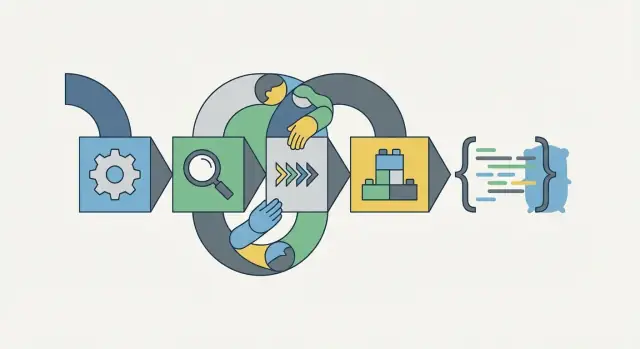
Why language engineering shows up in your day-to-day work
You may not think about compilers unless something breaks—but the choices behind a language’s compiler and tooling quietly shape your entire workday. How long you wait for builds, how safe refactors feel, how easy it is to review code, and how confidently you can ship are all downstream of language engineering decisions.
When a build takes seconds instead of minutes, you run tests more often. When error messages are precise and consistent, you fix bugs faster. When tools agree on formatting and package structure, teams spend less time arguing about style and more time solving product problems. These are not “nice-to-haves”; they add up to fewer interruptions, fewer risky releases, and a smoother path from idea to production.
Where Robert Griesemer fits
Robert Griesemer is one of the language engineers behind Go. Think of a language engineer here not as “the person who writes syntax rules,” but as someone who designs the system around the language: what the compiler optimizes for, what trade-offs are acceptable, and what defaults make real teams productive.
This article isn’t a biography, and it’s not a deep dive into compiler theory. Instead, it uses Go as a practical case study in how constraints—like build speed, codebase growth, and maintainability—push a language toward certain decisions.
What we’ll focus on
We’ll look at the practical constraints and trade-offs that influenced Go’s feel and performance, and how they translate into everyday productivity outcomes. That includes why simplicity is treated as an engineering strategy, how fast compilation changes workflows, and why tooling conventions matter more than they first appear.
Along the way, we’ll keep circling back to a simple question: “What does this design choice change for a developer on a normal Tuesday?” That perspective makes language engineering relevant—even if you never touch compiler code.
Language engineering in plain English
“Language engineering” is the practical work of turning a programming language from an idea into something teams can use every day—write code in, build it, test it, debug it, ship it, and maintain it for years.
It’s easy to talk about languages as a set of features (“generics”, “exceptions”, “pattern matching”). Language engineering zooms out and asks: how do those features behave when thousands of files, dozens of developers, and tight deadlines are involved?
Features vs. the machinery behind them
A language has two big sides:
- The language surface: syntax and rules—what code you’re allowed to write.
- The implementation: the compiler, runtime, standard library, and tooling—what happens when you build, run, format, test, and deploy.
Two languages can look similar on paper, yet feel completely different in practice because their tooling and compilation model lead to different build times, error messages, editor support, and runtime behavior.
What “constraints” really mean
Constraints are the real-world limits that shape design decisions:
- Time: how long builds and tests take; how quickly you can iterate.
- Teams: varying skill levels, code review needs, onboarding speed.
- Hardware and CI: laptops, build servers, and parallelism limits.
- Build systems and dependencies: caching, reproducibility, versioning.
- Maintenance: keeping code understandable and tools reliable over years.
A simple “great in theory, expensive in practice” example
Imagine adding a feature that requires the compiler to do heavy global analysis across the whole codebase (for example, more advanced type inference). It can make code look cleaner—less annotation, fewer explicit types—but it may also make compilation slower, error messages harder to interpret, and incremental builds less predictable.
Language engineering is deciding whether that trade-off improves productivity overall—not just whether the feature is elegant.
The goals Go optimizes for
Go wasn’t designed to win every language argument. It was designed to emphasize a few goals that matter when software is built by teams, shipped often, and maintained for years.
Readability over cleverness
A lot of Go’s “feel” points toward code that a teammate can understand on a first pass. Readability isn’t just aesthetic—it affects how quickly someone can review a change, spot risk, or make a safe improvement.
This is why Go tends to prefer straightforward constructs and a small set of core features. When the language encourages familiar patterns, codebases become easier to scan, easier to discuss in code review, and less dependent on “local heroes” who know the tricks.
Fast iteration and short feedback
Go is designed to support quick compile-and-run cycles. That shows up as a practical productivity goal: the faster you can test an idea, the less time you spend context-switching, second-guessing, or waiting for tooling.
On a team, short feedback loops compound. They help newcomers learn by experimenting, and they help experienced engineers make small, frequent improvements instead of batching changes into risky mega-PRs.
Easy deployment for long-lived services
Go’s approach to producing simple deployable artifacts fits the reality of long-running backend services: upgrades, rollbacks, and incident response. When deployment is predictable, operations work becomes less fragile—and engineering teams can focus on behavior rather than packaging puzzles.
What’s left out is part of the strategy
These goals influence omissions as much as inclusions. Go often chooses not to add features that might increase expressiveness but also increase cognitive load, complicate tooling, or make code harder to standardize across a growing organization. The result is a language optimized for steady team throughput, not maximal flexibility in every corner case.
Simplicity as a productivity strategy (not a slogan)
Simplicity in Go isn’t an aesthetic preference—it’s a coordination tool. Robert Griesemer and the Go team treated language design as something that would be lived with by thousands of developers, under time pressure, across many codebases. When the language offers fewer “equally valid” options, teams spend less energy negotiating style and more energy shipping.
The human factors: consistency beats cleverness
Most productivity drag in large projects isn’t raw coding speed; it’s the friction between people. A consistent language lowers the number of decisions you need to make per line of code. With fewer ways to express the same idea, developers can predict what they’re about to read, even in unfamiliar repos.
That predictability matters in daily work:
- New teammates onboard faster because patterns repeat.
- Code review focuses on correctness and clarity, not personal preference.
- Bugs are easier to spot because “unusual” code stands out.
Smaller surface area, smoother reviews
A large feature set increases the surface area reviewers must understand and enforce. Go intentionally keeps the “how” constrained: there are idioms, but fewer competing paradigms. This reduces review churn like “use this abstraction instead” or “we prefer this metaprogramming trick.”
When the language narrows the possibilities, a team’s standards become easier to apply consistently—especially across multiple services and long-lived code.
Design constraints that help big teams
Constraints can feel limiting in the moment, but they often improve outcomes at scale. If everyone has access to the same small set of constructs, you get more uniform code, fewer local dialects, and less dependency on “the one person who understands this style.”
Brief example: idiomatic patterns vs. highly customized styles
In Go, you’ll often see straightforward patterns repeated:
- Early returns for error handling (
if err != nil { return err }) - Simple structs and explicit interfaces
Compare that with a highly customized style in other languages where one team leans heavily on macros, another on elaborate inheritance, and a third on clever operator overloading. Each can be “powerful,” but it increases the cognitive tax of moving between projects—and turns code review into a debate club.
Fast builds and short feedback loops
Build speed isn’t a vanity metric—it directly shapes how you work.
When a change compiles in seconds, you stay in the problem. You try an idea, see the result, and adjust. That tight loop keeps attention on the code instead of on context-switching. The same effect multiplies in CI: faster builds mean quicker PR checks, shorter queues, and less time waiting to learn whether a change was safe.
What fast builds enable
Fast builds encourage small, frequent commits. Small changes are easier to review, easier to test, and less risky to deploy. They also make it more likely that teams will refactor proactively instead of postponing improvements “until later.”
At a high level, languages and toolchains can support this by:
- Keeping dependency handling predictable so you don’t rebuild the world for a tiny edit
- Designing compilation units and imports to be simple for tools to analyze quickly
- Preferring straightforward language features that don’t require expensive whole-program reasoning
- Making the default build command do the right thing with minimal setup
None of that requires knowing compiler theory; it’s about respecting developer time.
The hidden cost of slow builds
Slow builds push teams into larger batches: fewer commits, bigger PRs, and longer-lived branches. That leads to more merge conflicts, more “fix forward” work, and slower learning—because you find out what broke long after you introduced the change.
Treat build time like a product metric
Measure it. Track local build time and CI build time over time, the way you’d track latency for a user-facing feature. Put numbers in your team dashboard, set budgets, and investigate regressions. If build speed is part of your definition of “done,” productivity improves without heroics.
One practical connection: if you’re building internal tools or service prototypes, platforms like Koder.ai benefit from the same principle—short feedback loops. By generating React frontends, Go backends, and PostgreSQL-backed services via chat (with planning mode and snapshots/rollback), it helps keep iteration tight while still producing exportable source code you can own and maintain.
A quick tour of compiler trade-offs (without the jargon)
A compiler is basically a translator: it takes the code you write and turns it into something the machine can run. That translation isn’t one step—it’s a small pipeline, and each stage has different cost and different payoffs.
The main stages (what happens to your code)
1) Parsing
First, the compiler reads your text and checks that it’s grammatically valid code. It builds an internal structure (think “outline”) so later stages can reason about it.
2) Type checking
Next, it verifies that the pieces fit together: that you’re not mixing incompatible values, calling functions with the wrong inputs, or using names that don’t exist. In statically typed languages, this stage can do a lot of work—and the more sophisticated the type system, the more there is to figure out.
3) Optimization
Then, the compiler may try to make the program faster or smaller. This is where it spends time exploring alternative ways to execute the same logic: rearranging computations, removing redundant work, or improving memory use.
4) Code generation (codegen)
Finally, it emits machine code (or another lower-level form) that your CPU can execute.
Where compilers usually spend the most time
For many languages, optimization and complex type checking dominate compile time because they require deeper analysis across functions and files. Parsing is typically cheap by comparison. This is why language and compiler designers often ask: “How much analysis is worth doing before you can run the program?”
Different languages, different bets
Some ecosystems accept slower compiles in exchange for maximum runtime performance or powerful compile-time features. Go, influenced by practical language engineering, leans toward fast, predictable builds—even if that means being selective about which expensive analyses happen at compile time.
Visual suggestion for the full article
Consider a simple pipeline diagram:
Source code → Parse → Type check → Optimize → Codegen → Executable
Static typing, tooling, and safer refactoring
Static typing sounds like a “compiler thing,” but you feel it most in everyday tooling. When types are explicit and checked consistently, your editor can do more than color keywords—it can understand what a name refers to, which methods exist, and where a change will break.
Why types make tools smarter
With static types, autocomplete can offer the right fields and methods without guessing. “Go to definition” and “find references” become reliable because identifiers aren’t just text matches; they’re tied to symbols the compiler understands. That same information powers safer refactors: renaming a method, moving a type to a different package, or splitting a file doesn’t depend on fragile search-and-replace.
Productivity work: renames, API evolution, safe changes
Most team time isn’t spent writing brand-new code—it’s spent changing existing code without breaking it. Static typing helps you evolve an API with confidence:
- If you change a function signature, the compiler points to every call site.
- If you change a struct field type, you’ll catch mismatches immediately.
- If you delete a method from an interface, you’ll see which implementations no longer satisfy it.
This is where Go’s design choices align with practical constraints: it’s easier to ship steady improvements when your tools can reliably answer “what does this affect?”
The trade-offs: verbosity vs. clarity, strictness vs. flexibility
Types can feel like extra ceremony—especially when you’re prototyping. But they also prevent a different kind of work: debugging surprising runtime failures, chasing down implicit conversions, or discovering too late that a refactor silently changed behavior. The strictness can be annoying in the moment, yet it often pays back during maintenance.
Example: refactoring a service interface across packages
Imagine a small system where package billing calls payments.Processor. You decide Charge(userID, amount) must also accept a currency.
In a dynamically typed setup, you might miss a call path until it fails in production. In Go, after updating the interface and implementation, the compiler flags every outdated call in billing, checkout, and tests. Your editor can jump from error to error, applying consistent fixes. The result is a refactor that’s mechanical, reviewable, and much less risky.
Dependencies, packages, and scaling codebases
Go’s performance story isn’t only about the compiler—it’s also about how your code is shaped. Package structure and imports directly influence compile time and day-to-day comprehension. Every import expands what the compiler must load, type-check, and potentially recompile. For humans, every import also expands the “mental surface area” needed to understand what a package relies on.
Why imports matter
A package with a wide, tangled import graph tends to compile slower and read worse. When dependencies are shallow and intentional, builds stay snappy and it’s easier to answer basic questions like: “Where does this type come from?” and “What can I safely change without breaking half the repo?”
Dependency hygiene: boundaries over sprawl
Healthy Go codebases usually grow by adding more small, cohesive packages—not by making a few packages bigger and more connected. Clear boundaries reduce cycles (A imports B imports A), which are painful both for compilation and for design. If you notice packages that need to import each other to “get work done,” that’s often a sign responsibilities are mixed.
A common trap is the “utils” (or “common”) dumping ground. It starts as a convenience package, then becomes a dependency magnet: everything imports it, so any change triggers widespread rebuilds and makes refactoring risky.
Practical tips you can apply this week
- Keep packages cohesive: group code by a single purpose, not by who wrote it.
- Prefer depending on smaller packages that expose a narrow API.
- Avoid cyclic design pressure by moving shared concepts into a third, clearly named package.
Quick checklist
- List your top 10 most-imported packages—do they deserve that central role?
- Search for “utils/common/shared”—can you split it by domain (e.g., auth, time, encoding)?
- Check for dependency cycles or near-cycles—what responsibility is crossing boundaries?
- For one package, remove any import not used in its public API (keep internals private).
- Pick one “god package” and extract a smaller package with a clear name and a small interface.
Tooling defaults that keep teams moving
One of Go’s quiet productivity wins isn’t a clever syntax trick—it’s the expectation that the language ships with a small set of standard tools, and that teams actually use them. This is language engineering expressed as workflow: reduce optionality where it creates friction, and make the “normal path” fast.
Built-in tools as shared habits
Go encourages a consistent baseline through tools that are treated as part of the experience, not an optional ecosystem add-on:
- Formatting:
gofmt(andgo fmt) makes code style largely non-negotiable. - Testing:
go teststandardizes how tests are discovered and run. - Documentation:
go docand Go’s doc comments push teams toward discoverable APIs. - Build/run:
go buildandgo runestablish predictable entry points.
The point isn’t that these tools are perfect for every edge case. It’s that they minimize the number of decisions a team must repeatedly re-litigate.
Less variation, faster onboarding
When each project invents its own toolchain (formatter, test runner, doc generator, build wrapper), new contributors spend their first days learning the project’s “special rules.” Go’s defaults reduce that project-to-project variation. A developer can move between repositories and still recognize the same commands, file conventions, and expectations.
That consistency also pays off in automation: CI is easier to set up and easier to understand later. If you want a practical walkthrough, see /blog/go-tooling-basics and, for build feedback loop considerations, /blog/ci-build-speed.
A similar idea applies when you’re standardizing how apps get created across a team. For example, Koder.ai enforces a consistent “happy path” for generating and evolving applications (React on the web, Go + PostgreSQL on the backend, Flutter for mobile), which can reduce the toolchain-by-team drift that often slows onboarding and code review.
A simple team agreement that prevents churn
Agree on this upfront: formatting and linting are defaults, not debate.
Concretely: run gofmt automatically (editor on save or pre-commit) and define a single linter configuration that the whole team uses. The win isn’t aesthetic—it’s fewer noisy diffs, fewer style comments in reviews, and more attention spent on behavior, correctness, and design.
Practical constraints that shape real language decisions
Language design isn’t only about elegant theory. In real organizations, it’s shaped by constraints that are hard to negotiate: delivery dates, team size, hiring realities, and the infrastructure you already run.
What “practical constraints” look like day to day
Most teams live with some combination of:
- Deadlines and predictable delivery: features need to ship on calendar time, not “when the type system is perfected.”
- Hiring and onboarding: your language has to work for the engineers you can actually recruit—and help new hires become productive quickly.
- Existing infrastructure: build systems, CI limits, container images, and deployment pipelines all impose friction when builds are slow or toolchains are complex.
- Operational demands: when something breaks at 2 a.m., people need clear binaries, clear logs, and straightforward debugging paths.
How constraints become design decisions
Go’s design reflects a clear “complexity budget.” Every language feature has a cost: compiler complexity, longer build times, more ways to write the same thing, and more edge cases for tools. If a feature makes the language harder to learn or makes builds less predictable, it competes with the goal of fast, steady team throughput.
That constraint-driven approach can be a win: fewer “clever” corners, more consistent codebases, and tooling that works the same way across projects.
The trade-offs you may notice
Constraints also mean saying “no” more often than many developers are used to. Some users feel friction when they want richer abstraction mechanisms, more expressive type features, or highly customized patterns. The upside is that the common path stays clear; the downside is that certain domains may feel constrained or verbose.
When to embrace Go’s constraints (and when not to)
Choose Go when your priority is team-scale maintainability, fast builds, simple deployment, and easy onboarding.
Consider another tool when your problem leans heavily on advanced type-level modeling, language-integrated metaprogramming, or domains where expressive abstractions deliver large, repeatable leverage. Constraints are only “good” when they match the work you need to do.
Debuggability and operational productivity
Go’s language engineering choices don’t just affect how code compiles—they shape how teams operate software. When a language nudges developers toward certain patterns (explicit errors, simple control flow, consistent tooling), it quietly standardizes how incidents are investigated and fixed.
How language design changes error-handling and debugging habits
Go’s explicit error returns encourage a habit: treat failures as part of normal program flow. Instead of “hope it doesn’t fail,” code tends to read as “if this step fails, say so clearly and early.” That mindset leads to practical debugging behavior:
- Errors get surfaced close to where they happen.
- Context is attached while the stack is still meaningful.
- Recovery paths are visible in code review (rather than hidden in implicit exceptions).
This is less about any single feature and more about predictability: when most code follows the same structure, your brain (and your on-call rotation) stops paying a tax for surprises.
Predictability reduces time-to-fix
During an incident, the question is rarely “what is broken?”—it’s “where did this start, and why?” Predictable patterns cut search time:
- Logs are easier to correlate because fields and phrasing are consistent.
- Error messages carry the same kind of metadata (operation, key identifiers, upstream dependency).
- Tests fail in familiar ways because packages and naming conventions are uniform.
Concrete practices that compound the benefits
Logging conventions: choose a small set of stable fields (service, request_id, user_id/tenant, operation, duration_ms, error). Log at boundaries (inbound request, outbound dependency call) with the same field names.
Error wrapping: wrap with action + key context, not vague descriptions. Aim for “what you were doing” plus identifiers:
return fmt.Errorf("fetch invoice %s for tenant %s: %w", invoiceID, tenantID, err)
Test structure: table-driven tests for edge cases, and one “golden path” test that verifies logging/error shape (not just return values).
Mini case study outline: tracing a production bug faster
- Symptom: elevated 500s on
/checkout. - Initial signal: logs show
operation=charge_cardspikes induration_ms. - Traceability win: consistent wrapping reveals
charge_card: call payment_gateway: context deadline exceeded. - Narrowing: request_id links the timeout to a specific upstream region.
- Fix: lower gateway timeout + add circuit-breaker behavior; confirm via tests that timeouts wrap with
operationand include gateway region.
The theme: when the codebase speaks in consistent, predictable patterns, your incident response becomes a procedure—not a scavenger hunt.
Key lessons to apply to your own team and codebase
Go’s story is useful even if you never write a line of Go: it’s a reminder that language and tooling decisions are really workflow decisions.
What to take away
Constraints are not “limitations” to work around; they’re design inputs that keep a system coherent. Go leans into constraints that favor readability, predictable builds, and straightforward tooling.
Compiler choices matter because they shape everyday behavior. If builds are fast and errors are clear, developers run the build more often, refactor earlier, and keep changes smaller. If builds are slow or dependency graphs are tangled, teams start batching changes and avoiding cleanups—productivity drops without anyone explicitly choosing it.
Finally, many productivity outcomes come from boring defaults: a consistent formatter, a standard build command, and dependency rules that keep the codebase understandable as it grows.
Apply this next
- Measure your feedback loops: time-to-test, time-to-build, and how often engineers wait on CI.
- Simplify dependencies: remove unused packages, reduce “utility” modules that everybody touches, and keep boundaries explicit.
- Standardize tools: one formatter, one linter set, one build entry point, one dependency workflow.
If you want more depth on the most common pain points, continue with /blog/go-build-times and /blog/go-refactoring.
If your bottleneck is the time between “idea” and a working service, consider whether your workflow supports fast iteration end-to-end—not just fast compilation. That’s one reason teams adopt platforms like Koder.ai: you can go from a requirement described in chat to a running app (with deployment/hosting, custom domains, and source code export) and then keep iterating with snapshots and rollback when requirements change.
A neutral note on trade-offs
Every design optimizes something and pays elsewhere. Faster builds may mean fewer language features; stricter dependency rules may reduce flexibility. The goal isn’t to copy Go—it’s to choose constraints and tooling that make your team’s daily work easier, then accept the costs deliberately.
FAQ
What does “language engineering” mean in practical terms?
Language engineering is the work of turning a language into a usable, reliable system: compiler, runtime, standard library, and the default tools you use to build, test, format, debug, and ship.
In day-to-day work, it shows up as build speed, error message quality, editor features (rename/go-to-definition), and how predictable deployments feel.
How do compiler and tooling decisions affect a normal developer workday?
Even if you never touch the compiler, you still live with its consequences:
- Fast builds encourage small changes and frequent testing.
- Clear errors reduce debugging time and context switching.
- Consistent tooling reduces style debates and noisy diffs.
- Predictable dependency handling keeps CI and local workflows stable.
Why is Robert Griesemer mentioned if this isn’t a biography?
The post uses him as a lens for how language engineers prioritize constraints (team scale, build speed, maintainability) over feature maximalism.
It’s less about personal biography and more about how Go’s design reflects an engineering approach to productivity: make the common path fast, consistent, and debuggable.
Why are fast builds treated as a productivity feature (not a nice-to-have)?
Because build time changes behavior:
- You run
go testand rebuild more often. - You’re more willing to refactor incrementally.
- PRs stay smaller (easier review, lower risk).
- CI feedback arrives sooner, so breakages are caught earlier.
Slow builds push the opposite: batching changes, bigger PRs, longer-lived branches, and more merge pain.
What trade-offs in compiler design usually drive compile time?
Compilers generally do some combination of:
- Parsing (read and structure the code)
- Type checking (verify pieces fit)
- Optimization (try to make it faster/smaller)
- Code generation (emit machine code)
Compile time often grows with complex type systems and expensive whole-program analysis. Go leans toward keeping builds fast and predictable, even if that limits some compile-time “magic.”
How is “simplicity” an engineering strategy in Go rather than a slogan?
Go treats simplicity as a coordination mechanism:
- Fewer equally-valid ways to express the same idea
- More consistent code across teams and repos
- Less review churn about style or clever abstractions
The point isn’t minimalism for its own sake; it’s reducing the cognitive and social overhead that slows teams down at scale.
How does static typing translate into safer refactoring and better tooling?
Static types give tools reliable semantic information, which makes:
- Autocomplete more accurate
- “Go to definition” and “find references” trustworthy
- Renames and signature changes safer (compiler points to all call sites)
The practical win is mechanical, reviewable refactors instead of fragile search-and-replace or runtime surprises.
Why do packages and imports matter so much for scaling Go codebases?
Imports affect both machines and humans:
- A wide import graph increases what the compiler must load/type-check.
- A tangled dependency structure increases the mental surface area of a package.
Practical habits:
- Keep packages cohesive with narrow APIs.
- Avoid cycles by moving shared concepts into a clearly named third package.
- Treat “utils/common” as a smell; split by domain when it becomes a dependency magnet.
What’s the benefit of Go’s “batteries-included” tooling defaults?
Defaults reduce repeated negotiation:
gofmtmakes formatting largely non-optional.go teststandardizes test discovery and execution.go build/go runcreate predictable entry points.
Teams spend less time arguing about style or bespoke toolchains and more time reviewing behavior and correctness. For more, see /blog/go-tooling-basics and /blog/ci-build-speed.
What can a team apply this week to improve productivity using these ideas?
Treat build feedback as a product metric:
- Track local build/test time and CI duration over time.
- Set a budget and investigate regressions.
- Reduce dependency sprawl (especially shared “god” packages).
- Standardize formatting and a single linter configuration.
If you want targeted follow-ups, the post points to /blog/go-build-times and /blog/go-refactoring.