

Samsung SDS and Scaling Enterprise IT Where Uptime Is the Product
A practical look at how Samsung SDS-style enterprise platforms scale in partner ecosystems where uptime, change control, and trust are the product.
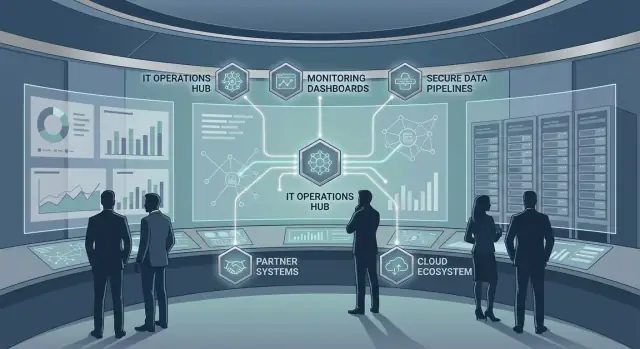
Why “reliability is the product” in enterprise ecosystems
When an enterprise depends on shared platforms to run finance, manufacturing, logistics, HR, and customer channels, uptime stops being a “nice-to-have” quality attribute. It becomes the thing being sold. For an organization like Samsung SDS—operating as a large-scale enterprise IT services and platform provider—reliability isn’t just a feature of the service; it is the service.
What “reliability is the product” really means
In consumer apps, a brief outage might be annoying. In enterprise ecosystems, it can pause revenue recognition, delay shipments, break compliance reporting, or trigger contractual penalties. “Reliability is the product” means success is judged less by new features and more by outcomes like:
- business processes completing on time
- critical integrations staying healthy
- predictable performance during peaks
- fast recovery when incidents happen
It also means engineering and operations aren’t separate “phases.” They’re part of the same promise: customers and internal stakeholders expect systems to work—consistently, measurably, and under stress.
What an “ecosystem” is in enterprise terms
Enterprise reliability is rarely about a single application. It’s about a network of dependencies across:
- affiliates and group companies sharing identity, networks, and core platforms
- vendors providing SaaS tools, data feeds, and infrastructure components
- customers and partners integrating via APIs, EDI, portals, and mobile apps
- regulators and auditors expecting traceability, controls, and reporting
This interconnectedness increases the blast radius of failures: one degraded service can cascade into dozens of downstream systems and external obligations.
What to expect from this article
This post focuses on examples and repeatable patterns—not internal or proprietary specifics. You’ll learn how enterprises approach reliability through an operating model (who owns what), platform decisions (standardization that still supports delivery speed), and metrics (SLOs, incident performance, and business-aligned targets).
By the end, you should be able to map the same ideas to your own environment—whether you run a central IT organization, a shared services team, or a platform group supporting an ecosystem of dependent businesses.
Samsung SDS in context: enterprise services, platforms, and scale
Samsung SDS is widely associated with running and modernizing complex enterprise IT: the systems that keep large organizations operating day after day. Rather than focusing on a single app or product line, its work sits closer to the “plumbing” of the enterprise—platforms, integration, operations, and the services that make business-critical workflows dependable.
What “enterprise services and platforms” typically includes
In practice, this usually spans several categories that many large companies need at the same time:
- Cloud and infrastructure services: building, migrating, and operating hybrid environments; standard compute, storage, and network foundations.
- Security services: identity and access management, monitoring, vulnerability management, and security operations that must run continuously.
- Data and analytics platforms: pipelines, data quality controls, governance, and systems that turn raw activity into trusted reporting.
- ERP and logistics support: the operational core—procurement, inventory, shipping, finance—where minutes of downtime can block real work.
- Managed operations (IT service management): 24/7 monitoring, incident response, change coordination, and ongoing service improvement.
Why “scale” is different in conglomerates and partner ecosystems
Scale isn’t only about traffic volume. Inside conglomerates and large partner networks, scale is about breadth: many business units, different compliance regimes, multiple geographies, and a mix of modern cloud services alongside legacy systems that still matter.
That breadth creates a different operating reality:
- You’re serving many internal customers with conflicting priorities.
- You’re integrating across vendors, subsidiaries, and partners, not just internal teams.
- You have to support long-lived workflows (billing, fulfillment, payroll) where “good enough” reliability is rarely acceptable.
The key constraint: shared systems power critical workflows
The hardest constraint is dependency coupling. When core platforms are shared—identity, network, data pipelines, ERP, integration middleware—small issues can ripple outward. A slow authentication service can look like “the app is down.” A data pipeline delay can halt reporting, forecasting, or compliance submissions.
This is why enterprise providers like Samsung SDS are often judged less by features and more by outcomes: how consistently shared systems keep thousands of downstream workflows running.
Ecosystems amplify risk: shared dependencies and blast radius
Enterprise platforms rarely fail in isolation. In a Samsung SDS–style ecosystem, a “small” outage inside one service can ripple across suppliers, logistics partners, internal business units, and customer-facing channels—because everyone is leaning on the same set of shared dependencies.
The common dependencies everyone forgets are “shared”
Most enterprise journeys traverse a familiar chain of ecosystem components:
- Identity and access: SSO, federation, MFA providers, shared roles and entitlements.
- Network and connectivity: VPNs, private links, DNS, gateways, WAF/CDN, partner routing rules.
- Data exchange: shared master data, reference codes, message brokers, file transfer services.
- Billing and entitlements: subscription checks, invoice generation, credit limits, usage metering.
- Compliance and audit services: logging, retention, encryption key management, regulatory reporting.
When any one of these degrades, it can block multiple “happy paths” at once—checkout, shipment creation, returns, invoicing, or partner onboarding.
Integration choices shape the blast radius
Ecosystems integrate through different “pipes,” each with its own failure pattern:
- APIs (real-time): sensitive to latency, throttling, and backward compatibility.
- EDI (standardized partner exchange): brittle mappings and strict schema expectations.
- Batch jobs (scheduled transfers): silent failures that surface hours later as reconciliation gaps.
- Event streams (near-real-time): replay, ordering, and consumer lag issues can amplify defects.
A key risk is correlated failure: multiple partners depend on the same endpoint, the same identity provider, or the same shared data set—so one fault becomes many incidents.
Failure modes unique to ecosystems
Ecosystems introduce problems you don’t see in single-company systems:
- Version mismatches between producer and consumer (API/EDI schema drift).
- Contract limits (rate limits, payload size, timeout assumptions) that get exceeded at peak.
- Shared identities where one directory issue locks out multiple organizations.
- Ambiguous ownership: “it’s not our system” delays triage while the outage expands.
Reducing blast radius starts with explicitly mapping dependencies and partner journeys, then designing integrations that degrade gracefully rather than fail all at once (see also /blog/reliability-targets-slos-error-budgets).
Platform foundations: standardization without slowing delivery
Standardization only helps if it makes teams faster. In large enterprise ecosystems, platform foundations succeed when they remove repeated decisions (and repeated mistakes) while still giving product teams room to ship.
A layered platform architecture that scales
A practical way to think about the platform is as clear layers, each with a distinct contract:
- Infrastructure layer: compute, storage, network, identity primitives, and baseline hardening.
- Runtime layer: Kubernetes/VM runtimes, container registry, CI/CD runners, and configuration management.
- Shared services layer: logging/metrics, secrets, API gateway, messaging, service discovery, feature flags.
- Business platforms: reusable domain capabilities—customer data, billing, document processing, ERP integration—exposed through stable APIs.
This separation keeps “enterprise-grade” requirements (security, availability, auditability) built into the platform rather than re-implemented by every application.
Golden paths: paved roads, not strict rules
Golden paths are approved templates and workflows that make the secure, reliable option the easiest option: a standard service skeleton, preconfigured pipelines, default dashboards, and known-good stacks. Teams can deviate when needed, but they do so intentionally, with explicit ownership for the extra complexity.
A growing pattern is to treat these golden paths as productized starter kits—including scaffolding, environment creation, and “day-2” defaults (health checks, dashboards, alert rules). In platforms like Koder.ai, teams can go a step further by generating a working app through a chat-driven workflow, then using planning mode, snapshots, and rollback to keep changes reversible while still moving quickly. The point isn’t the tooling brand—it’s making the reliable path the lowest-friction path.
Multi-tenant vs dedicated: choosing the right isolation
Multi-tenant platforms reduce cost and speed onboarding, but they require strong guardrails (quotas, noisy-neighbor controls, clear data boundaries). Dedicated environments cost more, yet can simplify compliance, performance isolation, and customer-specific change windows.
Reducing cognitive load for app teams
Good platform choices shrink the daily decision surface: fewer “Which logging library?”, “How do we rotate secrets?”, “What’s the deployment pattern?” conversations. Teams focus on business logic while the platform quietly enforces consistency—and that’s how standardization increases delivery speed instead of slowing it.
Reliability targets: SLOs, error budgets, and business outcomes
Enterprise IT providers don’t “do reliability” as a nice-to-have—reliability is part of what customers buy. The practical way to make that real is to translate expectations into measurable targets that everyone can understand and manage.
SLOs and SLIs in plain language
An SLI (Service Level Indicator) is a measurement (for example: “percentage of checkout transactions that succeeded”). An SLO (Service Level Objective) is the target for that measurement (for example: “99.9% of checkout transactions succeed each month”).
Why it matters: contracts and business operations depend on clear definitions. Without them, teams argue after an incident about what “good” looked like. With them, you can align service delivery, support, and partner dependencies around the same scoreboard.
Pick indicators that match the business risk
Not every service should be judged only by uptime. Common enterprise-relevant targets include:
- Availability: Can users start and complete a business process?
- Latency: Is it fast enough to meet customer and internal productivity expectations?
- Data correctness: Are reports, invoices, inventory, or identity decisions accurate and consistent?
For data platforms, “99.9% uptime” can still mean a failed month if key datasets are late, incomplete, or wrong. Choosing the right indicators prevents false confidence.
Error budgets: balancing change and stability
An error budget is the allowed amount of “badness” (downtime, failed requests, delayed pipelines) implied by the SLO. It turns reliability into a decision tool:
- If you’re within budget, you can ship changes faster.
- If you’re burning budget too quickly, you slow down, fix systemic issues, and tighten change practices.
This helps enterprise providers balance delivery commitments with uptime expectations—without relying on opinion or hierarchy.
Reporting cadence and audience
Effective reporting is tailored:
- Engineers (daily/weekly): SLI trends, top contributors to burn, actionable fixes.
- Executives (monthly/quarterly): business impact, risk outlook, investment needs.
- Partners (as agreed): shared SLOs, dependency performance, escalation readiness.
The goal isn’t more dashboards—it’s consistent, contract-aligned visibility into whether reliability outcomes support the business.
Observability and incident response at enterprise scale
When uptime is part of what customers buy, observability can’t be an afterthought or a “tooling team” project. At enterprise scale—especially in ecosystems with partners and shared platforms—good incident response starts with seeing the system the same way operators experience it: end-to-end.
The basics you actually need
High-performing teams treat logs, metrics, traces, and synthetic checks as one coherent system:
- Metrics tell you what changed (latency, error rate, saturation).
- Logs tell you what happened (context, IDs, decision points).
- Traces tell you where it broke across services.
- Synthetic checks tell you what users feel (can we log in, pay, sync data?).
The goal is quick answers to: “Is this user-impacting?”, “How big is the blast radius?”, and “What changed recently?”
Actionable alerting (and fewer noisy pages)
Enterprise environments generate endless signals. The difference between usable and unusable alerting is whether alerts are tied to customer-facing symptoms and clear thresholds. Prefer alerts on SLO-style indicators (error rate, p95 latency) over internal counters. Every page should include: affected service, probable impact, top dependencies, and a first diagnostic step.
Service maps across partner boundaries
Ecosystems fail at the seams. Maintain service maps that show dependencies—internal platforms, vendors, identity providers, networks—and make them visible in dashboards and incident channels. Even if partner telemetry is limited, you can still model dependencies using synthetic checks, edge metrics, and shared request IDs.
Runbooks and on-call: automate vs document
Automate repetitive actions that reduce time-to-mitigate (rollback, feature flag disable, traffic shift). Document decisions that require judgment (customer comms, escalation paths, partner coordination). A good runbook is short, tested during real incidents, and updated as part of post-incident follow-up—not filed away.
Change control that protects uptime while enabling velocity
Enterprise environments like Samsung SDS-supported ecosystems don’t get to choose between “safe” and “fast.” The trick is to make change control a predictable system: low-risk changes flow quickly, while high-risk changes get the scrutiny they deserve.
Move fast with smaller, reversible releases
Big-bang releases create big-bang outages. Teams keep uptime high by shipping in smaller slices and reducing the number of things that can go wrong at once.
Feature flags help separate “deploy” from “release,” so code can reach production without immediately affecting users. Canary deploys (releasing to a small subset first) provide an early warning before a change reaches every business unit, partner integration, or region.
Governance that satisfies auditors without blocking teams
Release governance isn’t only paperwork—it’s how enterprises protect critical services and prove control.
A practical model includes:
- Clear approval rules based on risk (routine vs. high-impact)
- Segregation of duties (the person who writes the change isn’t the only one who can approve it)
- Automatic audit trails from the CI/CD pipeline and ITSM tickets
The goal is to make the “right way” the easiest way: approvals and evidence are captured as part of normal delivery, not assembled after the fact.
Change windows, blackout periods, and business calendars
Ecosystems have predictable stress points: end-of-month finance close, peak retail events, annual enrollment, or major partner cutovers. Change windows align deployments with those cycles.
Blackout periods should be explicit and published, so teams plan ahead rather than rushing risky work into the last day before a freeze.
Rollback and fail-forward for platforms and integrations
Not every change can be rolled back cleanly—especially schema changes or cross-company integrations. Strong change control requires deciding upfront:
- Rollback path (how to return to the previous version quickly)
- Fail-forward plan (how to patch safely when rollback isn’t possible)
When teams predefine these paths, incidents become controlled corrections instead of prolonged improvisation.
Resilience engineering: designing for failure and recovery
Resilience engineering starts with a simple assumption: something will break—an upstream API, a network segment, a database node, or a third‑party dependency you don’t control. In enterprise ecosystems (where Samsung SDS-type providers operate across many business units and partners), the goal isn’t “no failures,” but controlled failures with predictable recovery.
Resilience patterns that reduce customer impact
A few patterns consistently pay off at scale:
- Redundancy: multiple instances, zones, or regions so a single fault doesn’t stop the service.
- Load shedding: when capacity is exceeded, reject or defer non-critical work (e.g., background reports) to keep critical flows (e.g., payments, order capture) alive.
- Graceful degradation: serve a simpler experience when dependencies fail—cached data, read-only mode, or limited features—rather than a full outage.
The key is to define which user journeys are “must survive” and design fallbacks specifically for them.
Disaster recovery: picking RTO/RPO per system
Disaster recovery planning becomes practical when every system has explicit targets:
- RTO (Recovery Time Objective): how quickly you must restore service.
- RPO (Recovery Point Objective): how much data loss (time) is acceptable.
Not everything needs the same numbers. A customer authentication service may require minutes of RTO and near-zero RPO, while an internal analytics pipeline can tolerate hours. Matching RTO/RPO to business impact prevents overspending while still protecting what matters.
Replication and consistency trade-offs
For critical workflows, replication choices matter. Synchronous replication can minimize data loss but may increase latency or reduce availability during network issues. Asynchronous replication improves performance and uptime but risks losing the most recent writes. Good designs make these trade-offs explicit and add compensating controls (idempotency, reconciliation jobs, or clear “pending” states).
Testing recovery, not just building it
Resilience only counts if it’s exercised:
- Failover exercises to prove DR runbooks and access paths.
- Game days that simulate dependency failures and overload.
- Chaos drills in safe scopes to validate graceful degradation and shedding rules.
Run them regularly, track time-to-recover, and feed findings back into platform standards and service ownership.
Security and compliance as reliability requirements
Security failures and compliance gaps don’t just create risk—they create downtime. In enterprise ecosystems, one misconfigured account, unpatched server, or missing audit trail can trigger service freezes, emergency changes, and customer-impacting outages. Treating security and compliance as part of reliability makes “staying up” the shared goal.
Identity and access across organizations
When multiple subsidiaries, partners, and vendors connect to the same services, identity becomes a reliability control. SSO and federation reduce password sprawl and help users get access without risky workarounds. Just as important is least privilege: access should be time-bound, role-based, and regularly reviewed so a compromised account can’t take down core systems.
Security operations that protect uptime
Security operations can either prevent incidents—or create them through unplanned disruption. Tie security work to operational reliability by making it predictable:
- Patching and vulnerability remediation on a published cadence, with clear maintenance windows
- Endpoint controls that are tested for performance impact before broad rollout
- Automated verification (health checks, canary groups) so updates don’t silently degrade service
Compliance: logging, retention, privacy, audit readiness
Compliance requirements (retention, privacy, audit trails) are easiest to meet when designed into platforms. Centralized logging with consistent fields, enforced retention policies, and access-controlled exports keep audits from turning into fire drills—and avoid “freeze the system” moments that interrupt delivery.
Supply-chain and third-party risk
Partner integrations expand capability and blast radius. Reduce third-party risk with contractually defined security baselines, versioned APIs, clear data-handling rules, and continuous monitoring of dependency health. If a partner fails, your systems should degrade gracefully rather than fail unpredictably.
Data platforms: scaling trust, lineage, and correctness
When enterprises talk about uptime, they often mean applications and networks. But for many ecosystem workflows—billing, fulfillment, risk, and reporting—data correctness is just as operationally critical. A “successful” batch that publishes the wrong customer identifier can create hours of downstream incidents across partners.
Master data and data quality as reliability
Master data (customers, products, vendors) is the reference point everything else depends on. Treating it as a reliability surface means defining what “good” looks like (completeness, uniqueness, timeliness) and measuring it continuously.
A practical approach is to track a small set of business-facing quality indicators (for example, “% of orders mapped to a valid customer”) and alert when they drift—before downstream systems fail.
Pipelines at scale: batch, streaming, and safe reprocessing
Batch pipelines are great for predictable reporting windows; streaming is better for near-real-time operations. At scale, both need guardrails:
- Backpressure to prevent one overloaded consumer from silently creating delays across the chain
- Idempotent writes and clear run identifiers so reprocessing doesn’t duplicate records
- Replay capability so you can recover from upstream errors without manual, risky fixes
Governance: lineage, cataloging, and stewardship
Trust increases when teams can answer three questions quickly: Where did this field come from? Who uses it? Who approves changes?
Lineage and cataloging aren’t “documentation projects”—they’re operational tools. Pair them with clear stewardship: named owners for critical datasets, defined access policies, and lightweight reviews for high-impact changes.
Preventing ecosystem data issues with contracts
Ecosystems fail at the boundaries. Reduce partner-related incidents with data contracts: versioned schemas, validation rules, and compatibility expectations. Validate at ingest, quarantine bad records, and publish clear error feedback so issues are corrected at the source rather than patched downstream.
Organization and governance: who owns reliability end to end
Reliability at enterprise scale fails most often in the gaps: between teams, between vendors, and between “run” and “build.” Governance isn’t bureaucracy for its own sake—it’s how you make ownership explicit so incidents don’t turn into multi-hour debates about who should act.
Choosing an operating model (and being honest about trade-offs)
There are two common models:
- Centralized operations: a shared team runs many services. This can standardize tooling and practices quickly, but risks creating a ticket factory and slowing product teams.
- Product-aligned teams: teams own services end to end (build + run). This improves accountability and learning, but requires strong platform support and consistent expectations.
Many enterprises land on a hybrid: platform teams provide paved roads, while product teams own reliability for what they ship.
Service catalogs and clear boundaries
A reliable organization publishes a service catalog that answers: Who owns this service? What are the support hours? What dependencies are critical? What is the escalation path?
Equally important are ownership boundaries: which team owns the database, the integration middleware, identity, network rules, and monitoring. When boundaries are unclear, incidents become coordination problems rather than technical problems.
Managing vendors and partners like first-class dependencies
In ecosystem-heavy environments, reliability depends on contracts. Use SLAs for customer-facing commitments, OLAs for internal handoffs, and integration contracts that specify versioning, rate limits, change windows, and rollback expectations—so partners can’t unintentionally break you.
Continuous improvement loops
Governance should enforce learning:
- Blameless postmortems with tracked action items
- Problem management to remove recurring causes
- Capacity planning tied to business events (peaks, launches, migrations)
Done well, governance turns reliability from “everyone’s job” into a measurable, owned system.
What to copy for your enterprise: a pragmatic starter plan
You don’t need to “become Samsung SDS” to benefit from the same operating principles. The goal is to turn reliability into a managed capability: visible, measured, and improved in small, repeatable steps.
1) Map what you actually run (and what depends on it)
Start with a service inventory that’s good enough to use next week, not perfect.
- List your top 20–50 business-critical services (customer portals, data pipelines, identity, integrations, batch jobs).
- For each service, record: owner, users, peak times, key dependencies (databases, APIs, networks, vendors), and known failure modes.
- Create a dependency map that highlights shared components with high “blast radius” (SSO, message queues, core data stores).
This becomes the backbone for prioritization, incident response, and change control.
2) Pick a few SLOs that the business will recognize
Choose 2–4 high-impact SLOs across different risk areas (availability, latency, freshness, correctness). Examples:
- “Checkout API: 99.9% successful requests per 30 days”
- “Employee login: p95 < 1s during business hours”
- “Daily finance feed: delivered by 07:00 with <0.1% missing records”
Track error budgets and use them to decide when to pause feature work, reduce change volume, or invest in fixes.
3) Improve observability before buying more tools
Tool sprawl often hides basic gaps. First, standardize what “good visibility” means:
- Consistent dashboards tied to SLOs
- Alerting that pages humans only for user-impacting issues
- A minimal set of runbooks for the top failure scenarios
If you can’t answer “what broke, where, and who owns it?” within minutes, add clarity before adding vendors.
4) Standardize integration patterns (especially for partners)
Ecosystems fail at the seams. Publish partner-facing guidelines that reduce variability:
- Approved API patterns (timeouts, retries, idempotency)
- Versioning and deprecation rules
- Rate limits and safe fallback behaviors
- Onboarding checklist and incident escalation contacts
Treat integration standards as a product: documented, reviewed, and updated.
Next steps
Run a 30-day pilot on 3–5 services, then expand. For more templates and examples, see /blog.
If you’re modernizing how teams build and operate services, it can help to standardize not only runtime and observability, but also the creation workflow. Platforms like Koder.ai (a chat-driven “vibe-coding” platform) can accelerate delivery while keeping enterprise controls in view—e.g., using planning mode before generating changes, and relying on snapshots/rollback when experimenting. If you’re evaluating managed support or platform help, start with constraints and outcomes on /pricing (no promises—just a way to frame options).
FAQ
What does “reliability is the product” actually mean in an enterprise ecosystem?
It means stakeholders experience reliability itself as the core value: business processes complete on time, integrations stay healthy, performance is predictable at peak, and recovery is fast when something breaks. In enterprise ecosystems, even short degradation can halt billing, shipping, payroll, or compliance reporting—so reliability becomes the primary “deliverable,” not an attribute behind the scenes.
Why do small outages have outsized impact in large enterprises?
Because enterprise workflows are tightly coupled to shared platforms (identity, ERP, data pipelines, integration middleware). A small outage can cascade into blocked orders, delayed finance close, broken partner onboarding, or contractual penalties. The “blast radius” is usually much larger than the failing component.
What are the shared dependencies most likely to create a large blast radius?
Common shared dependencies include:
- SSO/federation/MFA and directory services
- DNS, gateways, WAF/CDN, VPN/private links
- Message brokers, file transfer services, master data services
- Billing/entitlement checks and metering
- Central logging, retention, key management, audit/reporting
If any of these degrade, many downstream apps can look “down” simultaneously even if they’re healthy.
How can we map ecosystem dependencies without a huge documentation project?
Use a “good enough” inventory and map dependencies:
- List the top business-critical services (start with 20–50)
- For each: owner, users, peak times, and key dependencies (DB, APIs, network, vendors)
- Add partner journeys (API/EDI/batch/event stream paths)
- Highlight shared components used by many services (high blast radius)
This becomes the basis for prioritizing SLOs, alerting, and change controls.
How do we choose SLOs that reflect business impact (not vanity metrics)?
Pick a small set of indicators tied to outcomes, not just uptime:
- Availability of completing a critical transaction (not “server up”)
- Latency (e.g., p95 during business hours)
- Data freshness and correctness for pipelines (delivered by a deadline, low missing/wrong records)
Start with 2–4 SLOs the business recognizes and expand once teams trust the measurements.
What is an error budget, and how does it change day-to-day delivery decisions?
An error budget is the allowed “badness” implied by an SLO (failed requests, downtime, late data). Use it as a policy:
- If you’re within budget, ship normally
- If you’re burning budget fast, reduce change volume and fix systemic issues
This turns reliability trade-offs into an explicit decision rule rather than escalation-by-opinion.
What platform foundations help standardize reliability without slowing teams down?
A practical layered approach is:
- Infrastructure: hardened compute/storage/network/identity primitives
- Runtime: Kubernetes/VM standards, CI/CD runners, config management
- Shared services: logging/metrics, secrets, gateways, messaging, discovery
- Business platforms: reusable domain capabilities exposed via stable APIs
This pushes enterprise-grade requirements into the platform so every app team doesn’t re-invent reliability controls.
What are “golden paths,” and why do they matter for reliability at scale?
Golden paths are paved-road templates: standard service skeletons, pipelines, default dashboards, and known-good stacks. They help because:
- The secure/reliable default becomes the easiest option
- Deviations are intentional and owned (with explicit risk/operational burden)
- Onboarding is faster and more consistent across many teams
They’re most effective when treated like a product: maintained, versioned, and improved from incident learnings.
When should we choose multi-tenant platforms versus dedicated environments?
Ecosystems often need different isolation levels:
- Multi-tenant: cheaper and faster to onboard, but requires quotas, noisy-neighbor controls, and strict data boundaries
- Dedicated: higher cost, but simpler performance isolation, compliance separation, and customer-specific change windows
Choose based on risk: put the highest compliance/performance sensitivity into dedicated setups, and use multi-tenant for workloads that can tolerate shared capacity with guardrails.
What should enterprise-scale incident response and observability look like in partner-heavy environments?
Prioritize end-to-end visibility and coordination:
- Tie alerts to customer symptoms (SLO-style error rate/latency), not internal counters
- Use service maps that include vendors/partners and key shared dependencies
- Maintain short, tested runbooks for common mitigations (rollback, feature-flag disable, traffic shift)
- Run blameless postmortems with tracked action items
If partner telemetry is limited, add synthetic checks at the seams and correlate with shared request IDs where possible.