

Sony’s Hybrid Empire: Entertainment, PlayStation, and Sensors
Sony blends movies, music, PlayStation, and image sensors. See how these businesses reinforce each other, create leverage, and where the limits are.
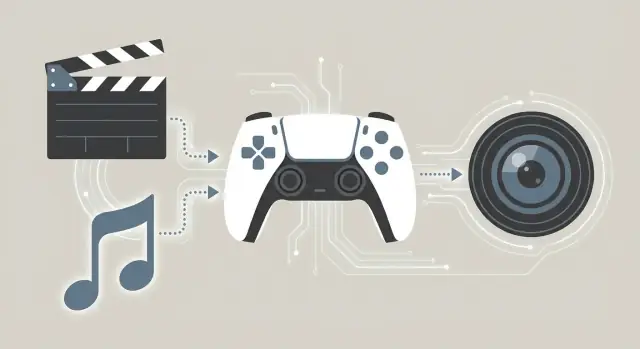
Sony’s Hybrid Model in One Simple Map
Sony is unusual because it isn’t “just” a studio, a games company, or a hardware brand. It’s a rare combination of:
- Media (film/TV/music)
- A global gaming platform (PlayStation)
- Advanced components (especially imaging sensors) that many other companies rely on
That mix creates a company that can win in multiple economic cycles—sometimes through synergy, and sometimes by letting each business stand on its own.
The simple map
Think of Sony as three engines that share fuel, not a single machine:
- Entertainment engine: Sony Pictures + Sony Music create and monetize IP across film, TV, and recorded/publishing catalogs.
- Gaming engine: PlayStation operates like a platform business—hardware, storefront, subscriptions, and a huge player/developer community.
- Imaging sensor engine: Sony’s CMOS image sensors power smartphones, cameras, and industrial devices across the market (often even for brands that compete with Sony elsewhere).
The “hybrid” part is that these engines can reinforce each other—but they can also run independently when the synergy doesn’t pencil out.
What “leverage” means here
When we talk about Sony’s leverage, we mean three practical advantages:
- Bargaining power: A company that can offer hit content, a major distribution platform (PlayStation), and critical components has more negotiating room with partners, creators, retailers, and suppliers.
- Distribution advantage: Owning channels to audiences—cinemas and streaming partners on the entertainment side, and a direct digital storefront/community on PlayStation—reduces dependence on any single gatekeeper.
- R&D reuse: Camera tech, production tools, and imaging know-how can sometimes be reused across products and workflows, lowering costs or improving quality.
Synergy is real—but it’s not automatic
Sony can’t simply “plug IP into PlayStation” or “turn sensor leadership into entertainment dominance” on command. Each engine has different economics, timelines, and risk profiles.
The interesting story is where Sony picks its moments to connect them—and where it deliberately keeps them separate.
In the rest of this article, we’ll break down these three engines, then look at the specific points where they do (and don’t) create compounding advantage.
The Building Blocks: What Sony Actually Owns
Sony isn’t a single “electronics brand” so much as a portfolio of businesses that behave very differently. Understanding what it owns—by segment, customer type, and business cycle—explains why the company can absorb shocks that would rattle a pure media studio or a pure hardware maker.
The major segments (and who they sell to)
-
Games (PlayStation) is primarily B2C: consoles, first-party games, subscriptions, and digital storefront spending from players. It also has B2B elements through licensing and revenue share with third‑party publishers.
-
Pictures (Sony Pictures) is mixed: B2C when audiences buy tickets or stream, and B2B when Sony sells distribution rights, co-produces with partners, or supplies content to platforms.
-
Music (Sony Music + publishing) runs on B2B pipes with B2C demand underneath: platforms and licensing structures do the monetization, while fans drive consumption.
-
Imaging & sensing (CMOS image sensors) is heavily B2B: supplying smartphone makers and other device manufacturers.
-
Electronics (TV, audio, cameras, etc.) is mostly B2C, with premium positioning and typically tighter margins than software-like businesses.
Cash flow and risk aren’t evenly distributed
Platform and catalog businesses (PlayStation services, music publishing) can produce steadier, recurring cash. Hit-driven segments (films, some games) can swing hard based on release timing. Sensors and electronics are more exposed to manufacturing costs, inventory, and demand shifts.
Why diversification matters
When console cycles cool, a strong slate in music or pictures can help offset. When smartphone demand softens, entertainment can keep momentum. Sony’s hybrid structure is built to survive multiple cycles—not by avoiding risk, but by spreading it across different types of revenue.
Entertainment Engine: IP, Catalogs, and Distribution
Sony’s entertainment businesses (Sony Pictures and Sony Music) are less about “one big opening weekend” and more about owning and managing rights that keep earning for years.
Why catalogs beat hits
A film library and a music publishing catalog behave like long-lived assets. New releases matter, but the back catalog often provides steadier cash flow: older movies get re-licensed, bundled, remastered, or rediscovered; songs keep generating royalties every time they’re streamed, played on radio, used in social trends, or performed live.
Music publishing is especially durable because it’s tied to the underlying composition (the songwriting rights), not just a particular recording. A single song can be monetized through countless recordings, covers, and sync placements over decades.
IP is the multiplier
The real prize is IP that can travel. A recognizable franchise, character, or story world can generate:
- Sequels and spin-offs
- Merchandising and brand partnerships
- Soundtracks and artist collaborations
- Licensing for games, experiences, and consumer products
When a property becomes a franchise, marketing gets more efficient too: familiarity lowers the cost of convincing audiences to show up again.
Distribution: the practical path to money
Owning rights is only valuable if you can get content to audiences. Sony monetizes across multiple routes, each with different economics:
- Theatrical releases for premium pricing and cultural impact
- Streaming partners and licensing windows (selling access, not necessarily owning a platform)
- TV networks and syndication for recurring fees
- Home entertainment (digital rentals/purchases and physical media) for long-tail revenue
The key is flexibility: the same title can be monetized repeatedly across formats and time periods.
Why rights outlast any single release
Box-office results fluctuate, streaming tastes shift, and formats change. Rights to strong IP and deep catalogs can be re-packaged and re-sold as new outlets emerge. That durability is what makes Sony’s entertainment engine a foundation, not a side bet.
Gaming Engine: PlayStation as a Platform Business
PlayStation isn’t just a console—it’s a marketplace. Sony runs a two-sided platform where players want great games and a strong community, while creators want access to a large, paying audience and efficient tools for publishing and monetization.
A two-sided platform: players ↔ creators
For players, PlayStation is a single “home base” for buying games, playing online, saving progress, and connecting with friends. For developers and publishers, it’s a distribution channel with built-in discovery (storefront placement, sales events), payments, anti-piracy, and global reach.
The feedback loop is the core:
- More players → more attractive for creators
- More quality games → more attractive for players
Where the money comes from
PlayStation revenue is diversified across:
- Hardware: consoles, accessories, peripherals (often lower-margin, sometimes priced aggressively to grow the base)
- First-party games: Sony-owned studios’ titles
- Third-party cuts: a share of digital sales and in-game purchases through the PlayStation Store
- Subscriptions: PlayStation Plus tiers
- Add-ons: DLC, skins, season passes, and virtual currency
Network effects—and the reality of console cycles
Network effects show up most clearly in friend graphs, multiplayer groups, and shared digital libraries. If your community is on PlayStation, switching is costly.
At the same time, console generations create predictable peaks and troughs: launches drive hardware spikes; mid-cycle brings steady software and subscription growth; late-cycle slows as buyers wait for the next upgrade.
Imaging Sensor Engine: The Quiet B2B Powerhouse
Sony is often discussed as a consumer brand, but one of its most consequential businesses is largely invisible: selling imaging sensors to other companies. This is a classic B2B engine—less glamorous than movies or PlayStation, but highly influential.
What CMOS image sensors are (and why they matter)
A CMOS image sensor turns light into digital data—the “eye” inside a device. It affects sharpness, low-light performance, motion capture, and how accurately a camera can measure a scene.
You’ll find CMOS sensors in:
- Smartphones (main, ultra-wide, telephoto, selfie)
- Digital cameras (especially performance-focused models)
- Cars (driver-assistance and safety cameras)
- Factories and logistics (machine vision for inspection, sorting, robotics)
Why Sony’s supplier position changes the game
Being a key supplier at high volume creates compounding advantages: manufacturing scale, continuous process learning, and feedback from many real-world deployments. That can translate into better performance-per-dollar and, in strong product cycles, pricing power.
Sensors are also sticky. Once a customer designs a device around a sensor family—size, power needs, software tuning, image pipeline—it’s costly to switch quickly, strengthening Sony’s long-term leverage.
The trends sensors ride: computation, safety, automation
- Computational photography pushes more of the “camera” into software, but it also increases demand for high-quality raw data from sensors.
- Safety systems in vehicles require reliable imaging across harsh conditions.
- Automation depends on cameras as measurement tools, not just recorders.
What’s known vs. what’s speculative
- Known: CMOS sensors are a core input for phones, vehicles, and machine-vision systems, and Sony is a major supplier.
- Speculative: which brands choose which sensors in future models—and how any single OEM’s decisions shift Sony’s share year to year.
Where Synergy Is Real: Shared R&D and Production Tools
Sony’s “hybrid” story is easiest to believe where tools, research, and know-how transfer well across product lines—even when business units still run separately.
Imaging research that scales beyond cameras
Sony’s imaging work isn’t just about nicer photos. Core advances—stacked sensor designs, low-light performance, faster readout, on-sensor processing—can show up across very different use cases.
For consumers, it supports mirrorless cameras and helps smartphone makers ship better video and photo performance. For industry, it powers machine vision: factory inspection, traffic monitoring, retail analytics, and robotics. The synergy isn’t that one sensor fits all; it’s that the underlying measurement problem (capturing clean data quickly) is shared.
Real-time graphics reshaping production workflows
PlayStation’s strengths—real-time rendering, performance optimization, developer tooling—translate well to modern film/TV production.
Virtual production increasingly uses game-like pipelines: LED volumes, pre-visualization, and real-time scene blocking. Even when Sony Pictures isn’t using a “PlayStation engine,” Sony benefits from internal depth in real-time workflows and GPU-era content pipelines.
Shared components (without pretending everything is integrated)
Sony can also reuse capabilities across categories: optics expertise, audio processing, display tuning, and specialized chips for imaging or signal processing.
These aren’t guaranteed cost savings, and they don’t imply a single roadmap. The more durable advantage is speed and quality: teams can borrow proven modules, supplier relationships, test methods, and engineering talent.
What synergy looks like in practice
It often shows up as shared labs, common measurement tools, internal tech licensing, and talent mobility—quiet connective tissue that improves products and production even when P&Ls stay separate.
Turning IP into a Flywheel: Games ↔ Film/TV ↔ Music
Sony’s most valuable “synergy” isn’t a vague promise—it’s a repeatable playbook for turning a single story world into multiple products that reinforce each other. When it works, each release earns its own revenue and also lowers the marketing cost and raises the ceiling for the next release.
The playbook: one world, many entry points
A Sony-scale franchise can start in any lane: a PlayStation title, a Sony Pictures film/series, or a Sony Music-driven artist collaboration. The goal is to create multiple ways for audiences to enter the same universe—then keep them there.
A typical flywheel looks like this: a game establishes characters and lore; a film or series expands the audience beyond gamers; music (soundtracks, artist tie-ins, theme songs) carries the brand into playlists and social clips; merchandise and licensing capture demand at peak attention.
Timing: coordination beats coincidence
The compounding effect depends on sequencing. A show landing near a game release can turn interest into action quickly, while a soundtrack drop can keep a title present between major moments.
The best cadence is usually: tease → release → sustain → re-ignite. That keeps a franchise visible without exhausting the audience.
Cross-promotion vs. a franchise pipeline
- Cross-promotion is tactical: a trailer in a game menu, a cameo, a bundle.
- A franchise pipeline is strategic: a multi-year slate designed with shared canon rules, consistent visual identity, and a roadmap that moves people from viewer → player → fan.
Constraints that can break the flywheel
This model has limits. Creative control matters (a rushed adaptation can damage the brand), audience fit isn’t automatic (not every game story works on screen), and production schedules rarely align perfectly. The best flywheels leave room for quality, not just coordination.
Hardware + Services: Why Devices Still Matter to Sony
Sony’s devices aren’t just “extra revenue.” They’re touchpoints where Sony can deliver the full experience of its entertainment, gaming, and imaging strengths—and then attach services that keep customers engaged between upgrades.
Hardware makes services stickier (and services make hardware more valuable)
A PlayStation is hardware, but retention often lives in the service layer: digital libraries, subscriptions, online play, cloud saves, and frequent content drops. Once a household invests time and purchases into that environment, the console becomes more than a one-off gadget—it becomes the gateway to an ongoing hobby.
A similar pattern exists in the living room: Sony TVs and audio products can surface Sony-owned and third‑party content with high-quality playback. Even when content isn’t exclusive, better presentation can raise usage and willingness to pay.
“Experience quality” is a competitive weapon
Sony can differentiate on the parts consumers actually feel:
- Picture and sound: processing, calibration, HDR handling, audio tuning
- Latency and responsiveness: input lag, VRR, controller-to-screen responsiveness
- Immersion: spatial audio, haptics, display performance
This is where the hybrid model matters: entertainment and games benefit when playback and interaction are excellent, and devices benefit when there’s consistently great content to justify premium choices.
The limits: consumers mix brands
Sony can’t assume a closed ecosystem. People use iPhones with PlayStations, watch streaming apps on non‑Sony TVs, and pair Sony headphones with competing devices. That means Sony’s hardware and services must win on clear value—price, quality, convenience—rather than relying on lock-in.
Distribution, Community, and Negotiating Power
Sony’s hybrid advantage isn’t just what it produces—it’s where and how it reaches people. When a company can distribute through multiple channels (PlayStation Store, PlayStation Plus, theatrical releases, streaming licensing, music services, physical media, and device retail), it gains leverage in negotiations because it can offer partners more than a single slot in one pipeline.
Why distribution equals bargaining strength
For game publishers, PlayStation is a key storefront and subscription channel. For filmmakers and rights-holders, Sony can be a producer, global marketer, theatrical partner, and licensing counterparty. For music, Sony Music’s relationships with platforms and creators influence release strategy and promotion.
That breadth gives Sony more deal structures: bundled marketing, cross-promotion, staggered windowing, or co-financing—rather than one take-it-or-leave-it path.
Community is a balance-sheet asset (even if it’s not booked that way)
Sony’s communities—players, fandoms around film/TV franchises, and artist fanbases—create repeat attention. Friend graphs drive multiplayer stickiness. Fandoms drive opening-week demand and long-tail viewing. Creator relationships reduce friction for future collaborations because trust and shared incentives already exist.
Data, used carefully, sharpens decisions
Engagement signals (what people watch, play, replay, and share) help forecast demand, plan content updates, tune marketing, and decide which IP deserves bigger bets. The goal isn’t “more data,” but better understanding of audience intent and retention.
Privacy and trust as a competitive moat
Entertainment and gaming depend on long-term relationships. Clear consent, sensible defaults, and transparent account policies reduce churn and protect brand equity—especially when communities span kids, families, and global audiences. Trust compounds the value of distribution over time.
How Sony’s Leverage Differs from Rivals
Sony’s advantage is not that it dominates a single lane, but that it can operate credibly across three: entertainment IP, a major consumer platform (PlayStation), and a high-value component business (CMOS image sensors). Most rivals are built to win in only one of those categories—and that shapes what they can (and can’t) coordinate.
Compared to platform-first companies
Platform-only peers (major OS owners or cloud-first platforms) typically control distribution and monetization tooling—app stores, identity, ads, or cloud budgets. Sony’s platform strength is narrower but deeper: PlayStation is a purpose-built ecosystem with a clear customer promise (games + social + subscriptions) and a premium hardware cycle.
Sony can also align platform incentives with owned entertainment supply without turning the platform into a pure ad channel. A PlayStation-exclusive game, a Sony Pictures adaptation, and a Sony Music soundtrack can be coordinated as one release rhythm—without needing an external OS gatekeeper.
Compared to studio-only entertainment companies
Studio-first peers can own massive IP libraries and global distribution relationships, but they usually lack a proprietary device-and-account platform with built-in payments at PlayStation scale. That means fewer native levers for:
- Launch-day bundling (hardware, subscriptions, content)
- First-party data inside a logged-in ecosystem
- Long-lived communities tied to a single identity
Sony can turn hits into multi-format franchises while keeping the gaming storefront, social layer, and subscription bundle in-house.
Compared to chip-only and component specialists
Chip-only leaders can outspend and out-scale in manufacturing and win on cost curves or foundry access. Sony’s sensor business is different: a specialized, defensible position built on imaging R&D, process know-how, and long customer relationships.
Still, others can outperform Sony in areas adjacent to its hybrid model:
- Cloud scale: hyperscalers can subsidize compute and global infrastructure.
- Mobile OS control: Apple and Google set rules for mobile distribution and payments.
- Ad networks: Google and Meta have reach and targeting infrastructure Sony doesn’t match.
Sony’s leverage is strongest when a product or franchise benefits from all three engines at once—not when the game is purely scale in cloud, mobile, or ads.
Constraints and Risks: Where the Hybrid Model Can Break
Sony’s mix of entertainment, PlayStation, and imaging sensors creates multiple profit engines—but it also creates multiple ways to stumble. The model works best when each unit is healthy on its own; synergy is a bonus, not a safety net.
Core business risks
-
Entertainment is hit-driven. Underperforming releases, a slowdown in catalog licensing, or shifting audience tastes can swing results quickly—especially with front-loaded marketing costs.
-
Gaming carries long development cycles and escalating budgets. A single flagship delay can ripple into hardware sales, subscription engagement, and third-party momentum. Live-service adds another risk: games that don’t find a durable player base can become expensive ongoing obligations.
-
Sensors are powerful but not invincible. Supply constraints (materials, advanced capacity, yield) can limit growth even when demand is high. Customer concentration—particularly in smartphones—means a few OEM decisions can move the needle.
Strategic tension: focus vs. diversification
Sony can’t fully optimize every unit at once. Investment choices create trade-offs:
- Doubling down on PlayStation studios may reduce flexibility elsewhere.
- Prioritizing “synergy projects” can clash with creative freedom and scheduling reality.
When synergy becomes a goal instead of an outcome, it can produce bland extensions rather than standout originals.
Industry shifts that can stress the model
Streaming economics are changing: platforms are more selective, licensing windows are tighter, and profitability matters more than subscriber growth. In gaming, players’ time is finite and live-service leaders crowd out newcomers. In smartphones, saturation and longer upgrade cycles can soften sensor demand growth.
Myths to avoid
- “Sony is diversified, so it’s automatically safer.” Correlations rise in downturns.
- “Synergy guarantees wins.” Execution and timing still dominate.
- “PlayStation prints money every year.” Cycles, delays, and competitive shocks are real.
What to Watch Next: Signals That Tell the Story
Sony’s hybrid model shows up in a handful of repeatable signals. Track them quarter to quarter and you can usually tell whether the engines (Entertainment, PlayStation, Sensors) are reinforcing each other—or drifting into separate cycles.
1) Release cadence and “event density”
Watch the timing and scale of tentpole moments: big PlayStation exclusives, headline film/series launches, and globally marketed music releases. The key signal isn’t just “a hit,” but whether Sony can stack multiple events in the same window and keep attention (and spending) inside its ecosystem.
2) Subscription and engagement trends
For PlayStation, follow subscriber counts, churn signals, and average spend per user—not just console shipments. A healthy platform business shows improving engagement even when hardware sales fluctuate.
Also watch price changes and tier mix: they reveal how much pricing power Sony has with its community.
3) Sensor demand drivers and customer concentration
Imaging is shaped by end-markets outside Sony’s control. Track smartphone upgrade cycles, high-end camera phone positioning, and emerging demand from automotive and industrial uses.
Two practical questions: is growth coming from higher volume, higher-value sensors, or both—and how dependent is that on a small set of large customers?
4) Capex and capacity commitments
Big investment plans in imaging (and related supply chain) are forward-looking bets. Rising capex can signal confidence in demand, but it also raises execution risk if markets soften. Compare capex direction with management’s guidance on utilization and profitability.
5) Cross-media franchising and new production tech
Look for moves that make IP easier to extend: virtual production pipelines, unified asset workflows, and consistent franchise development across games, film/TV, and music. AI-assisted imaging and content tools matter here less as buzzwords and more as cost, speed, and quality levers.
A useful parallel outside Sony: modern “tooling leverage” is increasingly built through software platforms that compress planning and execution cycles. For example, Koder.ai (a vibe-coding platform) uses a chat-driven interface and agentic workflows to help teams go from idea → plan → deployed app (web in React, backends in Go/PostgreSQL, mobile in Flutter) much faster than classic pipelines. The takeaway for Sony isn’t that it should build apps—it’s that process innovation and internal tooling can become a durable advantage when it shortens time-to-market without sacrificing quality.
The practical takeaway
When evaluating Sony, ask: which segment is driving margins right now, and which is driving growth?
Sony’s unique advantage is diversification with occasional synergy—but it depends on disciplined capital spending, sustained platform engagement, and continued leadership in sensors.
FAQ
What does the article mean by Sony’s “hybrid model”?
Sony operates as three semi-independent “engines” that can sometimes reinforce each other:
- Entertainment (Pictures + Music): IP, catalogs, and rights monetization
- Gaming (PlayStation): a platform with a store, subscriptions, and a community
- Imaging sensors (CMOS): a B2B component business that supplies many brands
The hybrid advantage is optional synergy—each engine still needs to work on its own.
What does “leverage” mean in Sony’s case?
“Leverage” here is practical power that shows up in deals and execution:
- Bargaining power (content + platform + critical components)
- Distribution advantage (multiple routes to audiences, including a direct PlayStation storefront)
- R&D reuse (imaging and production know-how sometimes travels across divisions)
It’s less about one magic synergy and more about having multiple strong positions at once.
Why isn’t synergy between Sony’s businesses automatic?
Synergy is real when capabilities transfer cleanly (tools, workflows, reusable tech), but it’s not automatic because:
- The businesses have different economics (hit-driven films vs. recurring subscriptions)
- Timelines don’t match (games and films rarely ship on the same calendar)
- Creative and product fit isn’t guaranteed
A good rule: treat synergy as a bonus, not the plan A.
How do Sony’s segments differ in cash flow and risk?
The segment mix matters because cash flow and risk are distributed differently:
- Steadier/recurring: services and catalogs (e.g., subscriptions, publishing royalties)
- Swingy/hit-driven: films and some major game releases
- Cycle/production exposed: sensors and electronics (capacity, yields, inventory, end-demand)
Diversification helps Sony absorb shocks, but it doesn’t eliminate downturn risk.
Why do entertainment catalogs often matter more than one-off hits?
A catalog is a long-lived rights asset that can be monetized repeatedly:
- Re-licensing across windows (theatrical, streaming, TV, home entertainment)
- Remasters, bundles, and rediscovery over time
- For music publishing, royalties tied to the composition, enabling covers and sync uses
Practically, catalogs often smooth revenue between new releases.
How does PlayStation function as a platform business?
PlayStation is a two-sided marketplace:
- Players want great games and a social “home base”
- Developers want access to a large paying audience and distribution tooling
As the player base grows, more creators ship games; more games attract more players. That feedback loop is the core platform advantage.
Where does PlayStation’s money actually come from?
Revenue is diversified beyond just console sales:
- Hardware (often lower margin, used to grow the installed base)
- First-party games (strong economics when Sony owns the studio)
- Third-party store cut (digital sales and in-game purchases)
- Subscriptions (PlayStation Plus tiers)
- Add-ons (DLC, skins, season passes, virtual currency)
A practical lens: watch engagement and recurring spend, not only unit shipments.
What are CMOS image sensors, and why is Sony strong in them?
CMOS sensors are the “eyes” that convert light into digital data, affecting low-light performance, motion capture, and overall image quality.
They show up in:
- Smartphones (multiple cameras)
- Digital cameras
- Vehicles (driver assistance/safety)
- Industrial systems (machine vision)
Sony’s advantage compounds via scale, process learning, and “stickiness” once customers design around a sensor family.
What does it mean to turn IP into a “flywheel” across games, film/TV, and music?
The most repeatable synergy is franchise flywheels—one story world expressed across formats:
- A game builds lore and fan investment
- Film/TV expands reach beyond gamers
- Music (soundtracks, artist tie-ins) extends cultural presence
- Merch/licensing captures peak attention
The key is sequencing and cadence (tease → release → sustain → re-ignite), not launching everything at once.
What should I watch to evaluate whether Sony’s hybrid model is working?
Track signals that reveal whether the engines reinforce each other:
- Release cadence / event density (can Sony stack major moments?)
- PlayStation engagement (subs, churn, ARPU, tier mix—not just console shipments)
- Sensor demand drivers (smartphone cycles, automotive/industrial mix, customer concentration)
- Capex and capacity (confidence vs. execution risk)
- Cross-media execution (quality adaptations, consistent franchise pipelines)
Use these to separate temporary hits from sustained compounding advantage.