

Take-Two’s Premium IP and Live Loops: Predictable Revenue
Learn how Take-Two’s premium franchises and live engagement loops can shift earnings from hit-driven spikes to steadier, more predictable revenue streams.
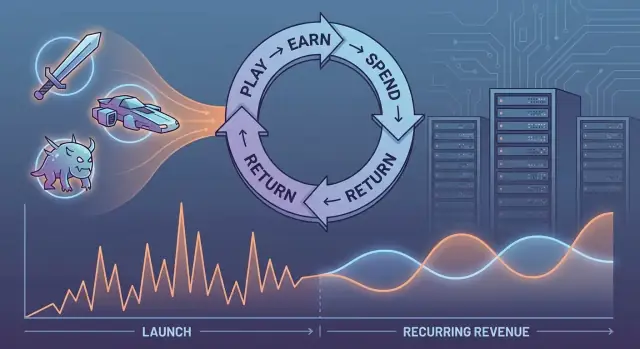
Why predictability matters in entertainment tech
Entertainment businesses don’t just compete on creativity—they compete on consistency. A studio can have a hit and still struggle if success arrives in short bursts followed by long quiet periods. Predictability matters because it affects everything that makes a company run: staffing, marketing spend, server capacity, support, partner negotiations, and how confidently teams can plan the next release.
From “launch day” to “every day”
Historically, premium games behaved like blockbuster movies: a big launch spike, then a steep drop-off. That pattern makes performance hard to forecast because a single release can dominate the year.
Live operations and ongoing content change the shape of demand. Instead of only selling a boxed product once, teams aim to earn attention repeatedly—weekly, monthly, seasonally—and monetize that attention through ongoing offerings.
What “premium IP” means (in plain terms)
“Premium IP” is a recognizable franchise people already trust and want more of—characters, worlds, and gameplay they can name without a screenshot. It matters because it lowers the friction of the next purchase:
- Fans are more likely to return for sequels, expansions, and new modes
- Communities form faster, improving word-of-mouth and retention
- Marketing becomes more efficient because awareness carries forward
A quick expectation-setting
This guide uses Take-Two as an illustrative example of how premium franchises and engagement loops can make bookings and spending patterns more stable. It’s not financial advice, and it’s not a forecast.
We’re aiming for a long-form, practical read—so this opening section sets the “why,” and the following sections get specific about engagement loops, monetization mix, and the metrics that signal durability.
Key concepts: premium IP, live ops, and recurring spend
Before talking about predictability, it helps to align on a few plain-English terms that show up in how companies like Take-Two build and monetize games.
Premium IP (and “franchises”)
IP (intellectual property) is the world, characters, and brand people recognize—think Grand Theft Auto or NBA 2K. A franchise is IP that can support multiple releases over time (sequels, spin-offs, remasters). “Premium” usually means the core product is sold upfront at a full price and is positioned as a high-quality, high-demand experience.
Why it matters: recognizable franchises tend to create more reliable baseline demand than unknown new titles.
Live operations (“live ops”)
Live ops is everything that happens after launch to keep the game feeling active: regular updates, seasonal events, new modes, balance changes, time-limited challenges, and community management. For example, a sports title might run weekly challenges; an online game might add a new season every few months.
Live ops isn’t only “more content”—it’s a planned cadence that encourages players to return.
Monetization and recurring spend
Monetization is how the game earns money. A useful split is:
- One-time sales: buying the base game once (or a major expansion).
- Recurring spending: optional add-ons like season passes, cosmetic items, virtual currency, or ongoing content drops.
Hit-driven vs “portfolio + live” patterns
A hit-driven business relies heavily on launch spikes: big sales early, then a steep drop-off. A portfolio + live model smooths that curve by (1) having multiple titles at different stages and (2) extending each title’s earning window through retention and recurring spend.
From launch spikes to longer tails: the old revenue pattern
For years, the classic premium-game business model looked like a movie opening weekend: an intense, short burst of sales around release day, followed by a rapid decline.
The historical model: spike, drop, sequel
A big title would build anticipation through marketing and reviews, convert that demand in the first few weeks, and then fade as most interested players had already bought in. After that, teams relied on discounts, bundles, and occasional DLC to stretch the curve—but the core revenue story stayed the same.
When the tail finally thinned out, the cycle reset: announce the next entry, spend heavily to produce and market it, then hope the next spike landed.
Why it created volatility
That “hit-driven” rhythm makes planning harder than it sounds. Budgets and headcount have to be committed years in advance, while outcomes are determined by launch reception, timing, competition, and even platform featuring.
Cash flow can become lumpy: a strong quarter at release can be followed by quieter periods where the business still has major ongoing costs (support, studios, licensing, marketing commitments). For leadership teams, it complicates forecasting, hiring, and deciding when to greenlight new projects.
Launch still matters—but the tail is getting longer
Major launches haven’t stopped being important; they’re still the biggest moment for awareness and unit sales. The change is that many premium franchises now try to keep players active for much longer after release through updates, online modes, and optional spend—turning what used to be a fast drop-off into a more extended curve.
Here’s a simple timeline graphic idea you can include in the article:
Revenue
  ^
  |    Old model:          Newer pattern:
  |      /\                 /\
  |     /  \               /  \____
  |    /    \             /        \____
  |___/      \_____  ____/               \____
  +------------------------------------------------> Time
        Launch   Drop        Launch      Extended tail
That extended tail is where predictability starts to improve—because engagement and spending become less dependent on a single release week.
How premium franchises reduce demand uncertainty
Premium franchises act like a shortcut through the noisiest part of the market: getting someone to care. When a title carries a recognizable name, the audience already has a mental model of what it is (genre, tone, quality bar), which reduces hesitation and lowers customer acquisition friction. Marketing still matters, but it’s amplifying existing awareness rather than creating it from scratch.
Brand trust turns attention into repeat purchases
A strong IP also sets clear expectations. Players who had a good experience with a prior installment are more willing to buy again, try a new mode, or return after a break—because they trust the “feel” of the product will match the brand promise. That trust can make demand less sensitive to short-term factors like crowded release windows or shifting trends.
Just as important: premium brands raise the cost of disappointment. When quality drops, the backlash is louder and longer-lasting, and future launches can suffer.
IP creates a natural ladder for cross-sell
Well-known franchises support a predictable progression of spend without forcing it:
- Base game purchase establishes the relationship
- Online mode extends playtime and social attachment
- Add-ons (expansions, season content, cosmetics) feel like “more of what I already like”
Because the funnel starts with a large, familiar audience, conversion to longer-term engagement and add-ons tends to be steadier than it would be for an unknown title.
The caution: hard to build, easy to damage
Premium IP takes years (sometimes decades) to earn. It can be weakened quickly through rushed releases, aggressive monetization, or neglecting community expectations. In other words, the same brand trust that reduces demand uncertainty also becomes a fragile asset that needs consistent protection.
Engagement loops that keep players coming back
Engagement loops are the repeatable “reasons to return” built into a game. When they’re healthy, players don’t just show up for launch week—they build a habit, and that habit supports steadier spending over time.
A typical loop, in plain terms
Most successful loops look like this:
- Motivation: A clear goal appears (finish a mission line, unlock a vehicle, climb a ranked tier, help your crew).
- Activity: The player takes action (matches, heists, races, challenges, exploration).
- Reward: The game pays that effort back (currency, cosmetics, gear, story beats, status).
- Progression: Rewards convert into lasting change (new abilities, access, upgrades, collection completion).
- Social return: Progress is visible and shareable (friends notice, teammates benefit, community conversation continues), which reignites motivation.
The key is that the loop feels fair and understandable: “If I do X, I’ll earn Y, and that unlocks Z.”
How updates refresh the loop without a new launch
Instead of relying on a big day-one spike, live updates keep the loop feeling new. Time-limited events, new missions, seasonal tracks, fresh cosmetics, balance tweaks, and community challenges all reframe the same core activities with new goals and rewards.
That means players re-enter the loop for a reason that’s current—without the company needing a full sequel or a major relaunch to create attention.
Why loop health creates predictable spend
When players return regularly, spending shifts from one-off purchases to a steadier mix: battle passes, cosmetic drops, convenience items, and periodic expansions. Performance becomes less about “who bought at launch” and more about “who stayed engaged.”
A note on ethics
Loops shouldn’t rely on pressure tactics. Clear odds, spending limits, transparent progression, and avoiding exploitative timers help maintain trust—critical for long-term engagement and sustainable revenue.
Monetization mix: how recurring spending is created
A premium game can earn most of its money at launch, but predictable performance usually comes from giving players optional, repeatable ways to spend over time. For publishers like Take-Two Interactive, the “mix” matters: the more spend is tied to ongoing participation (not one-off hype), the smoother bookings can become.
Common recurring mechanics
Recurring spend typically shows up through a handful of familiar formats:
- Season/battle passes that reward consistent play over a set period
- Cosmetics (skins, outfits, emotes) that personalize identity
- Expansions/DLC that add meaningful content drops
- Virtual currency that simplifies checkout and supports small, frequent purchases
The best versions of these feel like “more of what you already enjoy,” not a toll booth.
Why cosmetics are often lower gameplay risk than pay-to-win
Cosmetic-heavy monetization can be safer for long-term engagement because it doesn’t change competitive outcomes. Players may disagree on prices, but they rarely feel the game is unfair. Pay-to-win mechanics, by contrast, can damage trust quickly: once players believe spending determines success, matchmaking quality, community sentiment, and retention can decline—making revenue less predictable, not more.
Bundling and discounting to smooth demand
Studios also use bundles (starter packs, themed sets) and time-limited discounts to reduce purchase friction and convert hesitant players without needing constant new items. Thoughtful bundling can shift revenue from sporadic “big buys” into steadier, forecastable patterns—especially when paired with clear value framing.
Quick checklist: keep recurring revenue healthy
- Transparency: clear odds, clear pricing, clear expiration dates
- Value: purchases feel worthwhile even for non-spenders watching
- Trust: no surprise nerfs/buffs that make yesterday’s purchase feel misleading
Portfolio effects: smoothing volatility across multiple titles
Big entertainment releases often behave like “event businesses”: a major launch creates a surge of attention and spending, then naturally cools. A multi-title portfolio changes that pattern. Instead of relying on one moment to carry the year, ongoing titles can fill the quieter weeks between tentpole releases—keeping players engaged, keeping stores and platforms featuring your brand, and keeping cash flow from swinging too wildly.
How Take-Two uses different rhythms
Take-Two is a useful example because its portfolio isn’t built around a single cadence.
Flagship franchises create the cultural moments: big releases that bring in new and lapsed players and reset the conversation around the brand. Around those peaks, sports titles provide a more regular beat. Their seasonality aligns with real-world schedules, which makes planning marketing, community content, and product updates more predictable.
Alongside that, mobile and other live titles can run on shorter iteration loops—frequent events, limited-time offers, and lightweight content drops that are less dependent on one “day one” success. When one segment is between cycles, another is likely in the middle of one.
Why diversification reduces volatility
A portfolio smooths volatility when the titles don’t all depend on the same audience, platform, or purchase moment.
Different audiences behave differently: some show up for annual competition, others for open-ended progression, others for social play. Different platforms also carry different discovery mechanics and spending habits. And different release rhythms mean you’re not stacking your biggest risks on the same calendar window.
The practical effect is stability through overlap: a new premium launch can spike attention while existing live communities keep recurring spend flowing; sports seasons can provide a dependable baseline while other teams iterate and experiment. For non-game entertainment tech, the takeaway is simple: build multiple “reasons to return” on different schedules, so the business doesn’t hinge on one hit at one time.
Bookings vs revenue: what predictability looks like on paper
When people say a publisher has “predictable revenue,” they might be looking at the wrong line. For game companies like Take-Two, bookings and revenue can tell different stories—especially when live service spending is involved.
Bookings (what players spent) vs revenue (what gets recognized)
- Bookings are a business metric: the value of what customers bought in a period (game sales, in-game currency, subscriptions, virtual items). Think of it as “orders” or “consumer spend captured.”
- Revenue is an accounting metric: what the company is allowed to record as earned during that period.
The timing differs because a purchase can include content or services delivered over time.
Why deferrals exist in live service games
If a player buys virtual currency or a season pass, the company may not treat the full amount as earned immediately. Instead, some of it is booked as a deferred revenue liability and recognized later as the content is delivered (new items released, benefits consumed, online service provided).
At a concept level: cash/bookings can be “now,” while revenue can be “over time.”
How charts can mislead
A quarter with a big launch can show:
- Bookings spike sharply (everyone buys at once)
- Revenue rises more smoothly (because part of the purchase is recognized later)
Or the reverse: revenue can look strong in a “quiet” quarter because it’s catching up on previously deferred amounts.
A simple “read the report” checklist
- Compare bookings growth vs revenue growth (do they diverge?).
- Check the deferred revenue balance (is it building or unwinding?).
- Look for notes on recognition timing for virtual currency, passes, and online services.
- Read management’s comments on engagement and live ops cadence, not just sales.
- Sanity-check with cash flow: are players still spending even if revenue timing shifts?
Metrics that signal durable engagement
Predictable performance starts with predictable attention. You don’t need internal dashboards to get a feel for whether a premium franchise is building “staying power”—you just need to know what durable engagement looks like and which public signals tend to move first.
Retention basics (plain-English)
- DAU/MAU: Daily Active Users divided by Monthly Active Users. Think of it as “stickiness”—how often monthly players show up on a typical day.
- Session frequency: how many play sessions a person has in a week (or month). Higher frequency usually means the game has routines: missions, social play, progression, or roleplay.
- Churn: the share of players who stop playing over a period (for example, “didn’t return this month”). Lower churn means the experience is holding interest.
Why “whales” are not a strategy
Big spenders can meaningfully lift short-term bookings, but depending on them creates volatility: a small number of players can swing results, and aggressive monetization aimed at whales can damage trust. Healthier, more predictable performance usually shows broad mid-tier spending (many players making occasional purchases) alongside premium sales—less fragile, easier to forecast, and typically better aligned with long-term community sentiment.
Community signals matter more than you think
Retention is often social. When friends coordinate sessions, creators build storylines, and communities share tips/mods/clips, returning becomes a habit. That social “reason to come back” is hard for competitors to copy.
7 KPIs you can track without insider data
- Concurrent player trend (e.g., Steam/console charts): stability after launch matters more than peak size.
- DAU/MAU proxy: ratio of average daily concurrency to monthly active estimates (imperfect, but directional).
- Churn proxy: month-over-month drop in active communities (Discord, subreddit active users) after major beats.
- Creator momentum: Twitch hours watched, YouTube uploads, and clip volume sustained beyond release week.
- Social play indicators: growth in LFG posts, RP servers, clan/guild recruitment, or group-focused content.
- Monetization acceptance: review sentiment changes around store updates, pricing changes, or new bundles.
- Catalog lift: older titles in the franchise climbing charts when new content/news drops (a sign of a durable brand loop).
Content cadence: turning updates into a reliable rhythm
A premium franchise becomes more predictable when players learn to expect when new reasons to return will arrive—not just that they will arrive. A clear seasonal cadence (beats, events, and update calendars) turns engagement into habit, and habit is what supports recurring spend.
What “cadence” looks like in practice
Most successful live operations follow repeating beats:
- Weekly: small challenges, store refreshes, limited-time modes
- Monthly: a meaningful drop (new playlist, missions, cosmetics set, economy tweaks)
- Seasonal (6–12 weeks): headline theme, battle pass-style progression, new content pillar
- Annual: tentpole moments tied to major updates, competitive resets, or franchise milestones
The point isn’t constant novelty—it’s reliable timing. When players know an event starts every other Friday, or a season ends on a consistent interval, they plan playtime with friends, re-engage after breaks, and time purchases around predictable windows.
Why predictable schedules support predictable spending
Recurring spending (passes, cosmetics, in-game currency) rises when players feel confident that:
- Progress won’t be stranded (clear season start/end, transparent rewards)
- New content will arrive before boredom sets in (no long “dead air”)
- Purchases stay relevant (cosmetics and items remain usable and valued)
That expectation reduces demand uncertainty for the business: fewer surprise drop-offs, steadier conversion, and more consistent “high intent” moments (season launches, mid-season events, anniversary drops).
Operational risks and guardrails
Cadence cuts both ways. Delays, thin updates, or buggy releases can trigger community backlash and spending pullbacks. Common guardrails include scope tiers (small/medium/large drops), a buffer of pre-built content, clear rollback plans, and honest comms when timing changes.
A simple template content calendar (adaptable)
| Timing | Player-facing beat | Example content | Monetization moment |
|---|---|---|---|
| Weekly | “Check-in” loop | challenges, rotation, shop refresh | low-friction cosmetics/currency |
| Week 4 | Mid-cycle spike | limited-time event, collab | event bundle, themed items |
| Weeks 6–10 | Season launch | new theme, progression track | season pass + starter pack |
| Month 3 | Tentpole update | new mode/feature, big QoL | premium bundle, reactivation offer |
Keep the rhythm consistent; vary the theme and rewards. That’s how cadence becomes a revenue stabilizer instead of a content treadmill.
Risks and guardrails: trust, regulation, and platform rules
Predictable performance only stays predictable if players keep trusting the game—and if platforms and regulators keep allowing the monetization model. Live monetization sits inside a moving set of constraints: app store policies change, privacy rules tighten, and community expectations evolve.
Platform policies and compliance constraints
Console and PC storefronts, as well as mobile app stores, set rules on refunds, subscriptions, loot-box-style mechanics, disclosures, and how you present prices. Small policy shifts—like requiring clearer odds, limiting certain paywall patterns, or mandating easier cancellation—can force redesigns that hit conversion rates.
Compliance is not just legal. It’s operational: age gating, data handling, customer support response times, and audit-ready logs for purchases and moderation actions.
Trust risks that break the loop
Recurring spend depends on a feeling of fairness. Common trust breakers include:
- Pricing missteps (sudden inflation, confusing bundles, “best value” that feels manipulative)
- Balance issues that create “pay-to-win” perceptions
- Over-monetizing progression (turning play into chores unless you pay)
- Moderation failures (toxicity, cheating, harassment) that push communities away
Age-appropriate design and transparent offers
At a high level, safer monetization means: clear labels, plain-language explanations of what a purchase does, and protections for minors. That includes avoiding pressure tactics, using spending limits or reminders where appropriate, and making it easy to see recurring charges, odds (if relevant), and refund paths.
“Trust guardrails” for live monetization
- Keep prices stable; when changes are needed, communicate early and explain why.
- Separate competitive advantage from spending as much as possible.
- Use clear item descriptions, total cost previews, and friction-free cancellation.
- Make support and refunds easy to find from the store flow.
- Treat moderation as a revenue protector: invest in anti-cheat, reporting, and fast enforcement.
- Run compliance checks before every major store or offer redesign (platform + regional rules).
- Monitor sentiment alongside metrics; a short-term lift that harms trust rarely pays back.
What other entertainment-tech teams can learn
Take-Two’s playbook isn’t a single trick—it’s the combination of premium IP, live engagement loops, and portfolio timing that turns unpredictable launches into steadier, more forecastable demand.
The mechanism to copy (even without AAA scale)
Premium IP reduces uncertainty because players already understand the fantasy and quality bar. That doesn’t guarantee success, but it improves the odds that acquisition and reactivation spend converts.
Live loops (events, progression, social goals, new content drops) extend attention beyond week one. When players expect something new on a cadence, spending becomes less “impulse” and more “routine.” If your team is new to this, start with the basics in /blog/live-ops-basics.
Portfolio timing smooths volatility. Instead of one giant bet, stagger releases, seasons, and major updates so one title’s lull is offset by another title’s peak.
If you’re building the operational layer around that strategy—internal admin tools, live-ops calendars, KPI dashboards, experiment toggles—speed matters. Platforms like Koder.ai can help teams prototype and ship these supporting web services from a chat-based workflow, which is useful when you need to iterate quickly without rebuilding your entire development pipeline.
A practical framework: IP → Loop → Ledger
-
IP/Brand clarity: What promise are you making, and who is it for?
-
Loop design: Define the “return reason” (daily/weekly) and the “spend reason” (cosmetic, convenience, expansion-style).
-
Ledger discipline: Track leading indicators that predict durable demand: retention by cohort, repeat purchase rate, time-to-next-session, and content uptake. A lightweight version of this approach is in /blog/kpi-dashboard-guide.
-
Monetization ethics: Make optional purchases feel fair and transparent; price for trust, not extraction. (If you offer tiers or bundles, keep your pricing page simple and comparable—see /pricing.)
Predictability improves when you earn repeat attention and stagger your bets—but entertainment is still hit-driven. Cycles, platform shifts, and player sentiment can change quickly, so plan for variance even as you build more dependable fundamentals.
FAQ
Why does predictability matter so much for entertainment and game publishers?
Predictability lets teams plan staffing, marketing, infrastructure, and support without overreacting to one-off spikes. It also improves partner negotiations (platform featuring, licensing) because the business can show steadier demand and clearer capacity needs.
What’s the difference between a hit-driven launch model and a “portfolio + live” model?
The traditional model is a big launch spike followed by a steep drop, then a long wait for the next sequel. A “live + portfolio” model extends the tail with updates and recurring spend, and offsets lulls by having multiple titles in different lifecycle phases.
What does “premium IP” mean in plain terms, and why is it valuable?
It’s a recognizable franchise with built-in audience trust—people already know the world, tone, and quality bar. Practically, it lowers acquisition friction and increases the odds of repeat purchases across sequels, expansions, and new modes.
What counts as live operations (live ops) in this context?
Live ops is the planned work after launch that keeps a game active: seasonal events, balance changes, limited-time challenges, community management, and regular content drops. The goal is a reliable cadence that gives players recurring reasons to return.
What are “engagement loops,” and how do they make revenue more stable?
A simple loop is:
- Motivation (a goal)
- Activity (play)
- Reward (loot/currency/status)
- Progression (lasting unlocks)
- Social return (friends/community reinforce the habit)
When the loop is clear and fair, players return more often, which supports steadier monetization over time.
Which monetization mechanics tend to create recurring spend without harming the game?
Common options include season/battle passes, cosmetics, DLC/expansions, and virtual currency. The most durable versions feel additive (“more of what I enjoy”), not punitive, and avoid creating competitive imbalance that damages long-term trust.
Why are cosmetics often considered safer than pay-to-win monetization?
Cosmetics generally avoid changing competitive outcomes, so they’re less likely to create “pay-to-win” resentment. That usually protects retention, which is what makes spending patterns more forecastable quarter to quarter.
What’s the difference between bookings and revenue, and why does it matter for live games?
Bookings reflect what customers spent in a period; revenue reflects what accounting rules allow to be recognized as earned in that period. In live services, parts of purchases (like season passes or virtual currency tied to future delivery) may be deferred and recognized later, so bookings and revenue can diverge.
What metrics can I use to judge durable engagement without internal dashboards?
You can track directional signals like:
- Concurrent player trends after launch (stability matters)
- Creator momentum (Twitch/YouTube activity beyond week one)
- Community activity changes after updates (Discord/subreddit engagement)
- Review sentiment shifts around store/pricing changes
- Catalog lift when new content drops (older franchise titles rising again)
None are perfect alone, but together they indicate durability.
What are the biggest risks that can break predictability in live-service monetization?
Common guardrails include clear pricing and odds disclosures (if relevant), easy cancellation/refunds, avoiding pressure tactics, and investing in moderation/anti-cheat. Platform policy changes and regulation can force redesigns, so compliance needs to be operational (logs, support workflows, age gating), not just legal.