

Tencent Games and the Economics of Live Service Retention
Learn what Tencent Games’ scale can teach about live-service economics: retention loops, content cadence, monetization tradeoffs, and sustainable growth.
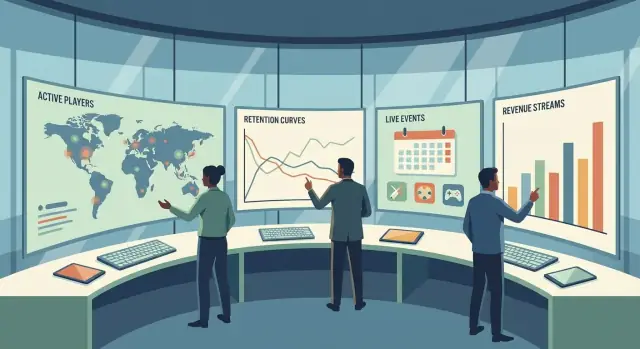
Why Tencent’s Scale Makes Live-Service Economics Visible
When people say Tencent “operates at portfolio scale,” they’re not just pointing to a single hit game. They mean a company running many live titles at once—across genres, regions, platforms, and audience sizes—each at a different stage of its lifecycle. That breadth turns live-service performance from a set of isolated stories into a readable pattern.
At smaller studios, one game’s results can look like fate: a lucky launch window, a streamer moment, a balance patch that happened to land well. At portfolio scale, those one-off explanations fade. You can compare what happens when a shooter updates weekly versus monthly, when a battle pass changes format, or when a community policy shifts—and see how retention and revenue move together.
This article isn’t “inside Tencent.” It’s a plain-English look at principles that become easier to observe when you have many games and lots of data points. The goal is to learn from what scale reveals, not to speculate about proprietary tactics.
The key question we’ll keep returning to is simple: how does player retention drive the economics of a live-service game? If players don’t come back, marketing gets expensive, content is wasted, and monetization feels pushy. If they do, costs spread across more playtime, LTV rises, and the game can take smarter risks.
To keep things practical, we’ll use a lightweight framework throughout:
- Retention loops: why players return (habits, goals, social ties)
- Content cadence: how often you give players a reason to show up
- Costs and operational load: what it takes to keep the service healthy
- LTV, ARPU, and risk: how outcomes compound over time
A Plain-English Primer on Live Services and Retention
A live service game isn’t “finished” at launch. It’s designed to run for months or years, with ongoing updates, events, balance changes, and community management. The work of running that game day-to-day is usually called live ops (live operations): the team activity that keeps the game healthy, fresh, and stable.
Engagement is how often and how deeply players interact (sessions, matches, quests completed, social activity). Retention is the share of players who return after a period of time. Churn is the opposite: players who stop coming back.
The retention ladder (what “good” looks like)
Teams often think about retention as a set of milestones:
- Day 1: The player returns after trying the game. This is mostly about first impressions: onboarding, clarity, performance, and early fun.
- Week 1: The player forms a habit. Progression goals, social hooks, and variety matter more.
- Month 1: The player identifies with the game. Long-term progression, collections, competitive goals, and a trustworthy update rhythm become key.
Why retention drives the economics
Retention is the biggest lever behind LTV (lifetime value) and ARPU (average revenue per user). If players stick around longer, there are more opportunities for purchases, subscriptions, or a battle pass—and more time to recover acquisition costs.
That’s why retention sets the payback period (how long it takes to earn back marketing spend) and ultimately determines budgets: better retention can justify more user acquisition, bigger live teams, and a faster content cadence.
Platform differences (high level)
On mobile, sessions are shorter and competition for attention is intense, so onboarding and daily reasons to return tend to dominate. On PC/console, longer sessions and social/competitive play often carry retention, with major updates and seasons creating spikes of returning players.
The Live-Service Business Model: Costs, Revenue, and Risk
Live-service games are less like a one-time product launch and more like running a continuing operation. Tencent’s portfolio makes this easy to see: when you’re updating games every week, the economic question becomes, “Can we afford to keep delivering value—and do players stick around long enough to pay for it?”
Where the money goes: the main cost buckets
A live-service budget typically breaks into a few recurring buckets:
- Content production: new characters, modes, seasons, events, art, audio, writing, and QA.
- Servers and platform fees: hosting, bandwidth, matchmaking, fraud prevention, and third-party services.
- Customer support and trust & safety: tickets, moderation, anti-cheat, ban appeals, and community operations.
- Marketing and user acquisition: ads, creator programs, app store assets, and re-engagement campaigns.
- Tools and live ops infrastructure: analytics, A/B testing, build pipelines, remote config, and incident response.
Some of these costs are fixed-ish (a core live team, essential tools, baseline support). Others are variable (server load with concurrency, marketing spend, payment processing fees). Knowing which is which helps teams plan: fixed costs demand predictable retention; variable costs can scale up or down.
Where the money comes from: common revenue streams
Most live-service revenue is a mix, not a single lever:
- In-app purchases (IAP): items, currency packs, upgrades, gacha-style pulls (where allowed).
- Battle passes: time-boxed progression with premium tiers.
- Cosmetics: skins, emotes, visual effects—often the “cleanest” monetization because it avoids power advantages.
- Ads: rewarded video and interstitials (more common in mobile, and sensitive to churn).
- Subscriptions: monthly perks, boosts, or content access.
Why retention is the risk manager
Retention stabilizes the whole model. When more players return consistently, revenue becomes smoother, forecasting improves, and teams can commit to content schedules with less financial anxiety. Low retention does the opposite: spending becomes a gamble, and even strong monetization can’t compensate for a shrinking audience.
In practice, retention sets the ceiling for everything—how much you can invest, how safely you can experiment, and how resilient the game is when a season underperforms.
Portfolio Strategy: Many Games, Many Lifecycles
Running live-service games isn’t just about making one title last forever. Tencent’s scale highlights a different mindset: portfolio thinking—operating multiple games at different life stages (launch, growth, maturity, revival, sunset) so the business doesn’t depend on a single retention curve.
What “portfolio thinking” means in practice
A portfolio approach treats each game like a product with its own lifecycle and goals. One title might be optimizing onboarding and first-week retention, while another focuses on keeping long-term players engaged with seasonal content and competitive updates. The point isn’t that every game must grow; it’s that each game has a clear role and investment level.
Why diversification matters
Diversification reduces the risk that one shift—player tastes, platform policy changes, regional regulations, or a competitor release—hits everything at once. Strong portfolios diversify across:
- Genre (e.g., shooter vs. strategy) so trends don’t move in lockstep
- Region to balance market-specific swings
- Platform (mobile/PC/console) because retention behavior and monetization differ
- Audience (hardcore vs. casual) since content cadence and social needs vary
The result: steadier revenue, more predictable staffing, and better tolerance for experiments.
Shared capabilities that compound
The biggest advantage isn’t only “more games”—it’s shared systems that make every team faster and safer:
- Analytics and experimentation frameworks (cohorts, funnels, A/B testing)
- Anti-fraud and anti-cheat infrastructure
- Customer support tooling and moderation playbooks
- Publishing muscle: UA know-how, creative testing, regional operations
When these are centralized, individual game teams can focus on gameplay and community instead of rebuilding fundamentals.
Learning transfer without copying gameplay
Portfolio learning works best at the level of principles, not carbon-copy mechanics. A battle pass structure that improves retention in one title might translate into “clear goals + fair progression + time-bound rewards” in another—implemented differently to match its audience. Teams can borrow what’s universal (cadence, incentives, communication rhythm) while protecting what players actually love: the game’s identity.
Retention Loops: What Keeps Players Coming Back
Retention isn’t magic—it’s a set of repeatable loops that give players a reason to return, feel progress, and know what to do next. When these loops are clear, live-service economics get simpler: returning players are easier (and cheaper) to serve than constantly replacing churn.
The four core loops
Most successful live-service games lean on a mix of:
- Progression: leveling up, unlocking features, upgrading gear, expanding a roster.
- Mastery: getting better at a skill-based system—ranked play, tougher bosses, higher difficulty.
- Collection: completing sets—characters, cosmetics, cards, achievements, limited-time items.
- Social: playing with friends, guild obligations, co-op schedules, friendly rivalry.
The important part isn’t having all four; it’s making at least one loop strong enough to carry weekly behavior.
Goals and “next step” clarity
Players return when the game answers: “What should I do next, and why does it matter?” Clear goals (daily tasks, milestone quests, season objectives) work best when they connect to a bigger promise—new power, a new mode, a new cosmetic, or status in a community.
If the next step is confusing, players often stop, even if they like the game. Good live teams constantly reduce ambiguity: better UI prompts, cleaner quest flows, and rewards that match the effort.
Onboarding: remove friction, show value early
Early retention is fragile. Onboarding should minimize setup and teach only what’s needed to enjoy the first session. Give an early win, preview the long-term loop (e.g., your first upgrade or first social unlock), and avoid overwhelming menus.
Updates should reinforce the loop
New content should strengthen existing habits—fresh goals for progression, new challenges for mastery, new sets for collectors, and new reasons to team up—rather than pulling players into unrelated one-off distractions.
Content Cadence as an Economic Lever
A live-service game isn’t just “updated often.” It runs on a schedule—and that schedule affects money as much as design.
When players learn there’s something meaningful to do every week (and something bigger every season), their behavior becomes more predictable: they log in, they spend time, and—if the offers fit—they spend money. Predictability is valuable because it reduces revenue volatility and makes staffing, server capacity, support coverage, and marketing planning far easier.
Small weekly beats vs. seasonal expansions
Weekly beats (mini-events, limited-time challenges, a new cosmetic set, a small questline) are like steady heartbeat content. They create frequent reasons to return, which protects short-term retention and keeps the community conversation active.
Seasonal expansions (new maps, major features, large narrative arcs, big competitive resets) function more like product launches. They can spike reactivation and acquisition, but they’re expensive and risky: if the expansion lands poorly, the disappointment is amplified because players have been waiting.
The economic lever is the blend. Weekly beats smooth the curve; seasonal drops create peaks that can reset momentum.
Content reuse that doesn’t feel cheap
Cadence doesn’t always mean building new assets from scratch. Some of the most efficient live-service calendars rely on:
- Rotating modes: the same set of rules rotates on a schedule, keeping queues healthy.
- Reruns with twists: returning events with new rewards, modifiers, or matchmaking brackets.
- Evergreen systems: battle passes, ranked ladders, clans/guild goals—systems that generate ongoing objectives with minimal new content.
Done well, reuse increases LTV while controlling costs. Done poorly, it signals “copy-paste” and accelerates churn.
The hard constraint: pipeline capacity and burnout
Cadence is limited by the content pipeline: concept → production → QA → localization → certification → release → live monitoring. If the calendar demands more than the pipeline can reliably ship, teams cut corners, bugs rise, and burnout becomes a business risk.
Sustainable cadence is an economic decision: ship fewer things, ship them reliably, and protect the team’s ability to keep the game healthy for years—not just the next patch.
Monetization and Retention: Align Incentives, Don’t Fight Them
Monetization works best when it rewards the same behaviors that make players stick around: mastery, expression, and social belonging. When revenue is tied to frustration, power gaps, or confusion, retention usually pays the price—often quietly at first, then suddenly.
Common monetization layers (and what they’re for)
Most successful live-service games stack a few compatible layers:
- Cosmetics: skins, emotes, effects, profile customizations. These monetize identity and status without changing competitive outcomes.
- Convenience: inventory space, time-savers, account services. These should reduce friction, not create it.
- Passes (battle passes / subscriptions): structured value over time. They convert “I play often” into predictable spend and can reinforce healthy routines (weekly goals, seasonal themes).
The key is coherence: cosmetics can celebrate engagement, passes can guide it, and convenience can smooth it—none of them need to undermine fairness.
Short-term revenue vs. long-term trust
A live game is an ongoing relationship. Aggressive tactics can lift revenue this month, but reduce willingness to spend later. Players remember how they paid as much as what they bought—especially if they feel pushed, tricked, or outclassed.
A useful rule: if a tactic increases ARPU but increases churn or community hostility, you’re borrowing from future LTV.
Pricing architecture basics: anchors, bundles, perceived value
Good pricing is legible. Many teams use:
- Anchors (a premium skin tier) to make mid-tier options feel reasonable.
- Bundles to simplify decisions and raise value perception (e.g., skin + currency + pass levels).
- Clear value math (what you get, when you get it, and how long it lasts) to reduce buyer’s remorse.
What to avoid
Avoid designs that trigger pay-to-win perceptions (power sold directly, or “convenience” that becomes mandatory). Also avoid surprise charges: unclear renewal terms, confusing currency conversions, and limited-time pressure that hides the real cost. Trust, once lost, is expensive to reacquire—and retention is where that bill shows up.
Analytics and Experimentation at Scale
When you run many live service games at once, “gut feel” doesn’t scale—but measurement does. The goal of analytics isn’t to turn games into spreadsheets; it’s to shorten the distance between a player experience and a business outcome.
The data loop that keeps live games honest
High-performing teams tend to follow a simple cycle:
instrument → analyze → test → ship → measure
You instrument events that reflect real behavior (finishing a match, failing a level, abandoning matchmaking). You analyze where players get stuck or drop off. You test a targeted change. You ship it safely. Then you measure whether it actually improved the experience—without creating new problems.
Metrics that matter (and what they really say)
A few core numbers show up everywhere:
- DAU/MAU: how “habit-forming” the game is (stickiness), not quality by itself.
- Retention (D1/D7/D30): whether new players find reasons to return.
- Churn: the flip side of retention—who leaves, and when.
- Conversion: what share of players ever pay.
- ARPPU: average revenue per paying user (helps explain monetization depth).
These metrics become far more useful when broken down by cohort (new vs. veteran, region, platform, acquisition channel).
A/B testing needs guardrails
At scale, experiments can accidentally harm trust or competitive integrity. Guardrails typically include: clear success metrics, minimum sample sizes, limited test duration, and “do no harm” checks (crash rate, queue times, match fairness). For competitive modes, some changes shouldn’t be split-tested at all.
Privacy basics you can’t ignore
Collect the minimum data you need, be transparent in disclosures, and follow local rules. Good analytics respects players: fewer surprises, clearer consent, tighter access controls.
Community, Social Play, and Competitive Integrity
Live-service retention isn’t only about content. It’s also about relationships and trust. Tencent-scale games make this obvious: when millions of players build routines with other people, the game becomes a social space—not just a product.
Why social systems raise switching costs
Social features increase “switching costs” in a non-punitive way. Players don’t just leave a game; they leave their group, their role, and their earned social identity.
Friends lists, clans/guilds, and squads create commitments: “I show up because my team expects me.” Status systems—rank, titles, cosmetics tied to events—add a second layer: “I’ve built a reputation here.” Even lightweight features like gifting, shared quests, or group-only rewards make returning feel easier than starting over elsewhere.
Community operations that keep the loop healthy
Strong community ops turns raw player emotion into useful signals. The basics matter:
- Moderation to reduce harassment, scams, and chat toxicity—especially in competitive modes.
- Clear feedback channels (in-game reporting, official Discord/Reddit, customer support, creator programs) so complaints don’t become rumor.
- Patch notes and dev updates that explain what changed and why, in plain language.
Patch notes are retention tools: they reassure players the game is actively cared for, and they reduce confusion that can look like “the game is broken.”
Competitive integrity is a retention feature
If players believe outcomes aren’t fair, they stop investing time. Competitive integrity typically rests on four pillars:
- Anti-cheat (detection, bans, device/account linking)
- Matchmaking quality (skill bands, party size rules, smurf controls)
- Reporting and penalties (fast feedback, consistent enforcement)
- Stability (server performance, lag compensation, exploit fixes)
When these systems work, players feel their effort matters—and that belief is a major driver of repeat sessions.
Trust after balance changes or outages
Every live game will ship a controversial balance patch or suffer an outage. The retention question is how the team responds. Transparent timelines, postmortems, and fair compensation help, but trust is earned by consistency: admitting mistakes, correcting quickly, and showing players you’re protecting the game’s long-term health, not just short-term monetization.
User Acquisition Economics: Retention Sets the Ceiling
User acquisition (UA) is often treated like a marketing problem: pick channels, buy ads, watch installs go up. In live-service games, it’s an economics problem first. The basic question is simple: how much can you afford to pay for a new player and still make money?
The plain-English math: CAC, payback, and channel mix
CAC (customer acquisition cost) is what you spend to get one new player (or payer—depending on how you measure it). It changes by channel: app-store ads, influencers, cross-promo, partnerships, or platform featuring.
Payback window is how long it takes for a cohort’s revenue to “pay back” that CAC. Live-service teams care about this because cash tied up for too long increases risk—especially when performance shifts with seasons, updates, and competition.
Channel mix is the practical lever: balancing cheaper but lower-intent traffic (broad ads) with more expensive but higher-intent traffic (creator audiences, targeted placements). A portfolio the size of Tencent’s can also use cross-promotion to smooth costs, but the same rule applies: the cohort has to earn back what it costs.
Retention (and monetization) sets your allowable CAC
Your allowable CAC is capped by expected value: LTV (lifetime value). In practice, LTV is driven by two engines:
- Retention: how long players stick around and how often they return
- Monetization (often summarized as ARPU/ARPDAU): how much value those returning players generate
If retention is weak, monetization improvements only help so much because there aren’t enough sessions to monetize. If monetization is weak, great retention can still fail to fund growth. The ceiling for UA spend is the overlap: players must stay long enough and find offers worth buying.
Re-engagement: win back value you already paid for
Because CAC is paid upfront, re-engagement is “second-chance economics.” Smart live teams plan for seasonal returns and win-backs:
- Push notifications and in-game messaging that point to something concrete (new mode, limited-time event), not vague hype
- Email for lapsed players where allowed, especially for major updates and account-specific reminders
- Seasonal returns that assume churn is normal and design a clean on-ramp back into the game
- Win-back offers that feel fair (e.g., catch-up progression) rather than desperate discounts
Creative testing without overpromising
UA creative is a product promise. Testing different creatives and store positioning helps find the best “truthful hook,” but overpromising creates fast churn—raising refunds, support load, and negative reviews that make future UA more expensive.
The goal is alignment: show the gameplay loop you can sustain, match the audience to the experience, and let retention do what it’s supposed to do—raise the ceiling on what growth can cost.
Operational Risks and How Live Teams Reduce Them
Live-service games fail less often from a single “bad update” and more often from accumulated operational risk. At Tencent-scale, small mistakes compound quickly—so teams treat operations as part of retention economics, not a back-office chore.
The risks players actually feel
Some risks look like design problems but behave like operational ones:
- Content droughts: gaps in events or meaningful updates create churn that’s hard to win back.
- Economy inflation: too much currency, too many rewards, or runaway item supply can flatten progression.
- Power creep: new characters/items invalidate old ones, hurting fairness and long-term trust.
- Player fatigue: overly demanding schedules, grind, or constant limited-time pressure makes “taking a break” permanent.
The risks that break trust overnight
Operational issues can erase months of retention work in hours:
- Outages and degraded performance during resets, launches, or big events.
- Fraud, botting, chargebacks, and account takeovers that poison the economy.
- Exploits and cheating that undermine competitive integrity.
- Localization and compliance mistakes (bad translations, wrong pricing, region-specific rating rules) that cause confusion or removals.
Governance: how live teams make shipping safer
High-performing live teams use lightweight but strict governance:
- Release gates (QA, economy checks, anti-cheat validation, server load tests) before any update reaches everyone.
- Staged rollouts (small percent, then expand) with clear kill-switch criteria.
- Incident response playbooks: on-call rotations, comms templates, and decision ownership.
- Rollback plans: version pinning, reversible economy changes, and compensations that don’t create new inflation.
“Fix later” is usually more expensive
Patching a bug is cheap; repairing trust isn’t. Preventing issues earlier avoids: emergency engineering time, customer support spikes, make-good currency that inflates the economy, and—most costly—lost players whose LTV never returns. Operational discipline is a retention feature.
Actionable Takeaways for Any Live-Service Team
Tencent’s scale is unique, but the day-to-day mechanics of retention are portable. If you’re a small or mid-sized live team, the goal is simple: make repeat play predictable, measurable, and sustainable.
A practical retention checklist
Use this as a quick health check:
- Retention loop clarity: Can you explain (in one sentence) what makes a player come back tomorrow? (Example: “Daily goal → meaningful reward → progress toward a longer-term objective.”)
- Cadence plan: Do you have a schedule for beats (daily/weekly) and moments (monthly/seasonal) that matches your team capacity?
- Metric set you actually use: Pick a small “dashboard” that drives decisions:
- Retention: D1/D7/D30, churn trend, returning users
- Engagement: DAU/MAU, sessions per user, time per session
- Monetization: conversion rate, ARPPU/ARPU, LTV (even if modeled roughly)
- Economy: inflation signals (currency balances), sink usage, price sensitivity
If you’re building internal tooling to support this—an ops console, an event calendar UI, a customer support admin panel, or a lightweight KPI dashboard—speed matters. Platforms like Koder.ai are useful here because you can prototype and ship internal web tools from a chat workflow, then iterate quickly as your live ops needs change (with options like planning mode, snapshots, and rollback).
Example operating rhythm (small team)
A lightweight rhythm keeps you from reacting randomly:
-
Weekly
- Mon: 45-minute KPI review + top 3 issues to fix
- Tue–Wed: build next event/balance changes + one A/B test
- Thu: community sweep (top complaints, exploit reports) + moderation alignment
- Fri: release window + rollback plan + quick post-release check
-
Monthly
- One “season” planning session (themes, rewards, difficulty curve)
- Economy review (sources/sinks, reward pacing, price tuning)
- Experiment readout: what shipped, what won, what you’ll stop doing
What to document (so learning compounds)
Write down the things that otherwise get rediscovered:
- Event calendar (beats, owners, launch checklist)
- Economy map (currency sources/sinks, caps, progression gates)
- Experiment log (hypothesis → metric → result → decision)
- KPI definitions (so everyone argues about decisions, not numbers)
- Incident playbook (hotfix steps, comms templates, escalation path)
If you want more practical guides, browse /blog. If you’re evaluating tools or services to support live ops, see /pricing.
FAQ
What does retention mean in a live-service game?
Retention measures how many players return after a set time. It matters because returning players create more chances for engagement and purchases, while the team spends less replacing people who leave.
What is a live-service game?
A live-service game keeps changing after launch through updates, events, balance work, and community support. The team treats launch as the start of ongoing work, not the finish line.
Why do D1, D7, and D30 retention matter?
Day 1 retention shows whether the first session works. Week 1 shows whether players formed a habit, and Month 1 shows whether the game gives them longer-term goals and reasons to identify with it.
What makes players come back to a game?
Use progression, mastery, collecting, or social play to give people a clear reason to return. The strongest loop tells a player what to do next and connects that action to a reward or longer goal.
How often should a live-service game add content?
Keep weekly updates small enough that your team can ship them reliably, then use larger seasonal releases for bigger moments. A schedule that causes bugs and burnout costs more than it returns.
How can a game monetize without driving players away?
Cosmetics, fair battle passes, and optional convenience purchases usually fit retention better than selling power. Players stay more willing to spend when purchases feel clear and competitive play remains fair.
How does retention affect lifetime value?
LTV is the value a player generates over their time with the game. Higher retention usually raises LTV because players have more sessions, more opportunities to buy, and more time to offset acquisition costs.
Which live-service metrics should a small team track?
Track retention, churn, returning users, sessions, conversion rate, ARPU or ARPPU, and economy signals. Break results down by cohort, platform, region, and acquisition source so averages do not hide problems.
Why do social features and fair competition improve retention?
Social systems give players shared goals, teams, and reputations they do not want to abandon. Fair matchmaking, moderation, anti-cheat work, and clear responses to problems protect that investment.
How can Koder.ai help a live-service team?
Koder.ai can help a team build internal tools such as KPI dashboards, event calendars, support panels, or operations consoles through a chat workflow. Planning mode, snapshots, and rollback support faster iteration when live needs change.