

Tencent Super-Platform: Messaging, Payments, Games, Mini‑Apps
See how Tencent links WeChat messaging, payments, gaming, and mini-programs into one ecosystem that builds daily habits and strong retention.
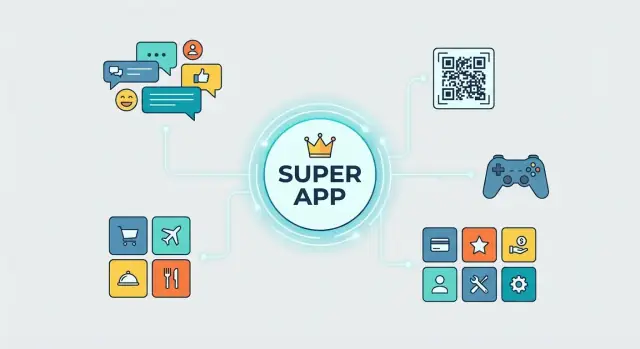
What Tencent’s “Super-Platform” Means
A “super-platform” is a simple idea: instead of using a separate app for every need, you handle many everyday tasks in one place. Not just “all-in-one” features, but a set of connected services that reinforce each other—so the product becomes part of your routine.
For Tencent, that super-platform pattern is best understood through WeChat and the wider set of services around it. The point isn’t that any single feature is unique; it’s that multiple high-frequency needs sit side by side, reducing friction and making it easier to return again and again.
The four pillars we’ll use in this article
We’ll look at the model through four pillars:
- Messaging: the habit engine that brings people back multiple times a day.
- Payments: the trust and transaction layer that turns attention into action.
- Gaming: repeat-use loops that create long-term engagement and spending.
- Mini-programs: “services without installs,” letting users do more without leaving the environment.
Why retention matters more than one-time growth
A lot of products can spike in downloads. What’s harder is keeping people active week after week. Super-platforms are retention machines because each feature creates reasons to return—and each return increases the chance you’ll use something else inside the same ecosystem.
This post focuses on high-level strategy and product mechanics, not on predicting stock performance or offering investment guidance. Consider it a practical breakdown of how these systems are designed.
For depth, the full article is intentionally long (around 3,000+ words), so we can connect the dots across features rather than treating them as isolated successes.
Messaging as the Habit Engine
Messaging is the default entry point because it’s the thing people open “just to check”—a quick reply, a voice note, a photo, a sticker. That tiny intention matters: it creates a daily (often hourly) return path that doesn’t require planning or a specific task.
Conversations create re‑engagement loops
Every message is a gentle trigger to come back. A single chat can generate multiple touchpoints: read, respond, follow up, share a link, send a location, confirm a plan. Group chats multiply this effect—one active group can produce a steady stream of notifications, reactions, and mini decisions that keep people inside the app without feeling like they’re “using a service.”
Sticky assets: contacts, groups, and social graph
Over time, a user’s contacts, group memberships, chat history, and shared media become a personal communication archive. That social graph is hard to recreate elsewhere. Even if another app matches the messaging features, it can’t instantly replicate your groups, your norms, and your ongoing threads.
Messaging reduces friction to discover services
Chats aren’t only communication—they’re a distribution channel. Friends share merchant pages, QR codes, mini-program links, event invites, and recommendations directly in context (“Use this,” “Book here,” “Pay this way”). Discovery feels natural because it’s embedded in conversation, not forced through search or ads.
Feature vs. ecosystem
A messaging feature is sending texts and media. A messaging ecosystem is when conversations become the default surface for identity, sharing, coordination, and service discovery—so new tools can plug into the same social flow and spread through people, not campaigns.
Payments as the Trust and Transaction Layer
If messaging is where people already spend time, payments are what turns that time into action. In WeChat’s model, paying doesn’t feel like “going to a bank app” first—it’s often a natural next step inside the same conversation where the decision was made.
Payments that fit the way people already coordinate
Chat is where everyday logistics happen: splitting a dinner bill, sending a gift, paying a tutor, confirming a delivery. When a payment button is close to the conversation, the gap between “OK, I’ll pay you” and actually paying shrinks to a few taps.
Two behaviors are especially sticky:
- Peer-to-peer transfers: sending money to a friend becomes as routine as sending a photo. That normalizes the wallet and keeps balances “alive.”
- QR code payments: scanning to pay (or showing your code) turns checkout into a quick ritual that works for tiny purchases as well as larger ones.
Convenience drives more frequent sessions
Payment convenience increases session frequency because it creates many small reasons to open the app: a quick transfer, confirming a receipt, checking a balance, viewing a transaction note, or responding to a request in a chat thread. These micro-interactions stack up into repeat daily use.
Merchants win with faster checkout and easier repeat visits
For merchants, QR-based checkout reduces friction at the counter and makes “pay and go” feel effortless. Digital receipts, simple refunds, and payment-linked loyalty prompts can also encourage repeat visits—without requiring customers to install yet another app.
Trust cues that keep the loop running
Payments only become habitual when they feel safe. Clear confirmation screens, recognizable security steps (like PIN/biometric prompts), transaction histories, and visible pathways for resolving mistakes (such as refunds or disputes) all serve as reassurance. The result is a payment layer that users rely on—and therefore return to—throughout the day.
Gaming as a Built-In Repeat-Use Loop
Games are recurring by design. Unlike many utilities you open only when you need them, games are built around short sessions that feel complete in minutes, while also feeding into longer-term progression. You can jump in for a quick match, collect a reward, or finish a small objective—and each action nudges you toward the next.
Sessions, progression, and events
Most successful games pair “fast gratification” with “slow accumulation.” Daily quests, streak rewards, battle passes, levels, and cosmetic unlocks create a steady drip of reasons to return. Limited-time events add urgency: if you don’t show up this week, you miss a challenge, an item, or a story beat. The result is a habit loop that doesn’t require you to plan ahead—it fits into idle moments.
Social play multiplies retention
When games plug into existing friend graphs, they become more than entertainment—they become a social appointment. Cooperative modes encourage coordination (“we need one more teammate”), while competitive modes create rematches and friendly rivalry. Sharing moments—high scores, highlights, achievements—turns play into conversation, and conversation becomes the trigger to play again.
Identity and community tie back to the platform
Game accounts, friend lists, group chats, and guild communities connect your gaming identity to the broader platform identity. That linkage matters: switching isn’t just losing a game, it’s losing your social context, your communities, and your shared history. Add regular content updates and live operations—new modes, seasonal themes, balance changes—and you get a predictable cadence that brings users back, then keeps them around long enough to discover other services on the platform.
Mini-Programs: Services Without the Install Friction
Mini-programs (often called “mini-apps”) are lightweight services that run inside WeChat, instead of being downloaded as separate apps from an app store. To a user, they feel like an app—browse, pay, track orders—but they open in seconds and don’t clutter your phone with new installs.
The core value: instant access
Most people only install a handful of apps, and they delete anything that feels “not worth it.” Mini-programs sidestep that decision. You discover one (often via a QR code, a friend’s share, or a brand’s official account), tap once, and you’re in. That speed lowers the “I’ll do it later” barrier—especially for one-off needs.
Everyday use cases that add up
Mini-programs cover the unglamorous but frequent tasks that create habits:
- Shopping and re-ordering from local stores
- Booking tickets, appointments, or table reservations
- On-demand services (delivery, repairs, ride hailing in some contexts)
- Customer support, order tracking, membership cards, and coupons
Because they’re embedded in a place you already open dozens of times per day, they get more repeat exposure than a standalone app competing for attention.
Built on WeChat’s existing rails
A mini-program doesn’t need to rebuild the basics. It can lean on WeChat’s familiar building blocks: existing login (so fewer passwords), social sharing (so discovery spreads through chats and groups), and integrated payments (so checkout is fast and trusted). That combination reduces friction at the two moments that matter most: first use and first purchase.
“Just one more” from a huge catalog
When thousands of services live under one roof, the odds rise that a user stumbles into an extra use—scan a QR code to pay, then notice a loyalty mini-program, then book a follow-up. The growing catalog turns WeChat into a practical utility drawer: you might not remember the name of the service, but you remember it’s available when you need it.
The Cross-Feature Flywheel in Daily Life
A “super-platform” feels abstract until you map a normal day. The flywheel is simple: chat → link → mini-program → pay → share. Each step happens in the same environment, so there are fewer moments where a user might abandon the task.
A familiar journey, with fewer exits
You’re chatting with friends about lunch. Someone drops a restaurant link or a shared location. Instead of jumping to a separate app store download, you open a mini-program instantly. Menu, pickup time, and address are already in context.
When it’s time to pay, mobile payments are one tap away—no re-entering card details, no “create an account” screen, no password reset. After ordering, the confirmation can be shared back into the same chat thread (“I ordered for 12:30—want to add anything?”).
The same loop shows up in other everyday actions. A group chat plans a ride home: a mini-program opens from a shared link, the pickup spot is pulled from the conversation, you confirm and pay, then share the ETA back to the chat. No app-switching, fewer forms, fewer dead ends.
The “return to chat” gravity
Even when you leave a mini-program, you naturally return to chat—to coordinate, update, or send proof of completion (a receipt, a status, a QR code). Chat becomes the home screen, which keeps discovery and re-discovery inside the platform.
One identity across actions
A single account ties together messaging, payments, and services. That “one identity” effect reduces friction (fewer logins) and increases confidence: the user recognizes where they are, merchants recognize the payer, and the platform can keep the experience consistent from link to transaction to sharing.
Network Effects Across Users, Merchants, and Developers
Network effects are a simple idea: the more people use something, the more useful it becomes for everyone else. With WeChat, that effect doesn’t sit in one feature—it stacks across messaging, payments, and mini-programs.
How users pull merchants in (and merchants pull users back)
When more users pay via WeChat Pay, it becomes worthwhile for a corner shop, café, taxi driver, or clinic to accept QR code payments. Once those merchants accept it, daily life gets easier for users: fewer cash-only moments, faster checkout, simpler splitting bills, and less friction when trying a new place.
That convenience then nudges even more people to rely on the same payment method—especially when your friends already use it and can send money instantly. Each side increases the value for the other, which is why adoption tends to accelerate after a certain point.
Developers and creators add “reasons to return”
Mini-programs create a second loop: if developers can reach a large audience with low install friction, they build services inside WeChat—food ordering, ticketing, membership cards, customer support, and niche tools.
For users, that means “there’s probably a mini-program for it.” For merchants, it means lower-cost digital services tied to payments and customer identity. For developers and creators, it means distribution and monetization without starting from zero.
Sharing as distribution—and why the effect grows over time
Mini-programs spread through chats, groups, and Moments: a friend shares a link, you tap once, and you’re inside. That social sharing acts like low-cost discovery.
Over time, network effects strengthen because switching costs rise: your payment history, merchant memberships, saved services, group norms, and habits get embedded in the same place. Moving elsewhere isn’t just changing an app—it’s renegotiating how you transact and coordinate with everyone around you.
Why Retention Gets So High: Incentives and Switching Costs
Tencent’s super-platform retention isn’t just about adding more features. It’s about stacking incentives and “stored value” so that staying feels easier—and leaving feels like losing something you’ve already built.
The incentive stack: rewards, convenience, status
Retention rises when multiple motivations line up:
- Rewards: coupons, cashbacks, red envelopes, game bonuses, member perks.
- Convenience: one login, one wallet, one QR flow, one place to message, pay, and book.
- Status and social signals: verified accounts, badges, group roles, in-game ranks, exclusive content access.
Each incentive alone is easy to copy. The advantage comes from combining them so users repeatedly get small wins with minimal effort.
Switching costs built from identity and memory
A platform becomes “sticky” when it accumulates personal context:
- Identity: a verified profile used across services.
- Contacts and groups: chat histories, communities, customer-service threads.
- Transaction history: receipts, bills, merchant interactions, refunds.
- Saved preferences: delivery addresses, favorite stores, service subscriptions, device logins.
Switching then isn’t only “download a new app.” It’s rebuilding your everyday setup—plus convincing your friends, family, and merchants to move with you.
“Stored value” is money—and much more
Stored value can be financial, like wallet balances, prepaid transit, gift cards, or loyalty credits. But it’s also non-financial: game progress, unlocked items, purchase histories, customer support records, and a familiar feed of mini-programs that already “know” your defaults.
A simple retention framework: frequency, convenience, attachment
- Frequency: daily messaging and routine payments create repeated touchpoints.
- Convenience: fewer steps to finish real tasks reduces drop-off.
- Emotional attachment: chats, groups, and playful loops (like games or gifting) add meaning without making any health claims about “addiction.”
When these three reinforce each other, retention becomes a product of everyday life, not just feature preference.
Distribution: How New Services Get Found and Re-Found
Distribution looks different when the platform already owns the entry point. In a typical app economy, discovery starts outside the product (ads, app store rankings, influencer reviews), and the user has to commit to a download before they can even try the service. On WeChat, the “front door” is already opened dozens of times a day—so new services can be surfaced inside an existing habit.
Lightweight discovery inside the flow
WeChat’s distribution is less about one big launch moment and more about many small, low-friction touches:
- Search: users can look up mini programs, official accounts, and services in the same place they search chats.
- Sharing in chats: a friend drops a mini-program card in a group message, and it’s instantly actionable.
- QR code payments and QR entry: scan-to-pay can double as scan-to-open (menus, booking, membership, customer support) without extra steps.
- Official accounts: content and updates can route users into a service at the moment interest is highest.
The key difference is psychological: “download a new app” feels like a decision with future costs (storage, notifications, setup). “Open a mini-program now” feels like a reversible action—try it, finish the task, move on.
Re-finding beats one-time discovery
Distribution doesn’t end at first use. WeChat makes it easy to re-find a service through chat history, saved mini programs, payment records, follow status, and repeated QR touchpoints at the same merchant. That turns discovery into a loop: a user encounters the same service in different contexts, which strengthens recall and reduces the chance they switch to a standalone competitor.
Service quality becomes the marketing
Because trying is cheap, service quality directly drives repeat behavior. Fast load times, clear flows, reliable customer support, and seamless payments matter more than aggressive promotion. A mini program that “just works” gets shared again, scanned again, and used again.
If you want a broader frame for why this kind of built-in distribution is so powerful, see /blog/platform-strategy-basics.
Developer Ecosystem: Tools, Rules, and Incentives
A super-platform only keeps expanding if outside teams can build useful services quickly—and if users feel safe trying them. That’s why the developer ecosystem around mini-programs is as much about governance as it is about code.
What developers need to ship (and keep shipping)
Most teams are looking for four basics: clear documentation and SDKs, stable APIs for login/payments/location/notifications, analytics to understand drop-off, and straightforward release tooling (testing, review, versioning, rollback).
Just as important are the non-technical needs: a predictable review process, support channels, and monetization options that fit different business models—selling goods, booking services, subscriptions, ads, or paid digital content.
Rules that make investment feel “safe”
When platform rules are consistent—what’s allowed, how data can be used, how payments and refunds work—developers can plan roadmaps and marketing without fearing that a core feature will be blocked later.
Predictability also reduces “one-off hacks.” Teams spend less time guessing what will pass review and more time improving product quality.
Trust and quality control: the entry price of convenience
Mini-programs remove install friction, so users try more things. That only works if the platform enforces quality standards: identity checks for merchants, content moderation, scam prevention, and reliable payment dispute handling.
There’s a trade-off: tighter platform control can limit experimentation, but it also protects users and keeps the overall directory worth browsing.
Building mini-app-style experiences faster (a practical note)
If you’re applying these mechanics outside WeChat—say, building an internal “super app” for a company, or a consumer app that combines chat-like coordination, payments, and embedded services—the main constraint is often speed: can a team prototype the flow end-to-end, test retention loops, and iterate before the opportunity window closes?
This is where platforms like Koder.ai can be useful in practice. Koder.ai is a vibe-coding platform that lets teams create web, backend, and mobile apps from a chat interface (commonly React on the web, Go + PostgreSQL on the backend, and Flutter for mobile). It’s particularly helpful for quickly shipping the “mini-program equivalent” in your own product—thin, task-focused services that can be tested, rolled back via snapshots, and refined with less overhead than a traditional pipeline.
Checklist: what makes a mini-program retention-friendly
- Fast first load and clear value in the first 10 seconds
- WeChat login + payment in as few steps as possible
- Order history, receipts, and easy re-buy/rebook
- Useful notifications (status updates, reminders), not spam
- QR-code entry points for offline-to-online repeat use
- Simple customer support and refunds flow
- Lightweight loyalty (points, membership, stamps) that users understand
Personalization and Trust (Without Overstepping Privacy)
A “super-platform” only feels helpful when it feels safe. Personalization is the difference between a home screen that saves time and one that feels noisy or pushy. The trick is delivering relevance while staying clearly within user expectations.
What users actually expect
Most people don’t want “more personalization.” They want three outcomes:
- Relevance: fewer irrelevant offers, more shortcuts to what they already use.
- Speed: less typing, fewer steps, faster discovery of frequently used services.
- Safety: confidence that payments, logins, and service access behave predictably.
When those expectations are met, users interpret customization as convenience—not surveillance.
Principles that keep trust intact
Personalization can remain privacy-respecting when it follows a few simple rules:
- Transparency: explain why something is being suggested in plain language.
- User controls: allow people to mute topics, hide suggestions, and reset recommendations.
- Clear permissions: when a mini‑program or service needs access (for example, location for delivery), it should be obvious what’s being requested and what benefit the user gets.
- Consistency: familiar UI patterns for payments, account linking, and confirmations reduce mistakes and anxiety.
These principles matter because a super-platform concentrates many “high-stakes” moments—money movement, identity, and daily routines—in one place.
The trust risks to manage
The bigger the ecosystem, the more it attracts low-quality actors. High-level risks include:
- Spam: aggressive notifications, misleading promos, or engagement bait.
- Fraud: fake merchants, counterfeit service listings, or payment scams.
- Quality drift: too many look‑alike mini‑programs that waste time and reduce confidence.
Best practices for platforms and partners
To keep personalization useful, platforms need enforceable rules: verification for sensitive categories, clear reporting and dispute flows, and penalties for repeat abuse. Partners should keep onboarding lightweight, avoid dark patterns, and make “opt out” as easy as “opt in.” Done well, trust becomes the multiplier that makes every feature—messaging, payments, and mini‑programs—feel safer and faster to use.
Limitations, Risks, and What Others Can (and Can’t) Copy
A super-platform can feel seamless to users, but it concentrates a lot of power and responsibility in one place. When messaging, payments, content, and services run through a single app, outages or policy changes ripple across daily life—affecting consumers, merchants, and developers at once.
Common risks: concentration, dependency, complexity
The biggest structural risk is dependency. Merchants may rely on one channel for customer acquisition and payments; creators may rely on one set of rules for distribution; users may end up “locked in” through contacts, payment history, and habits.
Complexity is another risk: as features pile up, navigation, settings, and privacy controls become harder to understand, which can reduce trust.
Operational challenges: support, moderation, reliability
A super-platform faces high expectations: payments must be accurate, messaging must be instant, and mini-programs must load quickly. At the same time, moderation is tougher because abuse can occur across chat, commerce, and third‑party services. That means substantial investment in customer support, fraud prevention, content review, and developer enforcement.
Regulatory and compliance considerations
Payments, identity, advertising, and data handling typically fall under different regulatory regimes. As a platform expands, it may need stricter know-your-customer checks, clearer dispute resolution, stronger anti-fraud systems, and more transparency in how recommendations and ads work.
Competitive pressure from specialists
Even with huge reach, niche apps can win by doing one job better—faster shopping, superior video creation tools, or simpler budgeting. A super-platform must keep quality high without bloating the experience.
What’s hard to copy vs. replicable
Hard to copy: dense social graphs, trusted payments at scale, and years of merchant and developer integration.
More replicable: QR-based flows, mini-app frameworks, and bundled incentives—if paired with clear rules, reliability, and real user value.
FAQ
What does “super-platform” mean in the context of Tencent and WeChat?
A super-platform combines multiple high-frequency behaviors (communication, transactions, services, entertainment) into one environment so each feature reinforces the others. The goal isn’t “more features,” but fewer exits—users can go from intent to completion (message → open service → pay → share) without app-switching.
Why is messaging considered the habit engine of a super-platform?
Messaging is opened many times per day with minimal effort—people check chats reflexively. Those repeated touchpoints create a reliable “home surface” where links, recommendations, and coordination happen naturally, which then makes it easier to introduce payments and services in the same flow.
How do integrated payments increase retention beyond convenience?
Payments turn coordination into action right where decisions are made (often inside or next to chat). Practical examples include:
- Splitting bills via peer-to-peer transfers
- Paying merchants with QR codes
- Confirming receipts and transaction notes
These small, frequent actions increase session frequency and build trust through consistent confirmations, histories, and dispute/refund pathways.
What are mini-programs, and why do they matter compared with standalone apps?
Mini-programs are lightweight services that run inside WeChat without requiring a separate app install. Because “try now” is cheaper than “download an app,” users are more willing to complete one-off tasks (booking, ordering, support) and then re-find the same service later via chat history, saved mini-programs, or payment records.
What is the “chat → mini-program → pay → share” flywheel?
The flywheel is a repeatable path that keeps users inside one environment:
- Chat about something
- Open a shared link (often a mini-program)
- Complete the task (often with one-tap payment)
- Share confirmation back into the chat
Each loop reduces drop-off points where a user might abandon the task or switch to another app.
How does gaming contribute to a platform ecosystem instead of being just entertainment?
Games are designed for recurring engagement through short sessions, progression systems, and limited-time events. When games connect to an existing friend graph, they also become social (team play, rivalry, sharing highlights), which creates extra triggers to return that don’t rely on push marketing alone.
What are “switching costs” in a super-platform, and what creates them?
Switching costs accumulate as users store more context inside one platform:
- Contacts, groups, and chat history
- Wallet habits and transaction records
- Saved services, memberships, and preferences (addresses, reorders)
- Game progress and community ties
Leaving isn’t just changing an app—it’s rebuilding routines and convincing others (friends/merchants) to move too.
How do network effects work across users, merchants, and developers?
They stack three forces that are hard to beat together:
- Users pull merchants in (demand for QR payments and easy checkout)
- Merchants pull users back (more places where the platform is the easiest option)
- Developers add services (mini-program catalog grows, making the platform more useful)
As the ecosystem expands, discovery and re-discovery happen inside everyday conversations, not just via ads or app stores.
How can personalization exist on a super-platform without overstepping privacy?
Users typically want relevance, speed, and safety—not “more personalization.” Practical trust-preserving practices include:
- Clear explanations for suggestions
- Simple controls to mute/hide/reset recommendations
- Obvious permission prompts (e.g., location only when needed)
- Consistent UI for payments and confirmations
Platforms also need verification, reporting/dispute flows, and enforcement to reduce spam and fraud in a low-friction ecosystem.
What are the biggest risks or limitations of the super-platform model?
Common risks include concentration (outages or policy changes affecting many activities), dependency for merchants/developers, and complexity that makes settings and privacy harder to understand. Some elements are replicable (QR flows, mini-app frameworks), but dense social graphs, trusted payments at scale, and long-term merchant/developer integration are much harder to copy.