

Tony Xu and DoorDash: Density Economics Behind Delivery
A practical look at how DoorDash scaled: last-mile logistics, merchant software, and density economics—plus the trade-offs that shaped the platform.
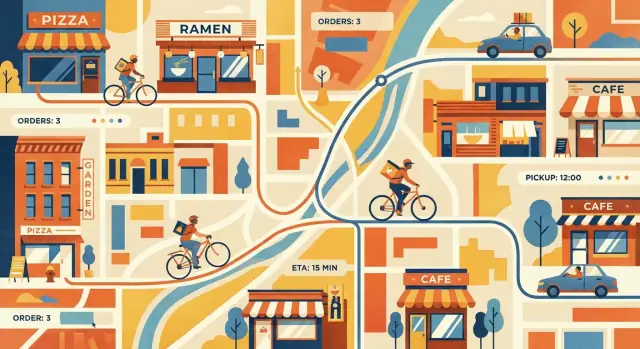
What This Case Study Tries to Explain
This case study is a guided tour of how a local delivery platform works when you zoom in on the mechanics—not just the brand. Using Tony Xu and DoorDash as the running example, we’ll connect three threads that determine whether delivery is convenient, reliable, and financially viable: last-mile logistics, merchant software, and density economics.
What we’ll cover (and why it matters)
First, we’ll break down the core “job” delivery platforms do: turning a customer’s intent (“I want that item now”) into a coordinated sequence of actions across a store, a courier, and a routing system.
Then we’ll look at the tools merchants need for delivery to be repeatable: menus and inventory that stay accurate, preparation timing that matches pickup, and workflows that reduce errors when orders spike.
Finally, we’ll explain density economics—the reason delivery can be expensive in one neighborhood and surprisingly efficient in another. Concentration of orders in time and space changes everything: courier utilization, travel time, batching, ETAs, and ultimately unit economics.
Why DoorDash is a useful example
DoorDash is a useful case because it built scale in varied local markets, not just a few dense urban cores. That makes it easier to see the practical trade-offs platforms face: speed vs. cost, coverage vs. reliability, and growth vs. profitability.
Key terms we’ll use throughout
- Merchant: The restaurant or store fulfilling the order.
- Dasher: DoorDash’s independent courier who picks up and delivers.
- Order density: How many orders exist within a given area and time window.
- ETA: “Estimated time of arrival,” the platform’s best prediction of when delivery will occur.
By the end, you should be able to look at any local delivery business and understand what’s driving its performance behind the scenes.
Tony Xu’s Starting Point: Local Merchants and Real-Time Ops
DoorDash didn’t begin as a grand plan to “own delivery.” Tony Xu’s early focus was more practical: help nearby merchants handle real customer demand they were already missing. Many local restaurants had great food and loyal fans, but no simple way to fulfill orders beyond their dining rooms. The opportunity wasn’t just creating demand—it was making fulfillment possible.
Local merchants first, not “tech first”
Starting with merchants changes what you build. Instead of optimizing for a catalog and a checkout flow, you end up obsessing over everyday operational friction:
- Can the kitchen handle an extra 10 orders during a rush?
- Who confirms the order and when?
- What happens when an item is out of stock?
- How do you prevent a driver from arriving too early (or too late)?
Those questions are “real-time ops” problems, and they become the product.
Why delivery is different from shipping goods
Shipping is often measured in days and built around predictable handoffs. Food delivery is measured in minutes and punished instantly for mistakes. The constraints are harsher:
- Tight time windows: dinner isn’t flexible the way a parcel is.
- Perishables: quality declines every minute after prep.
- Peaks: demand spikes at lunch and dinner create temporary capacity shortages.
That means the platform can’t just “send a driver.” It has to coordinate preparation time, pickup timing, and drop-off timing as one connected workflow.
Early choices that create long-term constraints
Small product decisions early on can lock in years of trade-offs. For example, how you set pickup expectations for merchants affects whether you can batch multiple orders later. How you design the Dasher experience affects acceptance rates and cancellation behavior. Even the initial merchant onboarding approach—manual versus integrated—can determine how quickly you can scale to new locations.
DoorDash’s merchant-and-ops starting point pushed the company toward execution details that many marketplaces only confront after they’ve already grown.
Last-Mile Logistics 101: The Job to Be Done
Last-mile logistics is the “from here to you” part of commerce: moving an order from a local merchant to a customer’s doorstep with predictable timing. In restaurant delivery, the product isn’t just food—it’s food that arrives hot, accurate, and on a schedule that feels trustworthy. In local commerce (pharmacies, convenience, pet supplies), it’s the same promise applied to everyday goods.
The core flow (and why it’s deceptively hard)
Most deliveries follow a simple chain:
Browse → order → merchant accepts → prep/pack → Dasher arrives → pickup → drive → drop-off
On paper, it’s linear. In practice, each step depends on real-world constraints: kitchen workload, store staffing, traffic lights, apartment access, and whether the customer is available.
Where delays and errors happen
The messiest problems show up at handoffs—moments when responsibility shifts:
- Order acceptance: the merchant may miss the tablet notification or pause orders during a rush.
- Prep timing: food can be late (Dasher waits) or early (food gets cold while waiting for pickup).
- Pickup friction: parking, finding the right entrance, and locating the correct bag are common failure points.
- Batching and sequencing: combining multiple orders can save cost, but increases the risk of late arrivals or mixed-up items.
- Drop-off complexity: gate codes, elevators, unclear instructions, substitutions, and availability all add uncertainty.
“Minutes” are the main currency
Delivery quality is mostly a time-management problem. Each extra minute compounds: it raises customer anxiety, increases refund risk, and lowers courier earning efficiency. Winning last-mile logistics means shrinking “unplanned minutes” across the flow—especially wait time at merchants and time lost during pickup and drop-off.
When those minutes are controlled, everything else improves: accuracy, temperature, on-time rates, and repeat usage.
The Marketplace Model: Customers, Merchants, Dashers
DoorDash works because it coordinates three groups at once: customers who want convenience, merchants who want incremental sales, and Dashers who want flexible earnings. Each side judges the platform by different standards—and improving one metric can easily hurt another.
Why three-sided marketplaces are hard to balance
Customers care about price, selection, and speed. If fees rise or ETAs slip, they churn quickly.
Merchants care about order volume, accuracy, and operational fit. They don’t want delivery to disrupt the kitchen, overwhelm staff, or create angry customers they can’t support.
Dashers care about earnings per hour, predictability, and low friction. Too much waiting at restaurants, long drives, or frequent cancellations makes the work feel unfair.
The tricky part is that “more demand” isn’t always good. A surge of orders can increase customer wait times, create longer merchant prep queues, and leave Dashers stuck in lobbies—reducing satisfaction on all three sides.
The basic incentive loop
A delivery platform has to align incentives so that:
- Customers feel the total cost is worth it (fees + tips + menu prices).
- Merchants see profitable incremental orders, not just displaced in-store traffic.
- Dashers see enough high-quality offers to stay active in a zone.
This is why platforms obsess over timing: when to send an order to the kitchen, when to dispatch a Dasher, and how to batch orders without making anyone feel “second priority.”
How trust gets earned (and kept)
Trust is built with boring consistency: transparent ETAs that don’t whipsaw, fewer cancellations, and smooth handoffs at pickup and drop-off. When the app’s promise matches what happens in real life—most of the time—customers reorder, merchants stay onboard, and Dashers keep driving.
Density Economics: Why Concentration Lowers Costs
Delivery platforms look like they scale by covering more map. In practice, many of the best gains come from packing more activity into the same map. That’s density economics.
What “density” actually means
Density is usually measured as orders per hour in a defined zone (a neighborhood-sized area), and often also as orders per hour per courier. High density means a Dasher finishing one drop is likely to get another nearby request quickly—without dead time or long repositioning.
How density lowers cost per delivery
When orders cluster in time and space, cost per delivery drops for a few simple reasons:
- Less idle time: Couriers spend more minutes moving with a paid task instead of waiting for the next ping.
- Shorter distances: Pickups and drop-offs are closer, which reduces miles (and minutes) per order.
- More efficient multi-order trips: If two customers are near each other, a single run can serve both with minimal extra travel.
These improvements compound: faster cycles allow more deliveries per hour, which helps cover fixed costs like support, insurance, and incentives.
Why density often beats raw geographic expansion
Expanding into a new area can increase top-line orders, but early volume is typically thin. Thin zones force longer drives, higher incentive spend to attract couriers, and more missed ETAs—hurting both unit economics and customer trust.
Concentrating on a smaller footprint first can create a virtuous loop: better ETAs and reliability bring repeat customers, which attracts more merchants and couriers, which further improves speed and utilization.
Common levers to increase density
Operators can push density without changing the product:
- Zoning: redraw boundaries so demand isn’t diluted.
- Batching rules: combine orders when it won’t meaningfully hurt quality.
- Peak-time incentives: targeted pay boosts during dinner rushes or bad weather to avoid shortages.
The goal isn’t maximum coverage—it’s a zone where each additional order makes the next one cheaper to fulfill.
Dispatch, Routing, and Timing: The Heart of Execution
If you want to understand why two delivery apps can look identical to customers yet perform very differently, focus on dispatch. Dispatch is the “control room” that decides which Dasher gets which order, in what sequence, and on what route—all while conditions change minute by minute.
Why dispatch quality becomes a competitive advantage
Great dispatch creates a quiet kind of reliability: orders arrive when promised, couriers stay productive, and merchants aren’t overwhelmed at the pickup counter. That advantage compounds because better execution attracts more orders, which creates more data, which improves matching and timing even further.
At a practical level, dispatch quality is a mix of:
- Matching: assigning the right Dasher based on proximity, vehicle type, historical reliability, and current workload.
- Routing: choosing paths that reflect real traffic patterns, parking friction, and building access—not just map distance.
- Timing: telling the Dasher when to head to the store so they arrive as the order is ready, reducing idle time and congestion.
The batching trade-off: speed vs. efficiency
Batching (one Dasher carrying multiple orders) can lower cost per delivery, but it’s easy to overdo. Aggressive batching boosts efficiency while risking cold food, missed ETAs, and customer complaints.
Smart batching uses guardrails: only combine orders that are close together, from compatible merchants, and with similar promised delivery windows. The goal is not “maximum batches,” but maximum on-time delivery at sustainable cost.
Handling peak demand: lunch, dinner, and bad weather
Surges expose weak dispatch. Lunch and dinner create sharp, predictable spikes; weather and local events create sudden spikes with slower driving and longer restaurant prep times. Good systems respond by adjusting delivery promises, prioritizing high-risk orders, and nudging supply (Dashers) to the right zones.
Operational metrics that matter
Teams can’t manage what they don’t measure. Four dispatch-centered metrics to watch:
- Pickup wait time: too high means wrong timing or merchant prep issues.
- On-time rate (pickup and drop-off): the clearest signal of execution quality.
- Cancellation rate: often a symptom of long waits, bad batching, or inaccurate ETAs.
- Courier utilization: how much time is spent moving orders versus waiting.
Dispatch isn’t just an algorithm—it’s the daily discipline of balancing customer promises, merchant realities, and driver productivity.
Merchant Tools: Software That Makes Delivery Work
Delivery isn’t just a driver showing up with a hot bag. For merchants, it’s an operational promise: orders arrive when expected, match what was requested, and don’t overwhelm the kitchen. That requires software that gives local businesses visibility, control, and predictability—especially during peaks.
What merchants need beyond “delivery enabled”
Merchants typically care about three things that sound simple but are hard in practice:
- Visibility: What’s being ordered, what’s pending, what’s delayed, and why.
- Control: The ability to shape demand so the kitchen doesn’t collapse at 7:00 p.m.
- Predictability: Consistent prep times, realistic ETAs, and fewer surprise rushes.
If those are missing, the failure shows up everywhere: late orders, cold food, cancellations, frustrated staff, and couriers waiting with no clear pickup time.
Examples of merchant tools that change outcomes
A strong merchant console isn’t just a POS screen—it’s an operations cockpit. Common features that materially improve performance include:
- Menu and hours management: Keeping items accurate and marking out-of-stock products quickly.
- Order throttling: Limiting the number of orders per time window to match kitchen capacity.
- Prep-time settings: Adjusting prep time by daypart or order size so pickups aren’t chronically early.
- Pause controls: Temporarily stopping orders during unexpected staffing or equipment issues.
These sound like small knobs, but they directly affect customer ETAs and courier idle time.
Why better merchant ops helps everyone in the marketplace
Merchant tools aren’t “nice to have” add-ons; they reduce waste in the system. When prep times are accurate, couriers spend less time waiting, which improves earnings per hour and increases availability nearby. When menus are current, customers get fewer substitutions and refunds. When order volume is paced, kitchens maintain quality instead of rushing and making mistakes.
In a density-driven model, these savings stack: fewer delays and reassignments mean dispatch can plan more tightly, which lowers the cost per order.
Onboarding and support: the hidden scaling challenge
Local commerce is messy: every merchant has different workflows, staffing patterns, and tech comfort. Consistent performance depends on onboarding that sets defaults correctly (prep times, pickup instructions, packaging guidance) and support that responds fast when something breaks.
At scale, “merchant tools” includes training, templates, and clear policies—not just features. The better the system standardizes best practices without forcing one rigid workflow, the more reliable the marketplace becomes for customers, merchants, and Dashers alike.
Quality and Reliability: Reducing Errors at Scale
Delivery businesses don’t fail because people dislike convenience—they fail because small mistakes quietly erase trust. A missing side dish, the wrong drink size, or a late handoff triggers refunds, support tickets, and, most importantly, fewer repeat orders. Quality isn’t a “nice to have” metric; it’s a direct lever on cost and retention.
Why accuracy matters financially
Every incorrect order has a cascading price tag: the refund or credit, the support interaction, the redelivery (sometimes), and the customer who decides the next meal isn’t worth the risk. When you operate at high volume, even a tiny error rate becomes a large absolute number of incidents. That’s why platforms obsess over accuracy and reliability: they’re unit economics in disguise.
Product tactics that prevent common errors
The practical wins tend to be simple and systematic:
- Item confirmation at handoff: prompts that nudge merchants to verify high-miss items (drinks, sauces, utensils) and encourage Dashers to double-check the bag label against the order.
- Substitution flows: when an item is out of stock, clear in-app options (approve substitutes, choose preferences, allow merchant choice) prevent surprise cancellations and wrong replacements.
- Clear instructions: structured fields for gate codes, drop-off notes, and “hand it to me” vs. “leave at door” reduce failed deliveries and reattempts.
Reducing friction at pickup
Pickup is where many errors are born—especially during rushes. Reliability improves when stores adopt boring-but-effective operational habits: dedicated pickup shelves, large readable labels, and a consistent pickup protocol (where to stand, who to ask, what gets verified). The goal is to minimize ambiguous conversations and grab-and-go mistakes.
Compounding gains at scale
A 1% improvement in accuracy sounds minor until it’s multiplied across millions of orders. Fewer mistakes mean fewer refunds, fewer support contacts, and more customers willing to reorder without hesitation. In delivery, consistency is the growth engine: reliability turns first-time users into habitual ones.
Unit Economics: Where Profitability Is Won or Lost
Unit economics in delivery is simple to describe and hard to improve: each order has a small pool of revenue, and a long list of variable costs that move with every trip.
What drives the per-order math
Revenue usually comes from a mix of customer delivery/service fees, merchant commissions, and sometimes advertising or sponsored placement. On the cost side, the big drivers are courier pay (including incentives), payment processing, customer support, and the messy tail: refunds, credits, and redeliveries when something goes wrong.
That last category matters because it compounds. A missing item isn’t just a refund—it can trigger support time, retention risk, and sometimes a second courier trip.
Why variable costs dominate—and how density changes the equation
Unlike a pure software product, delivery has real-world cost per order. Couriers are paid per delivery (plus incentives), and time is money: longer waits at restaurants and longer drive distances raise cost immediately.
Density changes the equation because it reduces dead time. When there are many orders close together, couriers spend less time driving empty, merchants see more consistent pickup flow, and dispatch can batch or sequence orders more efficiently. The same fee pool can cover the trip more often.
Subscriptions: repeat usage with smoother margins
Memberships (like free delivery thresholds) can improve unit economics indirectly by increasing frequency and predictability. More repeat ordering helps density and lowers the need for expensive acquisition campaigns. The membership fee also offsets discounts that would otherwise be funded order-by-order.
Promotions: useful, but easy to misread
Promos can help launch a new market or reactivate lapsed users, but they can also distort demand signals. If discounts are too aggressive, you may “buy” volume that disappears the moment incentives end—making the market look healthier than it is, and masking operational issues that must be fixed for sustainable margins.
Expanding Beyond Restaurants: From Meals to Local Commerce
DoorDash’s early focus on restaurants solved an urgent, repeatable problem: getting hot food to a doorstep quickly. Expanding beyond restaurants wasn’t just about “more stuff” on the app—it was about increasing useful selection while keeping the delivery experience dependable.
Why selection matters (and which categories fit)
Customers don’t think in categories; they think in needs. Dinner is one need, but “I’m out of cough drops,” “I forgot eggs,” or “I need a phone charger tonight” are just as real. Adding convenience stores, grocery, and select retail widens the reasons to open the app, which can turn delivery from a meal option into a local errands button.
How new categories change the logistics
Restaurants typically hand over a sealed bag with a predictable prep flow. Grocery and retail orders add extra steps and variability:
- Pick/pack time: someone must find items and assemble the order.
- Substitutions: out-of-stocks require customer communication and decision rules.
- Basket size and weight: larger orders affect vehicle choice, carry time, and drop-off complexity.
These differences can stretch delivery windows and increase customer support if the process isn’t tightly designed.
Cross-category demand smoothing
Multiple categories can help fill quiet hours. Late-night convenience orders, mid-afternoon grocery top-ups, or weekend retail runs can keep Dashers busier when restaurant demand dips. Smoother demand supports better availability without overpaying for idle time.
The risks: complexity and quality drift
Expansion adds moving parts: more item issues, more refunds, and more edge cases. If a platform grows selection faster than it improves tools, training, and support, quality can slip—and customers don’t care why an order went wrong. Scaling local commerce works only when the experience stays simple, fast, and consistent across categories.
Competition and Local Network Effects
Local delivery competition is less about a single “best app” and more about who executes better in a specific neighborhood at a specific hour. Customers compare options on a simple scorecard: how fast it arrives, whether their favorite places are available, what the total price looks like after fees and tips, and whether the order shows up correct and warm.
Network effects are local (block by block)
Marketplace network effects don’t travel well across geographies. Winning one city doesn’t automatically improve outcomes in another, because the inputs are local: merchant selection, courier availability, traffic patterns, and peak-time demand spikes.
When a platform increases order volume in one zone, it can often:
- offer couriers more consistent earnings per hour (more trips, less waiting)
- give merchants more incremental sales without overwhelming their kitchens
- improve ETAs because dispatch has more nearby options
That feedback loop can create a default-choice feeling for customers—but only within that zone.
What becomes defensible
Some advantages are harder to copy than a consumer app interface:
- Merchant relationships: onboarding, menu accuracy, problem resolution, and trust built store by store.
- Courier supply depth: enough active couriers to handle peaks without long delays.
- Operational playbooks: repeatable methods for launching new areas, staffing support, and tuning service quality.
Where differentiation is fragile
Local delivery can turn into a pricing fight. Competitors can buy demand with promotions, reduce fees temporarily, or offer guaranteed earnings to couriers. Those tactics can shift share quickly because many customers are not deeply loyal.
The practical takeaway: sustainable advantage tends to come from better unit-level execution (coverage + reliability) rather than from short-term promo spending alone.
Lessons and Trade-Offs: A Practical Takeaway Checklist
DoorDash’s story is useful beyond food delivery because it forces clear decisions about speed, cost, and reliability in a three-sided marketplace. If you’re building a marketplace—or any “pick up here, drop off there” operation—the biggest lessons are less about clever marketing and more about choosing which trade-offs you will consistently win.
The trade-offs you can’t avoid
Most delivery platforms get pulled between goals that fight each other:
- Higher courier pay vs. lower customer fees: Better pay can improve coverage and acceptance, but it pressures margins or raises prices.
- Faster ETAs vs. batching efficiency: Bundling orders reduces cost per drop, but it can increase delays and mistakes if timing isn’t tight.
- Growth vs. quality: Expanding zones and onboarding merchants quickly can dilute service levels if operations and support don’t scale at the same pace.
The practical move is to pick your non-negotiables (for example: on-time performance in your top zones) and allow flexibility elsewhere.
Regulatory and community realities (acknowledge early)
Local delivery touches real neighborhoods and local rules. Even without taking positions, it’s smart to plan for:
- How cities may view curb access, parking, and congestion around busy merchants.
- Evolving expectations around worker classification, minimum pay standards, and transparency.
- Merchant relationships and community trust (especially when service issues affect small businesses).
Treat these as operational constraints to design for, not afterthoughts.
A simple checklist you can reuse
Use this checklist to diagnose where performance or profitability is likely to break:
- Density: Are orders concentrated enough by zone/time to keep travel short and utilization high?
- Dispatch: Do you assign the right courier at the right moment, with realistic prep times and acceptance behavior?
- Merchant tooling: Can merchants confirm orders, update prep time, manage substitutions, and reduce errors with minimal effort?
- Reliability: Are cancellations, missing items, and late orders tracked with clear root causes and feedback loops?
- Economics: Do you understand contribution margin per order (after promos, support, refunds, and courier incentives), not just revenue?
If you improve only one thing, start with density + dispatch—they tend to unlock better unit economics and a noticeably better customer experience at the same time.
Building Something Similar: From Concept to Working Ops Software
A quiet meta-lesson in the DoorDash story is that “delivery” is really a bundle of tightly coupled systems: a consumer ordering app, a merchant console, a courier app, plus dispatch, payments, support tooling, and analytics. Because these pieces interact in real time, teams often benefit from prototyping end-to-end flows early (even if the first version is rough) to expose the real constraints: prep-time variance, pickup friction, and what happens when demand spikes.
If you’re exploring a delivery or on-demand marketplace concept, a fast way to pressure-test these workflows is to build a minimal but connected product: customer checkout → merchant acceptance/prep controls → courier assignment → live status updates. Platforms like Koder.ai are designed for this kind of iteration: you can describe the marketplace flows in chat, generate a working web app (commonly React) with a backend (Go) and database (PostgreSQL), and then refine the product in “planning mode” before you commit to deeper engineering. For ops-heavy businesses—where the UI and the timing rules matter as much as the business model—being able to snapshot, roll back, and export source code can make experimentation safer and faster.
FAQ
What problem is a local delivery platform actually solving?
A delivery platform coordinates a multi-step workflow across three parties:
- Merchant: accepts and prepares/packs the order
- Courier (Dasher): picks up and delivers
- Platform systems: dispatch, routing, ETA prediction, and support
The product isn’t just “delivery”—it’s predictable timing + accuracy under real-world constraints (prep variability, traffic, building access, peaks).
What does “order density” mean, and why does it matter so much?
Density is how many orders exist within a zone during a time window (often orders/hour, and orders/hour/courier).
Higher density lowers cost and improves service because couriers:
- wait less between jobs (higher utilization)
- travel fewer miles/minutes per order
- can do safe, time-compatible batching more often
Thin demand usually means longer drives, more incentives, and less reliable ETAs.
Why is dispatch considered the “heart” of delivery execution?
Dispatch is the control layer that decides who gets the order, when they should head to pickup, and in what sequence.
Strong dispatch reduces “unplanned minutes” by:
- matching based on proximity, reliability, and current workload
- timing arrival to merchant readiness (less lobby waiting)
- routing with real pickup/drop-off friction in mind
Two apps can look identical to users but perform very differently because dispatch quality compounds over time.
How does batching work, and when does it hurt the customer experience?
Batching lowers cost per delivery, but it risks late arrivals and cold food if overused.
Practical batching guardrails include:
- only batch orders that are close in geography
- keep promised windows compatible
- avoid pairing merchants with unpredictable prep times
- cap added delay per customer
Aim for sustainable on-time performance, not maximum batches.
Where do most delays and errors happen in last-mile delivery?
The biggest operational time sinks are usually at handoffs:
- merchant misses/pauses acceptance
- prep finishes too late (or too early)
- pickup friction (parking, entrances, finding the bag)
- drop-off complexity (gate codes, unclear instructions)
A useful diagnostic is to track where minutes accumulate: merchant wait time vs. travel time vs. drop-off time—and fix the dominant source first.
Which merchant tools have the biggest impact on reliability?
Merchant tools make delivery repeatable under peak stress. High-impact controls include:
- menu/hours and out-of-stock updates
- prep-time settings by daypart or order size
- order throttling (capacity pacing)
- pause buttons for emergencies
These features reduce refunds, cancellations, and courier idle time—improving outcomes for customers, merchants, and dashers at once.
What determines whether delivery can be profitable on a per-order basis?
Unit economics is the per-order math: revenue per order (fees, commissions, ads) minus variable costs (courier pay/incentives, support, refunds, payment processing).
Profitability is often won or lost on:
- courier time (wait + drive)
- rework (refunds, redeliveries, support contacts)
- incentive spend needed to cover peaks or thin zones
Density helps because it reduces dead time, making the same revenue pool cover the trip more often.
What metrics best reveal whether a delivery marketplace is healthy?
Use a small set of operational metrics that map to real failure modes:
- Pickup wait time: signals prep accuracy and dispatch timing
- On-time rate (pickup + drop-off): execution quality
- Cancellation rate: long waits, bad batching, inaccurate ETAs
- Courier utilization: paid movement vs. idle time
Instrument these by zone and daypart so you can see where performance actually breaks.
Why is expanding from restaurants into grocery and retail operationally harder?
Restaurants usually hand off a sealed bag with a predictable prep flow. Grocery/retail adds variability:
- pick/pack time (who shops, how long it takes)
- higher substitution frequency
- heavier/larger baskets affecting vehicles and drop-off time
To keep quality stable, platforms need clearer substitution rules, better item accuracy, and workflows that prevent support tickets from scaling with order volume.
Why are network effects in delivery “local,” and what becomes defensible?
Network effects are zone-specific: winning one city or neighborhood doesn’t automatically improve another.
Defensibility tends to come from hard-to-copy execution assets:
- merchant relationships and consistent onboarding
- deep courier supply to handle peaks
- repeatable operational playbooks for launch and quality control
Promotions can shift share temporarily, but sustained advantage usually comes from reliability + density in the same zones over time.