

Why Testing Frameworks Shape Engineering Culture and Quality
Testing frameworks do more than run tests—they shape habits, reviews, onboarding, and delivery speed. Learn how the right choice builds a healthy culture.
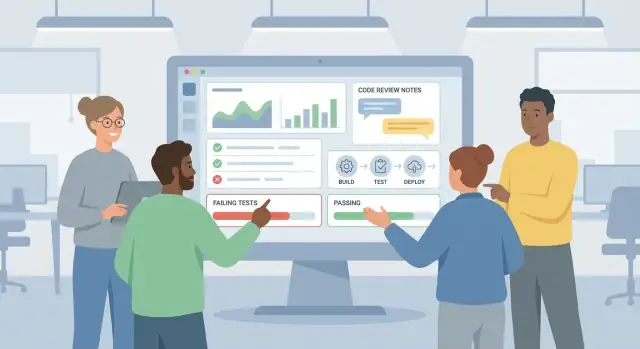
What We Mean by “Culture” and Why Tools Matter
“Engineering culture” sounds abstract, but it shows up in very practical ways: what people do by default when they’re busy, how they make tradeoffs under pressure, and what gets treated as “normal” versus “risky.” It’s the everyday habits—writing a small test before changing code, running checks locally, asking for review, documenting assumptions—that quietly define quality over time.
Culture is a set of defaults
Most teams don’t debate culture in meetings. Culture is reflected in:
- Standards: what “good” looks like (and what gets merged anyway).
- Decision-making: whether people choose the safe path or the fastest path.
- Feedback loops: how quickly you learn that something broke.
- Accountability: whether problems lead to fixes or finger-pointing.
These patterns are reinforced by what the team experiences day to day. If quality checks are slow, unclear, or painful, people learn to avoid them. If they’re fast and informative, people naturally rely on them.
A testing framework is more than a tool
When we say “testing framework,” we’re not just talking about an API for assertions. A framework usually includes:
- Tooling: runners, assertions, fixtures/mocks, reporters, watch mode.
- Conventions: how tests are structured, named, and organized.
- Workflows: how tests run locally and in CI, how failures are displayed, what’s considered “enough.”
That bundle shapes developer experience: whether writing tests feels like a normal part of coding, or an extra chore that gets postponed.
This article is about behavior change, not tool wars
Different frameworks can produce good outcomes. The more important question is: what behaviors does this framework encourage by default? Does it make it easy to write maintainable tests? Does it reward clear failure messages? Does it integrate smoothly into your CI pipeline?
Those details influence how your team works—and what quality means in practice.
The goal here is to help teams choose and use testing frameworks in a way that reinforces good habits: quick feedback, clear expectations, and confidence in releases.
Frameworks Create Defaults That Shape Daily Habits
A testing framework isn’t neutral. Its “happy path” quietly decides what feels normal to test first—and what feels optional.
What gets tested first: units vs end-to-end
When a framework makes it effortless to spin up small, isolated tests (fast runner, minimal boilerplate, simple parameterization), teams tend to start with unit tests because the feedback is immediate. If, instead, the easiest setup is a browser runner or a full app harness, people often begin with end-to-end checks—even when they’re slower and harder to diagnose.
Over time, that default becomes culture: “We prove it works by clicking through” versus “We prove it works by verifying the logic.”
Defaults that nudge behavior
Frameworks bake in opinions through:
- Assertions: readable, specific assertions encourage precise expectations; vague matchers invite “close enough” checks.
- Fixtures: good fixture patterns push reuse and clarity; awkward fixtures lead to copy-pasted setup and hidden dependencies.
- Mocking: lightweight mocking makes isolation common; heavy mocking APIs can tempt teams into over-mocking and fragile tests.
These aren’t abstract choices—they shape daily habits like naming tests, structuring modules, and how often developers refactor test code.
“Easy” vs “painful” tests decide whether they get written
If writing a test feels like adding one small function, it happens during normal development. If it requires wrestling with config, globals, or slow startup, tests become something you “do later.” Tooling friction then creates predictable shortcuts:
- skipping tests locally and relying on CI
- adding sleeps/retries to mask flakiness
- broad end-to-end tests to avoid hard-to-test components
Those shortcuts accumulate, and the framework’s defaults become the team’s definition of acceptable quality.
Feedback Speed Sets the Team’s Rhythm
A testing framework doesn’t just run checks—it trains people. When feedback is fast and easy to interpret, developers naturally commit more often, refactor in smaller steps, and treat tests as part of the flow rather than a separate chore.
Fast feedback makes “small and steady” the default
If a change can be validated in seconds, you’re more willing to:
- commit tiny slices of work
- rename and reorganize code without anxiety
- try alternatives and roll back quickly when something feels off
Framework features directly shape this behavior. Watch mode encourages tight loops (“save → see results”), which makes experimentation normal. Targeted test selection (running only affected tests, test file patterns, or last-failed tests) lowers the cost of checking assumptions. Parallel runs reduce wait time and remove the subtle pressure to “queue up a bunch of changes” before testing.
Slow suites create fear—and bigger, riskier batches
When the full suite takes 20–60 minutes, the team adapts in predictable ways: fewer runs, fewer commits, and more “I’ll just finish a bit more before I test.” That leads to larger batches, harder-to-review pull requests, and more time spent hunting which change caused a failure.
Over time, slow feedback also discourages refactoring. People avoid touching code they don’t fully understand because the validation cost is too high.
Set time budgets to protect the rhythm
Teams can treat speed as a requirement, not a nice-to-have. A simple policy helps:
- Unit tests: under 2–5 minutes locally
- PR-level suite: under 10–15 minutes in CI
- Longer integration runs: scheduled or gated for higher-risk changes
Once you define budgets, you can choose framework settings (parallelization, sharding, selective runs) that keep the pace—and the culture—healthy.
Clarity of Failures Builds Trust—or Erodes It
When a test fails, the team immediately asks two questions: “What broke?” and “Can I trust this signal?” Your testing framework strongly influences whether those answers arrive in seconds or in an endless scroll of noise.
Readable output shortens debugging (and teaches faster)
Clear failure output is a quiet productivity multiplier. A diff that highlights exactly what changed, a stack trace that points to your code (not framework internals), and a message that includes the actual inputs turn a failure into a quick fix.
The opposite is just as real: cryptic assertions, missing context, or logs that bury the useful line at the bottom increase debugging time and slow learning for newer teammates. Over time, people start treating test failures as “someone else’s problem” because understanding them is too expensive.
Good error messages reduce blame and speed up collaboration
Failures that explain why something is wrong create a calmer culture. “Expected status 200, got 500” is a start; “Expected 200 from /checkout with valid cart; got 500 (NullReference in PaymentMapper)” is actionable.
When the message includes intent and key state (user type, feature flag, environment assumptions), teammates can pair on the fix instead of arguing about whose change caused it.
A practical rule: if a failure message can’t be understood by someone who didn’t write the test, it will produce interruptions, defensiveness, and slower reviews.
Conventions: naming, structure, reporting
Frameworks often encourage patterns—use that to standardize:
- Naming: Prefer intent-first names (e.g.,
checkout_returns_200_for_valid_card) over vague ones (e.g.,testCheckout). - Structure: Use a consistent Arrange/Act/Assert layout so anyone can scan tests quickly.
- Reporting: Agree on what gets printed on failure (key IDs, URLs, payload snippets, and the minimal logs needed). Keep reports consistent so CI failures look familiar.
Flaky tests erode trust
Nothing damages credibility faster than tests that fail “sometimes.” Flakiness trains teams to ignore red builds, re-run jobs until they’re green, and ship with doubt. Once that habit forms, even real failures get treated as optional.
Treat flaky tests as cultural debt: quarantine them quickly, track them openly, and make “fix or delete” a shared expectation—because reliable signals are the basis of reliable collaboration.
Onboarding: The Framework as a Teaching Tool
A new engineer learns your team’s values faster from the first green build than from any slide deck. Testing frameworks quietly teach “how we do things here” through conventions: where tests live, how they’re named, how failures read, and how much ceremony is expected to write a simple assertion.
Conventions that reduce (or add) cognitive load
Frameworks with clear defaults make onboarding smoother because newcomers don’t have to invent patterns. When conventions are unclear—or your team fights the framework—new hires spend their first week asking “where do I put this?” instead of learning the product.
Common patterns worth standardizing early:
- Setup/teardown: one place to create test data and clean up side effects.
- Fixtures: reusable “known good” objects that keep tests short and readable.
- Helpers and shared utilities: a small toolbox for login, time control, factories, and API stubs—kept intentional to avoid a sprawling “test utils” junk drawer.
A starter template repo + “first test” checklist
Make onboarding concrete with a starter template repository (or a folder in your monorepo) that includes:
- A minimal example test per layer you expect (unit/integration).
- Preconfigured commands:
test,test:watch,test:ci. - Opinionated linting/formatting for test files.
- A short README pointing to /engineering/testing-standards.
First-test checklist for a new joiner:
- Run tests locally and in watch mode.
- Add one small unit test near a recent change.
- Intentionally break it to see the failure output.
- Fix it, push a branch, and watch CI.
- Request a review and respond to feedback.
Documentation and examples as onboarding multipliers
High-quality framework docs and community examples reduce tribal knowledge. Prefer frameworks with clear failure messages, maintained guides, and a healthy ecosystem—then link the best “how-to” pages directly from your internal docs (/engineering/testing-standards) so newcomers don’t have to hunt.
Code Review Norms Are Set by Test Expectations
Code review isn’t only about style and correctness—it’s where a team negotiates what “good” means. Testing frameworks quietly shape that negotiation because they define how easy it is to add, run, and understand tests.
How tests steer the conversation
When reviewers can quickly read a test and trust it, review comments shift from debates (“Will this break?”) to evidence (“Show me a case where this fails”). Good tests become a shared language: they document edge cases, clarify intended behavior, and make risk visible.
Over time, the team starts to treat tests as part of the change itself, not an optional attachment. A pull request without tests invites more back-and-forth, more “what if?” questions, and longer approval cycles.
Ergonomics changes how often reviewers ask for tests
If the framework makes setup painful—slow runs, confusing mocks, brittle fixtures—reviewers hesitate to request tests because they know it will stall the PR. If it’s fast and pleasant, “Please add a test” becomes a normal, low-friction comment.
That’s why developer experience is cultural: the easier it is to do the right thing, the more consistently the team expects it.
Practical review guidelines
A simple set of norms keeps reviews focused:
- Test what could break: business rules, tricky edge cases, and bug fixes (add a regression test).
- Don’t test the obvious: framework internals, library behavior, or trivial getters/setters—these add noise.
- Prefer stable signals: assert outcomes and user-visible behavior rather than implementation details that will change.
- One PR, one story: tests should explain the change, not become a second project.
Shared ownership, not a separate lane
Healthy teams treat tests like production code: everyone writes them, everyone fixes them, and failing tests block the merge regardless of who “owns” quality. That shared responsibility is how test automation becomes a daily habit, not a QA checkpoint.
CI Integration Turns Tests into a Social Contract
When a testing framework is wired into your CI pipeline, tests stop being “my local opinion” and become “the team’s shared agreement.” Every pull request runs the same checks, in the same environment, and the outcome is visible to everyone. That visibility changes accountability: failures aren’t private inconveniences—they’re blockers the whole team feels.
Gating turns standards into defaults
Most teams use CI gating to define what “done” means.
A framework that integrates cleanly with CI makes it easy to enforce required checks (for example: unit tests, linting, and a minimal integration suite). Add quality gates—like coverage signals or static analysis thresholds—and you’re encoding values into the workflow: “we don’t merge code that reduces confidence.”
Be careful with coverage, though. It’s useful as a trend or a guardrail, but it’s not the same as meaningful testing. Treat it as a signal, not a scoreboard.
Flaky tests change release behavior—fast
Flaky tests don’t just waste minutes; they erode trust in the whole pipeline. When people learn that red builds “often fix themselves,” they start merging with fingers crossed, delaying releases, or overriding gates. During incidents, flaky suites also muddy the picture: teams can’t quickly tell whether a change is safe to roll forward or needs rollback.
If your framework makes flakiness hard to diagnose (poor reporting, weak retries, unclear logs), it quietly normalizes risk.
Split pipelines: fast checks vs. deeper confidence
A practical pattern is to separate pipelines by intent:
- Fast checks on every PR: quick unit tests and a small set of high-signal integration tests
- Nightly (or scheduled) suites: broader integration/e2e coverage, cross-browser/device runs, longer scenarios
This keeps feedback tight without sacrificing depth. The best framework-into-CI integration is the one that makes the “right thing” the easiest thing to do.
Test Strategy: How Frameworks Push the Pyramid Up or Down
A “test pyramid” is just a way to balance fast, focused tests with a smaller number of realistic, slower tests. Frameworks quietly nudge that balance by making some kinds of tests easy—and others painful.
The three levels (plain language)
Unit tests check a small piece of code (like one function) in isolation. They’re usually the fastest and easiest to run often.
Integration tests check multiple parts working together (like your API + database, or a service + queue). They’re slower than unit tests but catch “wiring” problems.
End-to-end (E2E) tests simulate real user flows through the whole system (often via a browser). They give high confidence but are the slowest and most fragile.
How frameworks tilt your pyramid
If your chosen framework makes E2E tests delightful—great browser tooling, auto-waits, visual runners, simple setup—you may drift into writing too many E2E tests for behavior that could be validated faster lower down. The result is a slow suite that teams avoid running, and a culture of “tests are flaky.”
On the other hand, a unit-test framework with heavy mocking utilities can push teams toward “mock everything,” where tests pass even when real integrations break.
A simple allocation heuristic
A practical starting point for many teams:
- ~70% unit tests (cheap coverage for logic)
- ~20% integration tests (catch contract and wiring issues)
- ~10% E2E tests (protect critical user journeys)
Adjust based on risk, but treat E2E as a curated set of business-critical paths, not the default.
Warning signs your pyramid is upside down
- “All E2E”: builds are slow, tests fail due to timing, and small UI changes break unrelated checks.
- “Mock everything”: tests are green while staging is red; bugs are “surprising” because tests never exercised real boundaries.
Maintainable Tests Encourage Sustainable Engineering
Maintainability in test automation is about three things: readability (anyone can understand what the test is proving), stability (tests fail for real reasons, not random noise), and ease of change (small product changes don’t require rewriting half the suite).
When a testing framework makes these qualities easy, teams build habits that protect code quality without burning people out.
Patterns that keep tests simple
Good frameworks nudge teams toward reuse without hiding intent. A few patterns consistently reduce duplication:
- Fixtures to set up common preconditions (users, permissions, seeded data) in one place.
- Factories/builders to create objects with sensible defaults, then override only what matters in a given test.
- Helpers for repeated actions (e.g., “create order,” “log in,” “publish article”), named like business steps rather than technical steps.
The cultural effect is subtle but powerful: tests read like documentation, and new changes feel safer because updating a fixture or factory updates many tests coherently.
Anti-patterns that quietly tax the team
Some practices create a fragile suite and a cynical attitude toward failures:
- Shared mutable state (one test’s setup leaks into another), causing intermittent failures.
- Over-mocking that tests the mock setup more than the real behavior, reducing release confidence.
- Brittle selectors and overly specific assertions that break on harmless UI or wording changes.
Treat refactoring tests as real work
Sustainable engineering treats test refactors like production refactors: planned, reviewed, and done continuously—not “cleanup later.” Set the expectation that improving maintainable tests is part of delivering a feature, and your CI pipeline becomes a trusted signal instead of background noise.
What You Measure Becomes What You Value
Testing frameworks don’t just run checks—they make certain signals easy to see and others easy to ignore. Once those signals show up in pull requests, CI summaries, and team dashboards, they quietly become priorities. That’s helpful when metrics point to real quality—and harmful when they reward the wrong behavior.
Metrics: useful, but easy to game
A single number can simplify decisions (“tests are green”), but it can also create bad incentives (“ship faster by skipping slow suites,” or “inflate unit tests that assert nothing”). Good metrics describe health; bad metrics become targets.
Practical metrics that improve behavior
A lightweight set usually beats an elaborate scorecard:
- Test runtime (overall and per-suite): highlights where feedback is too slow to support frequent commits.
- Flake rate (intermittent failures): exposes trust issues. If developers expect retries, reviews and releases slow down.
- Escaped defects (bugs found after release): ties test investment to customer impact without blaming individuals.
- MTTR for test failures (mean time to repair): measures how quickly the team restores confidence when CI breaks.
Treat coverage as a clue, not proof
Coverage can show where you have no tests at all, which is valuable. It can’t prove tests are meaningful, nor that critical behaviors are protected. A high percentage may still miss edge cases, integration seams, and real user flows.
Use coverage to find blind spots, then review whether tests validate outcomes—not implementation details.
Dashboards and ownership keep “test health” real
Keep dashboards small and visible (CI summary + a simple weekly trend). Assign clear ownership: a rotating “test health” steward or ownership by area/team. The goal is quick decisions: fix flakiness, speed up suites, and prevent broken tests from becoming normal.
Choosing a Framework That Matches Your Team
A testing framework isn’t just a technical choice—it sets expectations for how people write, review, and trust code. The “best” framework is the one your team can use consistently, under real deadlines, with minimal friction.
Practical criteria (what developers feel every day)
Look beyond feature lists and focus on fit:
- Language fit: Does it match your main application language and runtime?
- Ecosystem support: Mature docs, community examples, plugins, reporters, mocking tools.
- IDE integration: Debugging tests, jumping to failures, running a single test quickly.
- Learning curve: Can a new hire write a good test in their first week?
Non-technical criteria (what makes it sustainable)
These factors often decide whether the choice lasts:
- Team experience: Do you already have people comfortable with it?
- Hiring pool: Are candidates likely to know it, or will you retrain everyone?
- Long-term support: Release cadence, maintainers, compatibility with your stack, and a clear upgrade path.
Run a small pilot before committing
Pick one representative service or module and compare 2–3 options for a week or two. Measure:
- Setup time: From zero to first meaningful test.
- Flakiness: Do tests fail for reasons unrelated to product changes?
- Developer happiness: Quick survey: “Was it easy to write, run, and debug?”
Decision checklist + a “no regrets” migration plan
Checklist: fast local runs, clear failure output, stable CI integration, good mocking/fixtures, parallelization support, active maintenance, and strong team familiarity.
Migration outline: start with new code only, keep old tests running in CI, add shared helpers/adapters, migrate the highest-change areas first, and define an exit date when the old framework becomes read-only.
Adoption Plan: Make the Culture Change Stick
Adopting a new testing framework is less about a tool swap and more about setting shared expectations. The goal is to make “the right thing” the easy, default thing.
A rollout plan that actually works
Start with a lightweight standard that fits on one page: naming conventions, how to structure tests, when to mock, and what “good coverage” means for your team.
Add templates so nobody starts from scratch: a sample test file, a helper for common fixtures, and a CI job snippet. Then run short training sessions (30–45 minutes) focused on how your team will use it, not every feature.
Adopt gradually:
- New code uses the new framework immediately.
- Touching old code triggers “leave it better” updates (migrate a test or two when you’re already there).
- Set a target date for new tests in the old framework to stop.
Legacy tests and mixed frameworks (without chaos)
Mixed frameworks are fine if you make the boundaries explicit. Keep runners separate in CI, report results together, and document which areas are “legacy.” Avoid big-bang rewrites; instead, prioritize migrations where they buy reliability (flaky suites, slow suites, critical paths).
If you must keep both for a while, define one shared rule: failures block merges regardless of where they come from.
Create a testing playbook and a reference project
Publish a simple playbook page (for example, /docs/testing-playbook) with:
- How to write and run tests locally
- Examples for unit vs integration tests
- Common troubleshooting and timeouts
A clear project structure reduces debate:
/tests
  /unit
  /integration
  /fixtures
/src
  ...
Frameworks reinforce culture when paired with clear norms: agreed standards, easy templates, consistent CI enforcement, and a migration path that rewards progress over perfection.
Where Koder.ai can help make “good defaults” real
If you’re trying to change habits, the fastest win is usually reducing setup friction. Teams using Koder.ai often start by generating a small “golden path” project structure and test commands (for example test, test:watch, test:ci), then iterating in chat until the framework conventions match the team’s playbook.
Because Koder.ai can build full web/server/mobile apps from a chat-driven workflow—and export source code for your repo—it’s a practical way to prototype a framework pilot (including CI wiring) before you ask the entire team to migrate. The tooling choice still matters, but lowering the cost of doing the right thing is what turns standards into culture.
FAQ
How can a testing framework affect engineering culture?
They set the easiest path for writing, running, and reading tests. When that path is fast and clear, developers test changes more often and treat tests as normal development work.
Should our team focus on unit tests or end-to-end tests?
Use a framework that makes small unit tests quick to create and run, then keep a smaller set of integration and end-to-end tests for real boundaries and critical user flows. The right mix depends on risk, but most checks should give feedback quickly.
How fast should a test suite run?
Aim for unit tests that finish locally in about 2 to 5 minutes and pull request checks that finish in about 10 to 15 minutes. Put broader or slower scenarios in scheduled runs unless a change carries higher risk.
What makes a test failure message useful?
A useful failure says what you expected, what happened, and the relevant input or state. Include details such as the endpoint, user role, feature flag, or payload snippet when they help someone fix the issue.
What should we do with flaky tests?
Treat an intermittent failure as a defect in the test system. Quarantine it if it blocks work, identify the shared state, timing issue, or external dependency behind it, then fix or remove the test.
What testing expectations should code reviews have?
Make tests part of the change review. Ask for coverage of business rules, edge cases, and bug fixes, while avoiding tests for trivial code or framework behavior. Reviewers should be able to understand the test without knowing every implementation detail.
How should we structure tests in CI?
Run a small, reliable suite on every pull request and reserve longer integration or browser suites for scheduled runs or higher-risk changes. Require failing checks to block merges so the team uses one shared standard.
What is a practical test pyramid for a new project?
Start with roughly 70% unit tests, 20% integration tests, and 10% end-to-end tests. Adjust the split for your product, but avoid putting ordinary logic only in slow browser tests or isolating every dependency behind mocks.
How do we choose a testing framework?
Try the framework on one representative module first. Compare setup time, local speed, failure output, CI behavior, debugging support, and how easily a new teammate can add a meaningful test.
How can we adopt a new testing framework without rewriting everything?
Start new code on the new framework, keep existing tests running, and migrate high-change, slow, or flaky areas first. Give the team a short playbook with naming, fixtures, mocking rules, local commands, and CI expectations.