

Xiaomi’s Platform Play: Fast Iteration, Value, Ecosystem
Learn how Xiaomi uses fast iteration, value pricing, and an ecosystem of connected devices to build a consumer tech platform that goes beyond phones.
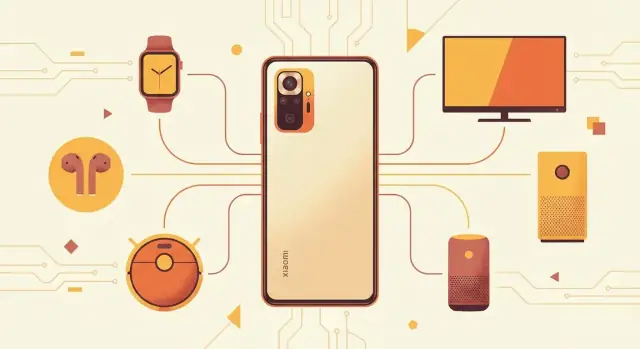
What Xiaomi Is Building Beyond Smartphones
Xiaomi’s story is often told through phones, but the more useful way to understand the company is as a consumer tech platform: a connected set of products, software, and buying paths that make it easy to upgrade—and easy to stay in the same orbit.
This article’s goal is simple: explain how Xiaomi combines fast product iteration, value pricing, and an expanding device ecosystem to build a repeatable “stack” for everyday users. The focus is strategy and consumer outcomes—what you get, how it fits together, and why it changes your options—not a spec-by-spec comparison.
What “platform” means in this context
When people hear “platform,” they often think of apps or cloud services. Here, it’s broader and more practical. Xiaomi’s platform is made of:
- Products: phones, tablets, TVs, wearables, audio, routers, and a wide range of smart home and lifestyle gadgets.
- Software and accounts: a shared identity, settings, backups, and cross-device features (often through MIUI/HyperOS) that reduce friction when you add a new device.
- Services and integrations: companion apps, device management, and automation that make the ecosystem feel like one system rather than a pile of gadgets.
- Channels: a mix of online sales, retail partners, and brand stores that help Xiaomi scale reach while keeping prices competitive.
- User habits: once your earbuds pair instantly, your watch syncs health data, and your home devices sit in one app, switching brands starts to feel like extra work.
What to expect next
We’ll break down the building blocks—speed of launches, pricing logic, product laddering, and ecosystem expansion—and then connect them to real buyer questions: when the Xiaomi stack saves money, when it adds convenience, and where the trade-offs show up.
Fast Iteration: Speed as a Competitive Habit
Xiaomi behaves less like a company that “launches a phone” once a year and more like a team that continuously ships upgrades across many price points. The result is a steady drumbeat of new models, variants, and refreshed editions that keep the catalog current—and keep competitors reacting.
How rapid refreshes and feature borrowing work
In consumer tech, fast iteration usually means two things: shorter product cycles and reusing proven components or ideas across the lineup.
Xiaomi will often introduce a feature in one tier—say a higher-refresh display, faster charging, a camera sensor, or a new thermal design—and then cascade a version of it into more affordable models within months. At the same time, mid-range devices may “borrow” premium traits while flagships adopt practical optimizations learned from mass-market volumes (battery tuning, antenna performance, durability changes).
This isn’t just copying a spec sheet. It’s about compressing the time between “users want this” and “it’s widely available,” using shared suppliers, reference designs, and software updates to reduce the cost and risk of shipping something new.
What Xiaomi gains from moving quickly
Speed creates tighter feedback loops. When you sell across many segments, you collect real-world data fast: which camera processing choices people prefer, where battery life disappoints, what screen sizes convert best, and which design compromises trigger returns.
It also helps Xiaomi adopt trends quickly—new chip generations, battery chemistries, charging standards, and display technologies—without waiting for a single annual launch window. If the market shifts, the lineup can shift with it.
The trade-offs: overlap, confusion, and perceived lifespan
Frequent refreshes can make the catalog harder to navigate. Similar names, close pricing, and small spec differences often force buyers to do more homework, especially when multiple devices are on sale at once.
There’s also product overlap: a newer mid-range phone might look uncomfortably close to last season’s premium model, which can blur positioning.
Finally, rapid releases can shorten perceived lifespan. Even if a phone performs well for years, it may feel “old” sooner because a newer variant appears quickly—making timing and clear priorities (camera, battery, performance, support) more important when choosing.
Value Pricing: Winning Share Through Accessible Upgrades
Xiaomi’s “value pricing” isn’t just about being cheaper. It’s a deliberate positioning choice: maximize the price-to-feature ratio so a buyer feels they’re getting the camera, battery, screen, or charging speed they expected from a higher tier.
That framing matters because many consumers don’t shop for “the best phone,” they shop for “the best phone I can justify.” Xiaomi often aims to sit right at that justification point—where the next step up feels like diminishing returns.
How value pricing grows the user base
Accessible upgrades expand the funnel. When a meaningful leap in performance costs only a little more than last year’s model (or a competing mid-range option), upgrading feels low-risk.
This also lowers switching friction. A customer can try Xiaomi without committing to a premium price, then move up the line later—bringing their habits (accounts, accessories, app preferences) with them. Over time, those “small” decisions compound: a phone purchase can lead to earbuds, a watch, or a smart home add-on, each bought because it feels like a sensible deal.
The trade-offs Xiaomi has to manage
Value pricing creates real constraints:
- Margin pressure: thinner per-device profit leaves less room for mistakes in forecasting, component pricing, or promotions.
- Reliance on volume: the model works best when sales scale efficiently through online channels, retail partners, and repeat purchases.
- “Cheap” perception risk: if consumers equate low price with low quality, Xiaomi has to spend more on proof—warranties, reviews, retail demos, and consistent product reliability.
Done well, value pricing becomes a trust signal: “You won’t feel overcharged.” Done poorly, it becomes a trap: “You get what you pay for.”
The Product Ladder: From Entry Phones to Premium Flagships
Xiaomi sells phones like a ladder you can climb over time, rather than a single “one-size” lineup. That matters because many buyers don’t jump straight to a premium flagship; they upgrade in steps as budgets change, needs grow, or carrier deals appear.
The typical ladder (and what each rung is for)
At the bottom are entry models built for basics: messaging, browsing, big batteries, and acceptable cameras at low cost. Next comes midrange, where most people find the sweet spot—faster chips, better screens, and camera systems that feel “good enough” for everyday photos.
Above that is upper-midrange / affordable premium, often focused on flagship-like displays and charging speeds while trimming a few expensive extras. Finally, you get premium flagships, where Xiaomi competes on top-tier cameras, performance, display quality, and design—plus the brand credibility that comes with a “best-of” device.
How naming and tiers reduce decision fatigue
Xiaomi’s branding can look busy, but the intent is straightforward: separate audiences quickly. Many markets see families like Redmi (value-first), POCO (performance-per-dollar), and the Xiaomi numbered series (premium leaning). Within a family, additions like Pro, Ultra, T, or Note usually signal the direction: more camera, more power, or a more balanced upgrade.
For shoppers, this tiering creates faster comparisons: pick the family that matches your budget, then choose the variant that matches your priorities (camera vs. gaming vs. battery). It’s less about memorizing every model and more about recognizing the rung you’re on.
The downside of frequent launches: models competing with each other
High launch velocity can create internal competition. A newer mid-range phone may undercut last quarter’s “near-flagship” on price, or a slightly different variant can confuse buyers who see similar specs across multiple names. The result is great deals—but also shorter “best time to buy” windows and a stronger need to compare the exact model name, storage, and region variant before checkout.
Companion Devices That Keep Users in the Xiaomi Orbit
Phones are the “hub,” but Xiaomi’s stickiness often comes from the smaller products you use dozens of times a day. Wearables and earbuds are especially powerful because they’re high-frequency companions: you put them on in the morning, tap them during the commute, and rely on them for calls, notifications, and media without constantly pulling out your phone.
Why wearables and earbuds matter more than they look
A watch or band becomes part of routine behavior—steps, sleep, heart rate, timers, quick message previews. Earbuds do the same for audio and calling: they’re in your pocket every day, and they quietly reduce friction when switching between music, meetings, and voice notes.
That “always there” presence creates familiarity with Xiaomi apps, device cards, and settings. The more often you interact with those touchpoints, the less likely you are to switch brands next time you upgrade.
Bundles, promos, and fast setup = retention
Xiaomi also uses simple commercial nudges to turn a phone purchase into a mini-ecosystem:
- Bundles and seasonal promotions (phone + earbuds, phone + band) lower the mental barrier to adding a second device.
- Cross-device setup makes the second purchase feel instantly rewarding—quick pairing, synced notifications, and shared controls.
Once your earbuds are tuned to your preferences and your wearable is tracking weeks of health data, the cost of switching isn’t just money—it’s losing convenience and continuity.
Everyday moments that pull you back
These companions win in small, repeated moments: pausing a podcast while commuting, taking a call while carrying groceries, checking directions with a glance, or controlling volume and tracks during a workout. Xiaomi doesn’t need every device to be “premium”—it needs them to be present, simple, and used constantly.
Smart Home and Lifestyle IoT: The Second Growth Engine
Xiaomi’s ecosystem story accelerates when the phone stops being the “product” and becomes the remote control for everything else you own. Smart home and lifestyle IoT turn one purchase into a gradual, room-by-room build-out—often starting with a single practical device and expanding as people get comfortable.
The everyday categories that scale
Instead of betting on one killer gadget, Xiaomi spreads adoption across familiar home needs. Common entry points include TVs, speakers, robot vacuum cleaners, air purifiers, security cameras, and small sensors and smart lighting. These are easy to justify (“I’ll use it every day”), which makes them natural add-ons after a phone upgrade.
“One app / one account” is a retention lever
Convenience is the hidden feature: managing devices under one app and one account reduces friction. Pairing, updates, automations, and sharing access with family members are simpler when they’re centralized (often via the Mi Home app and your Xiaomi account). Once multiple devices are configured, switching ecosystems starts to feel like redoing work—not just buying different hardware—which quietly lowers churn.
Why adoption keeps compounding
Three drivers push this second growth engine:
- Affordability: lower entry prices make “trying smart home” feel low-risk.
- Gifting: cameras, speakers, and wearables are easy gifts that seed new households.
- Room-by-room expansion: people add a purifier for the bedroom, then a camera for the entryway, then a vacuum for the living room—each step reinforcing the next.
The result is a practical flywheel: more devices create more value, and more value makes the next device an easier yes.
Software as Glue: Accounts, UI, and Cross-Device Features
Xiaomi’s ecosystem only feels like a “platform” when the software makes multiple gadgets behave like one coherent experience. Hardware gets you in the door; the account, interface, and device-to-device features are what keep you from drifting away.
The OS layer that unifies everything (MIUI/HyperOS)
MIUI and, increasingly, HyperOS act as a common layer across phones, tablets, TVs, wearables, and smart home gear. Even when the hardware categories vary widely, the core patterns—settings layout, notifications, sharing menus, device discovery—stay familiar. That consistency reduces friction when you add a new Xiaomi product: you don’t relearn everything, you just sign in and continue.
Setup, updates, and cross-device control
A Xiaomi account is the practical “key” to the stack: syncing Wi‑Fi, backups, device lists, and smart home pairings can turn a 30‑minute setup into a few guided taps. Cross-device features then become the payoff—quick pairing for earbuds, casting to a TV, shared clipboards, hotspot handoff, or controlling smart home devices from the same control center.
Concerns users actually have (and how to evaluate)
Software can also be where trust is won or lost:
- Update clarity: buyers want predictable timelines and plain-language changelogs. Before committing, check the model’s update track record and whether security patches arrive regularly.
- Privacy settings: Xiaomi offers granular controls, but they can be buried. Spend time reviewing permissions, ad/personalization toggles, and cloud sync options during first setup.
- “Bloatware” perception: preinstalled apps and recommendations can feel excessive. Most can be disabled or removed; it’s worth verifying what’s optional versus essential to the ecosystem features you want.
Channels and Partnerships: Scaling the Ecosystem
Xiaomi’s ecosystem only works at scale if people can buy devices easily in the places they already shop—and get them serviced afterward. Distribution and partnerships aren’t a side detail; they’re a core part of the platform play.
Broad distribution: meeting customers where they buy
Xiaomi benefits from a blended channel strategy:
- Online-first reach helps it launch quickly, test demand, and keep pricing competitive through efficient logistics.
- Carrier and operator channels (where available) make higher-end phones and wearables easier to finance and bundle, which lowers the “try something new” barrier for mainstream buyers.
- Retail presence—from brand stores to third-party electronics chains—lets customers handle products in person, compare devices, and get guided upsells (for example, pairing a phone with earbuds, a watch, or a smart home hub).
This mix matters because ecosystem products are often impulse add-ons. If a customer sees a phone, a scooter, and a pair of earbuds in the same aisle (or cart), the ecosystem grows faster.
Partner brands and co-development: widening the catalog
Xiaomi also expands variety through partner brands and co-developed devices, which can fill gaps faster than building everything in-house. The benefit is breadth: more price points, more form factors, and faster coverage of niche categories (from budget smart home sensors to specialized appliances). For buyers, it means more choice under a familiar umbrella—though it also makes consistent quality control and clear branding more important.
After-sales support: the trust multiplier
An ecosystem strategy depends on repeat purchases, and repeat purchases depend on confidence. Reliable warranties, repair networks, spare parts availability, and software support clarity reduce hesitation—especially for devices that live in your home for years. Strong after-sales service turns a low-price purchase into a long-term relationship, which is exactly what a platform model needs.
Ecosystem Flywheel: How Devices Reinforce Each Other
Xiaomi’s ecosystem works like a flywheel: once it starts turning, each new device you add makes the next one more useful. That’s a “network effect” in plain terms—not about social networks, but about your own setup. One product improves the experience of the others, so the combined value is higher than the sum of the parts.
Network effects, explained simply
If your phone already manages your Xiaomi account, notifications, and device settings, then adding another Xiaomi product is faster and smoother. Pairing takes fewer steps, controls live in familiar menus, and automations are easier to set up. The more devices you have, the more “little frictions” disappear.
A simple chain reaction
Picture a common path:
- Buy a Xiaomi phone: you’re signed in, you get the companion apps, and your preferences are saved.
- Add Xiaomi earbuds: quick pairing, battery pop-ups, and seamless device switching for calls and music.
- Add a Xiaomi TV: casting, shared streaming controls, and using your phone as a remote feels natural.
- Add a robot vacuum: schedules, rooms, and alerts live in the same app ecosystem you already use.
None of these steps is dramatic alone. Together, they create a “why not?” effect—adding the next device feels low-effort.
Convenience that turns into a subtle switching cost
Over time, your routines become organized around what already works: your automations, saved devices, familiar settings, and consistent controls. That doesn’t mean you can’t switch brands, but it means switching has a real cost in time and attention—re-pairing, re-learning apps, rebuilding automations, and losing small integrations you relied on.
How Xiaomi Differs From Other Consumer Tech Platforms
Xiaomi’s platform strategy looks less like a single “hero” product and more like a wide set of entry points that can all lead into the same account, apps, and connected-device experience. That changes how it competes with other consumer tech ecosystems.
Premium-first vs. value-first ecosystems
Many well-known platforms are built premium-first: the flagship device is the center of gravity, and everything else tends to orbit it at similarly high price points. The advantage is a consistent, tightly controlled experience.
Xiaomi leans more value-first. Instead of requiring a top-tier phone to get started, it often offers a credible “first step” at lower prices—then encourages upgrades over time. That approach can widen the funnel: more people can try the ecosystem through a phone, earbuds, a band, or even a smart home device, and then add more pieces as needs grow.
Breadth of categories as a distribution strategy
Some ecosystems focus on a smaller set of categories (for example, phone + watch + earbuds + laptop). Xiaomi tends to cover more everyday categories—wearables and audio, TVs, routers, robot vacuums, cameras, kitchen gadgets, and more.
This breadth matters because it creates multiple reasons to stay: if your phone, earbuds, and TV already work smoothly together, switching brands can feel like replacing a set rather than a single item.
Price coverage: a product ladder built into the platform
Another differentiator is price coverage within each category. Xiaomi often sells from entry-level to premium in the same line (or close substitutes), so users can move up without changing ecosystem logic.
That doesn’t automatically make it the best fit for everyone—some buyers prefer fewer options and a more uniform experience—but it’s a distinct model: accessibility, frequent refreshes, and many on-ramps into one connected stack.
Risks and Constraints: Where the Model Can Break
Xiaomi’s strength—shipping lots of devices quickly at sharp prices—also creates the main failure modes. A platform is only as good as the experience across the whole “stack,” and cracks tend to show up first in software consistency, long-term support, and focus.
Software consistency vs. device fragmentation
When many phones, tablets, earbuds, watches, and smart home products launch across regions, the experience can start to feel uneven. Some models get features earlier, some miss them entirely, and settings or naming can differ between MIUI/HyperOS versions.
Fragmentation isn’t just cosmetic. It can affect:
- Cross-device features (pairing, handoff, notifications) that work on one combination but not another
- Performance and battery tuning that varies by chipset and region
- Accessory compatibility, especially when multiple generations overlap
Support load and update reliability
Fast iteration increases the support burden: more SKUs, more carriers, more firmware branches, more edge cases. That can translate into slower bug fixes, delayed security patches, or inconsistent update policies between price tiers.
For buyers, “update reliability” matters more than headline features. Signals that the model is holding up include clear public update commitments, predictable security patch cadence, and fewer reports of major issues after big OS releases.
Trust: data handling and transparency
An ecosystem platform naturally collects more signals (accounts, device identifiers, usage metrics). The risk isn’t only what’s collected, but whether the company explains it in plain language and gives users meaningful controls.
Improvement signals to watch: clearer privacy dashboards, easy opt-outs, well-documented permissions, and consistent behavior across apps and devices.
Over-expansion and diluted focus
Expanding into “everything” can dilute product attention. If too many categories get launched, core experiences—camera tuning, connectivity, app stability, customer service—can slip.
How to spot healthier focus: fewer redundant models, longer time-on-sale for key devices, more frequent quality-of-life updates, and tighter integration that works reliably across generations (not just during launch season).
What It Means for Buyers: Choosing the Right Xiaomi Stack
Buying “Xiaomi” isn’t just picking a phone model—it’s deciding how many of your daily devices you want to work together. The best results usually come from starting small, verifying the experience, then adding pieces that solve real annoyances.
A practical checklist (start with a phone + one companion category)
-
Choose the phone based on your non-negotiables: camera consistency, battery life, screen size, and how long you plan to keep it.
-
Add one companion category that you’ll actually use every day (pick one):
- Wearable (fitness band/watch) if you want health tracking and quick notifications.
- Audio (buds/headphones) if calls and commuting are the priority.
- Smart home (a couple of lights/plugs) if you want routines and voice control.
- Live with the pair for 1–2 weeks before buying more. This is the fastest way to see whether Xiaomi’s software experience fits your habits.
How to evaluate ecosystem fit
App experience: Open Xiaomi’s companion apps and check whether setup is simple, permissions feel reasonable, and syncing is reliable. If you find yourself fighting notifications or aggressive battery optimizations, that friction multiplies with more devices.
Compatibility: Make sure the exact models you’re considering are supported where you live (regional variants matter). If you already use Google Home/Alexa/Apple services, verify integration before you commit.
Support and updates: Look for clear warranty terms, local service options, and a track record of software updates for your phone line. A great “value” deal isn’t great if repairs or updates are a hassle.
Build your stack intentionally
A good rule: expand only when the next device removes a repeat pain point (charging, tracking workouts, controlling lights), not just because it’s discounted.
If you want help choosing between options, explore related comparisons on /blog and see current plans or bundles on /pricing.
A quick note for builders: product ecosystems aren’t just hardware
If you’re analyzing Xiaomi as a “platform,” it can be useful to think like a software team: the real lock-in is often the account layer, the control app, and the integration surface (automations, device cards, cross-device handoff).
That’s also why internal tools matter for companies building multi-device experiences—dashboards for device status, support workflows, and rollout tracking. Platforms like Koder.ai can speed up building those kinds of web or mobile apps from a simple chat (with planning mode, snapshots, and source code export), which is handy when you need to prototype an IoT control panel, a customer support console, or an operations dashboard without spinning up a full legacy dev pipeline.
FAQ
What does “platform” mean when talking about Xiaomi?
In this article, “platform” means a connected stack of products + software + services + buying channels that makes it easy to add devices over time.
The practical outcome is lower setup friction and more cross-device convenience, which can subtly increase the cost (in time and effort) of switching brands later.
Why does Xiaomi release so many models so often?
Xiaomi tends to ship upgrades across many price tiers frequently, then cascades features (like charging, screens, or camera tech) downward over time.
For buyers, it often means you can get last-year-like features sooner in cheaper models—but you may need to compare similar devices carefully because the lineup changes quickly.
How does fast iteration help regular buyers (not just tech enthusiasts)?
You can benefit through:
- Better price-to-feature ratio at each tier
- More chances to buy on sale as new variants arrive
- Faster access to trends (new chips, charging, displays)
The main downside is choice overload: timing and model-name precision matter more than with slower-refresh brands.
What are the downsides of Xiaomi’s rapid refresh strategy?
Expect:
- Overlapping models with similar names and prices
- A shorter “best time to buy” window because new variants arrive quickly
- A feeling that your phone is “old” sooner, even if it still performs well
To reduce regret, decide your non-negotiables (camera, battery, size, support) before chasing minor spec bumps.
What does “value pricing” really mean for Xiaomi?
It’s a strategy to sit at the point where the next step up feels like diminishing returns.
Instead of being “cheap,” the goal is to make upgrades feel justifiable—so more people enter the ecosystem at a manageable price and then add accessories or move up the ladder later.
What trade-offs come with Xiaomi’s value pricing model?
Common trade-offs include:
- Margin pressure, which can limit room for forecasting mistakes
- Greater reliance on high sales volume and efficient distribution
- A risk that low prices create a “cheap” perception unless quality, warranty, and reliability stay consistent
As a buyer, look for strong local warranty terms and real-world reliability feedback, not just launch pricing.
How should I think about Xiaomi’s “product ladder” when choosing a phone?
Think of Xiaomi phones as a ladder:
- Entry: basics, big batteries, low cost
- Midrange: the common “sweet spot” for most users
- Upper-midrange: flagship-like highlights with a few trims
- Flagship: top cameras, performance, display, design
A practical approach is to pick the tier first (budget and needs), then compare only 2–3 models within that rung.
Why are Xiaomi earbuds and wearables such a big part of the ecosystem?
Because they’re used constantly and reduce daily friction:
- Earbuds: fast pairing, calls, quick switching
- Wearables: health data continuity, notifications, routines
Once you’ve built habits (audio preferences, weeks of health tracking), switching brands can feel like losing convenience—not just buying new hardware.
How does Xiaomi’s smart home approach create “stickiness”?
It centralizes pairing, updates, automations, and sharing access with family under one place (often via Mi Home + your Xiaomi account).
That saves time each time you add a device—and once you’ve configured multiple rooms and routines, switching ecosystems means redoing that setup work.
What’s the best way to test if the Xiaomi ecosystem is right for me?
Use a simple 3-step check:
- Start small: phone + one daily companion (buds, band/watch, or a couple smart plugs/lights).
- Test for 1–2 weeks: setup ease, syncing reliability, notifications, battery optimizations.
- Verify the boring stuff: regional compatibility, warranty/repair options, and update track record for your exact model line.
Expand only when the next device removes a repeat pain point—not just because a bundle is discounted.